Historical Maps of Brazil and the World

Historical Maps of Brazil and the World

The history of Brazil can be told through maps that represent its territorial transformations over the centuries.

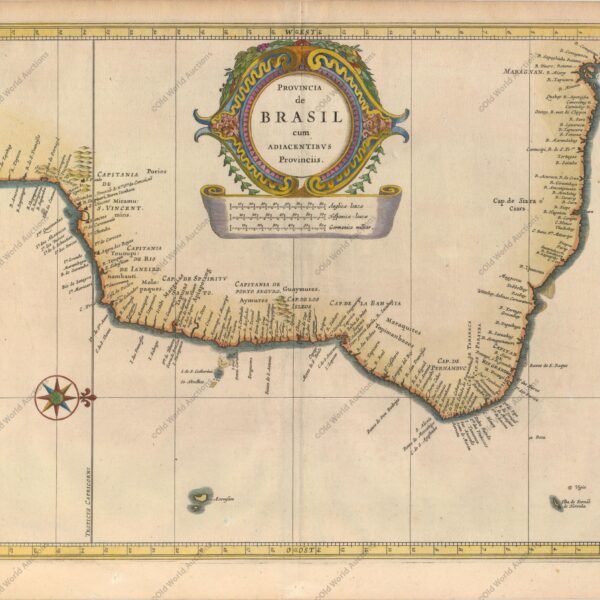
Since the beginning of the 16th century, various cartographies have depicted indigenous scenes, fauna, vegetation, and names attributed to the territory — such as Terra de Santa Cruz, Terra Incógnita, Terra dos Papagaios, and Brasil.

  • Early 16th century: maps such as those by Giovanni Ruysch (c. 1507) and Waldseemüller’s chart (1507) were among the first to represent the Americas and name it ‘America.’
  • 1500 — reports: the Letter/report by Pero Vaz de Caminha is a document of discovery (not a map) and, together with descriptors such as André Thevet, provides ethnographic observations and observations on bartering between Europeans and indigenous peoples.
  • First detailed coastlines: maps such as Cantino’s (1502) show the Brazilian coast with greater precision and helped to establish initial place names.
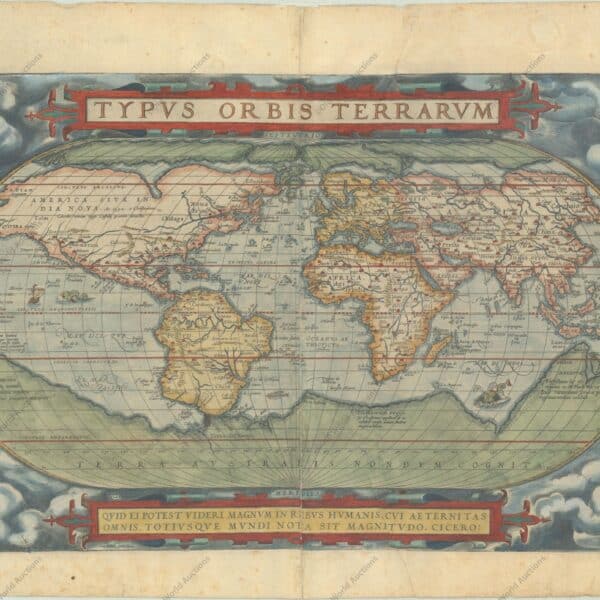
  • 16th century — European cartographers: authors such as Gastaldi, Ortelius and Mercator produced maps that recorded territorial disputes and various names; Mercator (1569) introduced the projection that influenced global navigation (not specific to Brazil).
  • Foreign presence and barter: representations documenting the French (e.g., Antarctic France), English, and Dutch presence on the Brazilian coast, as well as commercial contact with indigenous peoples, begin to appear.
  • Iberian Union (1580–1640): the Philippine administration (Philippine Crown) encouraged the updating of Luso-Brazilian cartography; maps by Portuguese authors, such as João Teixeira Albernaz I, record fortresses, settlements and captaincies.
  • 17th century — Portuguese manuscript cartography: noteworthy are the maps by Albernaz II (c. 1666), which detail the coast, São Paulo and the Jesuit missions in the south.
  • Dutch cartography (1624–1654): Dutch cartographic production on Pernambuco/Olinda and Recife is significant; some maps from the period (associated with the Maurits period) document occupations and fortifications — check specific titles/attributions according to the source.
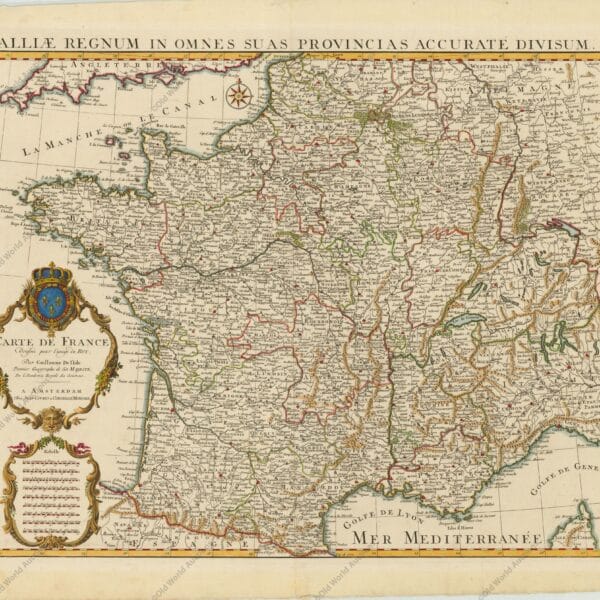
  • 18th century — French cartography: Guillaume de L’Isle and Jean Baptiste Bourguignon d’Anville produced maps correcting positions and longitudes previously calculated by the Portuguese; De L’Isle’s work influenced negotiations such as the Treaty of Madrid (1750), which generated extensive cartography of the borders.
  • 19th century: provincial, hydrological, and border cartographic production grows. Among minor and handwritten works are regional guides and atlases — for example, references to an atlas/manuscript entitled Guia dos Caminhantes (1817) should be verified in primary sources before definitive citation.
  • Late 19th century / early 20th century: systematic surveys and military and civil mapping increased territorial accuracy. The publication entitled Carta geographica do Brasil (Engineering Club, 1922) consolidates part of this work — it is recommended to indicate the author/edition when citing.

Significant Historical Maps of Brazil

  • Map by Juan de la Cosac. 1500: carta-mundi showing the coastline of the Americas, including northeastern Brazil.
  • Letter/account by Pero Vaz de Caminha1500: account of the arrival and discovery of Brazil (not a map).
  • Cantino Map1502: first European map to show the Brazilian coast in detail.
  • Map by Lopo Homemc. 1519: Portuguese cartographic map from the early 16th century (associated with Portuguese Atlantic production; avoid direct attribution to the ‘Miller Atlas’ without reference).
  • Mercator Map1569: introduced the Mercator projection; influential in global cartography (not specific to Brazil).
  • Map by João Teixeira Albernaz I1640: representations of the captaincies and the Atlantic coast.
  • Map by Guillaume Delisle1703: detailed map of Brazilian territory widely used in Europe.
  • Maps of the Treaty of Madrid1750: maps used in the redefinition of Portuguese-Spanish borders.
  • Map of the Empire of Brazilc. 1822: initial representations of the territory after independence.
  • Cruls Mission1892–1894: survey that informed the choice of the future capital (Brasília).

Historical maps are essential tools for understanding the territorial, political, and economic evolution of Brazil, from colonisation to the consolidation of the Republic.

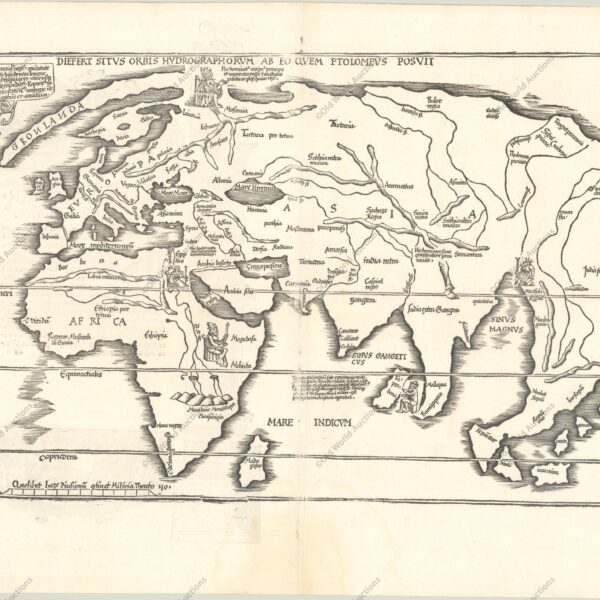
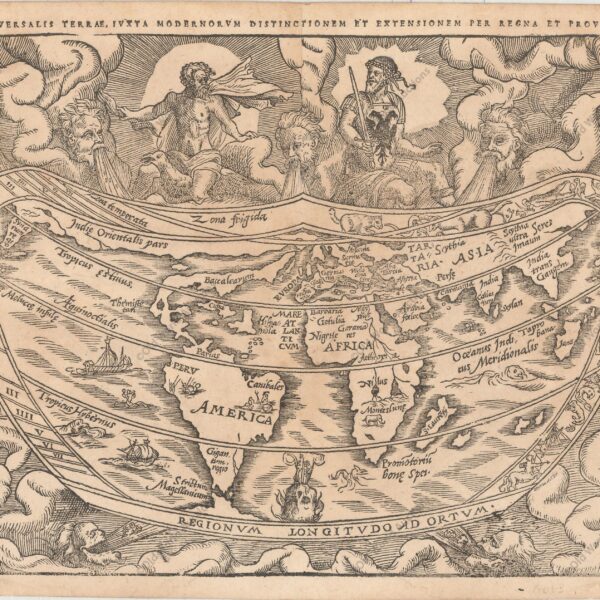
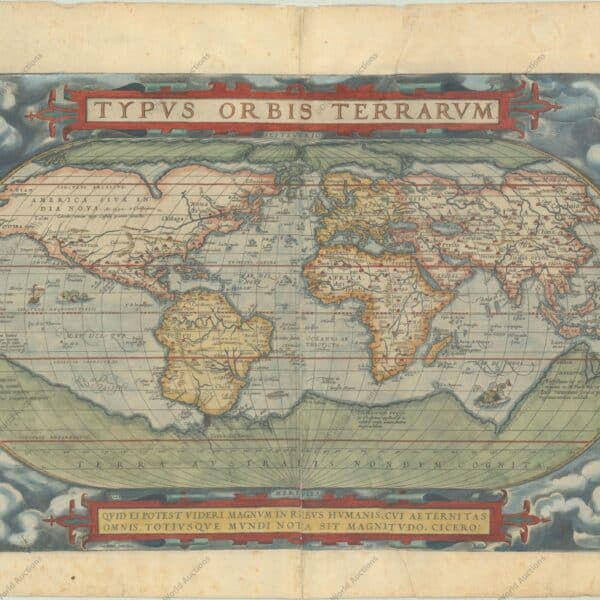
Este é um dos dois mapas-múndi “modernos” incluídos no atlas ptolomaico de Fries e um dos poucos mapas-múndi do início do século XVI disponíveis para colecionadores. É uma versão reduzida do famoso Mapa do Almirante, de Waldseemuller, concentrando-se no Velho Mundo, mas mostrando partes da América no lado esquerdo. Mostra o mundo numa combinação de equívocos clássicos com algumas das descobertas mais recentes, como um pouco da costa da América do Sul ao longo da borda esquerda. A Gronelândia é desenhada como uma península alongada ligada a uma Escandinávia ainda de forma primitiva. A adaptação de Fries apresenta as montanhas de uma maneira estilizada diferente e não tem as linhas direcionais da placa de Waldseemuler. Foram adicionados elementos decorativos, incluindo um elefante ao largo da costa da Groenlândia e retratos de cinco reis: Rússia, Egito, Etiópia, Toprobana e Mursuli. Ela oferece uma visão fascinante do que se sabia e não se sabia sobre o mundo no início da Era dos Descobrimentos. O canto superior direito da borda está faltando, como é o caso das edições de 1525 a 1541.
Cartography and Its Creators

Mapping: an Overview

Mapping: A Comprehensive Overview of the History, Science, Techniques and Modern Applications of Cartography The purpose of a map is to express graphically the relations of points and features on the earth’s surface to each other. These are determined by distance and direction. In early times ‘distance’ might be expressed […]

Historical Maps of Brazil and the World

Map of Africa from 1570

Historical Map of Africa from 1570 Ortelius’ Cornerstone Map of Africa “Africae Tabula Nova”, Ortelius, Abraham Period: 1570 Publication: Theatrum Orbis Terrarum This striking map is one of the cornerstone maps of Africa and remained the standard map of Africa well into the seventeenth century. It was designed by Ortelius […]

Mapa da Jamaica de 1671
Historical Maps of Brazil and the World

1671 Map of Jamaica

Map of Jamaica of 1671 – Atlas Maritimus “Novissima et Accuratissima Insulae Jamaicae Descriptio”, Seller, John This is the first edition of a very rare English map showing the island divided into districts. In 1670, Sir Thomas Modyford commissioned a survey of the island, which was completed by John Man, […]

Historical Maps of Brazil and the World

Map of South America, 1840

Map of South America, 1840 This impressive large map is taken from Louis Stanislas D’Arcy Delarochette’s monumental eight-sheet map of South America, which was used to settle countless boundary disputes across the continent. It contains the most up-to-date geographical information and numerous interesting annotations. Three insets at the bottom of […]