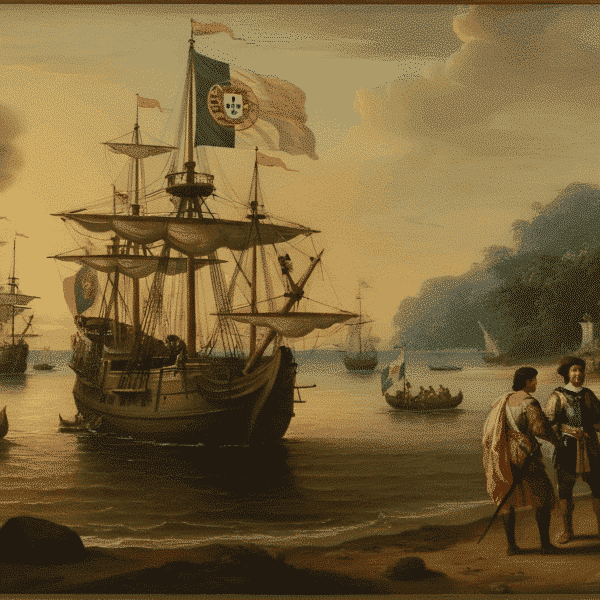
The 16th-century system of hereditary captaincies was a strategy adopted by the Portuguese Crown to organise and promote the colonisation of Brazil.
By dividing the coast into vast territorial strips granted to grantees (private individuals with hereditary titles), the system sought to attract private investment to populate, exploit resources, defend the coast against invaders, and reduce state costs.
Inspired by island experiences and sanctioned by royal decree, each grantee received broad administrative, judicial, and economic powers in exchange for the obligation to found settlements, build fortresses, and bring in colonists.
In practice, the model had mixed results: some captaincies, such as Pernambuco and São Vicente, prospered, while most failed due to lack of resources, indigenous attacks, logistical problems, and inefficient administration.
These failures led to increasing intervention by the Crown — with official expeditions (such as that of Martim Afonso de Sousa) and the creation of general governments — which gradually centralised power and reformed the colonial organisation.
Despite their limitations, the captaincies left a lasting mark on land distribution, colonisation dynamics, and the initial economic foundations of Brazil.