Paranaguá Palace — Ilhéus (Bahia)
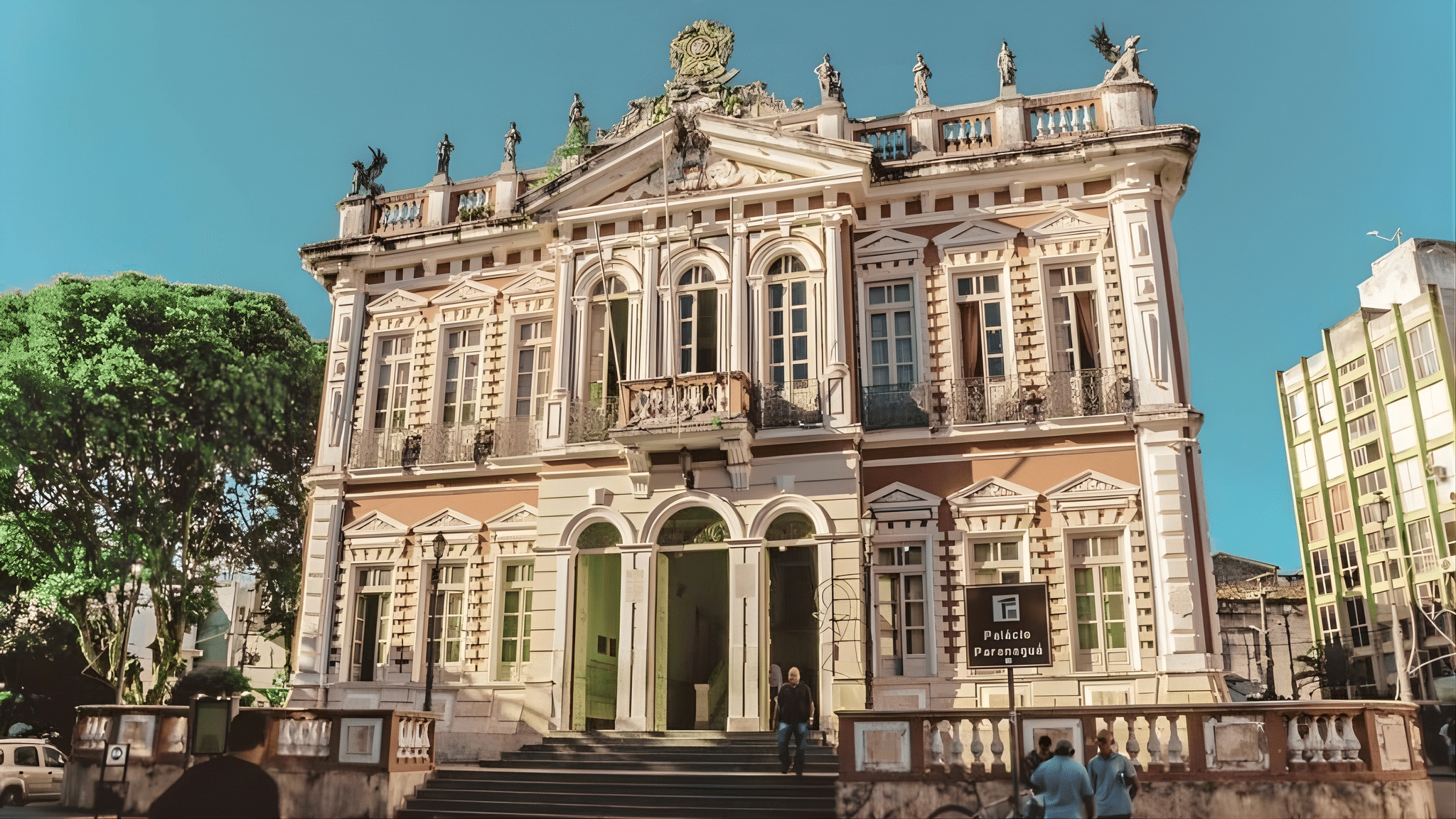
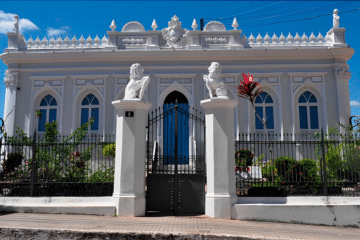
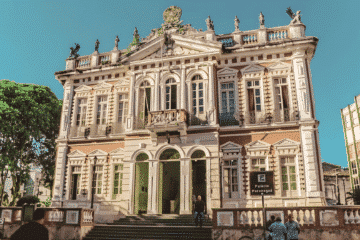
Paranaguá Palace, listed by the Bahia Institute of Artistic and Cultural Heritage (IPAC), is one of the architectural and historical landmarks of Ilhéus town centre. Built in the Neoclassical style, it occupies a prominent position in Praça J. J. Seabra, on the highest point of the town’s historic and commercial centre.
- Architecture: Neoclassical; a two-storey rectangular layout organised around a large central hall with an imperial staircase.
- Construction: The foundation stone was laid on 20 January 1898; it was opened on 22 December 1907.
- Current use: Municipal town hall (Paço Municipal).
- Built area: Approximately 1,060 m²; it has four façades.
- Decoration and lighting: Decoration and painting attributed to the Italian artist Oreste Sarcelli; the original acetylene lighting was supplied by the Vita brothers.
- Listed status: Recognised by IPAC for its significant architectural and historical importance.
Over the years, the building has undergone several renovations — including major works between 1912 and 1916 (the installation of sanitary facilities and refurbishment of the furnishings) and renovations in 1923, which involved replacing the wooden floors with concrete slabs and altering the roof structure. Originally, the upper floor housed the Council Chamber, the administrator’s office, the secretariat, the engineering department, the grand hall with its mural, and the courtrooms; on the ground floor were the judges’ chambers, the medical post, the barracks and the prison.
The name pays tribute to the president of the Province of Bahia who, on 28 June 1881 (Provincial Law No. 2,187), elevated the village of São Jorge dos Ilhéus to the status of a town. In front of the palace stands a neoclassical marble statue depicting Sappho, the Greek poetess from Lesbos.
Significance: built during the heyday of the cocoa industry, it was one of the most luxurious and beautifully decorated public buildings of its time, symbolising the prosperity and political life of Ilhéus.
Tip for visitors: Take a stroll around Praça J. J. Seabra to admire the façade and the statue; combine your visit with other sights in the historic centre. Check with the town hall or the site itself for information on internal visits and opening hours, as access may be restricted as it is an administrative headquarters.
Publicações Relacionadas
Ilhéus: A Journey Through Bahia's Rich History
Comandatuba Island: Resort and Family Adventure
The best places to visit on the Cocoa Coast in Bahia
Canavieiras: A Hidden Gem in Bahia's Coastline
Learn more about the sloth and its unique characteristics
Lagoa Encantada in Ilhéus: A Preserved Natural Paradise
History of the Convent and Church of Nossa Senhora da Piedade in Ilhéus
Cocoa farms attract tourists to Bahia - Chocolate Road
Chocolate Road and trails of the Cocoa Coast - video
History of Cocoa: From Aztecs to Modern Use
São Jorge Parish Church in Ilhéus — history, architecture and religious art
Municipality of Una: A Beach Paradise Awaits
History and Historical Attractions of Itacaré Reveale
Ilhéus (BA) — beaches, history and cocoa plantations
Serra Grande: Your Guide to Bahia's Paradise
Tourist Attractions on the Rio de Contas in Itacaré, Bahia
Beaches and Waterfalls of Itacaré: A Hidden Gem
History of St Sebastian’s Cathedral in Ilhéus
This post is also on:
 Português
  English
  Deutsch
  Español
  Français