Cocoa Farms: Discover Bahia’s cultural and tourist riches
Famous for its beautiful beaches, Bahia is betting on a new tourist craze: the exploitation of cocoa farm tourism in the southern region.

The cocoa renaissance
Once the second largest cocoa producer in the world, Brazil is once again exporting.
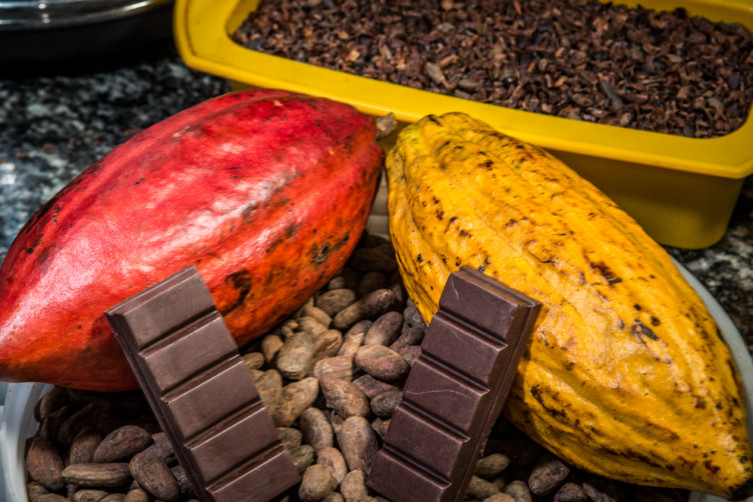
The cocoa farms in Ilhéus and the surrounding region offer guided tours that show the entire cycle of the fruit, from planting to the processes carried out after the harvest, which are fundamental to the production of chocolate.
Destinations in Ilhéus
Ilhéus is a destination for those who wish to visit cocoa farms. Known for the writings of Jorge Amado and as the setting for Gabriela, Cravo e Canela, the city of Ilhéus, in the south of Bahia, is usually a destination for tourists who don’t want to give up the heat and the good beaches.
No wonder, since the city has the longest coastline in Bahia, stretching almost 100 kilometres.
The history of cocoa in Ilhéus
What not everyone knows, however, is that the region experienced its heyday mainly in the 1920s, when cocoa was the enrichment of several families who exported the main product used to make chocolate.
After years of prosperity, the arrival of the plague called witches’ broom in mid-1989 devastated the local cocoa plantations.
Recovering from adversity
Still recovering and learning to live with the problem, the city has many good destinations for those who want to learn how a cocoa plantation works, from planting to drying the beans (as the cocoa “nibs” are called), as well as discovering the differences between the different types of cocoa.
Videos about the cocoa farms between Ilhéus and Uruçuca

Fazendas de Cacau no sul da Bahia03:53
Fazenda de Cacau em Ilhéus07:44
Estrada do Chocolate entre Ilhéus e Uruçuca02:29
Do cacau ao Chocolate10:52
Como fazer chocolate artesanal passo a passo
Chocolate Route or Road – Visits to cocoa farms
On the road between Ilhéus and Uruçuca, in the area known as the Cocoa Coast, in the south of Bahia, a real gastronomic route is being created. It’s called the Chocolate Road.
The Chocolate Route promotes rural experiences.
Restaurants and Shops selling cocoa-derived products are some of the options available in the region.
Southern Bahia is the region that produces the most cocoa and cocoa products in the state, which is the largest producer of the fruit in the country.
1. The farm
The Fazenda Provisão is open to all those who wish to enjoy a unique experience close to the nature, the history of the region and the cocoa culture, in a cosy atmosphere with the typical smells, tastes and climate of a traditional farm.
Ilhéus – Uruçuca motorway, km 27. Opening hours: Monday to Saturday, from 9:00 to 17:00.
2. Yrerê Farm
At the entrance to the Fazenda Yrerê, on the Jorge Amado Highway, the farm is open to visitors. Colourfully decorated and extremely cosy, the place is an almost irresistible invitation to visit the offline world.
On a tour that lasts around two hours, the hosts show you a small path in the shade of the Atlantic Forest, with cocoa trees along the way.
During the walk, the guide makes a point of explaining every detail of the place, from the history of the estate, which dates back more than two centuries, to the quality and cultivation of the cocoa.
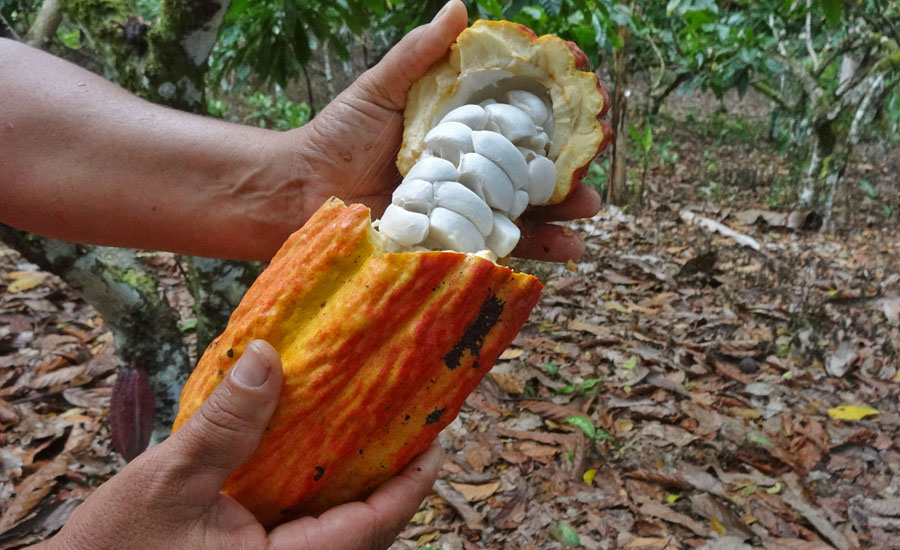
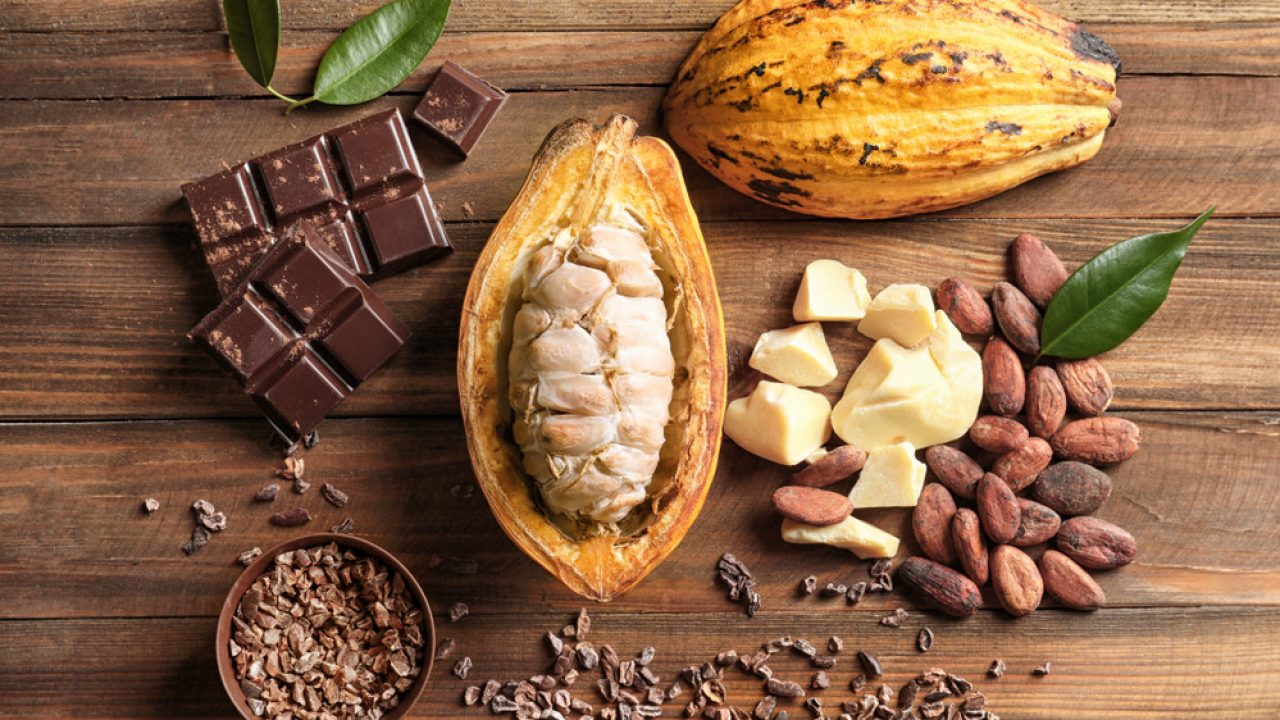
He uses a machete to open some fresh fruit, plucked straight from the tree, and allows guests to feast their eyes on the white pulp, which is quite fleshy and tasty – but not at all reminiscent of chocolate.
In addition to rural tourism, the production of rustic furniture and handicrafts, the couple recently launched their own brand of fine chocolates, made with selected almonds.
They are available in 54% and 70% cocoa versions. Large, soft and colourful sofas, rustic benches or even a hammock invite visitors to relax after their walk through the greenery.
Fazenda Yrerê is located on the banks of the Cachoeira River, in the shadow of the Atlantic Forest of Southern Bahia, at kilometre eleven of the Jorge Amado (Ilhéus/Itabuna) highway.
3. Vila Rosa Chocolates
Vila Rosa offers visitors an immersion into the world of chocolate. The tour includes learning about the artisanal production process, from cocoa bean to chocolate bar.

On the tour, you can walk through the Atlantic Forest, orchards, gardens, natural pools and visit the old mansion, with the right to taste the excellent flavours of handmade chocolates, as well as other derivatives of the fruit, such as cacao honey (made from the nectar and so called because it has an accentuated sweet taste).
Because it is so perishable, there are few places in Brazil where you can taste this delicacy. To complete the experience, visitors to the farm are also served cocoa cachaça.
Vila Rosa Chocolate is located at R. Pedro Longo, 174 – Centro, Itacaré – BA.
History of chocolate
Chocolate is made from a mixture of cocoa, sugar and milk. But its production begins much earlier, when the cacao fruit is broken to remove the bitter seeds, the basis of chocolate.
The transformation of chocolate into the sweetness we know comes later, after the cocoa beans have gone through various industrial processes, such as the decomposition of the raw material, the addition of milk and sugar, and its moulding into the tablets sold in supermarkets.
Although we don’t know for sure the origin of cocoa, we do know that it was consumed by the Aztecs and Mayans in the 16th century before being brought to Europe. The Aztecs also used cocoa beans as money and only the nobles drank“tchocolalt“, a mixture of cocoa beans and honey, considered a sacred aphrodisiac.
In 1502, when Christopher Columbus‘s fleet arrived on the island of Guanaja, the Aztec natives gave the traveller, who was one of the first Europeans to taste chocolate, a cup of the drink. Later, in the 18th century, the Swedish botanist Carlos Linnaeus named chocolate“Theobroma“, which in Greek means food of the gods.
Around 1700, the novelty arrived in France and England, added milk and spread around the world. And 65 years later it conquered the industry with the start of production in the United States. In Brazil, cocoa cultivation began in the 19th century in Ilhéus, Bahia, where the country’s largest cocoa-producing region is located.
Peaks and troughs in cocoa production
1920 to 1930 – The high point
This was the city’s heyday, when the Cocoa Colonels became rich by exporting chocolate’s main ingredient: almonds. There’s no shortage of stories about this period, all spiced up with the imagination of the locals. Some locals say that some of the wealthier colonels travelled to Rio de Janeiro just to get their hair cut, as a form of ostentation. Others even spent six months a year in Paris, with a private chauffeur and all.
1980 – Decline
In the mid-1980s, Brazilian cocoa production was around 400,000 tonnes per year. Towards the end of the decade, in 1989, with the arrival of the witches’ broom, local sales fell sharply, leaving several families bankrupt. According to records, more than 300,000 people became unemployed in and around Ilhéus.
2010s – Recovery
Bahia recently rejoined the world cocoa market, from which it had been excluded for more than 20 years. The Executive Commission for the Cocoa Farming Plan (Ceplac), linked to the Ministry of Agriculture, guarantees studies and surveys so that producers can live with the pest and produce high quality almonds.
Chocolate production process

1- COCOA BEANS
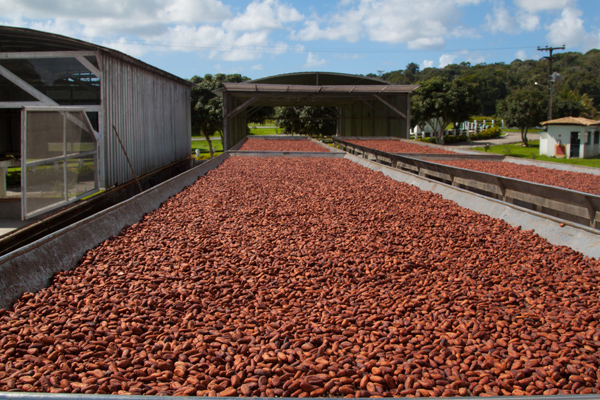
The production of chocolate begins on the cocoa farms. This is where the almonds or seeds are removed from the fruit. These are the main ingredients of the sweet. Each cocoa bean contains between 20 and 50 seeds with a high fat and water content. That’s why they have to be dried in the sun for eight days.
2- ROASTING
Once dried, the almonds are taken to the factory and put through the roasting machine. This is where a heating process takes place which removes all the moisture and helps to develop the colour, aroma and flavour.
3- CRUSHING
The seeds are then cooled and sent to the crusher, which removes the husk from the kernels.
4- MILLING
After grinding, the mass is ground into a liquid paste called cocoa mass.
5- PRESSING
The dough then passes through the pressing machine, which separates the ingredient into two products: the first is the cocoa butter, which is reused in the next stage. The second is the cocoa cake. Part of it is dissolved and mixed with sugar to make chocolate powder. The other part is cooled and broken into tablets to make chocolate.
6- MIXING
Large mixers homogenise the mixture and turn it into a paste. To make dark chocolate, the cake and cocoa butter are mixed with sugar and milk to make the traditional chocolate paste. Semi- sweet chocolate contains all the ingredients except milk. And Bitter is made only with cocoa butter, sugar and milk.
7- REFINING
All chocolates pass through refining cylinders where the sugar crystals in the mixture are crushed and broken into small particles. This improves the texture of the chocolate and softens its consistency. This process determines the quality of the chocolate.
8- FILLING
Equipment is used to keep the mass moving and to remove acidity and moisture from the chocolate. It then goes into another machine, where the chocolate goes through several temperature changes. This crystallises the cocoa butter and gives the paste the ideal consistency for moulding.
9- FINAL PRODUCT – MOULDING
The chocolate paste is placed in moulds to give it the desired appearance. For crunchy bars, fillings such as nuts, almonds or rice flakes are added before the moulds are filled. The chocolates are then cooled until they are solid and ready for automatic packaging.
10- Varying percentages of sugar
On average, chocolate contains half chocolate and half sugar. And a smaller proportion of cocoa butter. White chocolate has a special taste and is different from dark chocolate in its composition: it is made from cocoa butter, milk powder and vanilla essence. Cocoa is used to make cocoa butter, cocoa or chocolate powder and chocolate bars.
Each type of chocolate contains different percentages of sugar:
- Milk chocolate: 60%.
- White Chocolate: 59.4
- Semi- sweet chocolate: 51.4%.
Bahia.ws is the largest tourist guide in Bahia and the Northeast.

Publicações Relacionadas
Arembepe: beaches (Piruí, Praia do Canto), Hippie Village and the Tamar Project

Paranaguá Palace — History, architecture and visiting information | Ilhéus (BA)

São Jorge Parish Church in Ilhéus — history, architecture and religious art

History of the Convent and Church of Nossa Senhora da Piedade in Ilhéus

São Sebastião Cathedral (Ilhéus) — History, architecture and tourism
The 15 Most Visited and Well-Known Beaches in Bahia
The 3 most paradisiacal beaches in Bahia

Skydiving, Paragliding and Ballooning in Bahia

Historic Towns in Bahia: A Journey Through Time
Places to visit on the south coast of Bahia

História da Arte - Caracteristicas, Aspectos e Periodos
Tourist Attractions in Bahia: main attractions, beaches and cities

Subaúma, Bahia: where it is, things to do and where to stay

Massarandupió Naturist Beach, Bahia: Rules and Access
Beaches on the South Coast of Bahia: 10 Best and Tips
Towns and the Abrolhos Archipelago — The southernmost tip of Bahia

Baixio: Between lagoons, dunes and the charm of a village surrounded by nature
Best Beaches in Bahia: Your Guide to Paradise
Salinas da Margarida (BA) — Beaches, Attractions and a Complete Guide

Guarajuba Beach, Bahia: Natural Pools and Tips

Barra do Cahy: Brazil's first beach - history and nature

Garcez Beach: Discover Paradise in Jaguaripe

Barreiras: An Ecological Paradise in Bahia
Catabrigas Waterfall — A natural haven in Ibirajá, Itanhém (BA)

Serra Grande: Your Guide to Bahia's Paradise
Corumbau, Bahia: Ponta de Corumbau, beaches, map, how to go

Taipu de Fora: Discovering Natural Pools

Iguaí: A Guide to Waterfalls and Relaxation
Morro de São Paulo: Map, Beaches & How to Get There (2026)
Tourism in São Francisco do Conde (BA) — Tips and Attractions
Todos-os-Santos Bay (Bahia) — History, geography and conservation
Todos os Santos Bay — Nature, History and Water-based Tourism
Bay of Todos os Santos: nature, history and cultur

Rafting in Taboquinhas: The Ultimate Adventure Guide
Abseiling Sites in Bahia: Top Locations to Explore

Diving Spots in Bahia: Discover Underwater Treasures
This post is also on:
 Português
  English
  Deutsch
  Español
  Français