Published on · Updated on
Canavieiras (BA): beaches, historic quarter, blue marlin and things to do
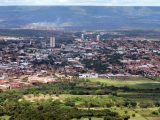
Canavieiras lies in southern Bahia, on the Costa do Cacau (Cocoa Coast), between Ilhéus and Porto Seguro. With a long coastline of beaches, rivers, mangroves and Atlantic Forest islands, the city also preserves a charming historic quarter from the cocoa era. In addition, it is known as the crab capital of Bahia and one of the best places in Brazil for blue marlin fishing.
- Location: Costa do Cacau, about 115 km from Ilhéus airport via the BA-001.
- Population: 32,683 inhabitants (IBGE 2022 Census).
- Beaches: Praia da Costa and Atalaia, Patipe, Barra Velha and Praia do Sul.
- Highlights: historic quarter, boat trips on the Rio Pardo, mangroves and sport fishing.
- Blue marlin: the season is in summer, and tournaments take place at the end of the year.
- Food: crab, moqueca and seafood.

Video about Canavieiras in Bahia


Canavieiras - Centro Histórico e Praias

Canavieiras - Guia de Turismo06:17

Canavieiras - Drone01:13

Canavieiras - Dicas de Viagem

Canavieiras - Guia de Viagem Completo13:00

Conheça Canavieiras Bahia e suas Praias04:54

Praia da Barra de Albino no norte da Ilha de Atalaia04:00

Praia da Costa em Canavieiras BA09:10
The city and its history
Affectionately called Canes by locals and tourists, the city grew with the wealth of cocoa. According to tradition, however, the name is older: it would date back to the 17th century, when a family with the surname Vieira grew sugarcane in the region.
Today, the municipality has 32,683 inhabitants, according to the IBGE. In addition, the wide, well-laid-out streets, lined with mansions with ornate façades and leafy backyards, give the city a peaceful atmosphere. That is why it appeals to those looking for tranquillity and unspoiled nature.

Historic quarter of Canavieiras

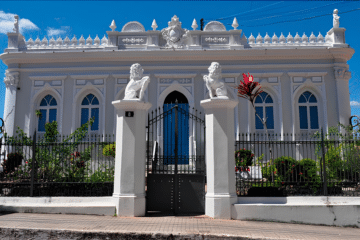
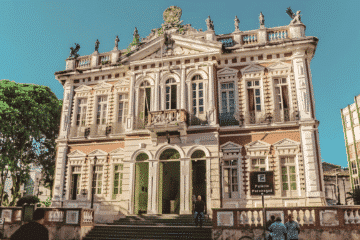
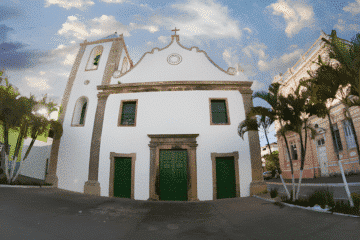
Near the Rio Pardo, the Sítio Histórico (historic quarter) brings together colourful 18th- and 19th-century mansions, stone streets and buildings from the cocoa era. Not by chance, the restored townhouses served as the setting for the soap opera Porto dos Milagres. The main sights include:
- Praça da Bandeira and the colourful little houses around it;
- the Prefeitura and the Câmara Municipal, housed in historic buildings;
- Porto Grande, on the riverbank, with restaurants and the cocoa-era houses;
- the Galeria do Porto, with antique furniture, clothing, whale bones and jewellery that belonged to the wives of the cocoa colonels;
- the Ponte do Lloyd, from the early 20th century.
Furthermore, at weekends the centre often hosts shows and small craft fairs. At night, moreover, the restaurants of Porto Grande are a wonderful setting for a romantic dinner.

Beaches of Canavieiras
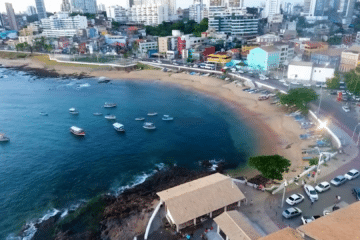
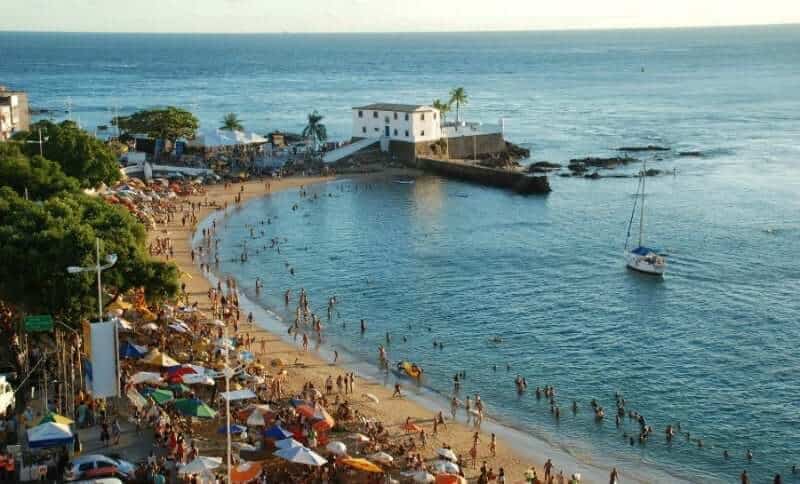
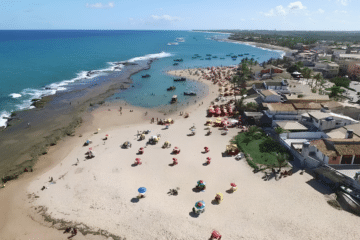
In general, the most popular beaches are on the Ilha de Atalaia, which is connected to the centre by a bridge. Others, on the other hand, are more isolated and can only be reached by boat or along a dirt road.
Praia da Costa (Atalaia)
It is the most famous and lively beach in the city, with about 6 km of sand, coconut palms and small freshwater streams. In addition, it has beach huts and seafood restaurants, so it is the best option for spending the day. The stretches with waves, on the other hand, attract surfers.
Praia de Patipe
Close to where the river meets the sea, the water is a mix of fresh and salt. As a result, this stretch is calm and good for kayaking and windsurfing.
Praia do Norte
Further north on the island, in turn, the beach is long and deserted, with Atlantic Forest in the background. Therefore, it is ideal for long walks.
Barra Velha
First of all, it is a riverside community and a bucolic beach, surrounded by mangroves, rivers and coconut palms. Access is by dirt road and ferry, or else by boat, on a river trip.
Praia do Sul
Accessible only by boat, via the Rio Pardo, it is surrounded by mangroves and coconut palms. For this reason, it is a favourite among those who enjoy fishing.

Rio Pardo, mangroves and boat trips
Without a doubt, the Rio Pardo and its mangroves are the setting for the most popular trips. Leaving from Porto Grande, the boats visit riverside communities, deserted beaches and islands. The highlights among the routes include:
- Ilha das Garças: above all famous for its mud bath;
- Barra do Peso: a deserted beach, good for relaxing;
- Belmonte: a neighbouring town at the mouth of the Rio Jequitinhonha, with historic houses (see the Belmonte guide).
In addition, a large part of these mangroves is protected by the Reserva Extrativista de Canavieiras (Extractive Reserve). Created in 2006, it covers about 100,000 hectares, mostly sea and mangrove, and supports the livelihoods of fishermen and crab catchers. That is why the region became famous as the crab capital of Bahia.
Sport fishing and blue marlin
Canavieiras is one of the world’s leading destinations for blue marlin fishing. Generally, the boats leave Porto Grande for a coral bank about 24 miles off the coast, where the fish can weigh hundreds of kilos. The season is in summer, and the tournaments usually take place at the end of the year. It is worth remembering that, in this type of fishing, the fish is released after being caught.
On the Rio Pardo, meanwhile, people fish for snook and other species, always with local fishermen as guides.

Trips in the surrounding area
- Una: the neighbouring municipality has areas of Atlantic Forest where the golden-headed lion tamarin lives; however, check beforehand which parks are open to visitors.
- Ilha de Comandatuba: just to the north, it is known for its resort and deserted beaches.
- Belmonte: to the south, it can also be visited by boat along the river.
How to get there and practical tips
- By plane: the nearest airport is in Ilhéus, with daily flights from several state capitals. From there, it is about 115 km along the BA-001, that is, roughly 1h30 by car.
- By bus: there are routes from Ilhéus; however, check the timetables with the bus companies.
- From Salvador: the car journey takes 8 to 10 hours, so most tourists fly to Ilhéus.
- Best time to visit: summer has more sunshine and is the marlin season; April, on the other hand, is usually the rainiest month.
- Facilities: finally, the city has hotels, guesthouses (pousadas), beach huts and a hospital.
Frequently asked questions about Canavieiras
Where is Canavieiras?
Canavieiras is in southern Bahia, on the Costa do Cacau, between Ilhéus and Porto Seguro.
Therefore, the nearest airport is in Ilhéus, about 115 km away.
What is the most beautiful beach in Canavieiras?
Praia da Costa, on the Ilha de Atalaia, is the most famous and has the best facilities.
Those seeking peace and quiet, however, should visit Praia do Sul or Barra Velha.
When is the blue marlin season?
The season is in summer, and the tournaments usually take place at the end of the year.
In general, it is sport fishing, and the fish is returned to the sea.
Why is Canavieiras the crab capital?
Because the region’s large mangroves provide an abundance of crabs.
In addition, a large part of them is protected by the Reserva Extrativista de Canavieiras.
How many days should you stay in Canavieiras?
In general, 3 to 4 days are enough for the historic centre, the beaches and a boat trip.
To fish for marlin, however, you should book more days.

Publicações Relacionadas
Arembepe Beach, Bahia: Hippie Village, Piruí and map

Paranaguá Palace, Ilhéus: History, Architecture, Visit

São Jorge Parish Church: historic church in Ilhéus, Bahia

Piedade Church, Ilhéus: history, convent and stained glass

Ilhéus Cathedral (São Sebastião): history and visit

Skydiving in Bahia: Paragliding and Hot-Air Balloons

11 Heritage-Listed Historic Towns in Bahia, Brazil

História da Arte - Caracteristicas, Aspectos e Periodos
30 tourist attractions in Bahia, Brazil, by region

Subaúma, Bahia: where it is, things to do and where to stay
Massarandupió Naturist Beach, Bahia: Rules and Access
Southern Bahia Beaches: 10 Best, Map and Travel Tips

Baixio (Bahia): where it is, lagoons, dunes and beach
26 best beaches in Bahia, Brazil: list by region
Salinas da Margarida & Barra do Paraguaçu: beach guide

Guarajuba Beach, Bahia: Natural Pools and Tips

Barra do Cahy, Bahia: where it is and how to get there

Garcez Beach and Ilha d’Ajuda, Bahia: how to get there

Rio de Ondas, Barreiras: Acaba Vida and Redondo waterfalls
Cachoeira dos Catabrigas, Bahia: photos and how to get there

Serra Grande, Bahia: beaches, map and things to do
Corumbau, Bahia: Ponta de Corumbau, beaches, map, how to go

Taipu de Fora, Bahia: Natural Pools, Tides and Access

Iguaí (BA): attractions, waterfalls, map and history
Morro de São Paulo: map, beaches and how to get there
São Francisco do Conde, Bahia: what to do and history
Bay of All Saints, Bahia: history, islands and Recôncavo

Rafting in Taboquinhas, Itacaré: Rapids and Tips

Diving in Bahia, Brazil: Salvador Wrecks, Abrolhos and More
Pitinga Beach, Arraial d'Ajuda: paragliding and tips
Abseiling in Bahia: Where to Go, Bungee Jumping and More
Kitesurfing in Trancoso, Bahia: Wind, Lessons and Tips
São Desidério, Bahia: Lagoa Azul and Buraco do Inferno
Paulo Afonso, Bahia: Canyons, Falls and Top Sights
Juazeiro (BA): things to do, riverfront, carrancas and where it is