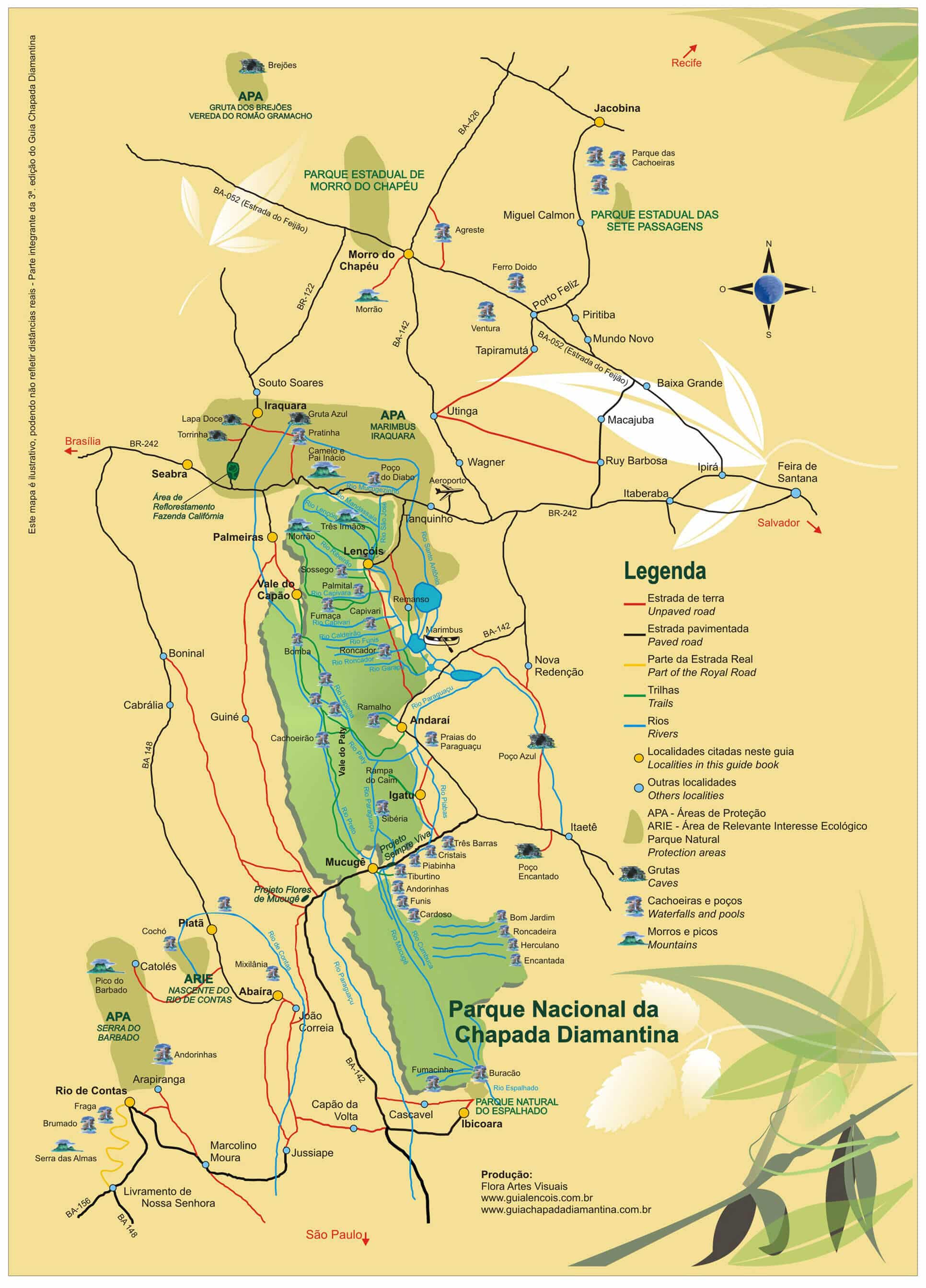
Lençóis is the gateway to the Chapada Diamantina. The town was founded when diamond deposits were discovered in Mucugê in the mid-19th century.
At that time, adventurers arrived in great numbers and set up tents which, from a distance, looked like sheets hung out to dry, giving rise to the town’s name. This origin reflects the character of the place and is intrinsically linked to its development during the Diamond Cycle.
The importance of diamond deposits
The diamond deposits were pivotal to the history of Lençóis, marking the beginning of its development and prosperity. In the 19th century, the discovery attracted many adventurers and prospectors, transforming the town into a vibrant economic hub.
The Diamond Cycle brought wealth to the region, making Lençóis the richest town in the Chapada Diamantina. Its effects can be seen in:
- Population growth: a massive influx of people seeking their fortune.
- Economic development: expansion of trade and infrastructure.
- Political influence: the prominence of figures such as Colonel Horácio de Mattos.
- Culture and identity: traces left in architecture and traditions.
- Decline and reinvention: once the mines had been exhausted, the town reinvented itself by prioritising tourism.
The Diamond Cycle
Lençóis was the wealthiest town in the Chapada during the Diamond Boom. It even housed a French consulate to facilitate the export of the stones. As the deposits were depleted, the town fell into decline, survived on the extraction of carbonates and faced conflicts caused by local colonels.
Conflicts and influence
The best known was that of Colonel Horácio de Mattos, who wielded considerable political influence, including within the Federal Government.
Culture and festivals
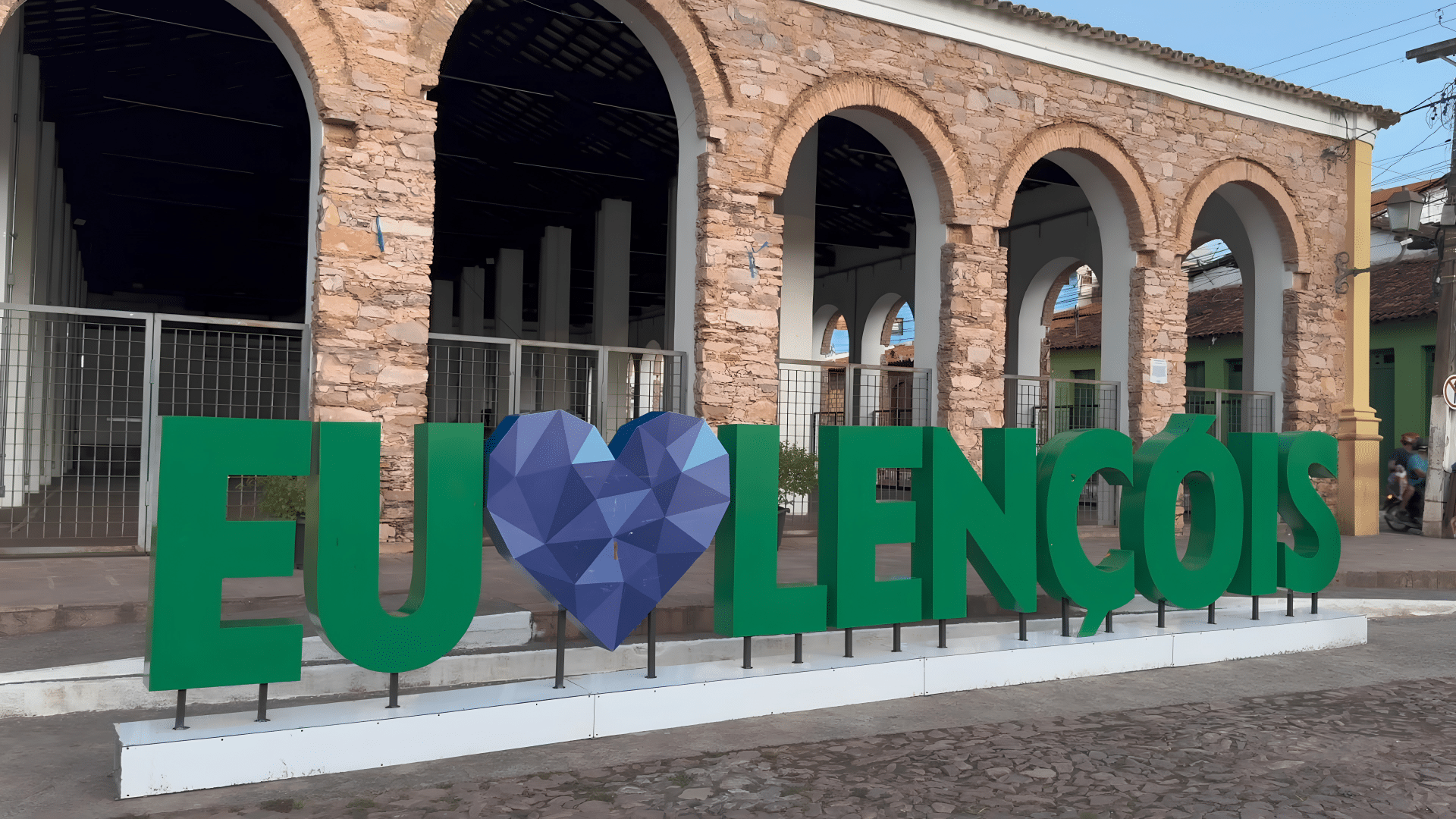
The architecture of Lençóis preserves the memory of times of opulence. The folkloric events are a highlight, especially the June festivals, featuring concerts, horse parades, forró dances and quadrilha dances.
Winter Festival
The Lençóis Winter Festival features performances by renowned artists, many of which are free to attend. Shops, restaurants and bars are concentrated in the streets near the main square, where the festivities and forró dancing take place.
Videos

Guia de Turismo de Lençóis na Chapada Diamantina05:21

Lençóis na Chapada Diamantina02:32

Lençóis Reportagem06:31
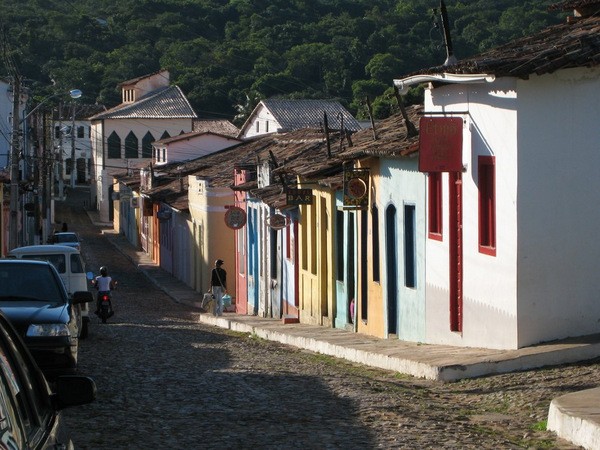
Lençóis e Região na Chapada Diamantina
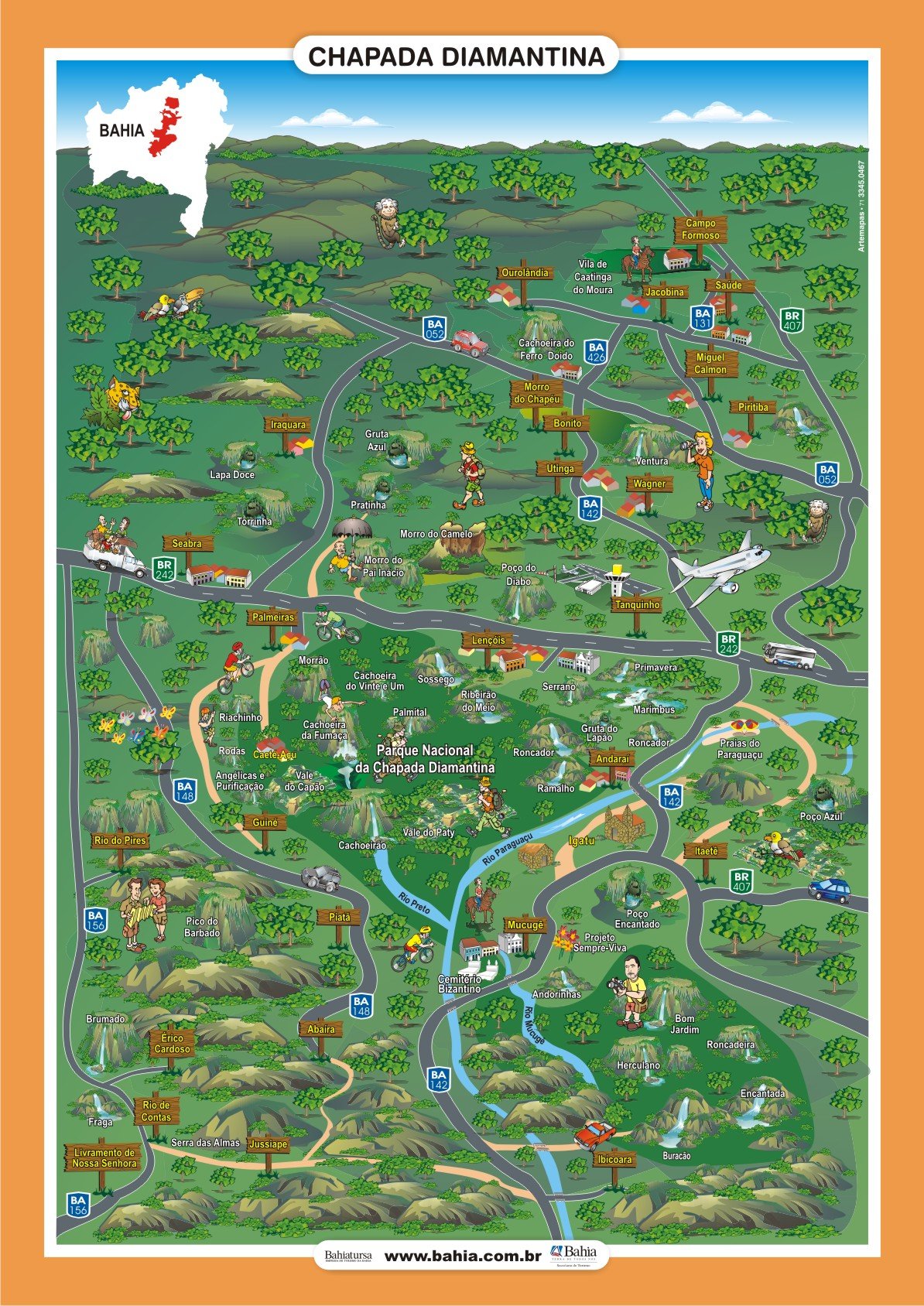
Map of the Trails and Tourist Attractions in Chapada Diamantina
Heritage and listed status
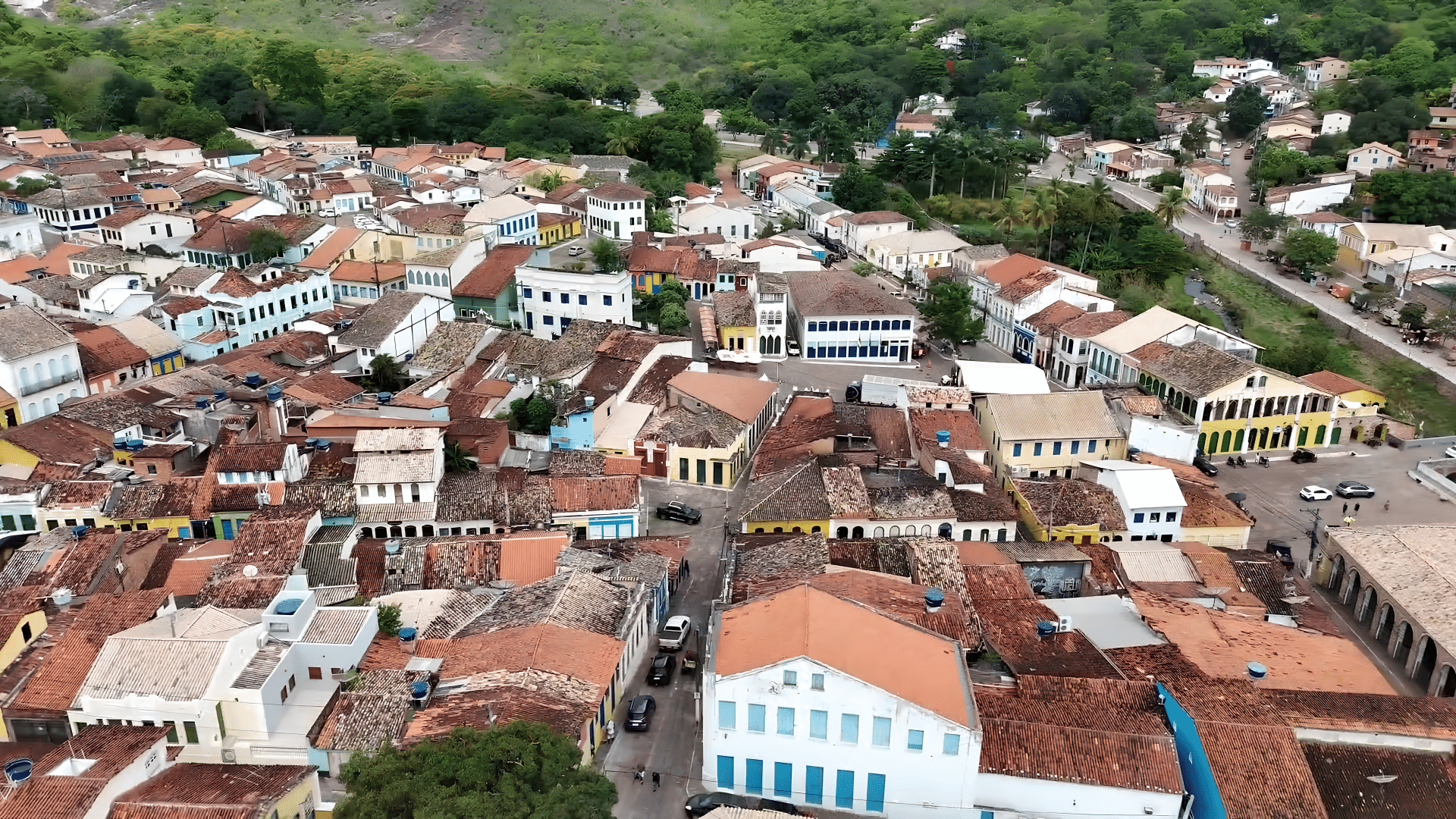
The architectural and landscape complex of Lençóis was listed by IPHAN in 1973. The town is located in the central-western region of Bahia, in a natural amphitheatre on the eastern slope of the Serra do Sincorá.
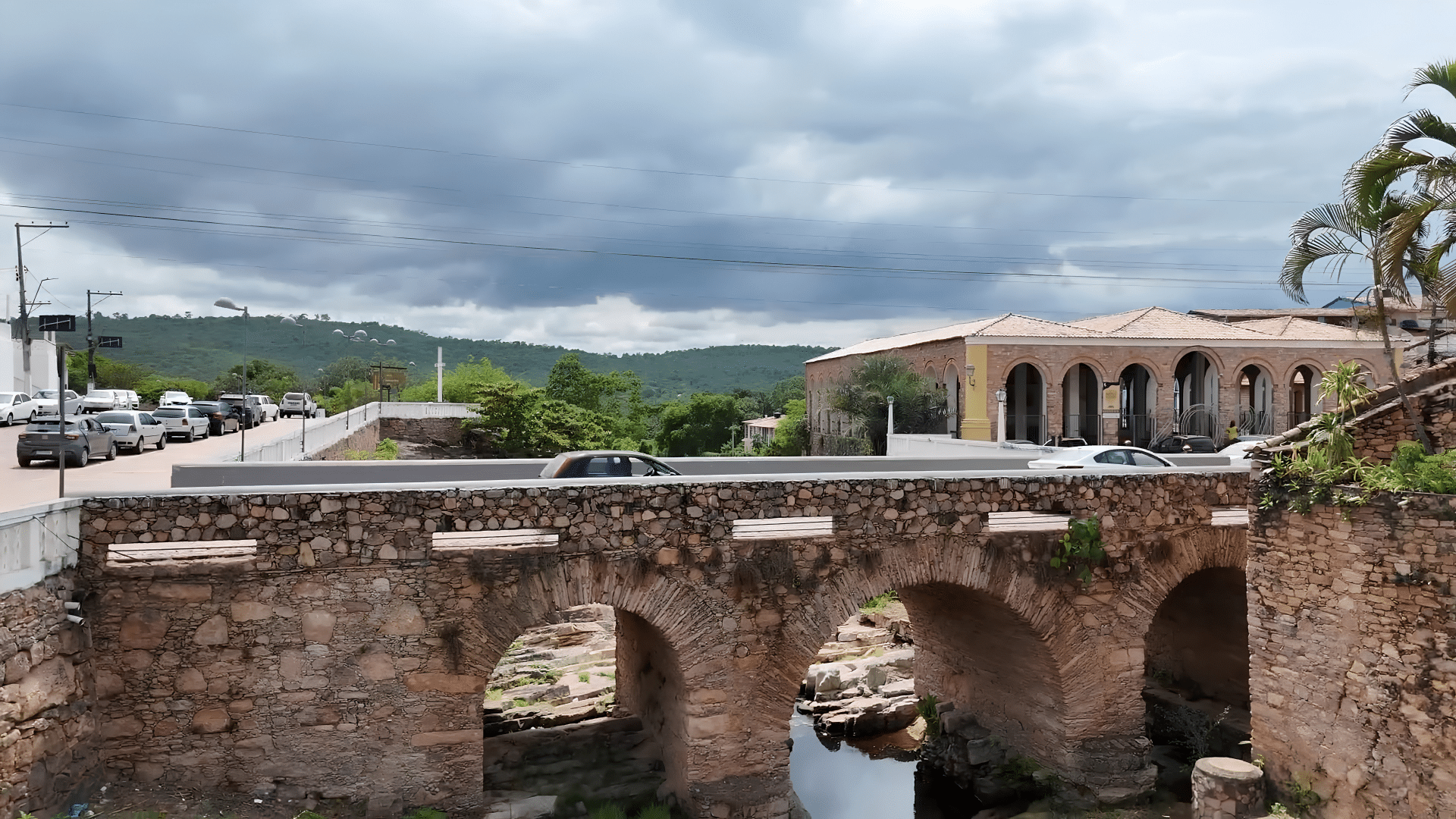
Characteristics of the estate
The complex is rich in heritage and has retained many of its original features. It is situated within the Chapada Diamantina National Park. There are around 570 properties within the heritage protection zone.
Economic boom
This cultural heritage reflects the economic heyday of the 19th century. Between 1845 and 1871, the region was a major producer of diamonds, turning Lençóis into a trading hub for the export of minerals to Europe and the import of luxury goods. A French vice-consulate even operated there.
Urban development
During the years of growth, townhouses and elaborate buildings began to appear. The architectural heritage consists of houses and townhouses from the second half of the 19th century, built using adobe, stone and hand-rammed earth structures.
Features of the houses
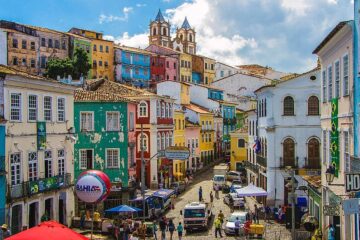
The houses are characterised by the bright colours of their brickwork and window frames. Secular architecture predominates over religious architecture, and there is no single dominant monument.
The settlement’s origins
The village grew out of two settlements: Serrano and São Félix, which developed around the farming areas and later merged.
Development of the centres
The centre of Serrano was situated on high ground next to a set of rapids; over time, it shifted towards what is now Praça Horácio de Matos, drawing closer to the settlement on the opposite bank of the river.
Colonial street layout
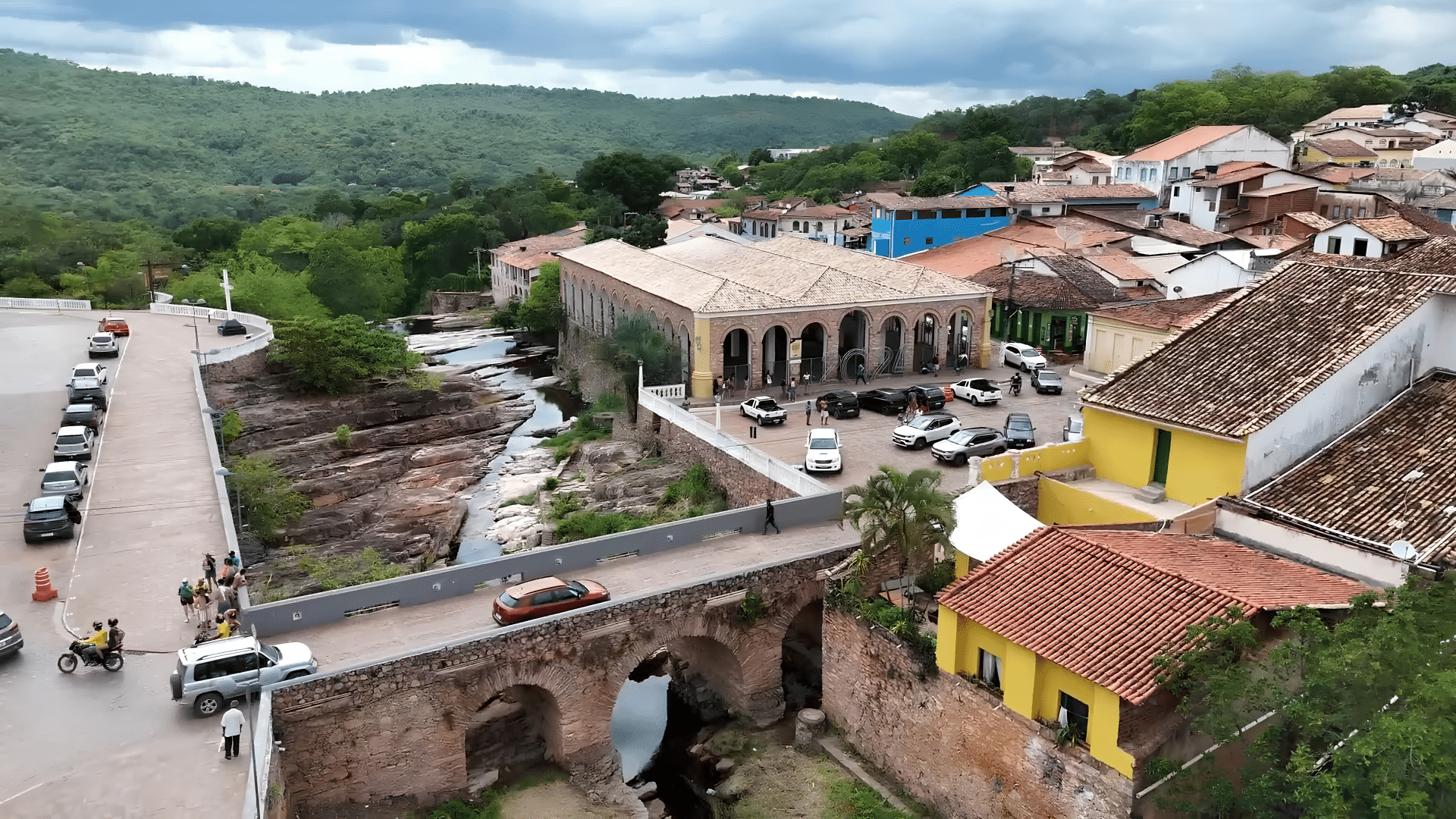
The colonial street layout was organised around the Church of Nossa Senhora da Conceição and the bridge linking the two settlements. Construction of the bridge, which began in 1860, made use of the surplus labour caused by the drought between 1859 and 1862.
Spacious flats
From that time onwards, large townhouses were built around the former Praça do Mercado (now Praça Horácio de Matos). Among them was the Casa do Conselho, which was demolished in the 1940s to make way for the construction of the Post and Telegraph Office.
Unplanned development
Like a typical mining settlement, Lençóis has grown in a haphazard manner: with winding streets that follow the contours of the land, and small squares and open spaces. In some places, the pavement is made of the local rock itself.
Paving and expansion
New streets, whether spontaneously created or approved by IPHAN, wind their way up and down the slopes, following the colonial street layout. Some are paved with irregular stones that form decorative patterns.
Listed monuments and public spaces
Lençóis is home to a number of listed monuments and public spaces, the main ones being:
- Horácio de Matos Square (the most important public space)
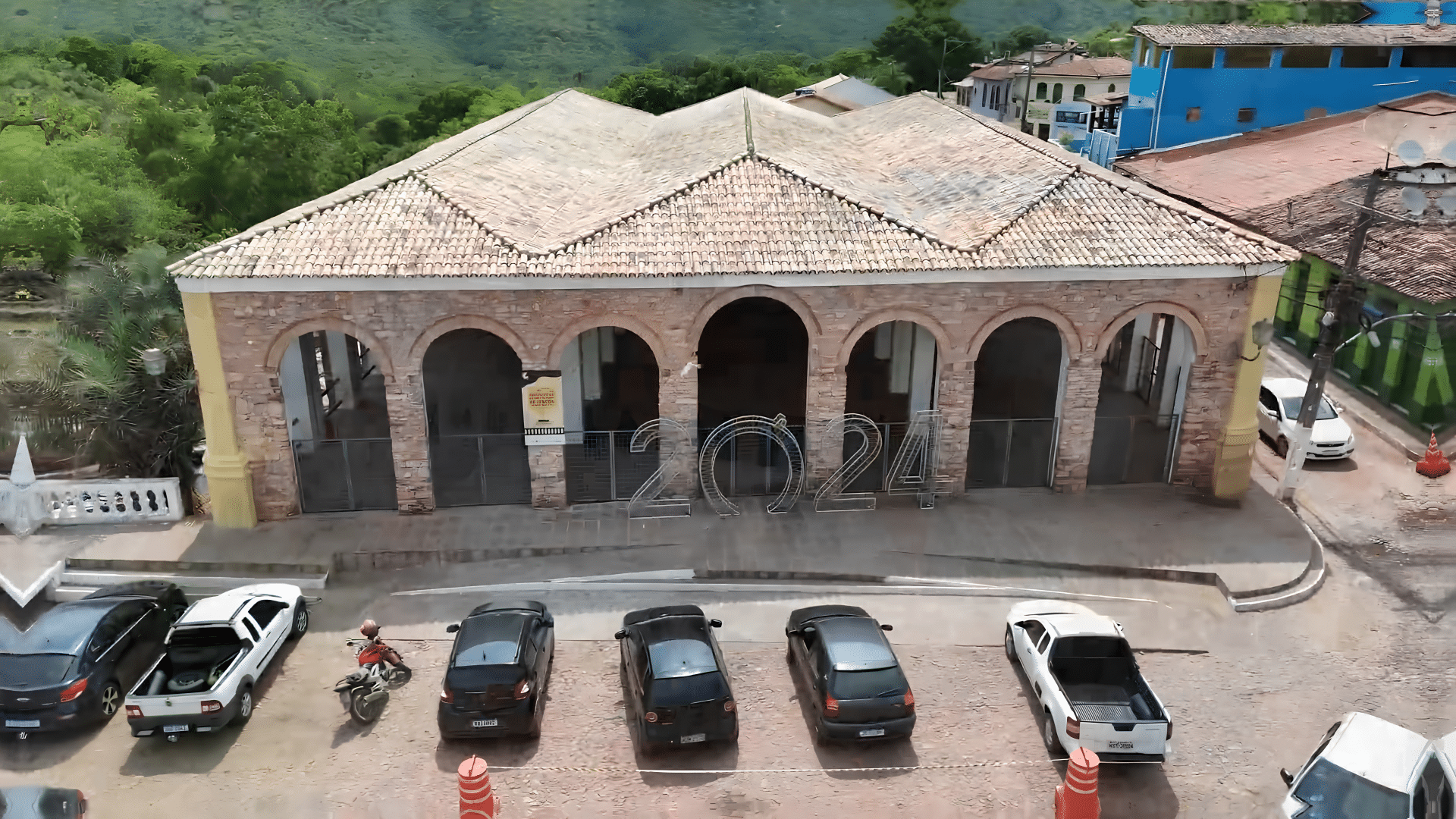
- Municipal Market
- Bridge over the River Lençóis
- Town Hall
- The building housing IPHAN’s Technical Office
- Former Health Centre
- Arena Theatre
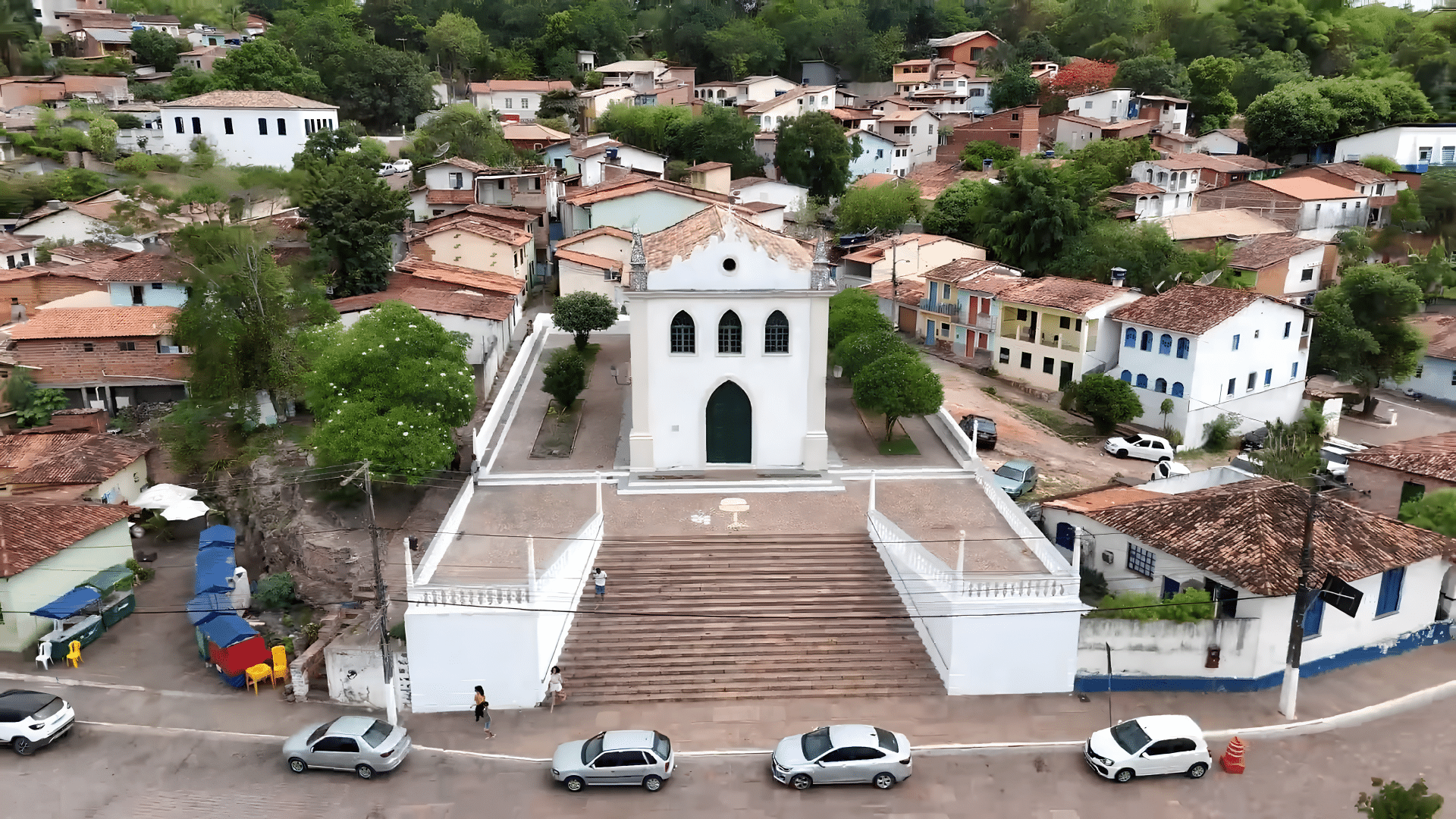
- Church of Our Lady of the Rosary
- Church of Our Lord of the Steps
- Afrânio Peixoto Cultural Centre and Amphitheatre
- Public Library
- Public Archives
- Among others
Features of the collection
The built heritage of Lençóis consists of buildings from the second half of the 19th century, constructed using a variety of techniques, with adobe being the predominant material. The vibrant colours of the façades and window frames are particularly striking.
- IPHAN headquarters in Lençóis
- UEFS Advanced Campus Building
- Former French Vice-Consulate
- Cultural Market
- Bridge over the River Lençóis
- Church of Our Lady of the Rosary
1. IPHAN headquarters in Lençóis
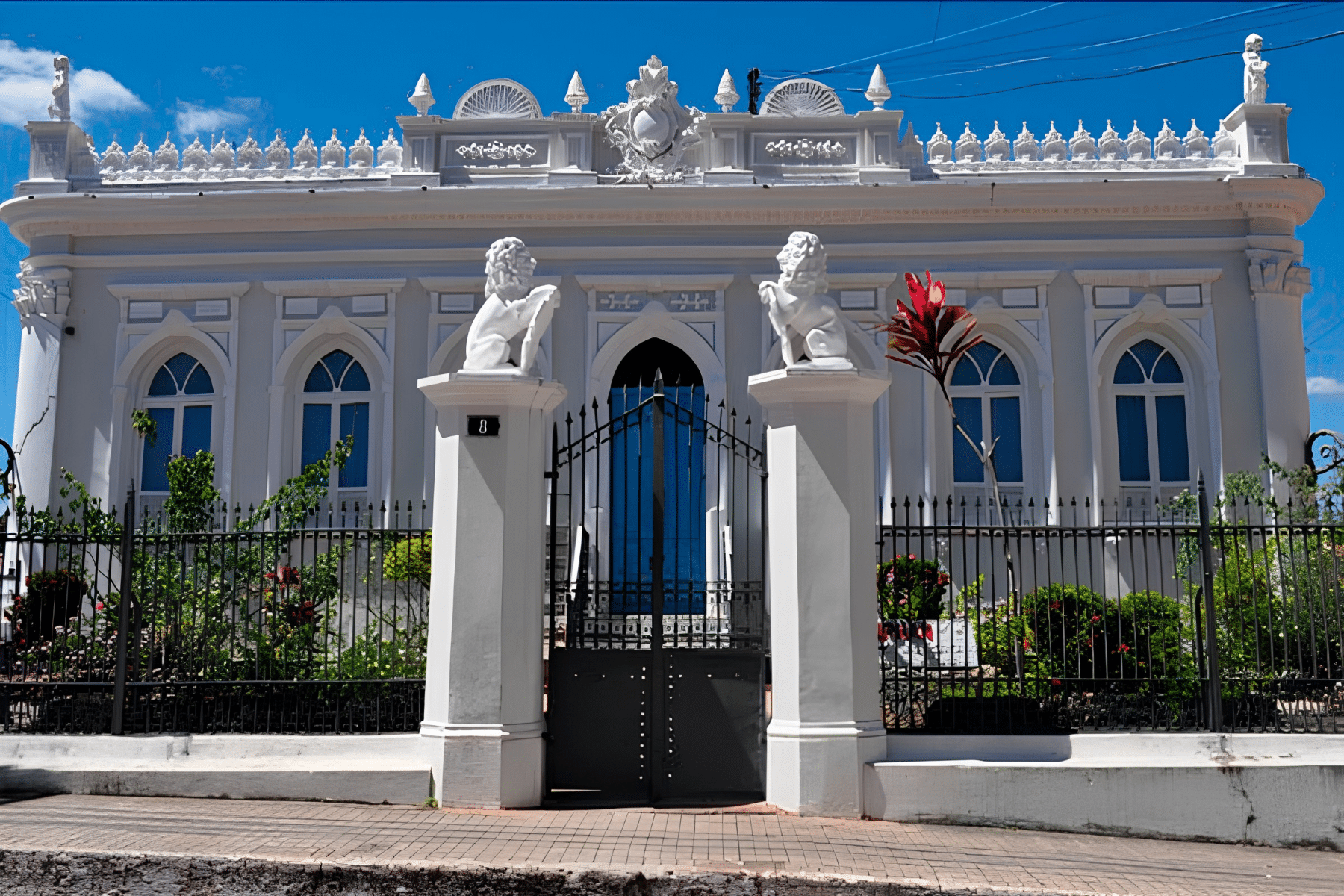
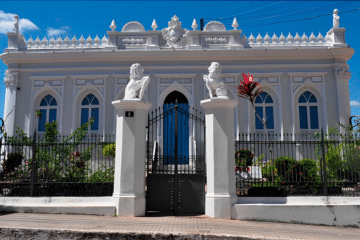
For many years, the building housed the Town Hall (ground floor) and the public jail (basement), and later served as the Town Hall. According to architect Liziane Peres Mangili, it is a fine example of the eclectic style. Historian Delmar de Araújo notes that the design of the lions was inspired by the Alhambra Palace in Granada.
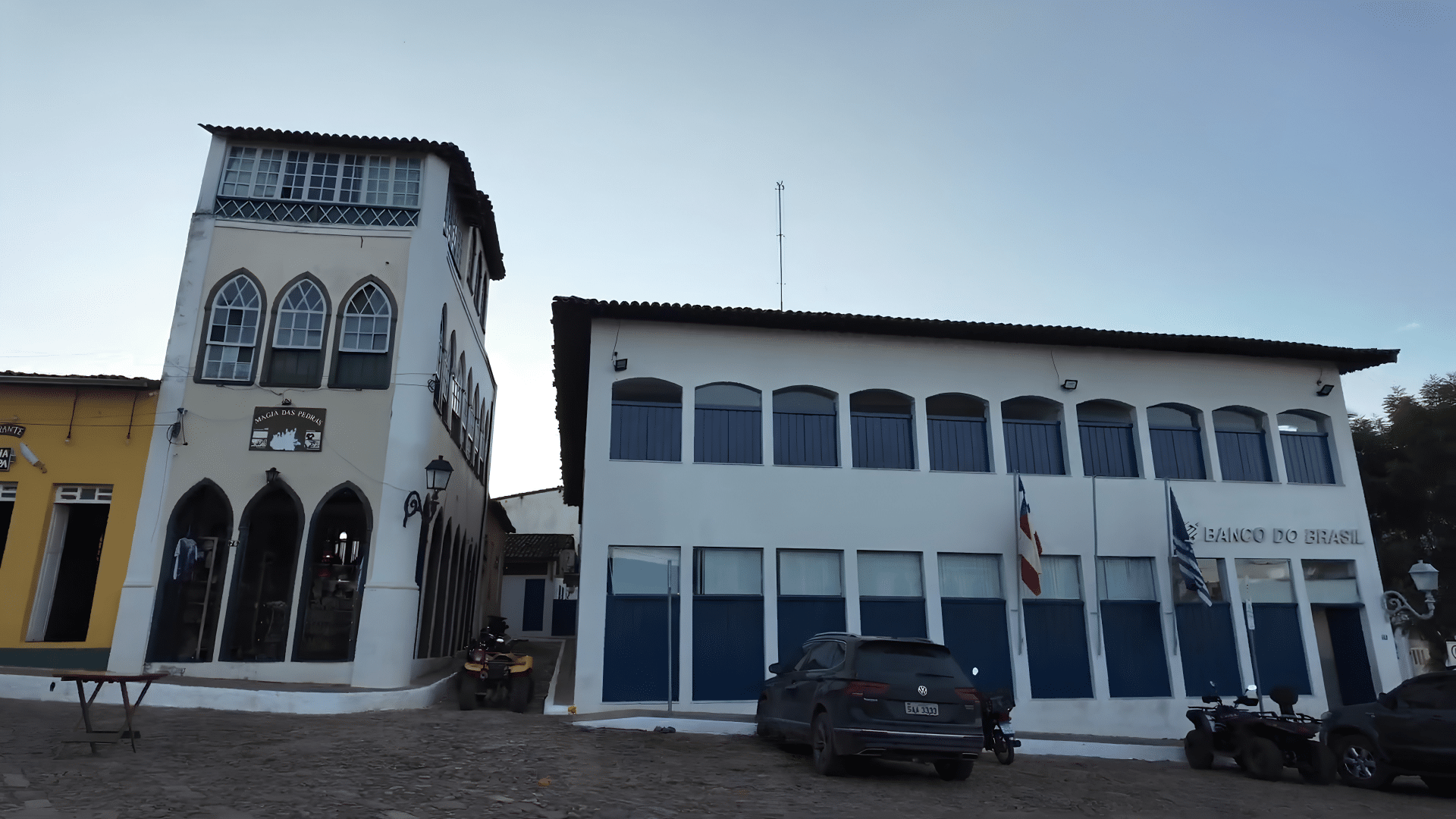
2. UEFS Advanced Campus Building
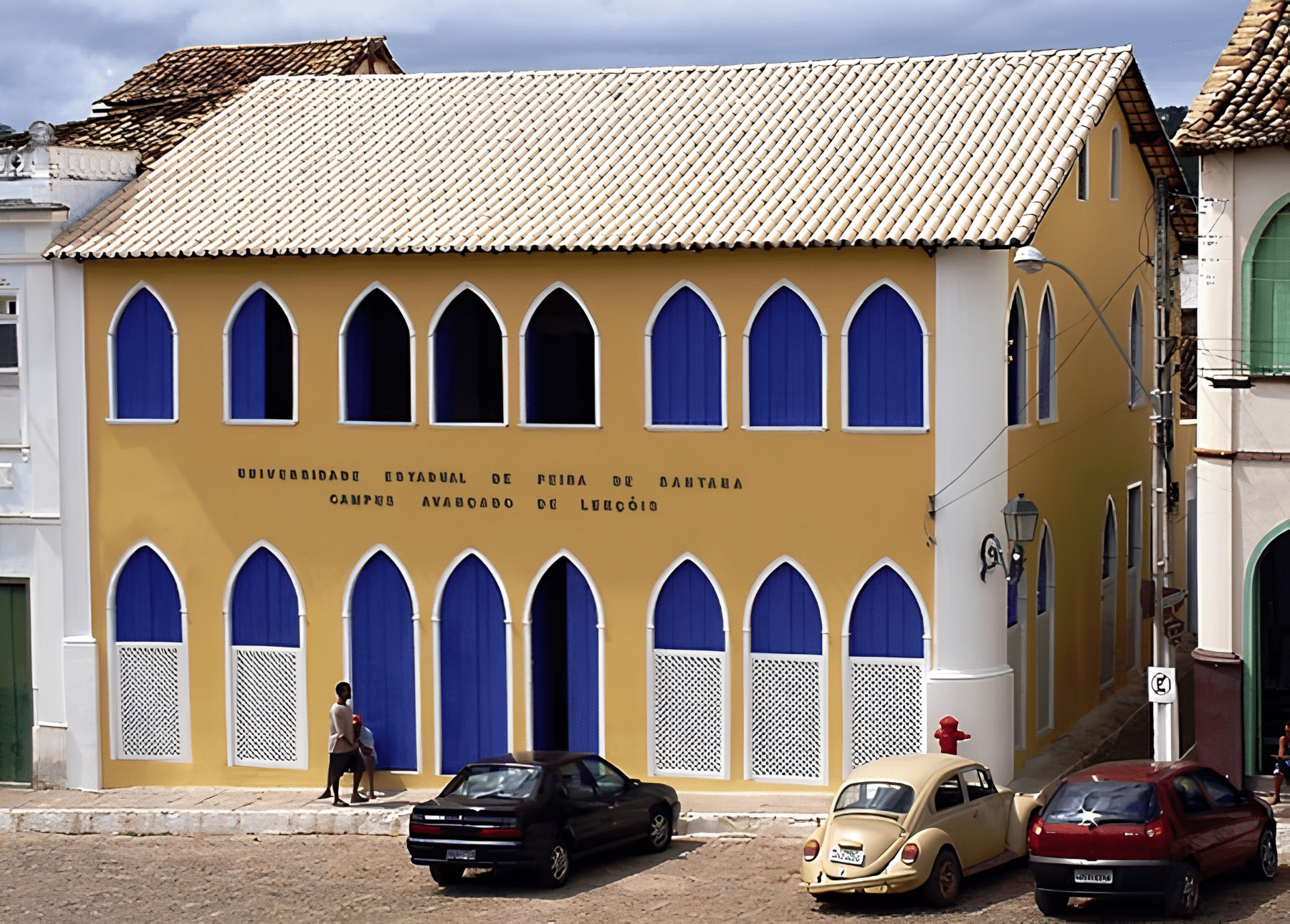
Built in the Neo-Gothic style, the townhouse is situated on the corner of Praça Horácio de Matos. The Neo-Gothic style was very popular in the towns of the Chapada region in the late 19th century.
3. Former French Vice-Consulate
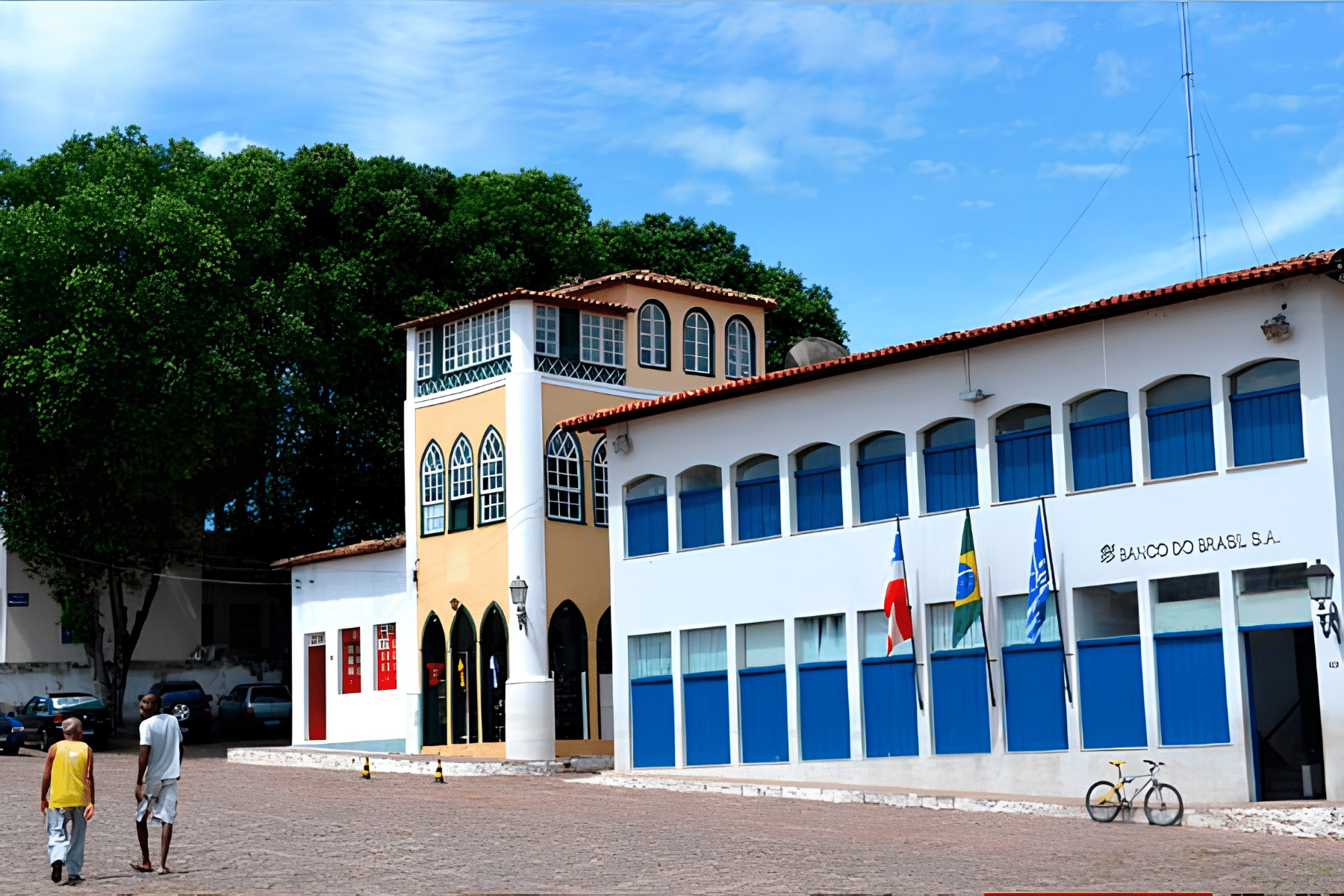
Decorated in the Neo-Gothic style, the building was used by the French Diamond Syndicate and was recognised as a Vice-Consulate. Today it serves as a residential and commercial property.
4. Cultural Market
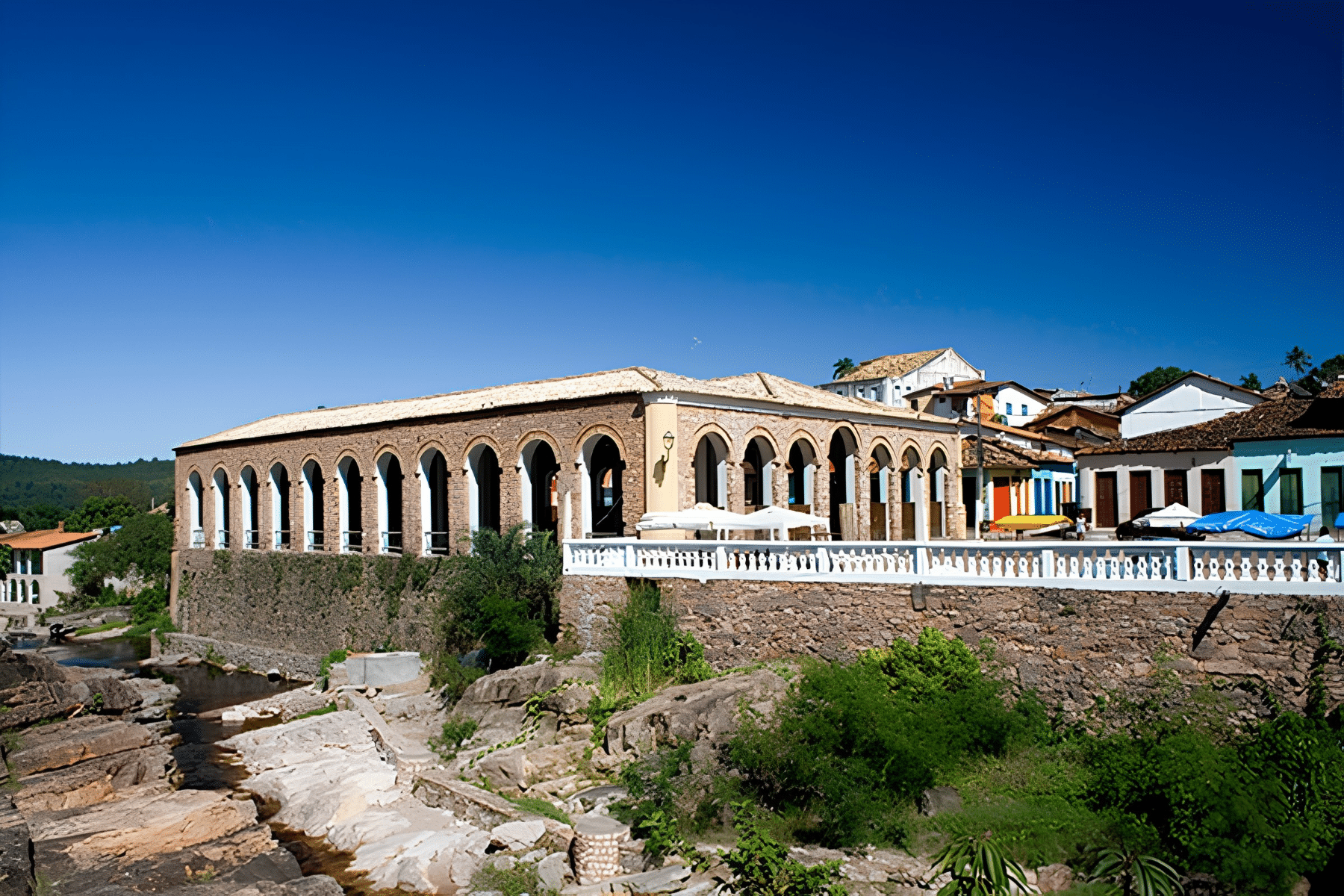
Built between the late 19th century and 1940, the Mercado Cultural has served as an open-air market, the city’s first cinema, a filming location for the film ‘Diamante Bruto’, a venue for dances and even a meeting place for people to watch television. Its façade blends into the natural surroundings thanks to its proximity to the River Lençóis.
5. Bridge over the River Lençóis
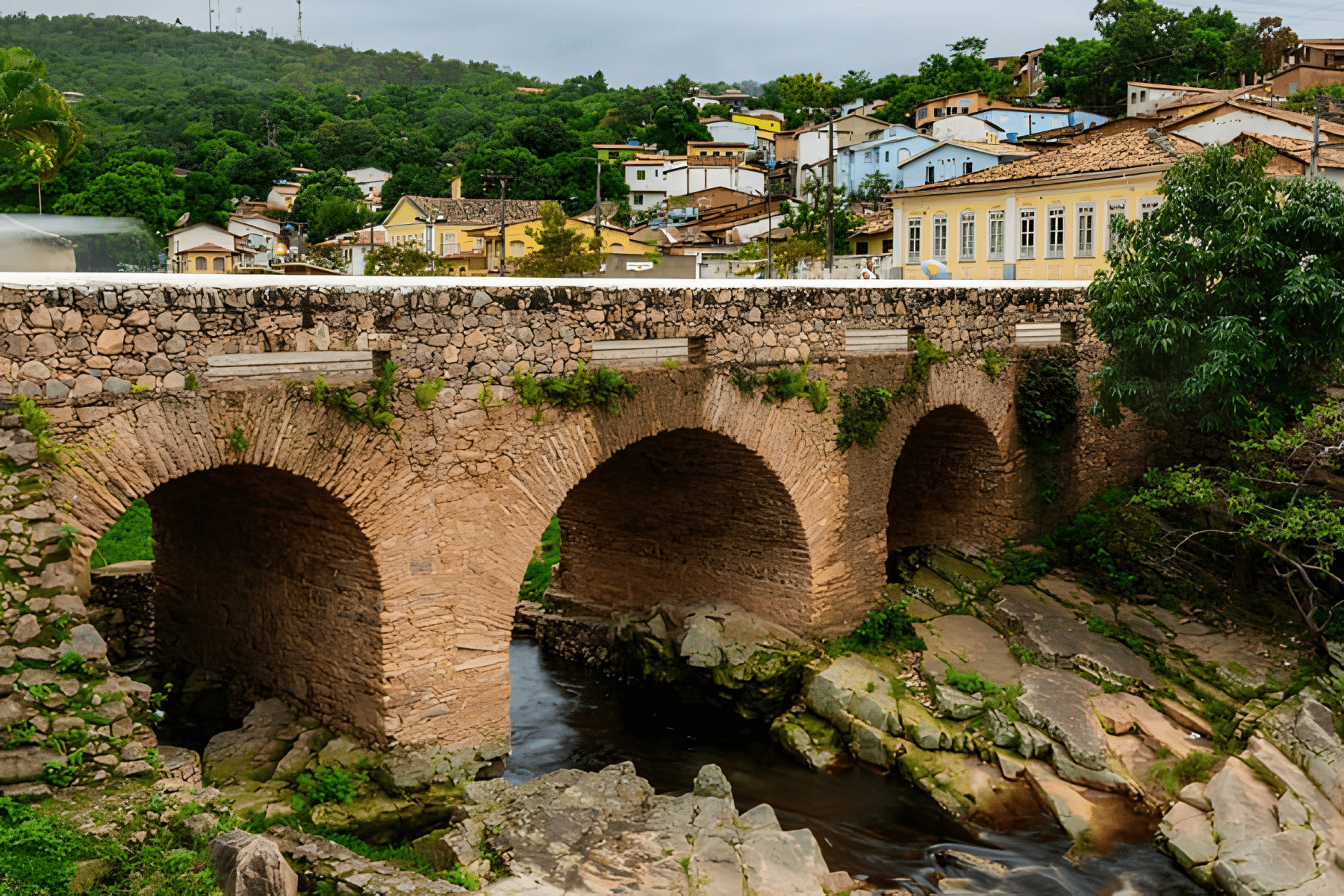
Built from 1860 onwards to create jobs during the drought of 1859–1862, the bridge has three full arches (Roman arches) and a massive appearance. As part of the Monumenta Programme (2000), the cladding was removed to integrate it into the riverbed. There are reports that egg white and castor oil were used in the mortar.
6. Church of Our Lady of the Rosary
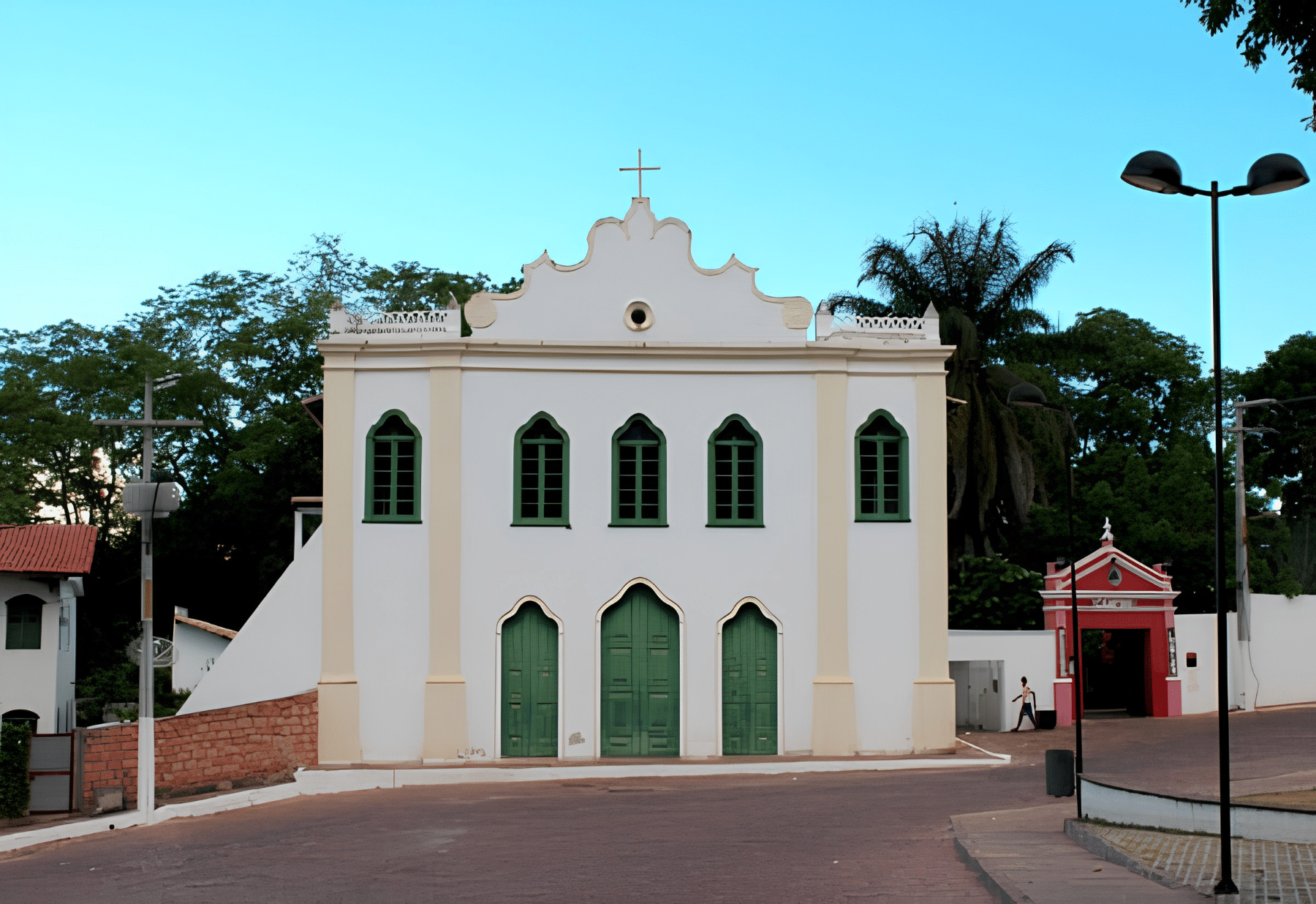
Built in 1830, it is considered the largest church in the Bahian hinterland and a central feature of the city’s religious heritage.
Publicações Relacionadas
Birds Found in Chapada Diamantina: A Guide
Blue Fountain in Chapada Diamantina: a complete guide
Relief, Fauna and Flora of Chapada Diamantina
Orchids of the Chapada Diamantina in Bahia
Trail to Buracão Waterfall in Chapada Diamantina
Tourist Attractions and Documentaries about Chapada Diamantina
Andaraí is the second largest town in the Chapada Diamantina
Chapada Diamantina's architectural style and influences
How to get to Fumaça Waterfall in Chapada Diamantina
Marimbus Pantanal: Adventure in Chapada Diamantina
Trekking - Popular trails in Chapada Diamantina
Ibicoara: An Unmissable Tourist Destination
Trekking - Route through the Chapada Diamantina in 7 days
Trekking in the Pati Valley in Chapada Diamantina
History of the settlement of Chapada Diamantina
Iraquara is also known as the "city of caves"
Ventura Village: A Rich History of Diamonds
Enchanted fountain in Chapada Diamantina: How to get there
Tourist Attractions in Rio de Contas You Must Visit
Curiosities about the Rio de Contas in Chapada Diamantina
Picos das Almas, Itobira and Barbado Trekking Guide
Trekking in the Pati Valley in Chapada Diamantina
Things to do in Lençóis in the Chapada Diamantina — 15 attractions
Dive Sites of Chapada Diamantina: A Guide
Waterfalls and trails in the Capão Valley: Complete Guide
The highest and most beautiful waterfalls in Chapada Diamantina
Mucugê: Discover the local history and culture
Piatã: The Highest Municipality in Bahia
Main caves in the municipality of Iraquara in Chapada Diamantina
Rio de Contas: Learn about the history of how the city was founded
Torrinha Cave: A Speleological Marvel in Brazil
Igatu: Explore the 19th-Century Stone Houses
Lapão Cave: The Ultimate Adventure Experience
Chapada Diamantina - Tourist Attractions, Itineraries and Tips
Palmeiras: A Gateway to Chapada Diamantina
Tourist Information about Chapada Diamantina
This post is also on:
 Português
  English
  Deutsch
  Español
  Français