If you’re wondering what to do in Rio de Contas, the answer lies in its waterfalls, peaks over 2,000 metres high, unfinished churches from the gold rush era, listed colonial mansions and a history stretching back over three centuries.
Rio de Contas is one of Bahia’s tourist destinations that attracts visitors not only for its natural beauty and nature trails, but also for the preserved heritage of the region’s best-preserved colonial houses.

History and Founding
The settlement of Rio de Contas was founded in the late 17th century, when travellers from Goiás and northern Minas Gerais, on their way to the city of Salvador, capital of the Province of Bahia, founded a small settlement, which was named Crioulos — a resting place for the gruelling journey.
Historical records indicate that the region began to be settled by escaped slaves from the coast of Bahia as early as 1687. A number of freed Black people lived there as a community, which explains the settlement’s original name, Crioulos.
This settlement was situated on the Serra das Almas Plateau, on the banks of the Rio de Contas Pequeno, now known as the Rio Brumado.
A small octagonal chapel was then built, dedicated to Our Lady of Santana. Shortly afterwards, veins and gold-bearing gravel were discovered in the bed of the Rio de Contas Pequeno, in its tributaries and in the surrounding mountains.
This attracted a large number of prospectors, particularly pioneers from São Paulo and Minas Gerais, who travelled up the riverbed of the Rio de Contas Pequeno and, whilst exploring the nearby mountains, founded, three leagues away and at an altitude of 1,450 metres, another settlement — Mato Grosso.
The Jesuits who accompanied the bandeirantes built a church dedicated to St Anthony. In 1718, the first parish in the Upper Sertão of Bahia or Sertão de Cima was established, named the Parish of Santo Antônio de Mato Grosso.
In the early 18th century, the Jesuits built another church, 12 km downstream from the village of Crioulos, dedicated to Nossa Senhora do Livramento.
On 20 October 1722, two towns were established in the interior of Bahia: the towns of Santo Antônio de Jacobina and Nossa Senhora do Livramento e Minas do Rio de Contas.
Authorised by the Royal Charter of 27 November 1723, D. Vasco César de Menezes commissioned Colonel Pedro Barbosa Leal to found the town, which was established in 1724. The establishment was approved by the Royal Provision dated 9 February 1725.
Under the Royal Proclamation of 2 October 1745, authorisation was granted for the town to be relocated to the settlement of Crioulos, on the plateau where the town of Rio de Contas stands today.
Having been granted town status, the settlement of Crioulo was renamed Vila Nova de Nossa Senhora do Livramento e Minas do Rio de Contas.
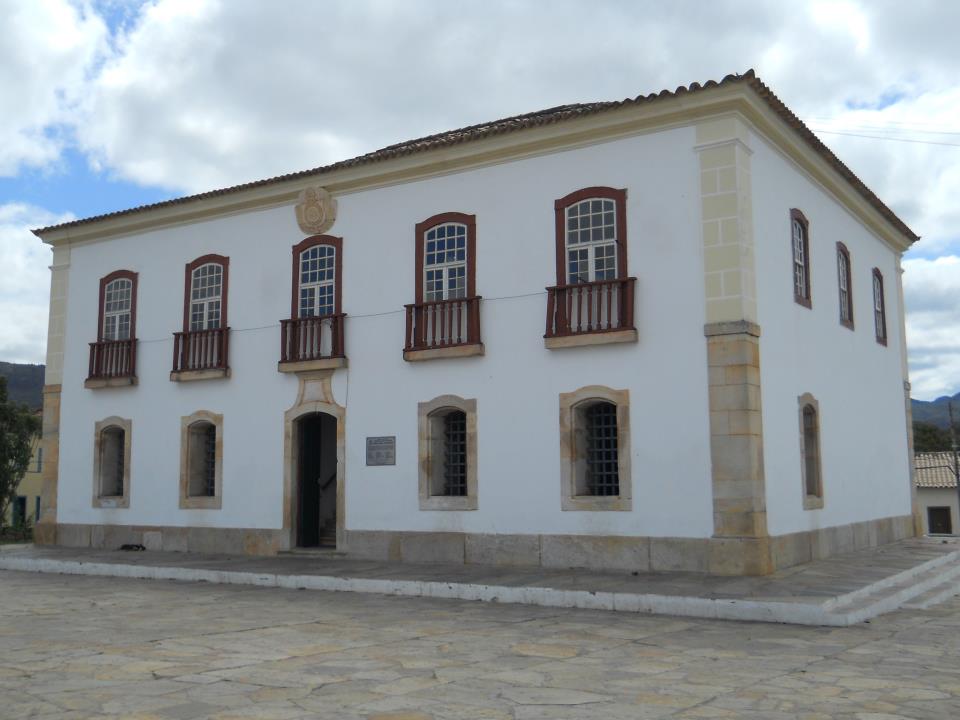
Following the relocation of the town’s administrative centre, the government of the metropolis of Salvador ordered the construction of the Town Hall and Prison, the Municipal Council and the Foundry, as well as the erection of the Pelourinho.

Origin of the Name ‘Rio de Contas’
The origin of the name “Rio de Contas” is linked to the history of the region and the presence of bandeirantes in the area. The name refers to a type of conta, which was an object used to make notes or keep records, particularly in connection with trade and the exchange of goods.
Another explanation is that the name may have derived from ‘contas’ in the sense of ‘accounting for’ or ‘recording’ the wealth that was extracted from the area, particularly during the period of gold mining.
Thus, ‘Rio de Contas’ could symbolise the flow of wealth and the intense commercial activity that took place in the region during the 17th and 18th centuries.

Cinema and Tourism
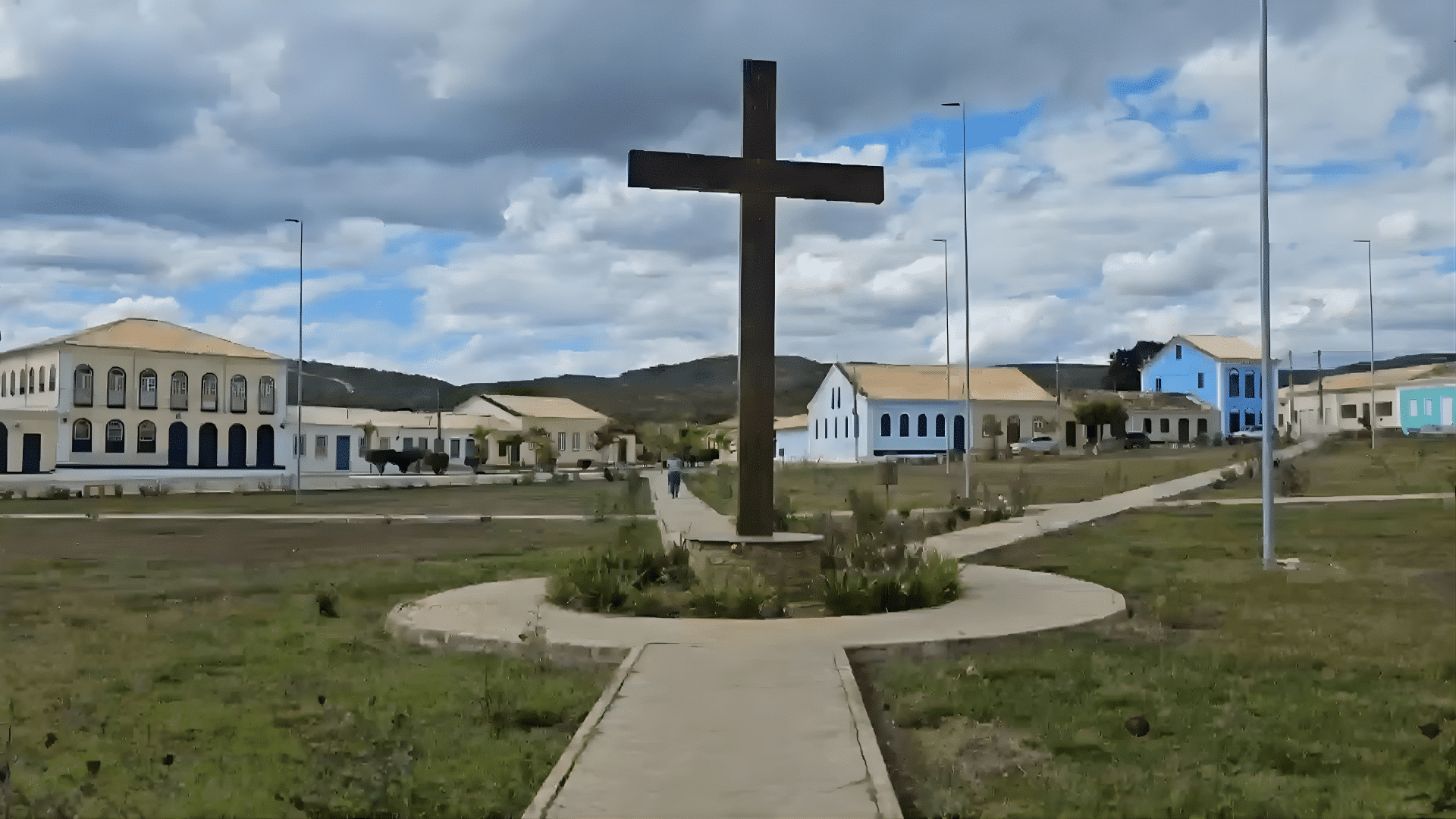
Scenes from *Broken April* (2001), directed by Walter Salles, were filmed in the main square of Rio de Contas — yet another reason why film buffs and curious visitors are drawn to the town.
Video about the Tourist Attractions in Rio de Contas


Imagens Aéreas de Rio de Contas

RIO DE CONTAS - SUA HISTÓRIA08:57

História de Rio de Contas08:39

Rio de Contas Guia de Turismo06:03

Rio de Contas Patrimonio Nacional06:59
Rio de Contas na Chapada Diamantina12:51

Rio de Contas Dicas de Viagem02:17

Rio de Contas Guia de Viagem07:48
Rio de Contas - Drone12:01

Igreja de Santana em Rio de Contas10:06

AS BELEZAS E A HISTÓRIA DE RIO DE CONTAS08:39
História de Rio de Contas na Chapada Diamantina05:05
See the map of Chapada Diamantina
See also Tourist Attractions in Chapada Diamantina
Things to Do in Rio de Contas: Top Tourist Attractions
- Coronel Bridge
- Brumado River Waterfall
- Fraga Waterfall
- Swallows’ Well
- Jiló Waterfall
- Mocotó Waterfall
- Raposo Waterfall
- Poço Preto
- Buracão Waterfall
- Royal Road
- Pico das Almas
- Itobira Peak, at an altitude of 1,970 metres
- Pico do Barbado, at an altitude of 2,033 metres
- Historic Monuments of Rio das Contas
The municipality of Rio de Contas is now known for its natural beauty, including waterfalls, rivers, streams and beautiful rock formations.
The city is home to the three highest peaks in the north-east of Brazil, each over 2,000 metres in height.
Formerly known as the city of gold, Rio de Contas is now renowned for the richness of its natural landscapes.
Due to its high altitude, the city is home to several mountain ranges, offering visitors beautiful scenery and breathtaking views.
1. Coronel Bridge

A stretch of the Rio Brumado, featuring several rapids and natural pools, is now the most popular spot for visitors to Rio de Contas.
Known as the Seven Wells, the site features pools of varying depths, where both children and adults can make the most of this attraction. The facilities are simple, with a bar service, as well as an area for camping and picnics. It is currently a must-see for anyone visiting Rio de Contas.
2. Brumado River Waterfall
Standing approximately 100 metres tall and featuring four consecutive drops, this waterfall allows visitors to reach its top, offering a complete view of its beauty from the front and the side.
It’s an excellent spot for photographs, where you can capture the full grandeur of the waterfall.
The descent to the waterfall requires a bit of effort, but it’s well worth it, especially when you reach the top of the largest waterfall in the municipality.
3. Fraga Waterfall

The postcard view of the municipality of Rio de Contas, the Fraga Waterfall enchants visitors with its 18-metre drop and its breathtaking beauty. From the waterfall, you can see the foothills of the Serra das Almas, creating a breathtaking landscape.
Next to the main waterfalls, there is access to the lowest part of the waterfall, which offers an excellent vantage point for taking photographs and enjoying a moment of contemplation. Situated very close to the town, it is an easily accessible leisure destination, with a bar nearby.
4. Swallows’ Well

The Poço das Andorinhas is a small well with crystal-clear waters, tucked away in the Serra do Porco Gordo. On arrival, it is common to see several swifts emerging from a small cave on the site, which is where the well gets its name.
The trail leading to the pool is dotted with other pools and small waterfalls that are ideal for swimming, making it one of the most beautiful routes in Rio de Contas. Despite its enchanting beauty, the spot is still rarely visited, offering a peaceful experience amidst nature. Situated inside a cave, it is one of the most beautiful places in the Chapada.
5. Jiló Waterfall

Situated on the Brumado River, on the way to Poço Preto, the Jiló Waterfall is an excellent spot for a swim. Comprising a series of small rapids, the waterfall allows several people to enjoy its refreshing waters at the same time, making it a popular stop for those exploring the region.
6. Mocotó Waterfall

Set amongst valleys and mountains, the path to the waterfall is lined with coffee plantations which, when in bloom, create what is known as the “Bride’s Veil“, an enchanting sight.
This itinerary is full of surprises: along the way, you’ll pass a viewpoint offering a panoramic view of Pico das Almas, Pico do Itobira, Serra do Barbado, Gerais de Mucugê, the Brumado River Dam, the Quilombola Community of Barra and part of the town of Rio de Contas.
7. Raposo Waterfall

Compact in size and ideal for small groups, this waterfall has clear water and is hidden away in a small wood.
Getting close to it requires a bit of effort, but it’s well worth it, as the waterfall only reveals itself when you get right up close, creating a secluded and special atmosphere for those seeking an intimate connection with nature.
8. Poço Preto

Ideal for swimming, the Poço Preto is situated 13 km from the centre of Rio de Contas. Although there is no beach, you can sit on the rocks of the Rio Brumado and enjoy the beautiful view. At approximately 6 metres deep, the pool is ideal for those seeking refreshment and tranquillity.
Nearby are the Jiló Waterfall and the Vaccaro Farm, where Serra das Almas Organic Cachaça is produced, providing an additional attraction for visitors.
9. Buracão Waterfall

It is one of the best-known waterfalls in the Chapada Diamantina, famous for its impressive waterfalls and a stunning pool of crystal-clear water where visitors can take a dip. The trail to the waterfall can be a little challenging, but the beauty of the place makes the effort worthwhile. It is a popular destination for nature lovers and ecotourists.
10. The Royal Road

The road, paved with stones laid by slaves in the 18th century, was used for the transport of gold and the supply of goods to the city during the colonial period. This section of the Estrada Real, near Rio de Contas, is in a good state of repair, stretching for approximately 6 km, and is perfect for a walk offering magnificent views.
Construction began in 1726, and it is an important part of the region’s historical heritage. It was the main route into Livramento and is now one of the region’s biggest tourist attractions.
11. Pico das Almas

At 1,958 metres above sea level, the Serra das Almas is the third highest point in the Northeast. It is not a peak for beginners, but it offers adventurers who reach the summit an incredible view of the whole of the Chapada Diamantina. As well as being a major tourist destination, it is also an ecological sanctuary, where the Kew Gardens carried out research for 20 years. The area boasts a rich variety of flora, with plant species found nowhere else on the planet.
The stunning rock formations, shaped by nature over time, enchant everyone who visits the region. It is worth noting that collecting plants in the Serra das Almas is considered a crime against Brazil’s natural heritage, highlighting the importance of environmental conservation.
12. Itobira Peak, at an altitude of 1,970 metres

At an altitude of 1,970 metres, Pico do Itobira is the second highest point in the Northeast. Along the way, you can see a wide variety of orchids, bromeliads, velosias, barbaceas, evergreens and carnivorous plants, highlighting the region’s rich biodiversity.
From the top of the peak, you can see Pico das Almas, the Serra do Barbado, the Serra do Sincorá, as well as a beautiful view of the Brumado River Dam and part of the town of Rio de Contas.
Along the route, there is also a small waterfall and small pools which are ideal for swimming, making the experience even more enjoyable for visitors.
13. Pico do Barbado, at an altitude of 2,033 metres

Pico do Barbado, at an altitude of 2,033 metres, is the highest point in the north-eastern region of Brazil, separating the towns of Rio de Contas, Abaíra and Rio do Pires. The bearded monkey used to live in the woods near the mountain range, giving rise to the name ‘Serra do Barbado’. Its extraordinary natural beauty is mainly due to the unique nature of its rock formations and the presence of evergreens, bromeliads and orchids — and it is the most popular destination for mountaineering enthusiasts.
There are two routes up the mountain, attracting many adventurers looking to take on this great challenge. The first option takes around 5 hours by car for the round trip, plus 6 hours’ walking for the round trip.
With the second option, the journey by car takes 3 hours there and back, but the walk takes a total of 14 hours there and back. From the top of the mountain range, there is a spectacular view of the whole of Chapada Diamantina, including Pico das Almas and Pico do Itobira in Rio de Contas, the Serra da Tromba, the Serra do Sincorá in Ibicoara, the Três Morros in Piatã and the Morro do Pai Inácio in Palmeiras. Speak to the staff at the Rio de Contas Tourist Information Centre and make sure you have reliable maps.
14. Historic Monuments of Rio das Contas
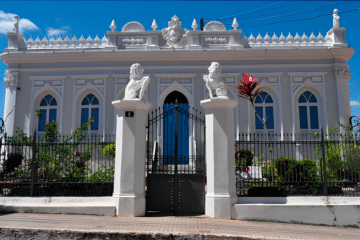
The town of Rio de Contas has more than 400 listed mansions recognised by the National Institute of Historical and Artistic Heritage, all of which are very well preserved, dating from the 17th and 18th centuries, and featuring Baroque architecture. Some of these houses were built at the time of the town’s foundation, in 1723.
The Municipal Archives of Rio de Contas contain old newspapers, photographs and documents dating from the 18th century.
In addition, there are several monuments that have been listed individually. As you stroll through the city’s streets, you’ll feel as though you’re taking a trip back in time.
Rio de Contas is Brazil’s first planned city, and its historic centre covers an area of 19.2 hectares. It is one of the rare colonial ‘new towns’, established by the Royal Provision of 1745, which recommended a regular layout and architecture designed to ensure its aesthetic appeal. When it was founded, all the houses were aligned, with wide streets. The houses were painted white, with blue window frames, which lends the city a special charm.
1. Former Town Hall and Prison

- Location: The Old Town Hall and Prison is situated in Praça Senador Tanajura, formerly known as Praça da Matriz, in the heart of Rio de Contas, and is highly visible — it is, without a doubt, the most photographed mansion in the town.
- History: This grand house once housed the most feared prison in the entire Upper Sertão region of Bahia, which was located on the ground floor, alongside the jailer’s quarters and the guardhouse. The second floor housed the Town Council and the Court of Justice. The building stands as a symbol of the public administration of that era and the judicial practices of the past.
- Architecture: The house displays features typical of colonial architecture, with an imposing façade and decorative elements that reflect the style of the period. A distinctive feature is the ‘people’s bell’, installed in the window jamb of one of the second-floor windows. Also noteworthy are the windows with their ornate frames, the use of arches and the symmetrical layout of the building.
- Visits: Although it is not a formal tourist attraction, the building is frequently visited by tourists and locals who wish to appreciate the history and architecture of the site.
2. House on Rua Barão de Macaúbas
- Location: Situated on Rua Barão de Macaúbas, this house is one of the many historic mansions that make up the centre of Rio de Contas, a municipality known for its rich cultural and architectural heritage.
- History: The house is of historical significance, reflecting the colonial architectural style of the period in which it was built. Like many of the city’s grand houses, the building bears witness to the housing practices and way of life of its former residents.
- Architecture: With a façade typical of the period, the house is characterised by features such as wooden-framed windows, balconies and a solid structure – characteristics commonly found in colonial mansions.
- Visits: Although it is not a formal tourist attraction, the house forms part of the town’s historical context and can be admired by those strolling along Rua Barão de Macaúbas.
3. São Carlos Theatre – One of the three oldest theatres in Brazil

- History: Opened in 1892, the São Carlos Theatre is one of the three oldest theatres in Brazil and the oldest in the interior of Bahia. Located in Largo do Rosário, it has hosted countless performances by local groups and productions from other parts of Brazil.
- Capacity and Layout: The theatre has a seating capacity of 120. When it was first established, audience members used to bring their own chairs to watch the plays.
- Culture and Society: During the 19th century, it was a vital cultural venue, hosting theatrical and musical performances. An interesting aspect of that era was that women were forbidden from performing, so men would dress in women’s clothing to play the female roles.
- Current Significance: Today, it serves as a venue for educational and cultural events and activities, preserving the region’s heritage of the performing arts.
4. The house where Abílio Cesar Borges – ‘The Baron of Macaúbas’ – was born

- Location and History: The house that once housed the Municipal Public Archives is the birthplace of Abílio César Borges, known as ‘The Baron of Macaúbas’, on 9 September 1824. The present building probably dates from the early 20th century and is a typical example of a diamond-mining residence, serving a mixed purpose (residential and commercial).
- Contributions: Having graduated in medicine from the Court Academy, Abílio César Borges distinguished himself as a great educator, with Rui Barbosa and Castro Alves among his most famous pupils. In addition to his work in medicine, he organised, using his own funds, the Zouave Battalion, which served the nation in the Paraguayan War.
- Legacy: The Baron of Macaúbas died on 17 January 1891 in Rio de Janeiro, but left a significant legacy in the fields of education and public health.
- Current Use: It is currently occupied by IPHAN’s Technical Office and the Rio de Contas Municipal Archives.
5. Rio-Contense Club
- History of Exclusion: The Rio-Contense Club, founded in 1921, was a venue that reflected the profound racial inequalities of the time. During the carnivals and other festivities of yesteryear, the club held parties exclusively for white people, held indoors, where the presence of black people was strictly forbidden.
- Signs of Social Exclusion: These events reflected the racial segregation that pervaded society at the time, reinforcing social and racial barriers.
- Significance in Collective Memory: Recognising the club’s history is essential to understanding the social development of Rio de Contas and the ongoing efforts to overcome racial inequalities.
6. Foundry – Now Rio de Contas Town Hall

- History: The Foundry House, which currently houses the Rio de Contas Town Hall, has a rich history dating back to the colonial era. Originally, this building was used as a foundry, where gold extracted from local mines was melted down and turned into bars.
- Location and Architecture: Situated in a central part of the city, the building is a fine example of colonial architecture, with stone walls and an imposing façade.
- Change of Function: Over the years, it ceased to be a site dedicated to mining and was adapted to serve as the seat of the municipal executive.
- Preservation and Tourist Attraction: The property is regarded as an important piece of historical and cultural heritage, frequently visited by tourists and curious visitors keen to learn more about the city’s history.
7. Former town hall

- Historical Significance: The former town hall of Rio de Contas is an important historical monument. The building dates from the colonial period and was opened in 1835, serving as the seat of the municipal executive for many years.
- Architectural Style: The style is characteristic of the period, featuring colonial elements, stone detailing and an imposing façade.
- The Fearsome Prison: The building is also known for having housed a prison, considered one of the most feared in the Bahian hinterland.
- Preservation: The building was listed by IPHAN in 1959, ensuring its preservation and enhancement.
8. Church of Our Lady of Santana
The Church of Nossa Senhora Santana is situated in Rio das Contas, Bahia, and is an extremely rare example, featuring three naves and a chancel that opens onto the side sacristies.

Features
- Architecture: The church is built in the colonial style typical of 18th-century religious buildings, with three naves — an extremely rare layout amongst churches of that period.
- History: Built by slave labour in the first half of the 18th century, the church was never completed. Work was halted around 1850, when the local population migrated en masse to the diamond mines of Mucugê, Lençóis and Andaraí. In 1914, as a result of heavy rain, the roof collapsed. It was not until 1960, after it had been listed by IPHAN, that restoration work was carried out to preserve it.
- Preservation: The church is listed by the National Institute of Historic and Artistic Heritage (IPHAN), which helps to ensure its preservation and the promotion of its historical heritage.
The Church of Nossa Senhora Santana is one of many examples of Rio das Contas’ rich cultural and religious heritage, contributing to the town’s identity and history — and one of the most striking symbols of the decline of the gold rush in the region.
9. Church of the Blessed Sacrament (Parish Church)

The Parish Church of the Blessed Sacrament is the finest example of religious architecture still standing in the entire Bahian hinterland. It was built in the 18th century using stone masonry, by slave labour, and — just like the Church of Santana — was never actually completed.
The church boasts remarkable woodwork, and its high altar and the two side altars are all covered and gilded with gold. On the ceiling of the chancel there is an illusionist painting, inspired by Italian art, one of the most valuable features of the city’s artistic heritage.
Frequently asked questions about things to do in Rio de Contas
When is the best time to visit Rio de Contas?
The dry season, between April and September, is the best time for hiking and climbing to the peaks, as there is less risk of heavy rain. It is worth bearing in mind that, due to the altitude, nights can be cold even during the Bahian summer.
How many days does it take to explore Rio de Contas?
To visit the historic centre, some nearby waterfalls (such as Ponte do Coronel and Cachoeira do Fraga) and go on a hike to one of the peaks, 3 to 4 days is ideal. Anyone wishing to climb Pico do Barbado, which requires up to 14 hours of walking on the longest route, should set aside a whole day just for this attraction.
Do you need a guide for the trails and waterfalls in Rio de Contas?
For the highest peaks (Pico das Almas, Pico do Itobira and Pico do Barbado) and the more remote trails, such as Poço das Andorinhas, it is strongly recommended that you hire a local guide, both for safety reasons and to avoid getting lost in the mountains.
How do I get to Rio de Contas?
The town is situated in the interior of Bahia, in the Chapada Diamantina region, some 620 km from Salvador. The most common way to get there is by car, via the BA-148 and regional roads from Salvador or nearby towns such as Vitória da Conquista, which has an airport with direct flights from some state capitals.
Why were the churches in Rio de Contas never completed?
Construction work on both the Church of Nossa Senhora Santana and the Parish Church of the Blessed Sacrament was halted around 1850, when part of the population migrated to the newly discovered diamond mines in Mucugê, Lençóis and Andaraí. The unfinished churches are now one of the most striking symbols of the decline of the gold rush in the town.
Is Rio de Contas a good destination for those who don’t like long hikes?
Yes. The listed historic centre, with over 400 grand houses, the Ponte do Coronel bridge and more easily accessible waterfalls, such as Jiló and Fraga, are good options for those who prefer more leisurely outings, without having to tackle trails that take several hours.
See also the History of Rio de Contas
Bahia.ws is the largest tourist guide for Bahia and Salvador.

Publicações Relacionadas
Palmeiras: A Gateway to Chapada Diamantina
Lapão Cave: The Ultimate Adventure Experience
Paragliding at Pitinga Beach in Arraial d'Ajuda
Solar do Unhão & MAM-BA — History, Architecture and a Visit
History of the Church of Nosso Senhor do Bonfim in Salvador
Abseiling Sites in Bahia: Top Locations to Explore
History of the Cathedral Basilica of Salvador
Waterfalls of Chapada Diamantina: A Guide for Adventurers
Mucugê: Discover the local history and culture
Trekking - Route through the Chapada Diamantina in 7 days
Picos das Almas, Itobira and Barbado Trekking Guide
Municipality of Una: A Beach Paradise Awaits
Rafting in Taboquinhas: The Ultimate Adventure Guide
São Jorge Parish Church in Ilhéus — history, architecture and religious art
Maraú Peninsula: A Coastal Paradise in Bahia
History and sights of Avenida Contorno in Salvador BA
Mining in the Chapada Diamantina History Explained
The War of Canudos: Rescuing historical memory
Torrinha Cave: A Speleological Marvel in Brazil
Marimbus Pantanal: Adventure in Chapada Diamantina
Caravelas (BA) — Complete Guide: Beaches, History and Abrolhos
Ecotourism in Bahia: discover village of Santo André
Places of interest in Salvador — A comprehensive guide
The highest and most beautiful waterfalls in Chapada Diamantina
Camaçari: Industry, History and Natural Beauty
Imbassaí Beach: Discover the Best of Bahia
Municipality of Entre Rios has first official naturist beach
Catabrigas Waterfall — A natural haven in Ibirajá, Itanhém (BA)
History of the Senhor do Bonfim Ribbons — Origin, Meaning and Traditions
Costa do Sauípe: Discover Paradise in Bahia
Morro de São Paulo: Beach Guide and How to Get There
Vila de Barra Grande na Bahia: Guia Completo para Turistas
Complete Guide to Visiting Arraial d'Ajuda in Bahia
Find out how to celebrate Carnival in Salvador, Bahia
Diving Spots in Bahia: Discover Underwater Treasures
Lauro de Freitas — A comprehensive guide to beaches, culture and leisure
This post is also on:
 Português
  English
  Deutsch
  Español
  Français