The Chapada Diamantina National Park offers several hiking trails through canyons, caves, steep hills, huge waterfalls, bromeliads and coca-coloured rivers.
Lençóis is the town that receives the most tourists and is full of charm, inns and delicious restaurants.

Igatu, a pre-Columbian city, is known as the Brazilian Machu Picchu and is full of stones and ruins from the ancient mining that dominated the region.
Mucugê, a National Historic Site, has a cinematic Byzantine cemetery, and Vale do Capão is a very cosy village that welcomes people from all over the world.
Vale do Capão is also the starting point for one of the most beautiful treks in Brazil, the Pati Valley Traverse.
Andaraí is a small wetland in the heart of the savannah, while Ibicoara in the south of the park hides two impressive waterfalls, Buracão and Fumacinha.
It’s impossible to visit Chapada just once and see all the sights. Make Chapada your adventure paradise!
 Map of the Chapada Diamantina in Bahia[/caption].
Videos of trekking in the Chapada Diamantina


Trekking – Round the Chapada Diamantina in 7 days

Day 1 – From Lençóis to Toca da Capivara
From Lençóis, head towards Ribeirão do Meio. After about two hours of hard climbing you reach the top of the Veneno mountain range, 2km from the Ribeirão. Cross the Muriçoca River to Toca da Onça, where you can rest and have a snack.
From there, walk towards the Palmital and Capivara Waterfalls.
The first night is spent at Toca da Capivara. If the weather is good and the river low, you can sleep in the open on a rocky ledge.
Toca da Capivara is a campsite in Chapada Diamantina, Bahia, which is part of the Cachoeira da Fumaça trail.
Day 2 – From Toca da Capivara to Toca da Fumaça
You leave Toca da Capivara and walk up the Capivara River to the Fumaça River, a walk of about 1 hour 30 minutes.
Backpacks and tents are left at the Toca da Fumaça.
Carrying only swimming gear and a snack, you continue along the Fumaça River and reach the waterfall at the lower end in two hours. Return along the Fumaça riverbed to the camp where the tents are pitched.
Day 3 – From Toca da Fumaça to Caeté-Açu
Next to Toca da Fumaça is Serra do Macaco, one of the hardest climbs of the trek.
The climb is about 4 kilometres and takes three hours. You stop for a break and lunch at the Sanctuary Well.
From there it’s on to the “mouth” of the Fumaça waterfall and the lookout point where you can see the waterfall.
You walk through a flatter and less strenuous area to Vale do Capão.
In Caeté-Açu, visitors usually sleep in guesthouses and eat in family houses. Caeté-Açu is a charming village located in the municipality of Palmeiras, in the Chapada Diamantina, Bahia.
Better known as Vale do Capão, it is one of the most popular destinations for tourists seeking contact with nature, trails, waterfalls and the unique atmosphere of Peace and Spirituality that the village offers.
Day 4 – From Caeté-Açu to Vale do Pati
To make the journey easier, visitors usually hire a 4×4 car with a driver to Bomba (6 kilometres away). From there, walk up to Gerais do Vieira.
After a long stretch of straight road and lush scenery, you reach the Desbarrancado. After extremely steep climbs and descents, you finally reach the Pati Valley.
Traditionally, visitors stay in local family houses where, despite their simplicity, they are served rich and tasty meals.
Day 5 – From the Pati Valley to Morro do Castelo
Without a backpack, visitors walk to the Funil Waterfall. On the way back, they collect their luggage from the locals and walk down the Paty River towards Morro do Castelo, where the City Hall is located.
The Town Hall and Mr Eduardo’s house are the two options for accommodation on this stretch.
Day 6 – Cachoeirão
From the town hall or Mr Eduardo’s house, walk to the Cachoeirão, which has a 20 metre drop. Crossing the forest next to the Cachoeirão, you reach the Pool, where you can dive and swim.
This is the lightest day of the trail. It takes two hours to get there and another two hours to get back to Mr Eduardo’s house.
Day 7 – Return
Leaving Mr Eduardo’s house, we cross the Pati River and climb the Ladeira do Império, a trail used in the past to transport the coffee produced in the valley, to Andaraí.
See also “Where to stay, how to get there and tips for Chapada Diamantina”.
Bahia.ws is the largest tourist guide for Bahia and Salvador.

Publicações Relacionadas

Lençóis, Bahia: Origins, the Diamond Cycle and Heritage

Architectural Style of the Chapada Diamantina, Bahia: A Guide

History of the Settlement of the Chapada Diamantina, Bahia

Birds found in the Chapada Diamantina: Exotic Species

Main Towns and Villages in the Chapada Diamantina, Bahia

Waterfalls and Walking Trails in the Capão Valley, Chapada Diamantina
Waterfalls in the Chapada Diamantina, Bahia: 5 Worth Visiting

The highest and most beautiful waterfalls in Chapada Diamantina

Candombá in the Chapada Diamantina, Bahia: the Flower of Fire

Mining in the Chapada Diamantina History Explained

Ventura Village: A Rich History of Diamonds

Igatu: Explore the 19th-Century Stone Houses

Marimbus Pantanal: Adventure in Chapada Diamantina
Picos das Almas, Itobira and Barbado Trekking Guide

Sempre-Viva: Symbol of Preservation in the Chapada Diamantina

Dive Sites of Chapada Diamantina: A Guide

Rio de Contas, Bahia: things to do, history and peaks

Things to Do in Piatã, Bahia: The Highest Town in the North-East

Palmeiras: A Gateway to Chapada Diamantina

Mucugê: Discover the local history and culture
Ecological tourism in Morro do Chapéu

Things to do in Lençóis in the Chapada Diamantina — 15 attractions
Iraquara is also known as the "city of caves"

Ibicoara: An Unmissable Tourist Destination

Andaraí is the second largest town in the Chapada Diamantina

Tourist Information about Chapada Diamantina

Trekking in the Pati Valley in Chapada Diamantina

Blue Fountain in Chapada Diamantina: a complete guide

Enchanted fountain in Chapada Diamantina: How to get there

Torrinha Cave: A Speleological Marvel in Brazil

Lapão Cave: The Ultimate Adventure Experience

Main caves in the municipality of Iraquara in Chapada Diamantina

Trekking in the Pati Valley in Chapada Diamantina

Trekking - Popular trails in Chapada Diamantina
Orchids of the Chapada Diamantina in Bahia
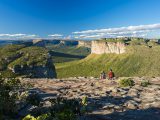
Chapada Diamantina: A Complete Guide to Attractions and Itineraries
This post is also on:
 Português
  English
  Deutsch
  Español
  Français