Discover the Lapão Cave: The perfect adventure in Chapada Diamantina
For those who enjoy adventure sports, the Lapão Cave in the Chapada Diamantina is the perfect place for abseiling.
Altitude and structure
Lapão Cave is 47 metres high and is located at the mouth of the largest known quartzite cave in Brazil. With special equipment, the activity is easy even for beginners.

Composition and sound
The metallic sound heard in the Lapão cave reveals its origin. Unlike most of the caves in the Chapada Diamantina, which are made of limestone, Lapão is a quartzite cave rich in iron – hence the characteristic sound.
Measurements
Lapão Cave is 1,000 metres long and about 10 metres wide, with a mouth 60 metres high. It is the second largest quartzite cave in Brazil, after the Gruta das Bromélias in Conceição do Ibitipoca (MG).
Formation and growth
Despite being made of quartzite, a harder material that is resistant to water erosion, Lapão has unusual formations for this type of cave. In some places you can see small stalactites, many of which are already fractured.
While in limestone caves each centimetre of speleothem takes on average 33 years to form, in quartzite caves it takes more than 100 years, depending on the intensity of the dripping.
History and risks
Exploited by prospectors from 1845 to 1871, Lapão was rich in diamonds and carbonate. In addition to the natural collapse of the walls of the underground aquifer through which the Lapão River flows, the tunnels and excavations of the miners make the attraction even more dangerous.
Many of the stones are loose and you must be careful not to step on the wrong one. In rainy weather, the walk becomes impractical as the river rises quickly and can cause accidents.
Crossing the cave
Even in the dry season, the force of the Lapão River, which runs through the cave and is narrow, can be frightening. To get out of the cave through the largest opening, you have to cross it.
The ascent is via the Lapão Mountain Range, and part of the descent can be made via the riverbed – only in the dry season. Equipment required for the visit includes a torch, extra batteries and sturdy footwear.
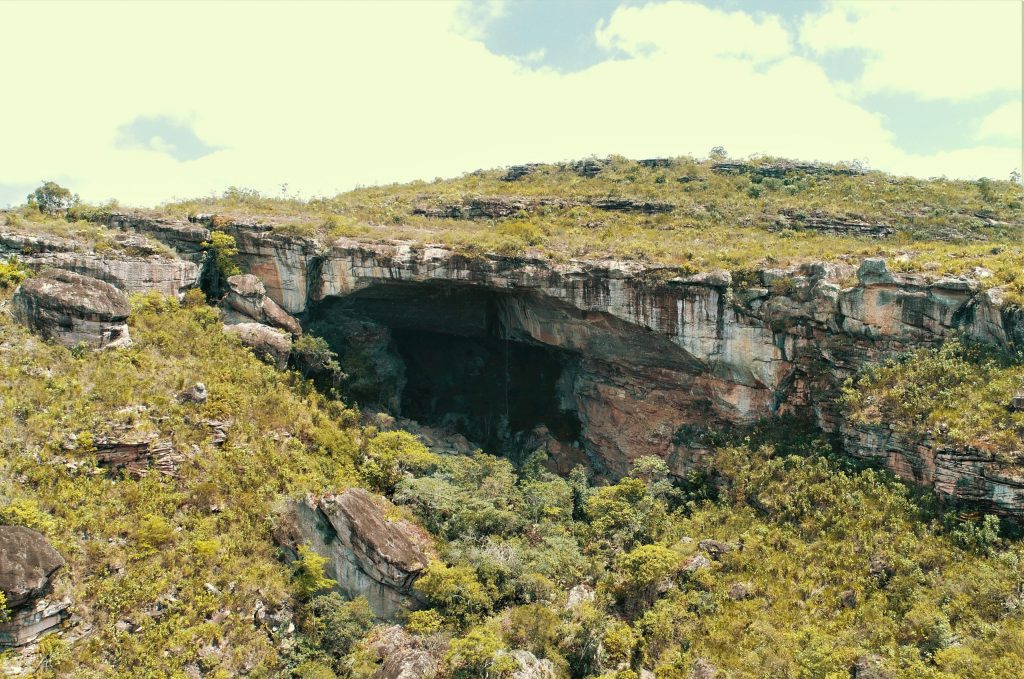
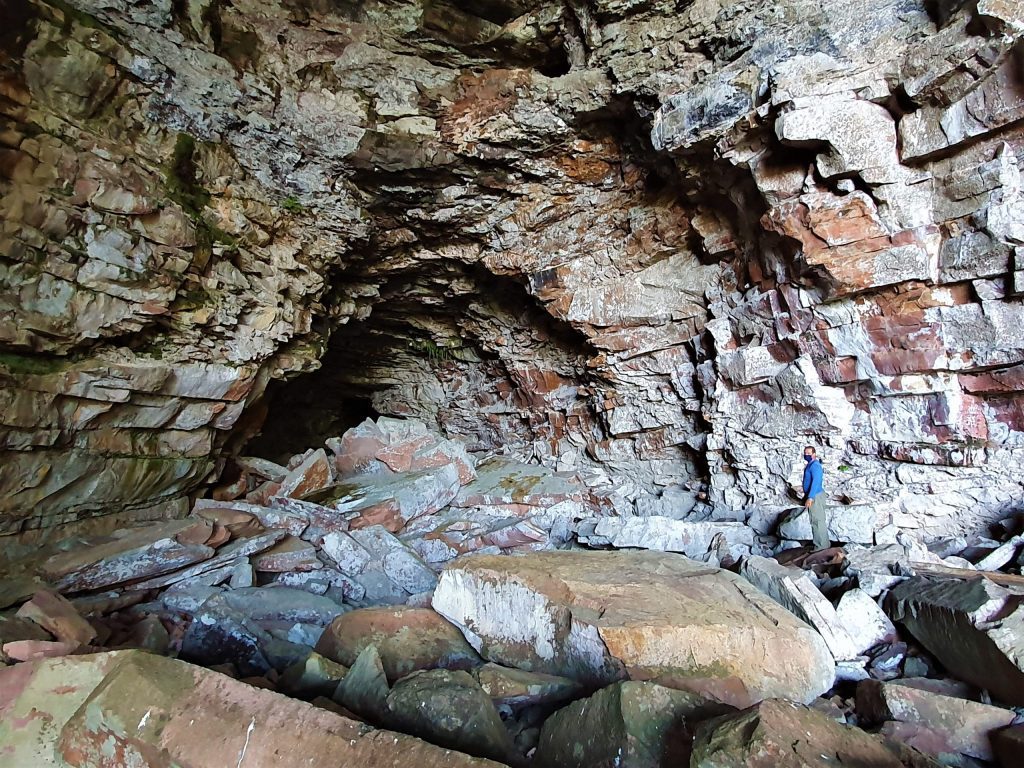
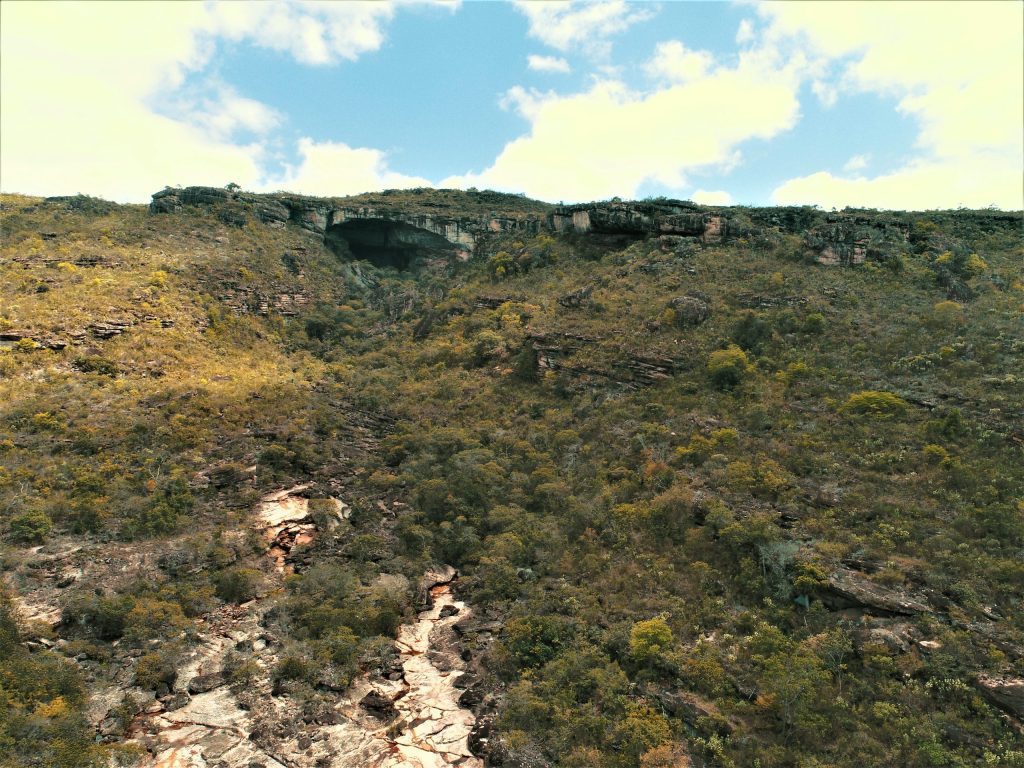
Video of Lapão Cave in Chapada Diamantina
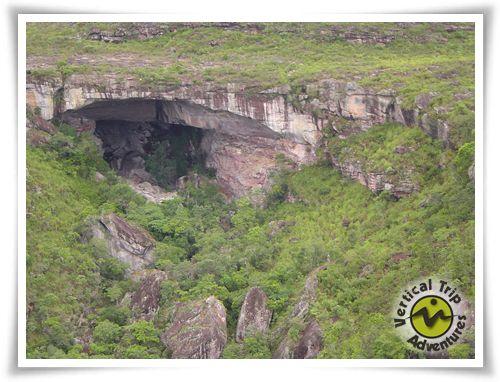
Gruta do Lapão na Chapada Diamantina

Map of trails and tourist sites in Chapada Diamantina
See the map of Chapada Diamantina
Main features of Lapão Cave
The Lapão C cave, located in the Chapada Diamantina, is one of the largest and most impressive quartzite caves in Brazil. It stands out for its unique characteristics and its scenic and tourist value.
1. Geological formation
- Lapão Cave is formed by quartzite, a tough metamorphic rock. Unlike limestone caves, which are more common and have speleothems, quartzite gives the cave a rustic and imposing appearance, with more irregular and solid walls.
- It has been shaped by water erosion over thousands of years.
2. Size and extent
- It is considered one of the largest quartzite caves in Brazil.
- It is about 1 kilometre long, with wide halls and narrow passages that challenge visitors.
3. Internal waterfall
- During the rainy season, a temporary waterfall forms at the entrance to the cave, creating an even more incredible visual spectacle.
- The water cascading down from the rocks collects in small natural pools.
4. Visuals and adventure
- The cave is known for its contrasts of light and shadow. The entrance allows natural light to enter, creating impressive effects inside.
- The site attracts abseiling and climbing enthusiasts as its walls offer excellent conditions for these activities, with descents of up to 50 metres.
5. Local ecosystem
- The area around the cave is rich in vegetation typical of the Caatinga and the Cerrado. The fauna includes insects, bats and small animals that inhabit the cave.
Activities in Lapão Cave
1. Abseiling
Abseiling is one of the most popular activities, with descents of up to 50 metres providing a great adrenaline rush.
2. Exploring the cave
You can walk inside the cave and explore its galleries, always with the help of torches.
3. Photography
The natural light and the waterfall (in the rainy season) create incredible backdrops for photographs.
4. Hiking
The trail to the cave is an excellent option for those seeking contact with nature and impressive views of the region.
How to get to Lapão Cave
The Lapão Cave is located about 7 kilometres from Lençóis, one of the main bases for exploring the Chapada Diamantina.
It can be reached mainly by hiking and is a popular activity with visitors.
Bahia.ws is the largest tourist guide to Bahia, Salvador and the Northeast.

Publicações Relacionadas
Tourist Attractions and Documentaries about Chapada Diamantina
Ponta de Humaitá — Lighthouse, church and the best sunset in Salvador
Taipu de Fora: Discovering Natural Pools
History of Cocoa: From Aztecs to Modern Use
Chapada Diamantina: A Complete Guide to Attractions and Itineraries
Cultura dos Índios Pataxós na Costa do Descobrimento
Enchanted fountain in Chapada Diamantina: How to get there
Waterfalls of Chapada Diamantina: A Guide for Adventurers
Iraquara is also known as the "city of caves"
History, the Festival of Nossa Senhora das Candeias and Tourist Attractions
History of São Marcelo Fort — Salvador, Bahia
Maraú Peninsula: A Coastal Paradise in Bahia
How to get to Fumaça Waterfall in Chapada Diamantina
Historic Towns in Bahia: A Journey Through Time
São Sebastião Cathedral (Ilhéus) — History, architecture and tourism
History of the Church and Convent of São Francisco in Salvador
Prostitution, sex, massage parlours and nightclubs in Salvador
Lauro de Freitas — A comprehensive guide to beaches, culture and leisure
Juazeiro: Discover the Land of the Carrancas
Serra Grande: Your Guide to Bahia's Paradise
Things to do in Lençóis in the Chapada Diamantina — 15 attractions
Tourist attractions and architectural heritage of Salvador (BA
Places to visit on the south coast of Bahia
Ilhéus: A Journey Through Bahia's Rich History
Learn more about the sloth and its unique characteristics
Tinharé Archipelago: Discover Hidden Island Gems
Paulo Afonso's Beautiful Waterfalls and Canyons
Trail to Buracão Waterfall in Chapada Diamantina
Mangue Seco: The Last Beach on the North Coast of Bahia
Costa do Sauípe: Discover Paradise in Bahia
Itaparica Island — Complete Guide: History, Beaches and Tips
Church and Convent of Nossa Senhora da Palma in Salvador, Bahia
Origin and History of Capoeira in Brazil Explained
Alcobaça, Bahia: A Comprehensive Guide to Beaches and History
Municipality of Una: A Beach Paradise Awaits
Island of Fear: Mysteries and Hauntings
This post is also on:
 Português
  English
  Deutsch
  Español
  Français