The history of Lençóis, in Bahia, begins with diamond mining. The origins of the town are linked to the discoveries made in 1844 in Mucugê and to the rush of prospectors who, the following year, climbed the mountains and founded the settlement. The Diamond Cycle brought wealth to the town, and the heritage that remains from this period – the architectural and landscape complex listed by IPHAN in 1973 – is now the town’s main tourist attraction. Lençóis is also the main gateway to the Chapada Diamantina. Updated in October 2026.

The origins of Lençóis: from the gold mine in Mucugê to the village
The first diamonds in the region were found in 1844, on the banks of the River Cumbuca, in Mucugê. The following year, the prospectors made their way up into the mountains and founded the settlement that would become Lençóis. The news attracted adventurers from various parts of the country, and settlement spread around the mining areas. To understand the regional context, see also the history of the settlement of the Chapada Diamantina and the history of mining in the Chapada.
The best-known explanation for the name is that the prospectors’ white tents, seen from a distance, resembled sheets hung out to dry across the valley. There is another version, cited in tourist guides, which links the name to the river water that forms foam as it flows over the rocks during floods. In 1856, the region was separated from Santa Isabel do Paraguaçu and became the town of Lençóis, and in 1864 it was granted city status.
The Diamond Cycle in Lençóis (1845 to 1871)
According to IPHAN, between 1845 and 1871 Lençóis was the world’s largest producer of diamonds and the third most important city in Bahia. The city became a trading hub: it exported the mineral to Europe and imported luxury goods. To facilitate this trade, France established a vice-consulate there. It was during this period that the first townhouses and more elaborate buildings began to appear. This period had lasting effects:
- Population growth: the arrival of prospectors, traders and families in search of fortune.
- Economic development: the expansion of trade, public works and higher-standard housing.
- Political influence: the mine owners formed an elite, from which Colonel Horácio de Matos emerged.
- Culture and identity: architecture and traditions bear the hallmarks of this period.
- Decline and reinvention: as the ore deposits were exhausted and competition from South African mines intensified, the town saw its population decline and eventually reinvented itself through tourism.
The mines discovered in South Africa from 1865 onwards shifted the international market’s focus to African diamonds, and by around 1871 the heyday of Lençóis had come to an end. Prospecting continued on a smaller scale, notably for the carbonado, the black diamond, and the Chapada became known for the ‘Carbonado do Sérgio’, found by a prospector almost 130 years ago and sold in fragments. To understand the stone, see the characteristics and the 4 Cs of a diamond.
Colonel Horácio de Matos and the colonels’ conflicts
Colonel Horácio de Matos (c. 1882–1931), who succeeded his uncle Clementino Matos as head of the mining districts, was the most influential political figure in the Chapada, wielding considerable influence even with the federal government. He defeated local rivals, led a march towards Salvador in 1920 (the Sertaneja Revolt), which ended with the so-called Lençóis Agreement, and in 1926, at the request of the federal government, fought against the Prestes Column. He was arrested in December 1930 and assassinated in Salvador in May 1931. Today, the city’s main square is named after him.
Videos
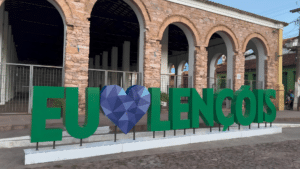
Guia de Turismo de Lençóis na Chapada Diamantina05:21

Lençóis na Chapada Diamantina02:32

Lençóis Reportagem06:31
Lençóis e Região na Chapada Diamantina
Map of the Walking Trails and Tourist Attractions in the Chapada Diamantina
Heritage and listed status: the historic quarter of Lençóis
The architectural and landscape complex of Lençóis was listed by IPHAN in 1973 (December 1973, file 847-T-1971, according to a report from 2026) and is one of the ten complexes protected by the agency in Bahia. The protected area comprises around 570 properties, mostly 19th-century houses and townhouses. The town is situated in the central-western region of the state, in a natural amphitheatre on the eastern slope of the Serra do Sincorá, and IPHAN classifies it as part of the Chapada Diamantina National Park. See also other towns listed as historic heritage sites in Bahia.


Characteristics of heritage
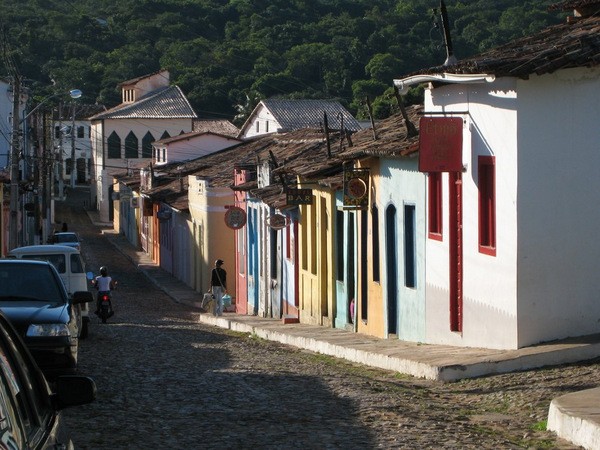
The collection comprises houses and two-storey dwellings from the second half of the 19th century, built of adobe or stone, and wooden structures with hand-rammed earth walls. The bright colours on the walls and window frames are a hallmark of the buildings. Secular architecture takes precedence over religious architecture, and there is no single monument that dominates the ensemble. To learn about the region’s architectural style, read about the architectural style of the Chapada Diamantina.
The development of the settlement and its colonial street layout
The settlement grew out of two centres, Serrano and São Félix, which developed alongside the mining areas and later merged into a single urban area. Serrano was situated on high ground next to a set of rapids and, over time, shifted towards what is now Praça Horácio de Matos. Construction of the chapel of Nossa Senhora da Conceição began in 1851 and it was later replaced by the parish church.
The bridge dating from 1860 and the grand townhouses
The bridge over the River Lençóis was built in 1860, making use of the surplus labour caused by the great drought of 1859 to 1862. The large townhouses in the former Praça do Mercado – now Praça Horácio de Matos – date from that period, including five listed residences. The Casa do Conselho was demolished in the 1940s to make way for the Post and Telegraph Office.
Unplanned development and road surfacing
As with other mining settlements, Lençóis grew in a haphazard manner, with irregular streets that follow the contours of the land, small squares and open spaces. In some places, the road surface is the local rock itself, and there are streets paved with irregular stones that form patterns. New streets, whether created spontaneously or approved by IPHAN, follow the colonial grid pattern.
Listed monuments and public spaces
According to IPHAN, the following are among the protected assets:
- Horácio de Matos Square (the most important public space)
- Municipal Public Market
- Bridge over the River Lençóis
- Town Hall
- IPHAN Technical Office premises
- Former Health Centre
- Arena Theatre
- Church of Our Lady of the Rosary
- Church of Our Lord of the Steps
- Afrânio Peixoto Cultural Centre and Amphitheatre
- Public Library
- Public Archives
Six buildings to visit in Lençóis
These six buildings help to tell the story of the town. For a complete itinerary, see things to do in Lençóis.
- IPHAN headquarters in Lençóis
- UEFS Advanced Campus Building
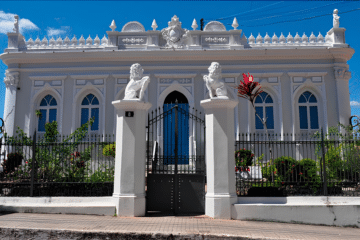
- Former French Vice-Consulate
- Cultural Market
- Bridge over the River Lençóis
- Church of Our Lady of the Rosary
1. IPHAN’s headquarters in Lençóis

For many years, the building housed the Town Hall (on the ground floor) and the public prison (in the basement), and later the City Council. Tourist guides describe it as a building dating from the 1860s, now occupied by the IPHAN office.
2. UEFS Advanced Campus Building

Built in the Neo-Gothic style, the two-storey house stands on the corner of Praça Horácio de Matos. The Neo-Gothic style was widely used in the towns of the Chapada region in the late 19th century.
3. Former French Vice-Consulate

The building is situated in the row of houses on Rua Sete de Setembro and is linked to the diamond trade with Europe. The French vice-consulate was established in Lençóis to facilitate this trade, and today the property serves as both a residence and a business premises.
4. Cultural Market

The Cultural Market is a central hub of the city’s cultural life and hosts events from the Lençóis Festival, such as round-table discussions on popular culture and the environment. The façade blends into the landscape thanks to its proximity to the River Lençóis. The film Diamante Bruto (1977), directed by Orlando Senna, is set in Lençóis and depicts the town following the decline of the mines.
5. Bridge over the River Lençóis

The bridge, built in 1860, is the only link between the two sides of the city divided by the river. In July 2026, a local resident reported signs of wear and tear at the base of one of the piers, and IPHAN asked the local council for an updated structural stability report. Any work on the bridge must be approved in advance by IPHAN.
6. Church of Our Lady of the Rosary

Described in tourist guides as the largest church in the Bahian hinterland, it is a centrepiece of the city’s religious heritage. The date of construction varies depending on the source, and IPHAN does not specify the year, so it is worth checking the information before quoting it.
Culture and festivals
Lençóis’s architecture preserves the memory of a time of prosperity, and its folk traditions are a highlight, particularly the June festivals, featuring forró, quadrilha and cavalhadas. The Senhor dos Passos festival is also part of the calendar.
The Lençóis Festival, which is sometimes referred to as the Winter Festival in some promotional material, held its 27th edition in 2026, from 4 to 6 September. The event was free to attend and took place in public spaces such as Horácio de Matos Square, the Cultural Market and the bandstand. The theme was ‘Sing, Plant and Protect’, and the organisers reported an attendance of around 30,000 people. Shops, restaurants and bars are concentrated in the streets near the main square.
Lençóis today: tourism and new accolades
In July 2026, the Ministry of Tourism announced that Lençóis was one of seven Brazilian cities nominated for the UN World Tourism Organisation’s ‘Best Tourist Towns in the World’ award, and the only one in the North-East.
The result was due to be announced in December, in Buenos Aires. As well as its historical heritage, the city serves as a base for the Cachoeira da Fumaça, the Pantanal dos Marimbus and other attractions. See also Igatu, a village with gold-mining ruins, and the list of the main towns and villages in Chapada Diamantina. Continue exploring the Chapada Diamantina travel guide and the tourist attractions in Bahia.
Frequently Asked Questions
Why is the town called Lençóis?
The most widely accepted explanation is that the prospectors’ white tents, seen from a distance, looked like sheets spread out across the valley. There is another version, which links the name to the foam on the river’s surface as the water flows over the rocks during floods.
When and how did Lençóis come into being?
The first diamonds were found in 1844 on the River Cumbuca, in Mucugê. The following year, prospectors founded the settlement that became Lençóis. The area became a village in 1856, following the separation of Santa Isabel do Paraguaçu, and was granted town status in 1864.
What was the Diamond Cycle in Lençóis?
This was the period, between 1845 and 1871, when Lençóis was the world’s largest producer of diamonds, according to IPHAN, and the third most important city in Bahia. This era came to an end with competition from the mines in South Africa, which were discovered from 1865 onwards. Read more about the history of diamond mining in the Chapada Diamantina.
When was Lençóis listed by IPHAN?
The architectural and landscape complex was listed in 1973. The conservation area comprises around 570 properties, mostly 19th-century houses and townhouses.
Was there ever a French consulate in Lençóis?
Yes, a French vice-consulate operated in the city at the height of the diamond trade, to facilitate the export of the mineral to Europe.
Who was Horácio de Matos?
He was the most influential colonel in the Chapada Diamantina, head of the diamond mines and a politician. He led a march against Salvador in 1920, fought against the Prestes Column in 1926 and was assassinated in Salvador in 1931. The main square in Lençóis is named after him.
What are the main historical monuments in Lençóis?
The protected sites include Horácio de Matos Square, the Municipal Public Market, the bridge over the River Lençóis, the Church of Nossa Senhora do Rosário, the Church of Nosso Senhor dos Passos and the Afrânio Peixoto Cultural Centre. See the full itinerary in the Lençóis guide.
How far is it from Salvador to Lençóis?
Around 420 km by road, according to tourist guides. As flights are limited, many visitors travel by car or coach.
Sources consulted
- IPHAN: Lençóis (BA)
- A Tarde: the history of Lençóis and France’s interest
- A Tarde: Lençóis, 169 years
- Bahia News: IPHAN and the historic bridge (2026)
- Economic Development: Lençóis and the UN World Tourism Organisation label (2026)
- Jornal Grande Bahia: Lençóis Festival 2026
- Correio: the story of Horácio de Matos
- Metrópoles: Lençóis in the heart of the Chapada Diamantina

Publicações Relacionadas
Tourist Attractions and Documentaries about Chapada Diamantina
How to get to Fumaça Waterfall in Chapada Diamantina
Dive Sites of Chapada Diamantina: A Guide
Palmeiras: A Gateway to Chapada Diamantina
Things to do in Lençóis in the Chapada Diamantina — 15 attractions
Andaraí is the second largest town in the Chapada Diamantina
Enchanted fountain in Chapada Diamantina: How to get there
Picos das Almas, Itobira and Barbado Trekking Guide
Ventura Village: A Rich History of Diamonds
Main caves in the municipality of Iraquara in Chapada Diamantina
Torrinha Cave: A Speleological Marvel in Brazil
Main Towns and Villages in the Chapada Diamantina, Bahia
Ecological tourism in Morro do Chapéu
Trail to Buracão Waterfall in Chapada Diamantina
Sempre-Viva: Symbol of Preservation in the Chapada Diamantina
History of the Settlement of the Chapada Diamantina, Bahia
Things to Do in Rio de Contas (Bahia): A Complete Guide
Candombá in the Chapada Diamantina, Bahia: the Flower of Fire
Tourist Information about Chapada Diamantina
Iraquara is also known as the "city of caves"
Mucugê: Discover the local history and culture
Trekking in the Pati Valley in Chapada Diamantina
Blue Fountain in Chapada Diamantina: a complete guide
Orchids of the Chapada Diamantina in Bahia
Marimbus Pantanal: Adventure in Chapada Diamantina
Relief, Fauna and Flora of Chapada Diamantina
Things to Do in Piatã, Bahia: The Highest Town in the North-East
Trekking - Popular trails in Chapada Diamantina
Architectural Style of the Chapada Diamantina, Bahia: A Guide
The highest and most beautiful waterfalls in Chapada Diamantina
Waterfalls and Walking Trails in the Capão Valley, Chapada Diamantina
Lapão Cave: The Ultimate Adventure Experience
Trekking in the Pati Valley in Chapada Diamantina
Mining in the Chapada Diamantina History Explained
Birds found in the Chapada Diamantina: Exotic Species
Chapada Diamantina: A Complete Guide to Attractions and Itineraries
This post is also on:
 Português
 English
 Deutsch
 Español
 Français