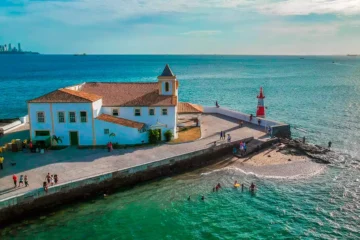
Discover the Sanctuary of Monte Santo in Bahia, a place of religious pilgrimage and tourism for centuries, set in the breathtaking landscape of the Serra do Piquaraçá. The architectural complex of the city of Monte Santo in Bahia is of great scenic and symbolic beauty, combining natural and cultural heritage, […]
Culture, history and religion of the Brazilian Northeast
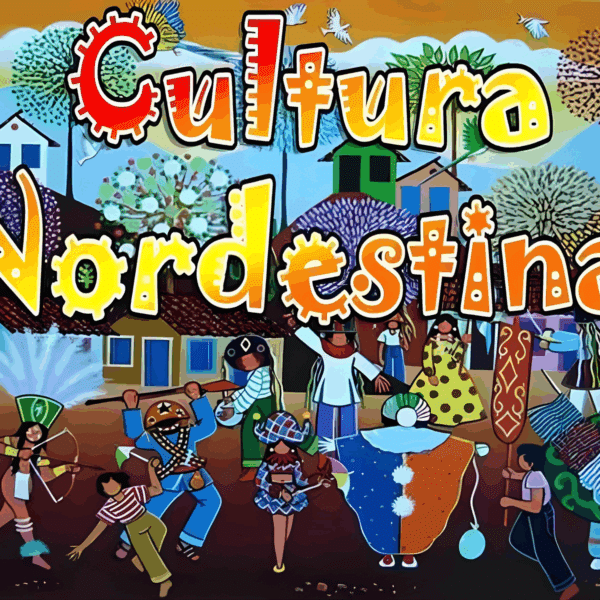
Brazil’s Northeast is one of the country’s most culturally rich regions, the result of a mixture of indigenous, African and European influences. This diversity is reflected in the religion, architecture, cuisine, music, dance and handicrafts of the nine states that make up the region.
Religion and syncretism
Religion is strong and syncretic. In Bahia, Candomblé has a strong presence, while Maranhão stands out for its Tambor de Mina. Religious festivals, pilgrimages and popular Catholicism are common throughout the Northeast, mixing faith and tradition.
History and architecture
The historical heritage is preserved in centres such as Pelourinho (BA), Olinda (PE) and São Luís (MA), which have been recognised by UNESCO. Baroque churches, adobe houses and colonial buildings tell the story of the region from Brazil’s earliest days.
The cuisine
The cuisine of the Northeast reflects its cultural diversity. Acarajé, vatapá, moqueca, baião de dois, bolo de rolo, arroz de cuxá and buchada de bode are typical dishes that combine local ingredients with Afro-Indian and European traditions.
Music and dance
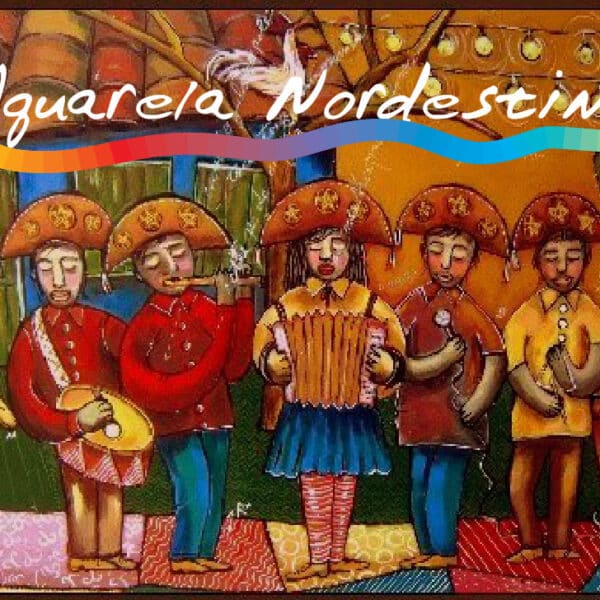
The Northeast is home to rhythms such as forró, frevo, maracatu, axé, samba de roda and bumba-meu-boi. Music and dance are strong expressions of northeastern cultural identity and resistance.
Handicrafts
Each state has its own speciality: lace and embroidery (CE), caruaru clay (PE), buriti (MA), wood and ceramics (BA) and sand bottles (RN). Handicrafts reveal the talents and stories of the people of the Northeast.
A symbol of resistance, faith and creativity, the Northeast is essential to understanding the cultural and historical formation of Brazil.
European architecture – chronology, styles and characteristics
European architecture has several architectural styles that have changed slowly over the centuries. Unlike other styles, such as fashion or furniture design, architectural styles change much more slowly over the centuries. However, the architectural style of a building can also tell us about the period in which it was built. […]
The culture of Northeastern Brazil: how it originated, influenced and flourished
The culture of Northeastern Brazil is quite diverse, having been influenced by indigenous peoples, Africans and Europeans. Customs and traditions often vary from state to state. Being the first region actually colonised by the Portuguese in the 16th century, who met the native populations and were accompanied by Africans brought […]
Musical styles, rhythms, singers and composers of northeastern Brazil
Northeastern music includes rhythms such as coco, xaxado, martelo agalopado, samba de roda, baião, xote, forró, axé and frevo, among others. The Armorial Movement of Recife, inspired by Ariano Suassuna, has carried out an erudite work to valorise this popular rhythmic heritage of the Northeast (one of its best known […]
Extreme sports in the Northeast of Brazil: Destinations not to be missed
The Northeast of Brazil is not only a paradise for beach lovers, but also for lovers of extreme and adventure sports. The region is home to incredible scenery and geographical diversity, including dunes, cliffs, valleys, mountains, canyons, rivers and walls – perfect for sports such as kitesurfing, windsurfing, abseiling, free […]
Influences and main dishes of northeastern cuisine
The Northeastern cuisine is a direct result of the socio-economic dynamics that have historically shaped the region. Its recipes incorporate elements of Portuguese cuisine, introduced during the colonial period; African food traditions, assimilated in the context of slavery; and Indigenous food, inherited from the indigenous populations. In general, the dishes […]
Brazil’s historic moments illustrated in great works
From the arrival of the Portuguese colonisers in 1500 to Brazil’s independence, many important events marked the history of Brazil. These historical events were recorded in the works of painters such as Oscar Pereira da Silva, Victor Meirelles, Jean-Baptiste Debret, Manuel José de Araújo and Pedro Américo. Main historical events […]
Biography of Victor Meirelles and analysis of the work “The First Mass in Brazil”
The first mass in Brazil, held on 26 April 1500, just four days after the Portuguese landed at Porto Seguro, was depicted by Victor Meirelles between 1859 and 1861, whilst the artist was living in Paris. The painting was inspired by the letter written by Pero Vaz de Caminha to […]
Jean-Baptiste Debret: biography and works in Brazil
Jean-Baptiste Debret (1768-1848) was a renowned French painter, draughtsman and lithographer, known for his significant contribution to the art and historical documentation of Brazil in the 19th century. A graduate of the Paris Academy of Fine Arts and a disciple of Jacques-Louis David, he initially stood out for his works […]
History of Baroque Architecture in the Northeast and Minas Gerais
Baroque architecture is an important part of Western history, with unique characteristics that shaped the urbanisation of Europe and can still be seen in Brazil today. Although the first signs of Baroque architecture can be found in works from the early 16^(th) century, it was only towards the end of […]
Popular Art from the Northeast of Brazil
Popular art from the Northeast of Brazil reflects the vastness of its territory and the diversity of its culture, and some types of work can be found, with slight variations, in all the states. While relying on tradition, popular art of the Northeast discovers new languages, techniques and materials: the […]
History, biography and paintings of Frans Post in Dutch Brazil
The representation of Brazil through European eyes in the 17th century From the 16th century, conquerors began to interpret South America not only through words, but also through images. This process of visual representation gained momentum with the Dutch invasion of northeastern Brazil between 1630 and 1654, when European artists […]
History and Chronology of the Portuguese Tile Industry
The art of tiling would take root in the Iberian Peninsula under the influence of the Arabs, who brought the unknown mosaics to their conquered lands to decorate the walls of their palaces, making them shine and shine with a complex play of geometries. The style fascinated the Spaniards and […]
Franciscans in Brazil: Urban, architectural and artistic heritage
The Franciscan presence in Brazil can be traced back to the Discovery, when Friar Henry of Coimbra, a member of the Cabral’s Expedition, celebrated the First Mass on 22 April 1500, shortly after arriving at the bay of Port Seguro, in the south of what is now the state of […]
Colours of houses and buildings in the colonial architecture of the northeast
The colours of the facades of the houses and buildings preserve the identity of the colonial architecture of the Northeast. Many houses, buildings, and especially churches, convents, squares and streets, date from the time when Brazil was mainly colonised by the Portuguese. In addition, various other peoples, such as the […]
King Momo, Pierro, Harlequin and Colombina – Carnival characters
Rei Momo, Pierrô, Arlequim and Colombina are the best known and most traditional Carnival characters and can be seen at parties and in marchinhas. The colourful costumes of these characters gave rise to the costumes worn at Carnival balls and are part of the joys of this popular festival. Video […]
History and Chronology of the Carnival of Salvador de Bahia
The Carnival of Salvador is a popular celebration that combines tradition, music and innovation and is one of the biggest and liveliest in the world. Its history includes several historical influences and the creation of the Trio Elétrico, which revolutionised the festival. The following are some of the highlights: Introduction […]
History of the introduction of Portuguese tiles in Brazil
According to Simões (1980), the main characteristics that distinguished Portuguese tiles in the first 25 years of the 17th century were monumentality, suitability for architecture and modernity. Portuguese tiles arrived in Brazil at the same time as the other arts, following the same process of acculturation as in Portugal. In […]
Maranhão’s handicrafts have more than 400 years of tradition
Maranhão’s handicrafts have a rich tradition of more than 400 years, reflected in the variety of artifacts found in the historic centre of São Luís. This handicraft production is characterised by creativity and innovation, elements that have been refined since the founding of the capital of Maranhão. The wealth of […]
The influence of Arab architecture on the buildings of Pernambuco
Pernambuco’s architecture is a rich mosaic of cultural influences, with a particular emphasis on the heritage of Arab architecture. Originating in the Iberian Peninsula, this influence shaped the architectural style of Portugal and left its mark on the buildings of Pernambuco, especially in Olinda. By exploring this link, we can […]
Historic Towns in the Northeast: Explore the Past
Discover the 12 most important historic cities in the Northeast of Brazil, built during the colonial period and still preserving a large part of their houses. The history of Brazil The history of Brazil is rich, extensive and full of contradictions. Developing a narrative that covers the details of the […]
The 7 north-eastern rhythms and musical styles that enchant Brazil
The 7 Northeastern rhythms and musical styles that are a hit in Brazil. The Northeast region of Brazil is characterised by its rich cultural diversity, uniquely expressed in its rhythms and musical styles. Made up of nine states with different historical, social and geographical characteristics, this region has developed over […]
Rural Maracatu: A carnival tradition in the interior of Pernambuco
Maracatu Rural is a traditional cultural manifestation that stands out in the city of Nazaré da Mata, located in the state of Pernambuco, Brazil. Originating from the rural region of Pernambuco, Maracatu Rural is a variation of Maracatu, a form of popular culture and Afro-Brazilian music and dance. Unlike Maracatu […]
Woodcuts and Cordel Literature in Northeastern Brazil
Woodcut and Cordel Literature: The Art and Popular Tradition of the Northeast In the Northeast of Brazil, both cordel literature and woodcut play significant cultural roles and are deeply rooted in regional traditions. This symbiotic relationship between woodcut and cordel literature not only beautifies the pamphlets but also amplifies the […]
Brazil’s northeastern subsoil has emeralds and archaeology
The underground of the northeastern hinterlands holds many treasures. Among them are emeralds, mined from depths of up to 150 metres. There are also natural caves, where researchers have found fossils of prehistoric animals and traces of Brazil’s ancient inhabitants. The subterranean labyrinths of the Sertões stretch for hundreds of […]
History of the 8-bass accordion and its influence on forró
The history of the 8-bass accordion and its influence on Forró Nordestino The accordion, including models like the 8-bass accordion, is an aerophone musical instrument of German origin. Composed of a bellows, free reeds and two wooden harmonic boxes, the 8-bass accordion is fundamental to the forró, which marks the […]
June festivals: Tradition and Culture in the Northeast of Brazil
Although the June Festivals are celebrated in all four corners of Brazil, it is in the Northeast that the festivities take on their greatest expression. The June Festivals in the Northeast of Brazil are one of the country’s most traditional and eagerly awaited celebrations, deeply rooted in the region’s popular culture. […]
Bobbin lace and embroidery: predominant handicrafts in Ceará
Bobbin lace and embroidery: Techniques and Stories Bobbin lace and embroidery are among the most traditional handicrafts in the Northeast of Brazil, especially in Ceará. Bobbin lace is not only a source of income, but also a form of entertainment and a link between the women who have marked the […]
Diógenes Rebouças and His Architectural Legacy
The Importance of Diógenes Rebouças in Bahian Architecture Diógenes Rebouças was undoubtedly the most renowned and influential architect in Bahia between the late 1940s and the early 1960s. Biography of Diógenes Rebouças Diógenes de Almeida Rebouças (Diógenes Rebouças) was born in 1914 on a farm in the Bahian municipality of […]
Turban is Religion, Fashion and Culture in Brazil and the World
For many, the turban is a symbol of blackness, culture and beauty, but this accessory, full of meanings and functions, is also widely used by people from the East. As well as being a symbol of identity and tradition for many African cultures, the turban has a strong presence in […]
Casa Grande & Senzala: The Work of Gilberto Freyre
Casa Grande & Senzala Casa Grande & Senzala was the work that made the Brazilian sociologist and writer Gilberto Freyre famous. This essay, published on 1 December 1933, deals with the formation and economic and social development of the Northeast during the colonial era. The importance of Casa Grande and […]
São Jorge dos Erasmos Sugar Mill: A Landmark in Brazil
The São Jorge dos Erasmos sugar mill was built in the newly founded town of São Vicente. The São Jorge dos Erasmos sugar mill was the third sugar mill to be built in Portuguese America, located in the centre of the town of São Vicente, now in the municipality of […]
Graciliano Ramos: The life and work of the Brazilian writer
Graciliano Ramos left his mark on Brazilian literature with works that portrayed the life of the man from the northeast of Brazil in the sertão. The writer belonged to the 2nd phase of modernism, whose main characteristic was regionalism. Raquel de Queiroz, Jorge Amado and José Lins do Rego were […]
Lampião and the Cangaço: Between History and Mythology
Lampião, an iconic figure of the cangaço, is often portrayed as a visionary warrior, fearless and cunning, but this heroic image has increasingly been called into question by contemporary historians. Virgulino Ferreira da Silva, the man behind the legend, not only orchestrated robberies and kidnappings, but also fostered a climate […]
Lampião and Cangaço: Between history and mythology
Lampião, the emblematic figure of the Cangaço, is often portrayed as a visionary, fearless and cunning warrior, but this heroic image has been increasingly challenged by contemporary historians. Virgulino Ferreira da Silva, the man behind the myth, not only orchestrated robberies and kidnappings, but also cultivated a scene of extreme […]
José Américo de Almeida: A Brazilian Literary Icon
José Américo de Almeida: A literary and political legacy of the Brazilian Northeast José Américo de Almeida (1887-1980) was a Brazilian writer and politician. His work “A Bagaceira” launched the Northeast Regionalist Generation and is a social critique of the reality of rural workers in the region. He was elected […]
Rapadura: A Sweet Treat from Northeastern Brazil
Rapadura: a traditional and nutritious sweet from Brazil The name rapadura, a variation of “raspadura” (from the verb raspar), refers to the scraping of the thick layers of sugar that stick to the walls of the pots used to make it. Origin and characteristics It is typical of the northeastern […]
História e Evolução do Trio Elétrico no Carnaval
The Trio Elétrico of musicians Dodô and Osmar celebrated their 64th anniversary in 2015, while axé celebrated its 30th anniversary. Without this sound truck, the Bahian Carnival would definitely not be the same. Carnival, one of Brazil’s largest popular festivals, is a vibrant reflection of the country’s culture and diversity, […]
Jorge Amado’s Life and Literary Contributions
The life and work of Jorge Amado: a legacy in Brazilian literature Birth and childhood Jorge Amado was born on 10 August 1912 on the Auricídia farm in the district of Ferradas, in the municipality of Itabuna, in the south of the state of Bahia. The farm was of great […]
History of Carnival in Brazil: Origins and Traditions
History of Carnival in Brazil Carnival, a festival of ancient Catholic tradition originating in Europe, is celebrated annually during the three days before Lent. Introduced to Brazil by the Portuguese colonisers, it was known as the Entrudo during the first centuries of colonial life. During this period, it was customary […]
Cultural Aspects of Northeast Brazil Explained
The cultural aspects of the Northeast Region are well known for their strong and distinctive cultural aspect. The Northeast Region of Brazil consists of the states of Alagoas, Bahia, Ceará, Maranhão, Paraíba, Pernambuco, Piauí, Rio Grande do Norte and Sergipe. Its total area is 1,561,177km², similar to the area of […]
Geography and Climate Regions of Northeast Brazil
The Northeast is the third largest region in Brazil and the largest in number of states, with nine: Alagoas, Bahia, Ceará, Maranhão, Paraíba, Pernambuco, Piauí, Rio Grande do Norte and Sergipe. Its total area is 1,561,177 km², similar to the area of Mongolia. The region has 3,338 km of beaches, […]
Northeastern Literature: A Rich Cultural Tapestry
History and origins of Northeastern literature: Biographies and contributions of the main authors The maturity of Brazilian literature Brazilian literature was born mature, expressing itself in the language of the 17th century – the Baroque – thanks to a writer from the Northeast, Gregório de Mattos. Since then, Northeastern literature […]
Northeastern architecture with typical colonial features
The architecture of the northeast has baroque buildings built by the sugar company mark the starting point of the long and varied path that northeastern architecture has travelled over five centuries. On the balconies of the sobrados of old São Salvador there are memories of maidens from the time of […]
Plastic Arts of the Northeast: A Cultural Journey
The plastic arts of the Northeast have received outside influences and information and have helped to build a genuinely Brazilian and local art – a process of appropriation and re-creation that goes back to the colony. The European artists who accompanied Maurício de Nassau during the Dutch occupation of Pernambuco […]
Música, Ritmos e Danças do Nordeste do Brasil
Music, rhythms and dances of the Northeast: A Celebration of Brazilian Culture It’s impossible to think about Brazilian culture without considering the music and rhythms of the Northeast. The themes and inventiveness of Northeastern music represent a mixture of influences, where tradition and innovation coexist. Cultural influences Throughout Brazil, the […]
History of Northeast Brazil – Chronology and Summary
The history of the Northeast begins with the discovery of Brazil, and the Northeast owes its birth and development to the sugar industry. Point zero of Brazilian history was in the Northeast, the history of the Northeast owes its birth and development to the sugar mill. Today, the region still […]
Brazil’s Northeast: Must-See Tourist Destinations
The Brazilian Northeast boasts idyllic beaches, a vibrant culture and itineraries to suit every type of traveller. In this comprehensive guide, you’ll find the best destinations by state, accommodation tips, local cuisine and suggested itineraries to help you make the most of your trip to the Northeast. The States of […]
Iemanjá: Discover the Orixá and the Traditional Festival in Salvador
The Iemanjá Festival in Salvador de Bahia attracts thousands of Bahians and tourists who flock to the beaches of the Rio Vermelho on 2 February every year. Iyemanjá, Yemanjá, Yemaya, Iemoja or Yemoja, is an African orisha whose name derives from the Yoruba expression “Yèyé omo ejá” (“Mother whose children […]
Candomblé: A Blend of African and Catholic Traditions
Candomblé: An Afro-Brazilian religion Candomblé is an Afro-Brazilian religion that developed in the 19th century, particularly in Brazil, from a mixture of African religious traditions brought by slaves, mainly from the region of modern-day Benin and Nigeria, with elements of Catholicism and indigenous traditions. Origins and cultural resistance Its origins […]
Discover the History of Capoeira in Salvador
Capoeira in Salvador: An authentic martial art Salvador, in Bahia, is one of the birthplaces of capoeira and offers numerous opportunities to see this martial art in its most authentic setting. The city is home to many renowned capoeira groups and historical sites where capoeira is practised regularly. The history […]
Iemanjá Festival: Meaning and Celebrations
Iemanjá, thousands of Bahians and tourists flock to the beaches of Rio Vermelho in Salvador every year on 2 February. The goddess Iemanjá Iyemanjá, Yemanjá, Yemaya, Iemoja or Yemoja is an African orisha whose name derives from the Yoruba expression “Yèyé omo ejá” (“Mother whose children are fish”). Identified in […]
The Origins of Umbanda: Brazilian History, Beliefs and Practices
Umbanda, by virtue of its origins, is a genuinely Brazilian religion Umbanda is a Brazilian religion, which emerged in the early 20th century, characterised by syncretism between elements of spiritualism, Afro-Brazilian cults, indigenous traditions and influences from popular Catholicism. Its core purpose is charity, peace and harmony, emphasising the connection […]
Itineraries focused on religious tourism in Salvador, Bahia
Salvador: A destination for religious tourism Salvador, the capital of Bahia, is one of the main destinations for religious tourism in Brazil, reflecting its rich historical and cultural heritage. Church and Spirituality Religious tourism in Salvador takes place in more than 300 secular churches. It is often said in the […]
The Rhythm of Candomblé and the Invocation of the Orixás
The importance of music in Candomblé In Candomblé, music plays a fundamental role in the invocation of the orixás, who act as intermediaries between humans and the gods. Spiritual connection Through rhythms and chants, followers establish a spiritual connection that allows the orixás to manifest. In the Bahia de Todos […]
The dress of the Baianas is influenced by African culture
The Baiana costume: A cultural expression The costume worn by baianas, often called baiano, reflects the influence of African culture in Brazil, combined with the swaying hips and swaying gait characteristic of samba. Traditional Baiana costume The traditional costume of the baiana is a set of traditional clothes and is […]
Origin and history of Acarajé: Discover the Afro-Brazilian tradition
Acarajé: An expression of Afro-Brazilian tradition Much more than just a dish from Bahian cuisine, acarajé is a true expression of the rich Afro-Brazilian tradition. With roots in Africa, this delicacy symbolises the fusion of cultures and the resilience of Afro-descendant communities over the centuries. Street vendors in Salvador Sold […]
History of Afro-Brazilian Religions: Candomblé and Umbanda
Afro-Brazilian religions arose from the forced encounter between African peoples brought to Brazil as slaves and local cultures. Through their coexistence, there was an exchange and synthesis of rites, beliefs and practices, giving rise to distinct religious traditions that are nevertheless linked by common roots. Video on the history of […]
History of the indigenous peoples of Bahia
When the Portuguese colonists arrived in southern Bahia in 1500, the Brazilian coastal lands were occupied by the Tupi-Guarani Indians. Indigenous groups of the Bahian coast The predominant indigenous groups on the Bahian coast were the Tupiniquins and the Tupinambás. The Tupiniquins inhabited the strip from Camamu to Espírito Santo. […]
The origins of Afro hairstyles in Salvador, Bahia
Afro hairstyles in Salvador have deep roots in African culture brought by enslaved peoples during the colonial period. These hairstyles are an essential part of the identity and resilience of African peoples and Afro-descendants in Bahia and Brazil as a whole. Video about Afro hair styles in Salvador Afro Hairstyles […]