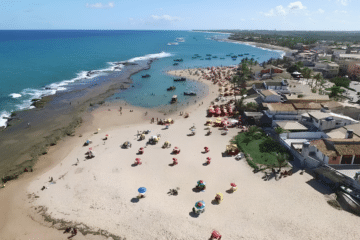
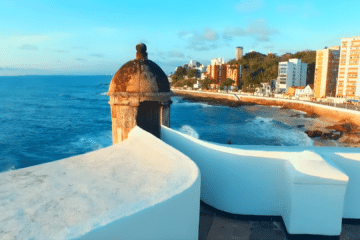
Videos about the village of Arembepe
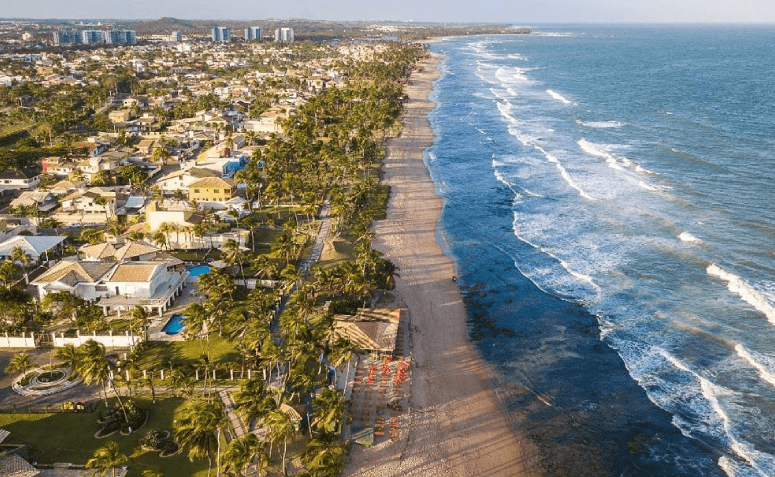

Hippie Village: history and experience
The Arembepe Hippie Village flourished in the 1960s and 1970s and welcomed many distinguished visitors. Today, nestled between the dunes and the Capivara River, around 60 residents live in rustic huts, producing handicrafts and organising cultural activities.
Practical tips:
- Visit the village in the morning to soak up the atmosphere of the craft markets.
- Buy items directly from the artisans and ask about local workshops and demonstrations.


Tamar Project: site visit and environmental education
Arembepe is home to one of the Tamar Project’s historic centres (since 1982). The centre offers exhibitions, interactive tanks and guided tours — a great option for families and schools.
Practical tips:
- Check the visiting hours and any cub release events taking place during the season.
- Please respect the marked nesting areas and follow the guides’ instructions.
Beaches and natural pools
Main beaches:
- Praia Central — reefs that form natural pools at low tide; ideal for swimming and families.
- Piruí — waves for surfing and a more secluded setting.
- Canto Beach — a coral reef and a peaceful sunset.
- Capivara River — great for swimming when the water is high.


Village, cuisine and crafts
The town centre features a revitalised square, the Church of St Francis of Assisi, craft shops and restaurants specialising in seafood. Recommended spots: the Craft Centre and the traditional Bar do Alceu.
Food tip: try moquecas, shrimp bobó and acarajé made by local cooks.
Nature, birdwatching and hiking trails
Arembepe forms part of the North Coast Environmental Protection Area (APA), featuring sandbanks, mangroves and dunes. It is ideal for nature walks, birdwatching and guided tours led by local guides.
Cultural events and heritage
In the summer, there are fairs, moonlight gatherings and events celebrating the history of the hippie village. There are local initiatives to have the village recognised as a cultural heritage site — keep an eye on the local association’s social media for the programme.
How to get there and practical tips
- Distance: ~42 km from Salvador (Luís Eduardo Magalhães Airport ≈ 40 minutes via the BA-099, Estrada do Coco).
- Transport: hire car, taxi, ride-hailing apps or city bus (see up-to-date timetables).
- Best time to visit: September to March — warm weather and calmer seas.
- What to bring: sun cream, a hat, insect repellent, walking shoes and cash for the markets.
- Environmental responsibility: do not walk on the reefs, respect spawning grounds and take your rubbish away with you.


A practical 1-day itinerary
- Morning: a visit to the Hippie Village and the Craft Centre.
- Afternoon: natural pools at Praia Central; surfing at Piruí (optional).
- Sunset: Canto Beach or the banks of the Capivara River.
- Evening: dinner with live music in the town centre.

Publicações Relacionadas

Paranaguá Palace — History, architecture and visiting information | Ilhéus (BA)

São Jorge Parish Church in Ilhéus — history, architecture and religious art

History of the Convent and Church of Nossa Senhora da Piedade in Ilhéus

São Sebastião Cathedral (Ilhéus) — History, architecture and tourism
The 15 Most Visited and Well-Known Beaches in Bahia
The 3 most paradisiacal beaches in Bahia

Skydiving, Paragliding and Ballooning in Bahia

Historic Towns in Bahia: A Journey Through Time
Places to visit on the south coast of Bahia

História da Arte - Caracteristicas, Aspectos e Periodos
Tourist Attractions in Bahia: main attractions, beaches and cities

Subaúma, Bahia: where it is, things to do and where to stay
Massarandupió Naturist Beach, Bahia: Rules and Access
Beaches on the South Coast of Bahia: 10 Best and Tips
Towns and the Abrolhos Archipelago — The southernmost tip of Bahia

Baixio: Between lagoons, dunes and the charm of a village surrounded by nature
Best Beaches in Bahia: Your Guide to Paradise
Salinas da Margarida (BA) — Beaches, Attractions and a Complete Guide

Guarajuba Beach, Bahia: Natural Pools and Tips

Barra do Cahy: Brazil's first beach - history and nature

Garcez Beach: Discover Paradise in Jaguaripe

Barreiras: An Ecological Paradise in Bahia
Catabrigas Waterfall — A natural haven in Ibirajá, Itanhém (BA)

Serra Grande: Your Guide to Bahia's Paradise
Corumbau, Bahia: Ponta de Corumbau, beaches, map, how to go

Taipu de Fora: Discovering Natural Pools

Iguaí: A Guide to Waterfalls and Relaxation
Morro de São Paulo: Map, Beaches & How to Get There (2026)
Tourism in São Francisco do Conde (BA) — Tips and Attractions

Todos-os-Santos Bay (Bahia) — History, geography and conservation
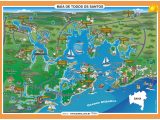
Todos os Santos Bay — Nature, History and Water-based Tourism
Bay of Todos os Santos: nature, history and cultur

Rafting in Taboquinhas: The Ultimate Adventure Guide
Abseiling Sites in Bahia: Top Locations to Explore

Diving Spots in Bahia: Discover Underwater Treasures
Paragliding at Pitinga Beach in Arraial d'Ajuda
This post is also on:
 Português
  English
  Deutsch
  Español
  Français