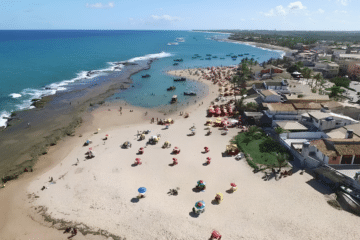
Caraíva enchants with its unspoilt beauty and rustic, authentic atmosphere. Located on the south coast of Bahia, 70 kilometres from Porto Seguro, the sandy village maintains a simple lifestyle in harmony with nature.
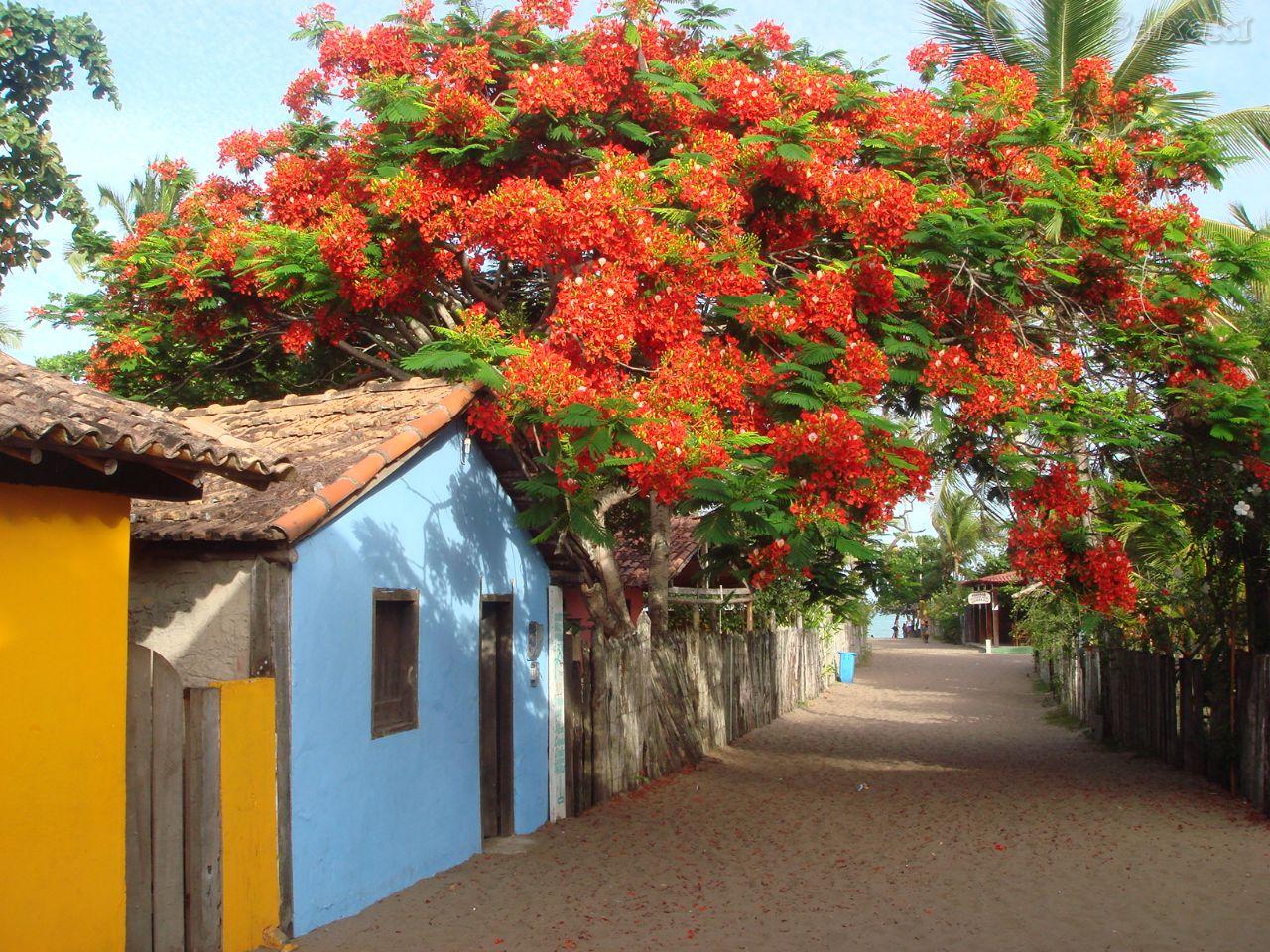
Caraíva is an isolated and charming village
With a population of around 2,000, Caraíva is a small village that has attracted visitors seeking more authentic experiences away from the modern world.
Caraíva can be reached by a dirt road about 38 kilometres from Trancoso. The journey takes about an hour by car on sandy roads with little traffic.
The village retains its rustic charm and cars are not allowed – they must be parked before crossing the Caraíva River, which is done by canoe.
Although Caraíva didn’t have conventional electricity until recently, the village now has electricity, with underground wiring to preserve the landscape. In addition, some establishments still use solar energy and generators as alternative sources.
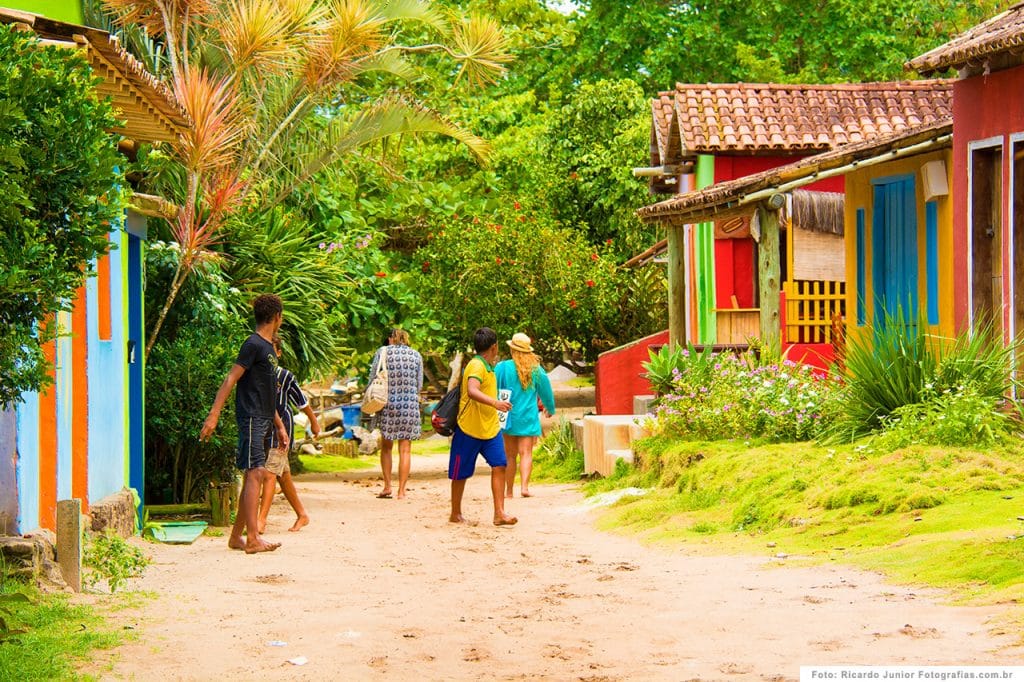
The village’s infrastructure remains simple and unspoilt, without large buildings or excessive technology, preserving the bucolic and paradisiacal atmosphere that enchants visitors.
The village of Barra Velha, home to the Pataxós Indians, is 6 kilometres from Caraíva, within the reserve that forms part of the National Park of Monte Pascoal – the historic site where Portuguese navigators, led by Pedro Álvares Cabral, first sighted Brazil.
Video about Caraíva’s Tourist Attractions
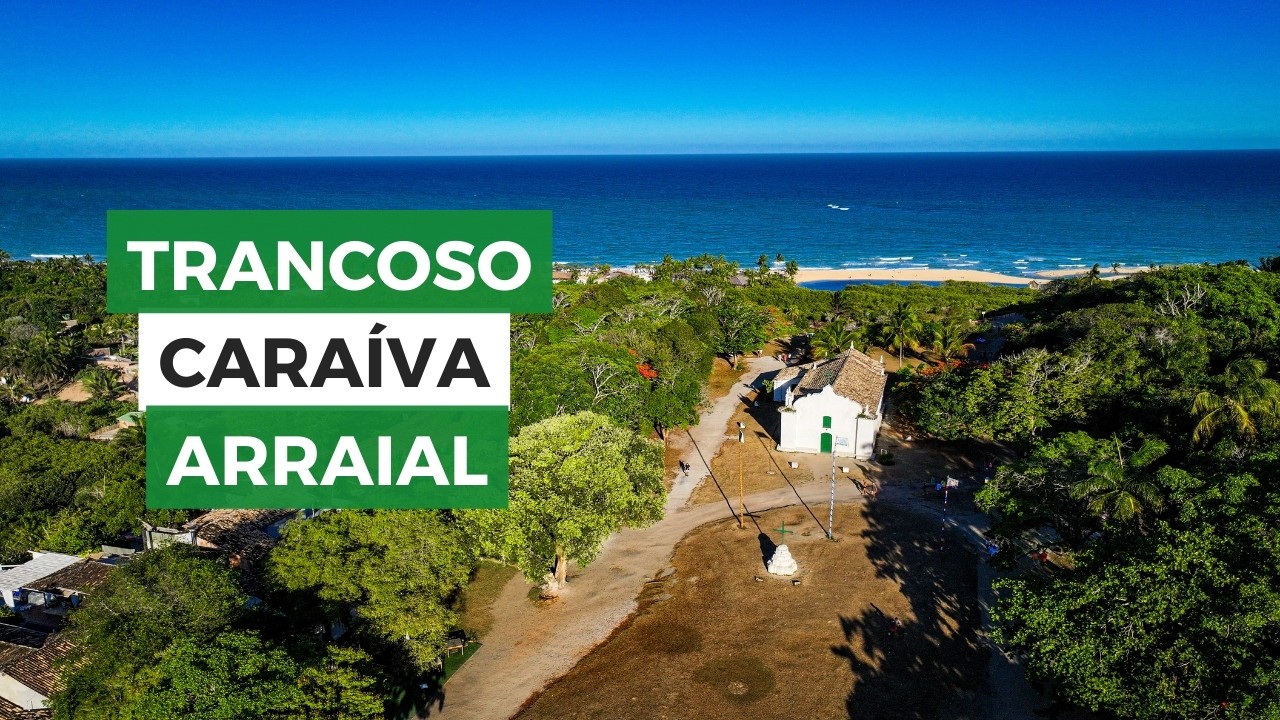
Caraíva, Trancoso e Arraial: Três paraísos do litoral baiano

Caraíva na Bahia02:32
Caraíva - Guia Turístico26:01
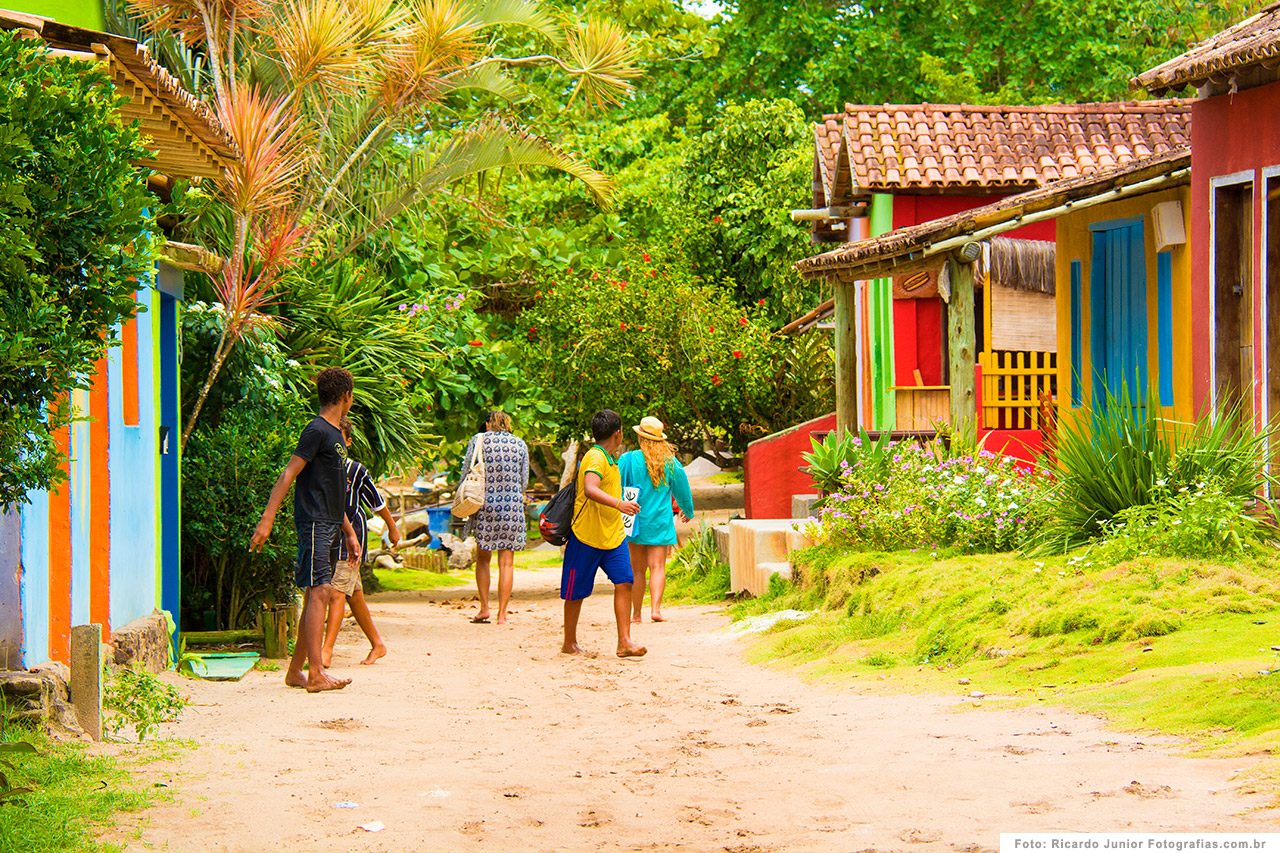
Caraíva - Dicas de Viagem11:01
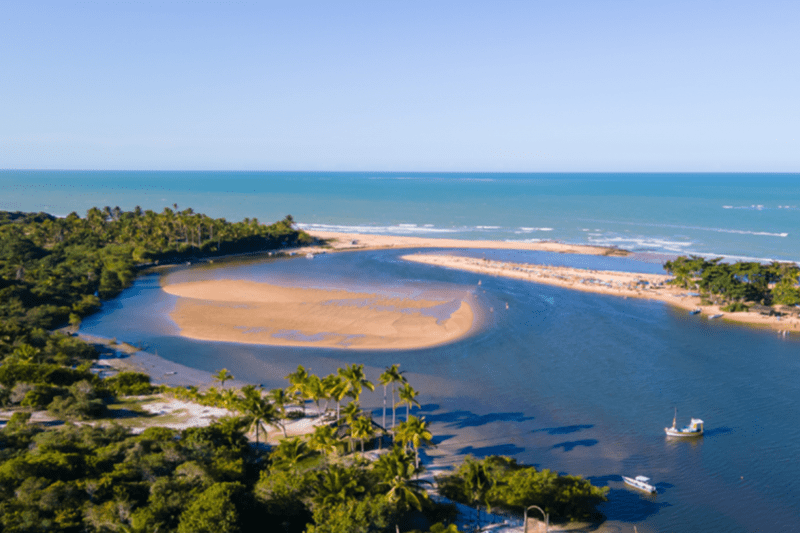
5 melhores praias de Caraíva10:25
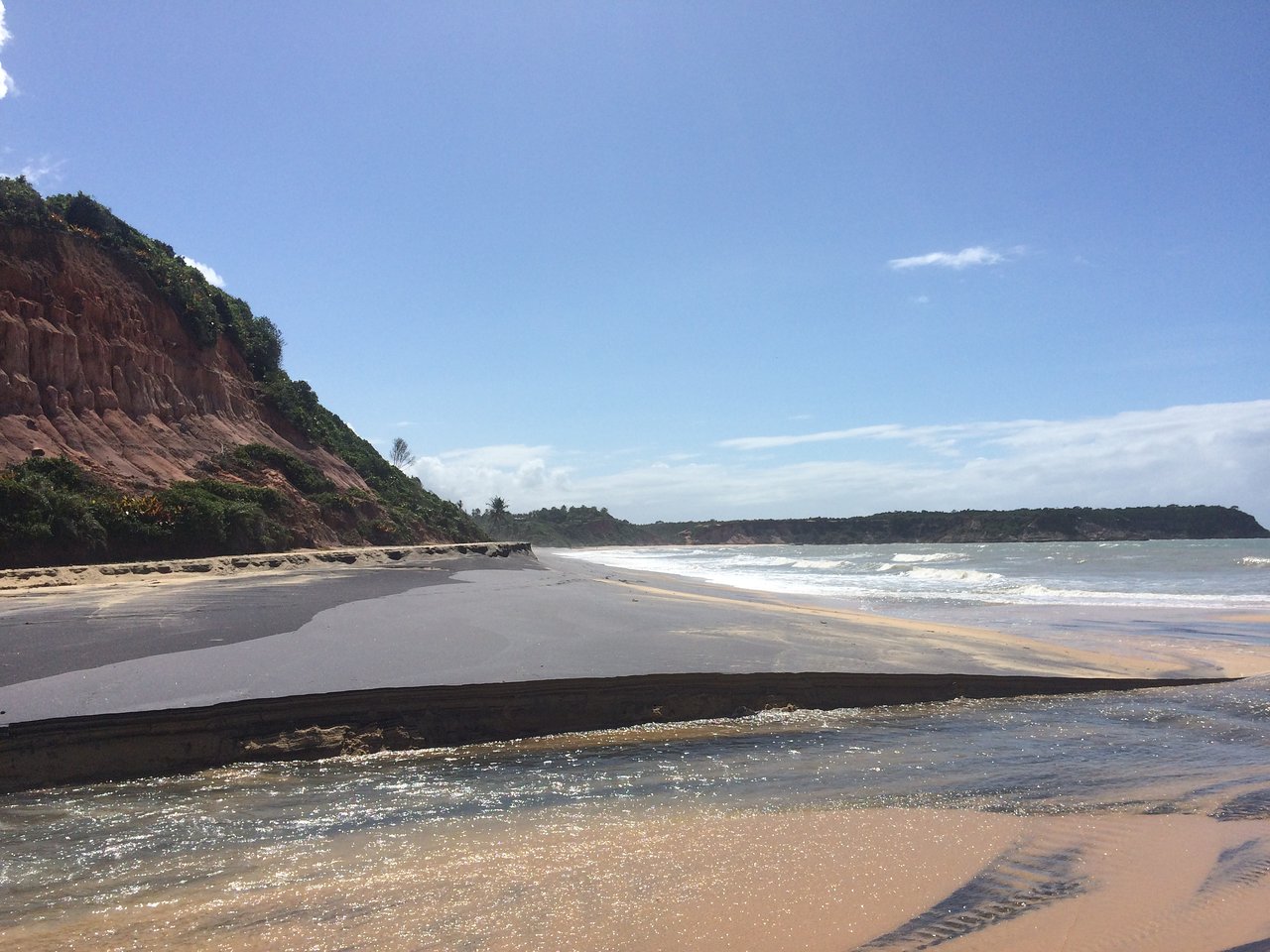
Praia Juacema ou do Satu em Caraíva07:11
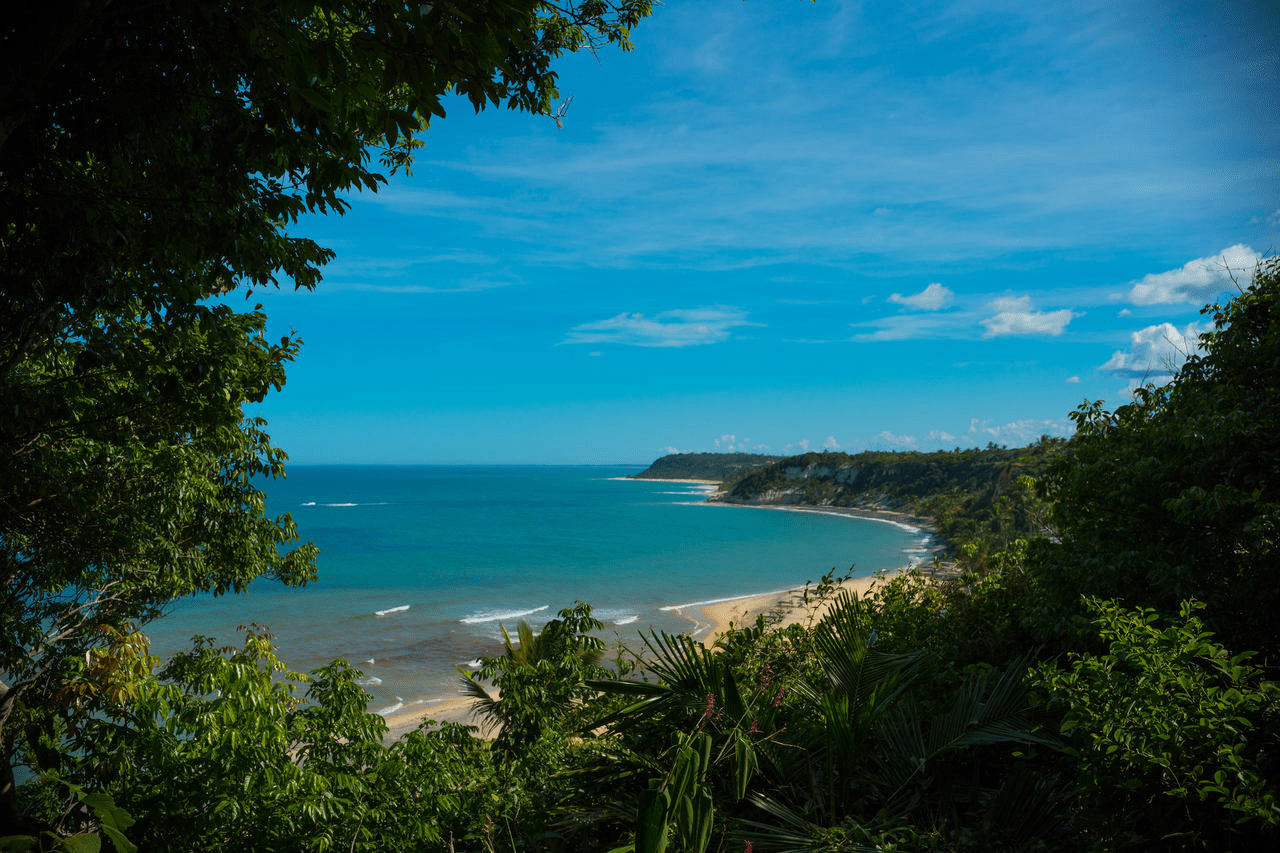
Praia do Espelho - Trancoso - BA03:47
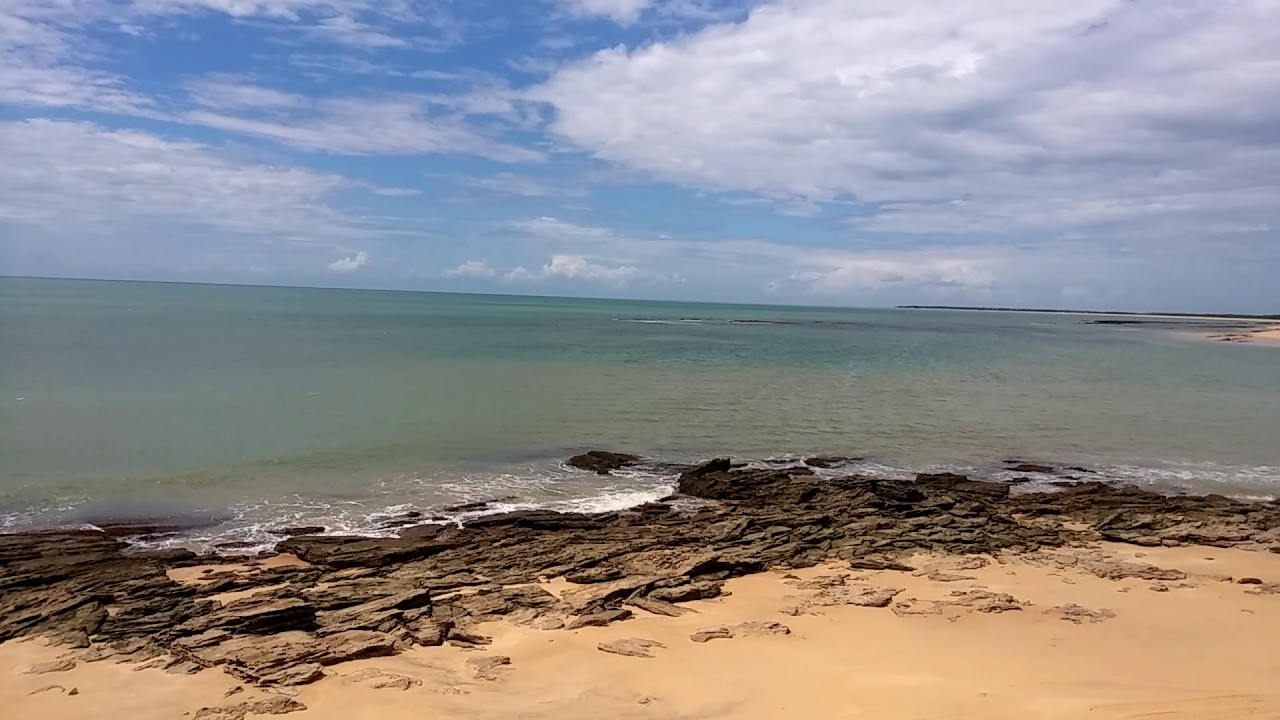
Praia Barra Velha em Caraíva00:14
Arrival in Caraíva: An unforgettable experience
Separated from the mainland by the Caraíva River, the village is reached by canoe, making arrival a special moment.
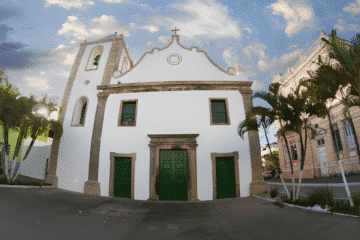
As soon as you disembark, the village’s rustic and welcoming atmosphere is revealed: colourful houses, sandy streets, coconut trees and small boats create a postcard-perfect landscape. As there are no paved roads, luggage can be transported on foot or by cart from the harbour.
Natural beauty and conservation
Caraíva is located within two protected areas:
- APA Caraíva-Trancoso (Environmental Protection Area)
- RESEX (Corumbau Marine Extractive Reserve)
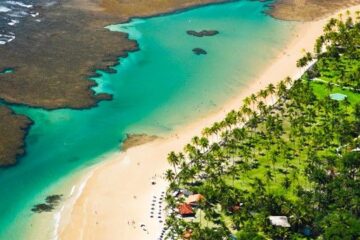
The village is surrounded by practically deserted beaches, coconut groves, colourful cliffs and the beautiful Caraíva River, which flows into the sea in a unique setting.
The locals emphasise the importance of preserving the environment and encourage sustainable practices and conscious tourism.
What to do in Caraíva?
- Walk along the beaches and the river: The beauty of the coastline and the tranquillity of the Caraíva River invite you to relax.
- Contact with the Pataxós: The indigenous culture is present in everyday life, with local handicrafts – necklaces and ornaments made from coloured seeds are excellent souvenirs of the trip.
- Diving and Sailing: Caraíva’s sea is ideal for activities such as stand-up paddle boarding, kite surfing and scuba diving.
- Ponta da Barra: The place where the River meets the sea, ideal for swimming and admiring the sunset.

Map of the Discovery Coast in Bahia .

Beaches of Caraíva
1. Caraíva Beach
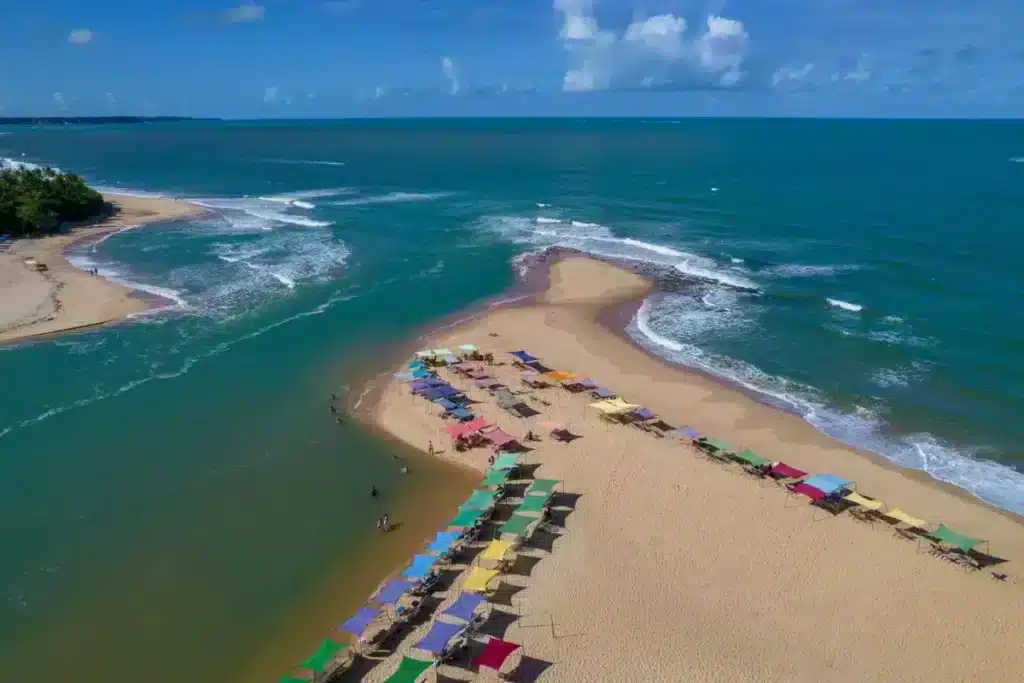
The main beach in the village, it is about 2 kilometres long with fine, clear sand and crystal clear waters. The sea is ideal for diving and water sports. Pedra de Tatuaçu, a reef about 20 minutes away by boat, is one of the main diving spots in the region.
2. Satu (or Juacema) Beach
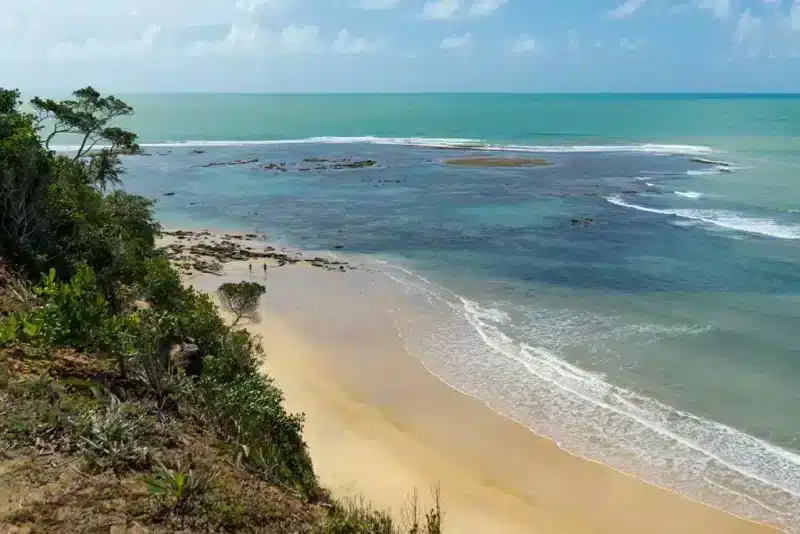
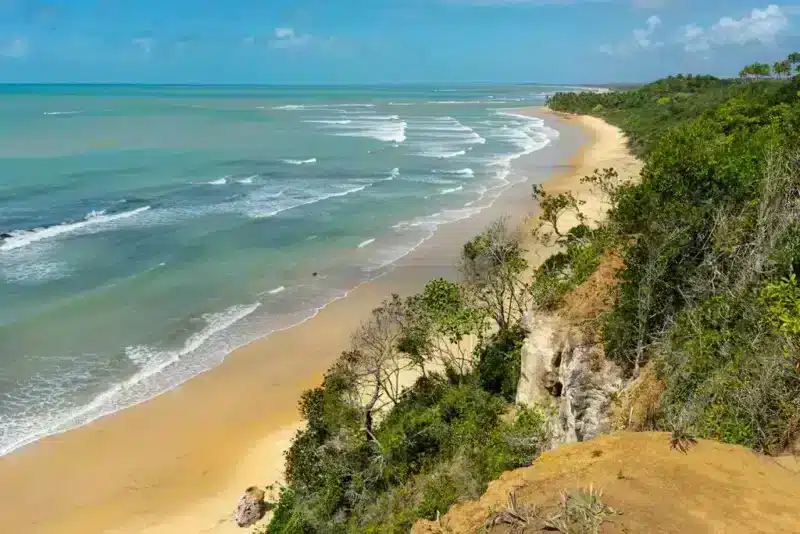
With golden sand and greenish water, this beach is a paradise. The highlight is the natural lagoons, freshwater formations close to the shore, ideal for relaxing.
3. Mirror beach
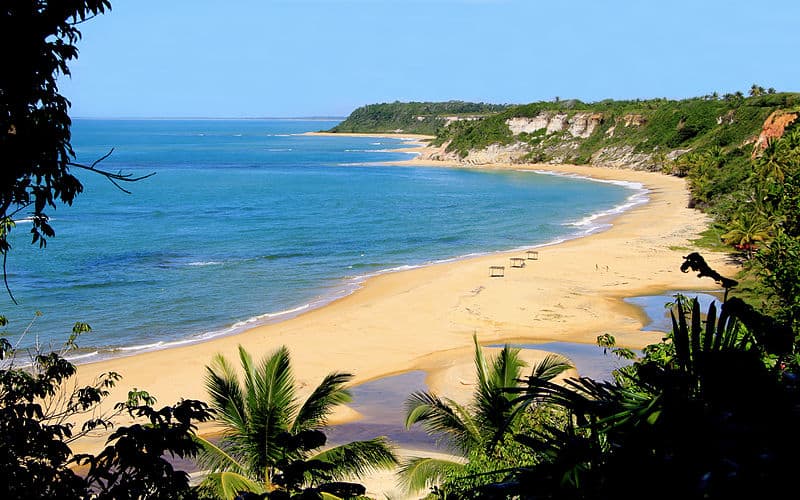
Considered one of the most beautiful beaches in Brazil, it has natural pools, colourful cliffs and reefs, as well as rivers that flow into the sea, creating a unique setting.
The name “Mirror” comes from the reflection of the sun on the surface of the water, creating a dazzling effect. Located 21 kilometres from Trancoso and 80 kilometres from Porto Seguro, it is part of two Nature Reserves and a Mining Reserve.
4. Barra Velha beach
Only accessible on foot or by boat, 6 kilometres south of Caraíva. It is a protected area within the Monte Pascoal National Park, where the Pataxós Indian Village is located.
Conclusion
Caraíva is a special destination, perfect for those who want to get away from the fast pace of the cities and connect with nature, indigenous culture and the authentic Bahian lifestyle.
Whether you want to explore deserted beaches, enjoy forró nights by the sea or just relax, this small village has retained its rustic charm and unique atmosphere, making it one of the most unforgettable places on the south coast of Bahia.
Bahia.ws is the largest tourist guide to Bahia, Salvador and the Northeast.
Tourist guide of Caraíva in Bahia

Publicações Relacionadas
The Secret History of Salvador, Bahia: Caramuru and the City’s Early Day
7-day itinerary in Salvador and the surrounding area: Pelourinho, the islands and Praia do Forte
Whale Coast (BA) — Complete guide: Abrolhos, beaches and whale-watching
Bom Jesus da Lapa Sanctuary: A Complete Visitor’s Guide
History of Cocoa: From Aztecs to Modern Use
Historic Towns in Bahia: A Journey Through Time
South Coast of Bahia: Discover Stunning Beaches
Iraquara is also known as the "city of caves"
Wine Tourism in the São Francisco Valley Guide
Caravelas (BA) — Complete Guide: Beaches, History and Abrolhos
Tourist Guide to the Pantanal in Bahia — Jaguaripe (BA) | Mangroves, Fishing and Excursions
Subaúma Beach: The Perfect Escape in Bahia
Learn more about the sloth and its unique characteristics
Todos-os-Santos Bay (Bahia) — History, geography and conservation
Alcobaça, Bahia: A Comprehensive Guide to Beaches and History
Churches in Salvador (BA) — a guide: history, architecture and itinerary
Island of Fear: Mysteries and Hauntings
Bom Jesus dos Passos Island: A Complete Guide (Beaches, Church and How to Get There)
Bahia Art Museum (MAB): Learn about its history and collection
Tourist Attractions on the Discovery Coast in Bahia
Origin and History of Capoeira in Brazil Explained
The most visited churches in Salvador — itinerary and tips
Trail to Buracão Waterfall in Chapada Diamantina
Blue Fountain in Chapada Diamantina: a complete guide
Camamu Bay — A Hidden Paradise in Bahia
Church of the Third Order of St Francis — History, Art and Baroque Architecture
The 3 most paradisiacal beaches in Bahia
Todos os Santos Bay — Nature, History and Water-based Tourism
Lacerda Elevator — history, construction and visits
Barreiras: Where Carnival Meets Adventure Tourism
Tourist Areas in Bahia - Tourist Guide
Churches of Salvador: Architectural and Historical Treasures
Trekking - Popular trails in Chapada Diamantina
Tourist Attractions in Bahia: main attractions, beaches and cities
History, the Festival of Nossa Senhora das Candeias and Tourist Attractions
Serra Grande: Your Guide to Bahia's Paradise
This post is also on:
 Português
  English
  Deutsch
  Español
  Français