Ponta de Humaitá is one of the most charming spots in Salvador, situated near Monte Serrat Fort on the Itapagipe peninsula.
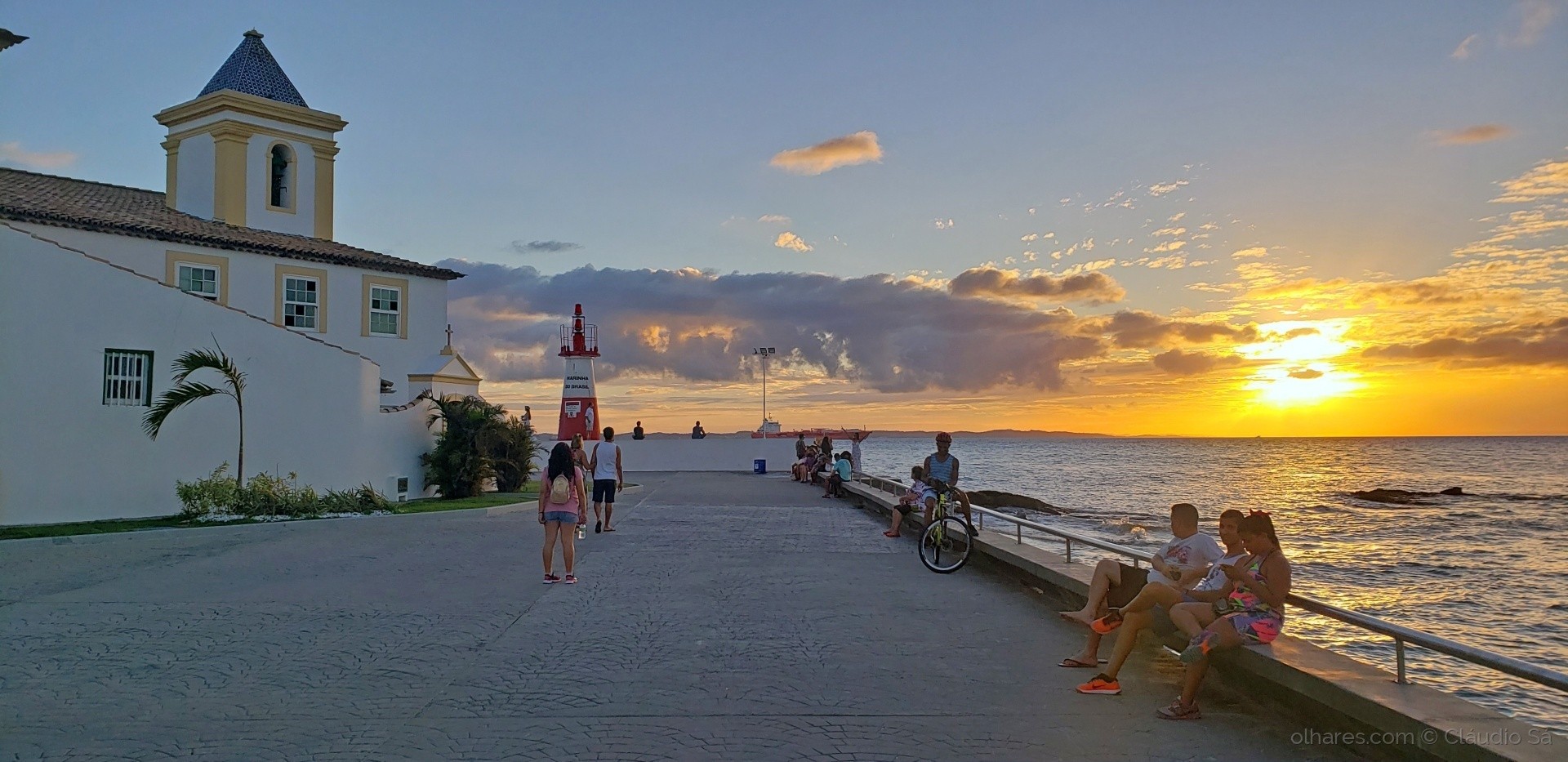
With a stunning view of Todos os Santos Bay, the spot is particularly renowned for its unforgettable sunsets.
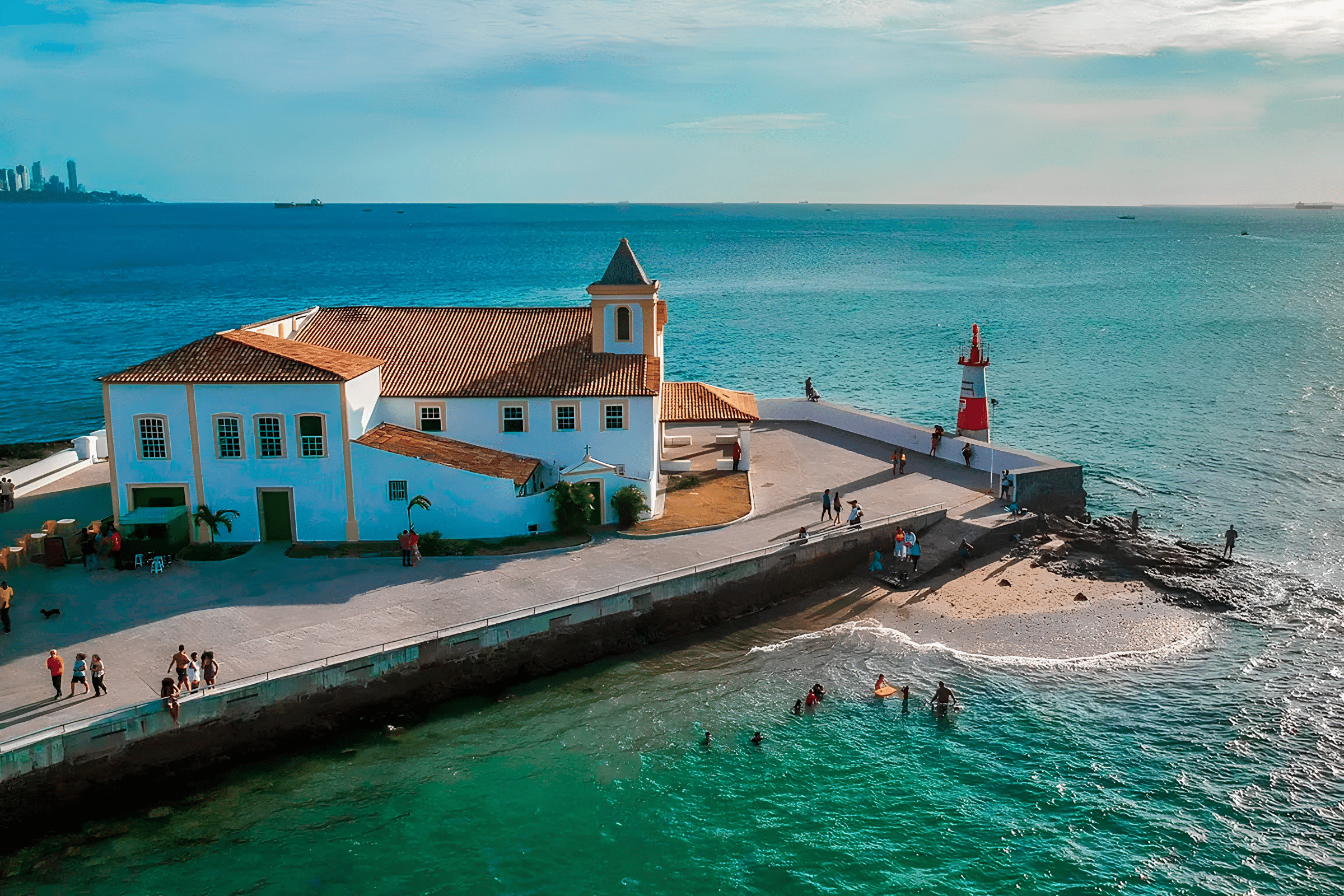
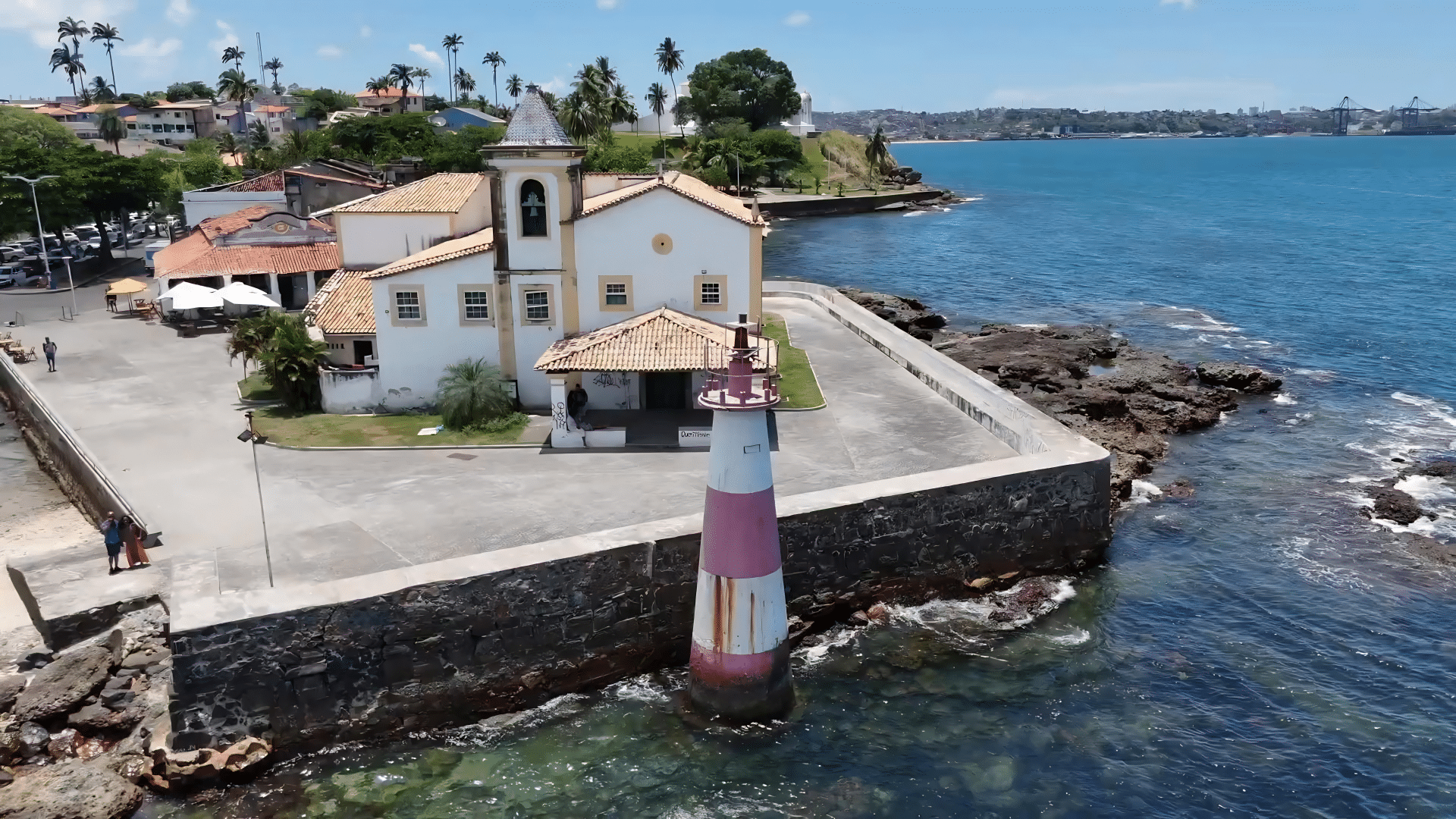
In the courtyard that juts out over the sea, there is a church, a convent and a lighthouse, creating one of the most picturesque scenes in the region.

Ponta de Humaitá is renowned for its cultural diversity and spontaneous religious gatherings, such as masses and Candomblé samba circles.
Visitors enjoy the calm sea, the architectural beauty of the Church of Nossa Senhora do Monte Serrat and the area’s history, which includes Monte Serrat Fort, built in the 16th century to defend against Dutch invasions.
Since 1993, the fort has housed the Armoury Museum, which boasts a collection of historical weapons.
Ponta de Humaitá thus offers an experience that combines natural beauty, culture and history.

Video about Ponta de Humaitá in Salvador, Bahia



Places of Interest in Ponta de Humaitá
Ponta de Humaitá, in Salvador, is a charming destination offering a variety of tourist attractions for visitors.
1. Humaitá Lighthouse
The Humaitá Lighthouse, opened in 1935, is the third and last lighthouse to be built in Salvador. Located at Ponta de Humaitá on the Itapagipana Peninsula, it stands out for its simple, charming design, featuring a white cylindrical tower that blends in with the surrounding landscape.

It is the only lighthouse situated within Todos os Santos Bay, offering spectacular views and serving as a popular spot for watching the sunset.
With a narrower field of view compared to the lighthouses at Barra and Itapuã, the Humaitá Lighthouse forms part of the region’s architectural complex and is under the care of the Army’s Regional Maintenance Park.
2. Church of Our Lady of Monte Serrat
This small, old church is an architectural and religious landmark in the region. It is a place where the faithful gather for masses and religious events, offering an atmosphere of peace and spirituality.

The original shrine of Nossa Senhora do Monte Serrat was founded around 1580. The architectural complex dates from the second half of the 17th century and was designed by the Italian architect Baccio de Filicaya.
The church was built by the Governor-General of Brazil, Francisco de Souza, at the same time as he built the Fort of São Felipe. Francisco de Souza donated the church to the Monastery of São Bento.

In the early 20th century, it was renovated and the high altar was adorned with ornaments from the Church of São Bento. It houses a statue of Saint Peter the Penitent, created by Friar Agostinho da Piedade.
3. Monte Serrat Fort or São Felipe Fort
One of the best-preserved forts in Salvador, built in the 16th century. This military monument offers an insight into the city’s history and is now home to the Armoury Museum, which houses a collection of civilian and military weapons.

Ponta de Humaitá is situated near the Fort of Monte Serrat, also known as São Felipe, a 16th-century structure which, thanks to its harmonious lines, is considered the most beautiful military monument in Bahia.
Construction began in 1583 at a strategic location at the tip of the headland, and the building was completed in 1742 without any alterations to its original design.
Since 1993, it has housed the Armoury Museum, which displays civilian and military weapons, some of which were used by the Army in the past.
From this fort, one has the best view of the entrance to the Bay of Todos os Santos, with Salvador on one side and Itaparica Island on the other.
Frequently Asked Questions about Ponta de Humaitá
What is Ponta de Humaitá?
It is a historic and tourist attraction in Itapagipe, Salvador, known for the Humaitá Lighthouse, the Church of Monte Serrat and views of the Bay of Todos os Santos.
How do I get to Ponta de Humaitá?
By car or taxi through the Itapagipe neighbourhood; there are also bus routes nearby. Use GPS/Google Maps with the location’s coordinates.
What is the best time to visit?
Late afternoon is the perfect time to watch the sunset (the golden hour). Early mornings are good for photos with fewer people around.
Is there an entrance fee?
Access to the waterfront is usually free. There may be an admission charge for tours inside specific buildings — please check locally.
Is the area safe for tourists?
It is a tourist area, but you are advised to keep an eye on your personal belongings, avoid quiet areas at night and follow local advice.
Is there on-site parking?
There are parking spaces on the street and in nearby car parks; at peak times it can be difficult to find a space, so consider using ride-hailing apps or public transport.
Is the venue wheelchair accessible?
Some parts of the waterfront are flat and accessible, but historic buildings may have limited accessibility. Please check for specific information before visiting.
Can I take photos and do photo shoots?
Yes. For professional shoots or shoots involving bulky equipment, please check local regulations and, if necessary, apply for a permit.
Which nearby attractions are worth including in your visit?
Monte Serrat Fort, Monte Serrat Church, the historic neighbourhoods of Itapagipe and other spots along Salvador’s waterfront.
Are there any places to eat or toilets nearby?
There are bars and restaurants nearby, and toilets in local shops; availability varies depending on the time of day and the season.
Bahia.ws – Tourist Guide to Salvador, Bahia and the Northeast

Publicações Relacionadas
A History of the Forts and Lighthouses of Salvador (Bahia)
Basílica Santuário Nossa Senhora da Conceição da Praia — history and architecture
Church of Nossa Senhora dos Mares (Salvador) — History and Architecture
What to do on Boipeba Island - Tourist Guide - videos
The History of Lençóis in the Chapada Diamantina — Origins, the Diamond Cycle and Heritage
History of the Church of Nosso Senhor do Bonfim in Salvador
Igatu: Explore the 19th-Century Stone Houses
Ilhéus (BA) — Beaches, Cocoa Plantations and Cultural Itinerary
Best Beaches in Bahia: Your Guide to Paradise
The most visited churches in Salvador — itinerary and tips
Arembepe: beaches (Piruí, Praia do Canto), Hippie Village and the Tamar Project
History, the Festival of Nossa Senhora das Candeias and Tourist Attractions
Jandaíra: Discover the charm of Mangue Seco
Rio de Contas: Learn about the history of how the city was founded
Santa Rita de Cássia: Attractions and Activities
Origin and History of Capoeira in Brazil Explained
Mucugê: Discover the local history and culture
Madre de Deus Island (BA) — Beaches, Islands and Tourism in the Recôncavo
Church of São Pedro dos Clérigos — History, architecture and religious art
Cultura dos Índios Pataxós na Costa do Descobrimento
Catabrigas Waterfall — A natural haven in Ibirajá, Itanhém (BA)
Guarajuba Beach: A Paradise on the North Coast of Bahia
Mangue Seco: The Last Beach on the North Coast of Bahia
Main Towns and Villages in the Chapada Diamantina Region
Abseiling Sites in Bahia: Top Locations to Explore
Costa do Sauípe, Bahia: Resorts and Tourist Guide
Serra Grande: Your Guide to Bahia's Paradise
Trekking in the Pati Valley in Chapada Diamantina
Guide to Trancoso (BA) — what to do, beaches and inns
Sempre-Viva: Symbol of Preservation in the Chapada Diamantina
Tourism in São Francisco do Conde (BA) — Tips and Attractions
São Jorge Parish Church in Ilhéus — history, architecture and religious art
Cathedral Basilica of Salvador — History, Sacred Art and Collection
Juazeiro: Discover the Land of the Carrancas
Paulo Afonso's Beautiful Waterfalls and Canyons
Prado (BA) — Beaches, Cliffs and Whale Watching | Whale Coast
This post is also on:
 Português
  English
  Deutsch
  Español
  Français