Nossa Senhora dos Mares Church: Gothic Architecture

Nossa Senhora dos Mares Church: A neo-Gothic heritage site in Salvador

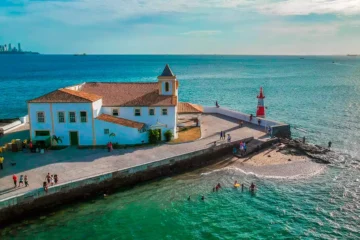
The Nossa Senhora dos Mares Church, located in Salvador, Bahia, is an important religious and cultural monument of the city. Also known as the Church of Nossa Senhora dos Mares and São Pedro Nolasco, it is located in the Mares district, a traditional area of Salvador, close to the Lower Town.

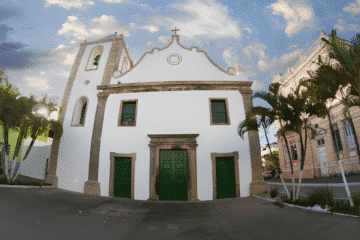
Igreja Nossa Senhora dos Mares em Salvador BA
Church of Nossa Senhora dos Mares, Salvador BA

Despite its importance, the church is not listed because it is considered new and has no significant historical facts associated with it.

Video about the Gothic style of the Nossa Senhora dos Mares Church

Igreja Nossa Senhora dos Mares em Salvador
play-rounded-fill

Igreja Nossa Senhora dos Mares em Salvador

See also Churches in Salvador de Bahia.

1. The history

The Gothic style emerged in the middle of the 12th century in France at a time of population growth and economic, commercial and urban development. This context allowed the rise of an urban elite and the affirmation of clerical power, both of which invested in the embellishment of cities with the construction of cathedrals and buildings that were indicators of their power and prestige, benefiting from advances in construction techniques.

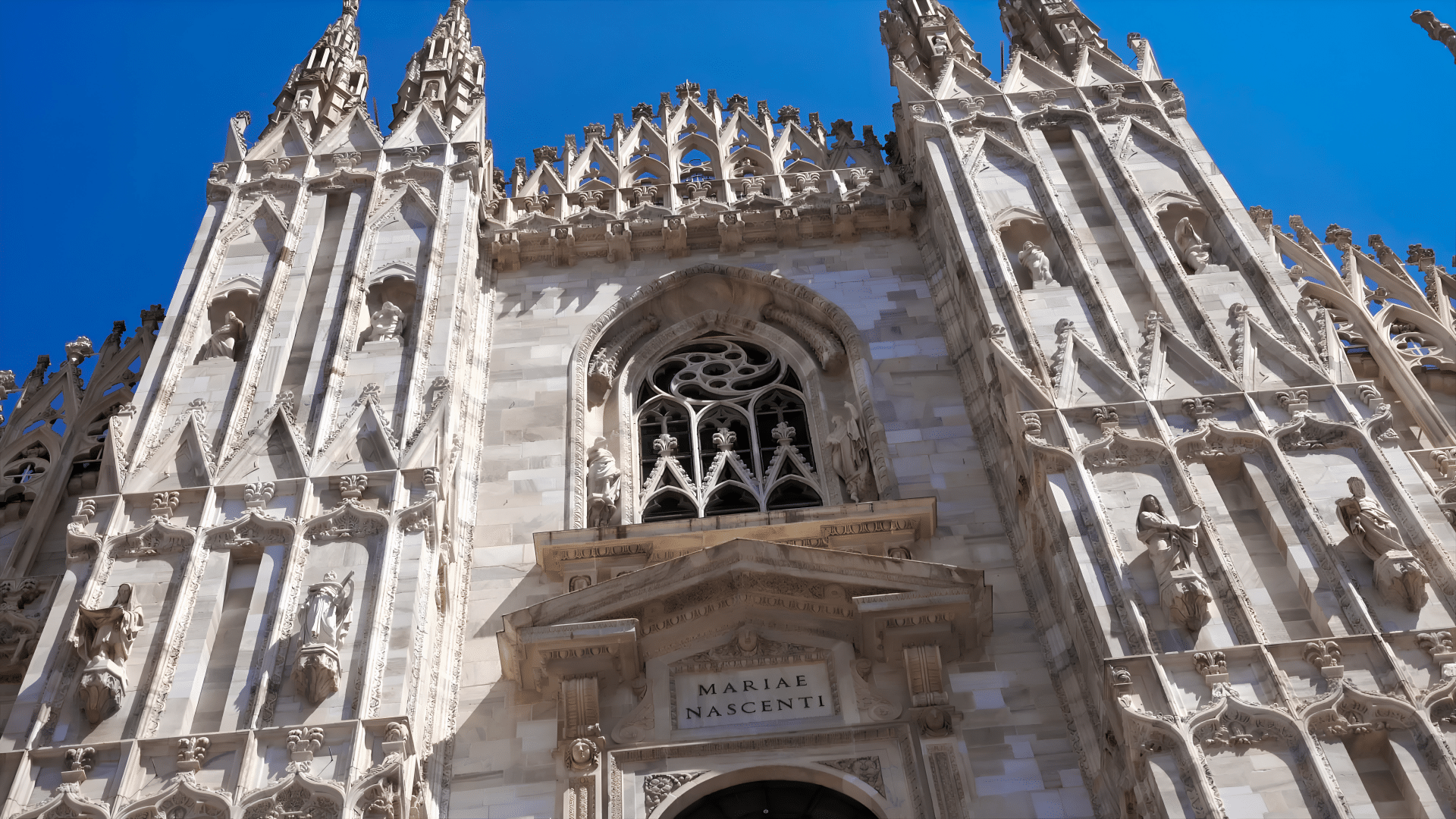
The Nossa Senhora dos Mares Church is the only church in Bahia built in the Neo-Gothic style, characterised by elements such as

  • Verticality: Tall, slender structures that create a sense of elevation towards the sky.
  • Ogee arches: Point-shaped arches that help support the weight of the walls.
  • Buttresses: External supports that strengthen the walls, allowing the structures to be thinner and higher.
  • Towers and pinnacles: Tall, pointed towers, often topped with pinnacles, which add grandeur to the building.
  • Stained glass windows: Large windows decorated with colourful stained glass, providing internal lighting and creating a spiritual atmosphere.
  • Rosettes: Circular windows decorated with elaborate patterns, located on the main façade.
  • Decorative elements: Ornamental details such as gargoyles and statues of saints that add complexity to the facades.
  • Pyramidal Roofs: Accentuated roofs that resemble pyramids.
  • Materials: Use of stone, brick and, in some buildings, reinforced concrete.
  • Latin cross plan: Many neo-Gothic churches have a cross plan, symbolising the Christian faith.

The Carmelites built a chapel dedicated to Our Lady of the Seas in 1749. This chapel stood in the centre of the square in front of the present church. It wasn’t until 1871 that Captain Major Manuel da Costa Araújo and a group of believers built the parish.

The fourth vicar, Monsignor Anísio Ayres Esteves, took office in 1927, when the old parish was already showing signs of decay. During this period, the church was broken into by a young man from an influential family, who broke into the tabernacle and stole the solid gold ambo, throwing the wafers into the bushes outside the church. In 1930 the foundation stone was laid for the new parish church, dedicated to the Blessed Sacrament and the Secular Clergy. Worship began in 1937 with the transfer of the images and the procession of the Blessed Sacrament from the old church to the new one. Although the building work was still in progress, there was a considerable attendance, with around 180 baptisms every Sunday, as well as many weddings. The old parish church was later demolished and the current Praça Manoel da Natividade Maria was built in its place.

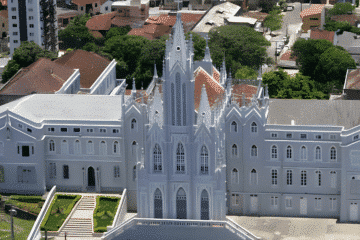
Igreja Nossa Senhora dos Mares em Salvador BA
Nossa Senhora dos Mares Church in Salvador BA

2. Architectural typology and elements

The architecture of the church was inspired by a catalogue of French works and follows the influences of the Radiant Gothic period.

Reinforced concrete was used instead of stone in the construction of the parish church.

The exterior is notable for its verticality and symmetry, rhythmically marked by buttresses that end in pinnacles, interspersed with ogival windows in lace and iron, coloured stained glass with rose windows that illuminate the interior in a cheerful and special way, and decorated cornices.

The church has a single slender tower at the centre of the main façade, over fifty metres high. The tower has a series of windows and pointed pediments decorated with cogulhos below the main entrance, rising to a corbelling that ends in a cross. The main door is made of upholstered wood and has an ogival arch.

Another important aspect is the absence of pointed arches and a central rose window. The church has one main entrance and two side entrances.

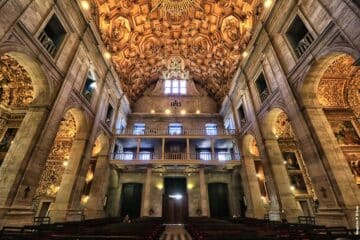
The main nave, side aisles with marble altars dedicated to the saints Sacred Heart of Jesus, Senhor Bom Jesus dos Navegantes, St Joseph the Worker and Our Lady of Sorrows stand out in its hall-like layout.

The high altar is dedicated to Nossa Senhora dos Mares Church, and there is an ambulatory with a confessional and an access door to the sacristy, as well as a stone altar containing the tombs of the church’s first priests: Monsignor Manuel da Natividade Maria, Monsignor Anísio Ayres Esteves and Monsignor Vitalino de Munford.

To the right of the main entrance, a staircase leads to the choir. The floor is granite and the ceiling has cross and star vaults with chain link ogives resting on fascicled columns. The roof is carved with six angels with their hands around the coat of arms of the First National Eucharistic Congress.

Igreja Nossa Senhora dos Mares em Salvador BA
Nossa Senhora dos Mares Church, Salvador BA

Conclusion

The Nossa Senhora dos Mares Church is an outstanding example of neo-Gothic architecture in Bahia, reflecting the cultural and religious richness of Salvador. Its history, marked by important events, and its architectural typology make it a point of religious and tourist interest in the region.

Tourist guide to Salvador, Bahia and the Northeast

Publicações Relacionadas

Where to Stay in Salvador for Your Best Experience

Interesting places to visit in Salvador

Solar do Unhão and the Museum of Modern Art in Salvador BA

Tourist Attractions and Architectural Heritage of Salvador, Bahia

Palaces in Salvador to visit and learn about Brazil's history

Find out how to celebrate Carnival in Salvador, Bahia

Fort of Santo Antônio da Barra and Its Rich History

Cathedral Basilica of Salvador — History, Sacred Art and Collection

Ponta de Humaitá: A Gem in Salvador Bahia

Most Visited Churches in Salvador de Bahia Revealed

Tourist attractions in the Gamboa neighbourhood in Salvador BA

History of the Church of São Pedro dos Clérigos in Salvador

7 Day Itinerary in Salvador and Surroundings Guide

Bahia Art Museum (MAB): Learn about its history and collection

History of the Founding of Salvador, Bahia - History of Brazil

Learn about the history of the construction of the Lacerda Lift

History and sights of Avenida Contorno in Salvador BA

History of the forts and lighthouses of Salvador, Bahia

History of the Cathedral Basilica of Salvador

39 Museums in Salvador: Discover the history and culture of Bahia

Discover the Magnificence of Nossa Senhora de Monte Serrat Fort

Church and Convent of Nossa Senhora da Palma in Salvador, Bahia

Churches of Salvador: Architectural and Historical Treasures

Basílica de Nossa Senhora da Conceição da Praia: História

Prostitution, sex, massage parlours and nightclubs in Salvador

Tourist Attractions in Pelourinho and the Historic Centre of Salvador

History of the São Marcelo Fort or Forte do Mar in Salvador

Features and History of the Church and Convent of São Francisco

History of the Senhor do Bonfim Ribbons — Origin, Meaning and Traditions

Parks and Squares in Salvador for Leisure Activities

Tourist attractions for children in Salvador: fun and learning

Convent and Church of Santa Teresa and its History

Fort of Nossa Senhora de Monte Serrat History

Church of the Third Order of St Francis History

Discover the reasons for a holiday in Salvador, Bahia

Attractions in the Historic Centre of Salvador, Bahia

This post is also on: Português English Deutsch Español Français

Hide picture