Discover Salvador’s most important churches: architectural styles, history, religious syncretism and practical tips for visiting these monuments, ranging from the colonial period to contemporary works.
Churches in Salvador (BA): architectural and historical treasures
Salvador, Brazil’s first capital, boasts an impressive religious heritage — some 160 churches — which reflect the influence of Catholicism, the talent of local craftsmen and the cultural fusion of Europe and Africa. From exuberant Baroque to Neoclassical and Neo-Gothic, these places of worship are also sites of remembrance and faith.

Religiousness and syncretism
Religious life in Salvador combines Catholic celebrations with practices of African origin. Candomblé is practised in hundreds of terreiros and in popular events — such as the Lavagem do Bonfim — which illustrate the religious syncretism typical of the city.
Religious highlights
There are a number of temples and events that are a must-see for anyone visiting Salvador:
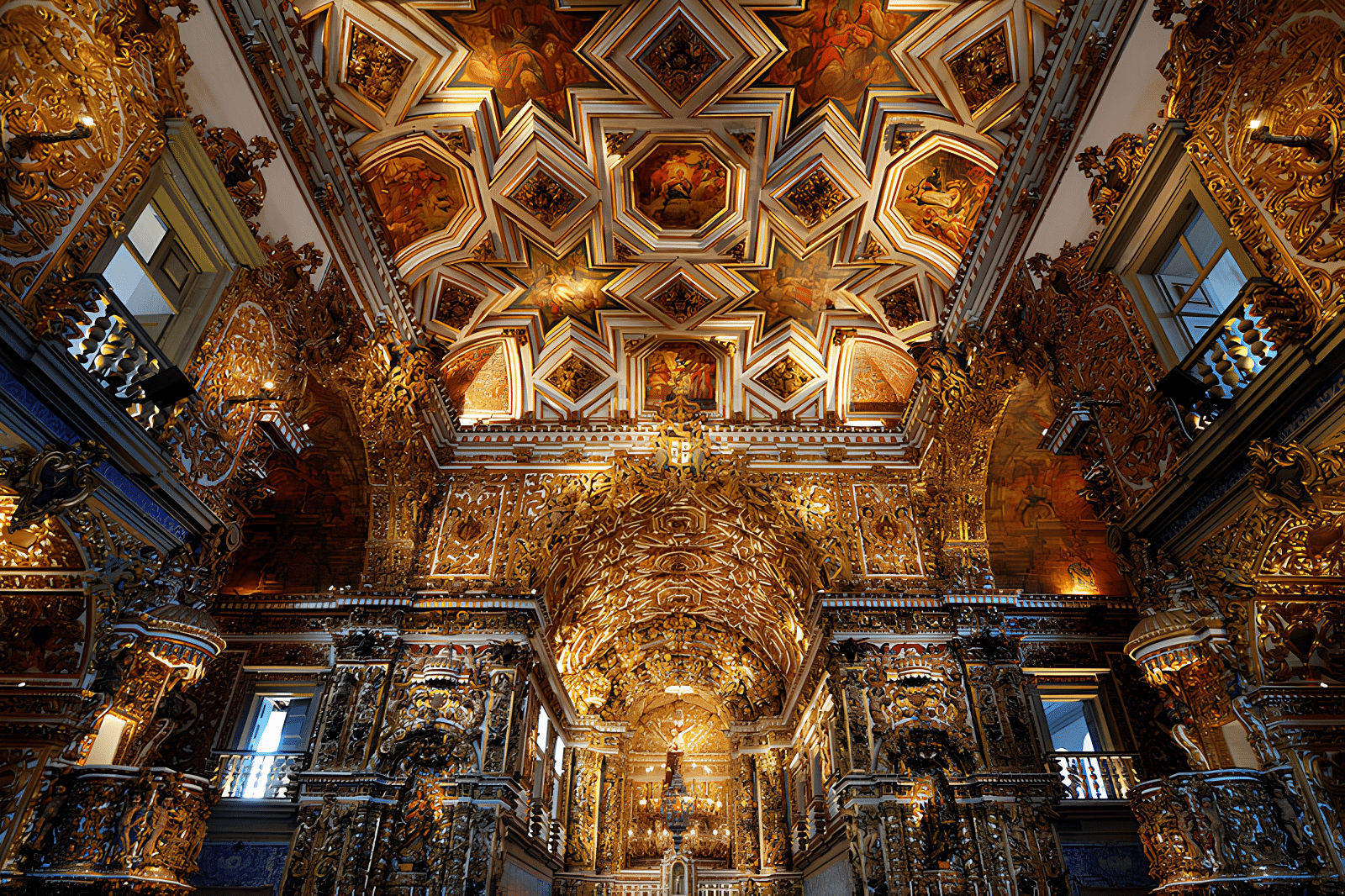
- Church and Convent of São Francisco — the interior is richly adorned with gilded woodcarvings (over 100 kg of gold was used in the decoration).
- Church of Senhor do Bonfim — famous for the ‘Washing of the Stairs’ and its ribbons; ceiling paintings by Francisco Velasco (1820).
- Church of Our Lady of the Rosary of the Black People — historical links with the Afro-descendant community; masses featuring traditional African rhythms.
- Santa Dulce dos Pobres Shrine — the tomb and memorial of the first saint born in Brazil, Sister Dulce.
Recommended videos and reading


Catedral Basílica Primacial São Salvador

Igreja e Convento de São Francisco06:40

Turismo Religioso03:32

História das Fitinhas do Senhor do Bonfim

Basílica Santuário Nossa Senhora da Conceição da Praia04:31
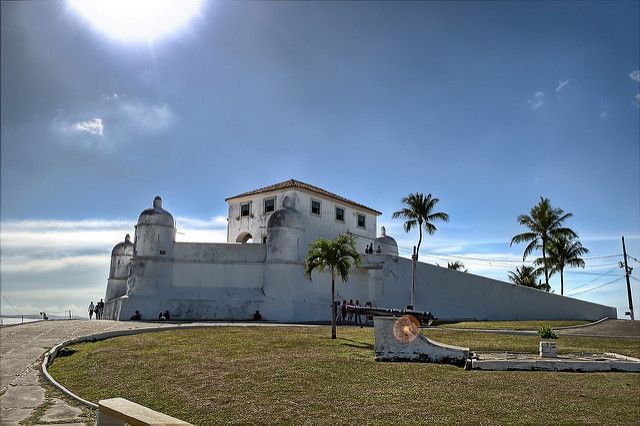
Vista aérea do Forte de Nossa Senhora de Monte Serrat

Conheça a Igreja da Ordem Terceira de São Francisco, em Salvador20:21

Santuário Santa Dulce dos Pobres02:34

Igreja de Nossa Senhora do Rosário dos Pretos05:49
See also: The Development and History of the Visual Arts in the North-East and Salvador’s Historic Centre.
Architectural features of colonial churches
The churches of Salvador combine European influences adapted to the local context:
- Styles: predominantly Baroque and Rococo, with a transition to Neoclassical and occasional examples of Neo-Gothic.
- Gilded woodcarving: altars and panels made of carved wood covered with gold leaf.
- Portuguese tile work: narrative panels in cloisters and corridors.
- Understated façades: a contrast between austere exteriors and opulent interiors.
- Latin cross plan: central nave, transept and side chapels.
- Syncretism: the presence of Afro-Brazilian practices in celebrations and rituals.
- Local materials: stone, mortar and tropical woods suited to the climate.
Main churches mentioned
- Primatial Cathedral Basilica of Salvador
- Convent of Santa Teresa (Museum of Sacred Art / UFBA)
- Church of the Afflicted
- Bonfim Church
- Basilica of Our Lady of the Immaculate Conception in Praia
- Church of Our Lady of Mont Serrat
- Church of Our Lady of the Rosary of the Black People
- Church and Convent of St Francis
- Church of the Third Order of St Francis
- Church of Our Lady of the Pillar and Saint Lucy
- Church of Our Lady of the Seas
- Our Lady of the Marshes Parish
- Church and Convent of Santa Clara do Desterro
- Santa Dulce dos Pobres Shrine
- Church of Our Lady of Victory
- St Anthony’s Church, Além do Carmo
Featured churches (summary)
1. Primatial Cathedral Basilica of Salvador
Founded: 17th century — completed in 1672. Location: Terreiro de Jesus, Pelourinho, Historic Centre of Salvador (BA).
The cathedral is the seat of the Archdiocese of Salvador and houses a rich collection of religious art, including 13 altars. The façade is clad in lioz stone brought from Portugal. The complex, which is linked to the former Jesuit College, has been adapted over time for civil and academic uses.
Listing: IPHAN, 1938.


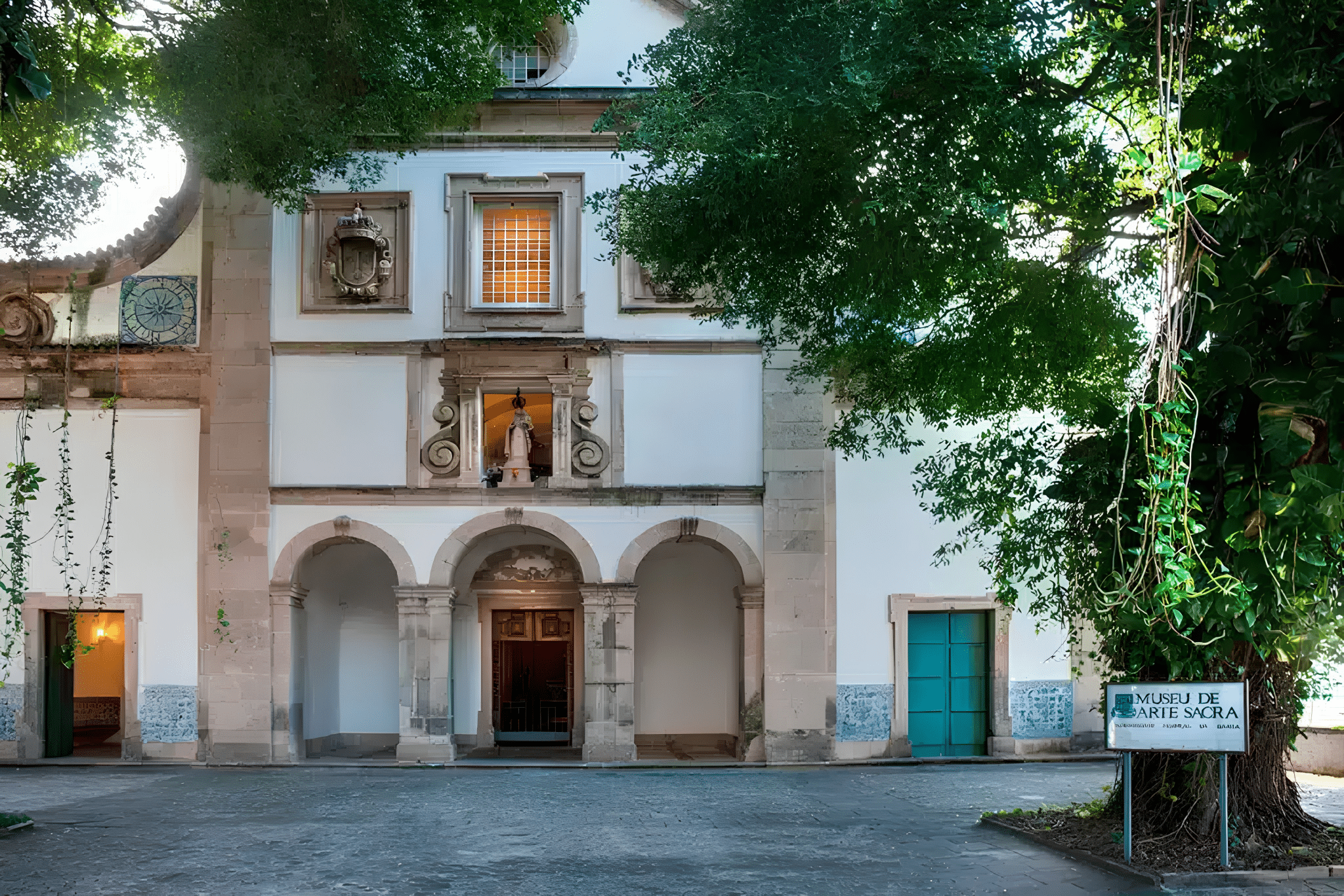
2. Convent of Santa Teresa (Museum of Sacred Art / UFBA)
Location: Rua do Sodré, 276 — Historic Centre of Salvador (BA).
A 17th-century convent complex, regarded as one of the finest examples of colonial religious architecture in the North-East. It is notable for its gardens and its panoramic view of the Bay of Todos-os-Santos.
The building houses the Museum of Sacred Art (UFBA), with a collection of approximately 1,400 items — including wooden and terracotta figures, sculptures, paintings, tiled panels, silverware and furniture dating from the 16th to the 19th centuries.


3. Church of the Afflicted
Location: Rua dos Aflitos — Historic Centre of Salvador (BA).
Built in the 18th century using funds raised through charity and donations from the Portuguese national António Soares, the church was constructed on a slope of the geological fault line along which Av. do Contorno now runs. The site offers views of Todos-os-Santos Bay and the houses of Gamboa, making it one of the few preserved viewpoints in the city.
The surrounding area features 19th-century houses and is of scenic and historical value.
Visiting hours: Monday to Friday, from 8.00 am to 12.00 pm and from 2.30 pm to 6.00 pm (times subject to change).

4. Church of Senhor do Bonfim
Founded: 1745
Location: Senhor do Bonfim Square, Bonfim neighbourhood (Colina Sagrada), Salvador — BA.
The Church of Bonfim is the most popular place of worship in Bahia, a symbol of faith and cultural syncretism. Of particular note are the Hall of Miracles and the Museum of Ex-Votos, as well as the façade, which is partially covered in tiles, and the neoclassical interior.
The gates and railings are usually covered with thousands of Senhor do Bonfim ribbons, amulets left by devotees. The traditional Lavagem do Bonfim — held on the second Thursday after Epiphany — attracts pilgrims and tourists and is one of the largest popular festivals in Bahia.


See also the History of the History of the Church of Bonfim
5. Church / Basilica of Our Lady of the Immaculate Conception in Praia
Founded: 1549
Location: Rua da Conceição da Praia, Comércio — near the Lacerda Lift and the Mercado Modelo, Salvador (BA).
Originally built during the colonial period, the present church was constructed using lioz stone from Portugal. It is notable for the illusionist painting on the ceiling of the nave, executed by José Joaquim da Rocha in 1772 — an iconic work of the Bahian School of Painting.
The church preserves the ruins of the town’s first place of worship and houses an important collection of sacred artefacts. The façade features neoclassical elements and diagonally positioned towers, setting it apart from other colonial churches.
Ceiling painting: illusionist panel (José Joaquim da Rocha, 1772), covering a substantial area of the nave (c. 633 m²) and on a monumental scale — technique: oil painting.

6. Church of Our Lady of Mont Serrat
Founded: c. 1580 • Location: Rua Santa Rita Durão, Ponta do Humaitá — Salvador (BA).
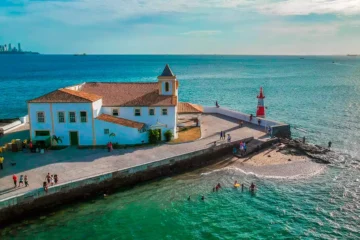
Its origins are attributed to the period of Governor-General Francisco de Sousa; the present complex dates from the 16th–17th centuries, with the design attributed to the Italian architect Baccio de Filicaya. Built on a rock by the sea, the church blends into the landscape and has strong historical links with the Monastery of São Bento, to which it was donated.
Over the years it has undergone renovations (early 20th century) — the high altar was adorned with ornaments from the Church of São Bento — and it houses notable sculptures, such as Saint Peter the Penitent, attributed to Friar Agostinho da Piedade. The complex has been listed by IPHAN.


Dating from the 16th–17th centuries, designed by Baccio de Filicaya; listed by IPHAN.
7. Church of Our Lady of the Rosary of the Black People
Founded: late 18th century (built between 1704 and 1796)
Venue: Praça José de Alencar, Largo do Pelourinho, Historic Centre of Salvador (BA).
Built by enslaved Black worshippers, the church has a Rococo-style façade and an interior featuring tiled panels, neoclassical altars and three 18th-century statues (Our Lady of the Rosary, Saint Anthony of Cartagerona and Saint Benedict). The ceiling features a panel by José Joaquim da Rocha.
The grounds contain a slave cemetery, and the temple is notable for its syncretism: masses and services incorporate African-inspired rhythms and instruments (atabaques, agogôs, pandeiros).
Services and times: Masses accompanied by atabaque drums on Tuesdays (6.00 pm) and Sundays (10.00 am) — please check the times before your visit.


8. Church and Convent of St Francis
Foundation: founded c. 1587; major works and reconstructions carried out between 1686 and 1723.
Venue: Largo do Cruzeiro de São Francisco, Pelourinho — Historic Centre of Salvador (BA).
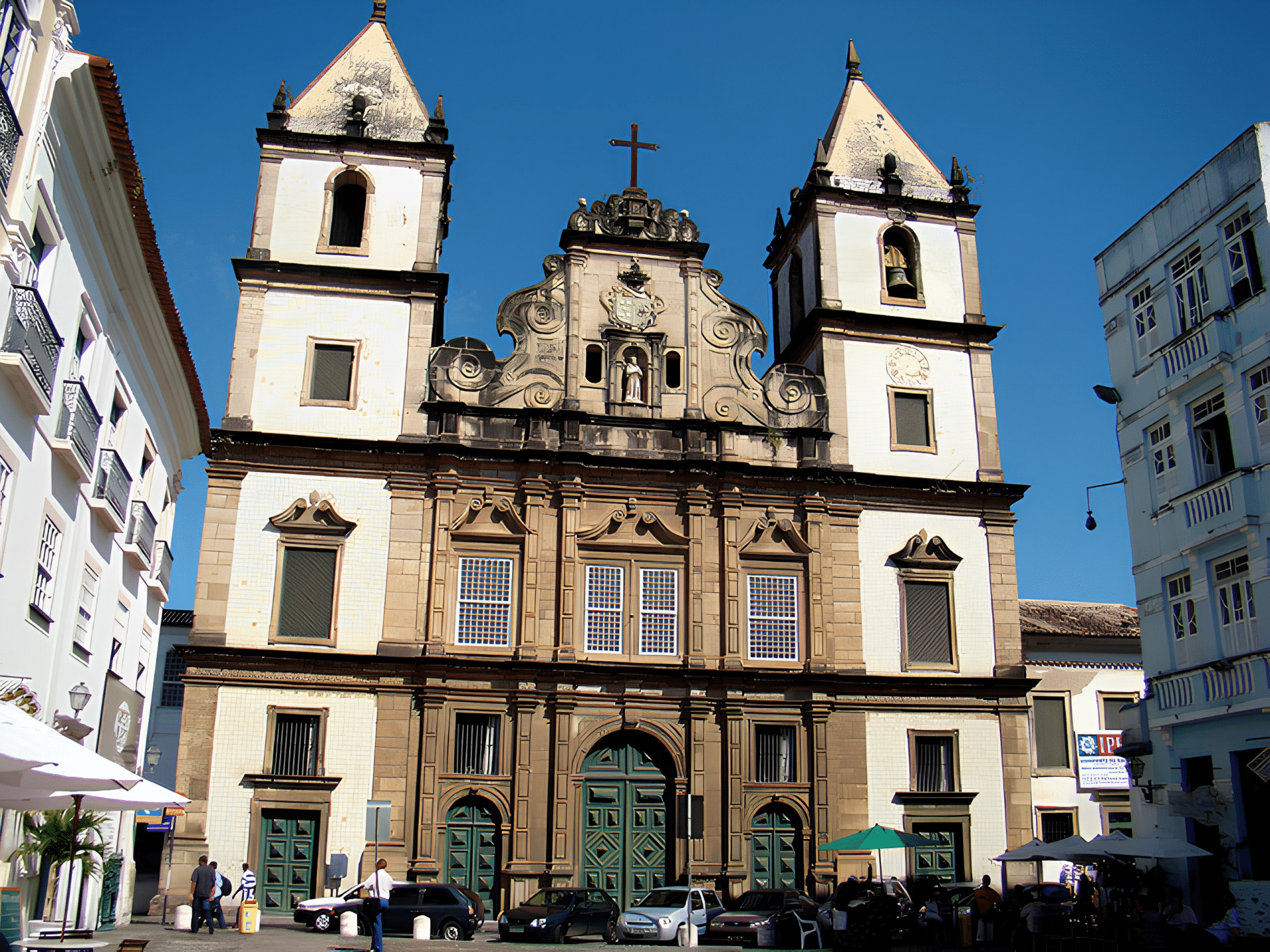
One of the most remarkable examples of Portuguese Baroque architecture in Brazil: the interior is richly decorated with gilded woodcarvings, panels of Lisbon-style azulejos, altars and paintings. The reconstruction following the Dutch invasion (1624) and the extensions overseen by Friar Vicente das Chagas (from 1686 onwards) resulted in the monumental complex we see today.
Consecrated in 1713, the church was adorned in the following decades with gilded decorations, tiling and ornaments that have made it a landmark of colonial religious art.

Find out more about San Francisco
9. Church of the Third Order of St Francis
Founded: 1703 (cornerstone laid on 1 January 1702).
Location: Rua da Ordem Terceira, Pelourinho — Historic Centre of Salvador (BA).
A significant example of colonial Baroque architecture, with a façade featuring high-relief carvings in limestone and a central niche containing a marble statue of Saint Francis. The original Baroque interior was replaced by Neoclassical altars (1827–1828), but it retains extensive Portuguese tiles in the cloisters and corridors, depicting historical scenes from Lisbon.
Of particular note are the religious artworks, such as the sculpture of the Dead Christ (by Francisco das Chagas Xavier) and a hall dedicated to the saints featuring life-size statues. There are ceiling paintings and a rich collection of colonial décor.

See also the History of the Church of the Third Order of St Francis
10. Church of Our Lady of the Pillar and Saint Lucy
Founded: 1710
Location: Praça do Pilar, 55 — Comércio, Salvador (BA).
A Rococo-style church, known for its stucco decorations and delicate paintings. The highlight is the Fountain of Saint Lucy, associated with devotion to the protection and healing of the eyes; many worshippers often bathe their eyes in the fountain as an act of faith.
Please note: please check visiting times and service times before you go.

11. Church of Our Lady of the Seas
Foundation (current headquarters): 1930–1956
Venue: Praça Padre Manoel da Natividade, Largo dos Mares — Salvador (BA).
Although the first church dedicated to Our Lady of the Seas was built in the area in 1749, that original building was demolished to make way for the current parish church.
The present-day church is the only significant example of Neo-Gothic architecture in Bahia, characterised by its vertical lines, spire-topped towers, rose windows and pyramid-shaped roof.

12. Our Lady of the Marshes Parish
Founded: 7 July 1980 (visit by Pope John Paul II)
Location: Rua Luiz Régis Pacheco, Alagados area — Uruguai neighbourhood, Salvador (BA).
A parish church featuring contemporary architecture, clad in exposed brickwork in rectangular and circular patterns. It was built to serve the local community and stands out for its presence on the outskirts of the city, playing a significant role in the community and in pastoral care.
Please note: Please check the parish for Mass times and opening hours before your visit.

13. Church and Convent of Santa Clara do Desterro
Founded: 1677
Location: Rua Santa Clara, no number — Nazaré, Salvador (BA).
Founded by Poor Clare nuns from Évora, Portugal, the Convento do Desterro is Brazil’s first convent. The complex is built around two cloisters and is notable for its 18th-century bulbous tower and its viewing platform, the first of its kind to be used in women’s convents in Bahia.
The church has a single nave, a chancel, a lower choir and an upper choir; it incorporates neoclassical elements from 19th-century renovations. On the first floor is the Chapel of the Holy Crucifix of Passos, with a 19th-century altar and altarpieces. The convent houses a rich collection of liturgical vessels, silverware and furniture from the 18th and 19th centuries.
Historically linked to social welfare, the convent now runs charitable projects, a day school and an orphanage. Despite renovations, it retains much of its original structure.

14. Sanctuary of Saint Dulce of the Poor
Established: 2003
Venue: Av. Dendezeiros do Bonfim, Largo de Roma — Salvador (BA).
A shrine dedicated to Sister Dulce (canonised in 2019 as Saint Dulce of the Poor). It houses the tomb and memorial of the ‘Mother of the Poor’ and operates in conjunction with the Sister Dulce Social Works (OSID).
It can accommodate over 1,000 people and offers Masses, tours of the memorial and social activities. Construction began as part of the ‘Campanha do Tijolo’ (2002) on the site of the former Cine Roma/Círculo Operário da Bahia.
Chapel of the Relics: a circular room with a triple-height ceiling where the relics are housed; it was inaugurated on 9 June 2010 and refurbished in 2019, when a glass tomb featuring a bust was added.


15. Church of Our Lady of Victory
Founded: 1561
Venue: Praça Rodrigues Lima, Largo da Vitória — Salvador (BA).
A 16th-century church, listed by IPHAN, considered one of the oldest churches in the country. It is notable for its collection of Baroque sculptures from the Bahian school (18th century) and for its location overlooking the Bay of Todos-os-Santos.
It has undergone several renovations over the centuries; the façade was given neoclassical features in 1910. The complex is currently undergoing restoration work to restore features of the original architecture.

16. St Anthony’s Church, Além do Carmo
Founded: 1594
Venue: Largo de Santo Antônio — Salvador (BA).
Originally a 16th-century chapel, the church was extended and rebuilt over the centuries (the main reconstruction taking place in 1813). It played a part in historical events (Dutch invasions and acts of resistance) and retains its Rococo façade and an interior featuring Neoclassical carvings.
The courtyard and the surrounding viewing points are popular spots for watching the sunset and for local cultural events.


Santo Antônio Além do Carmo neighbourhood
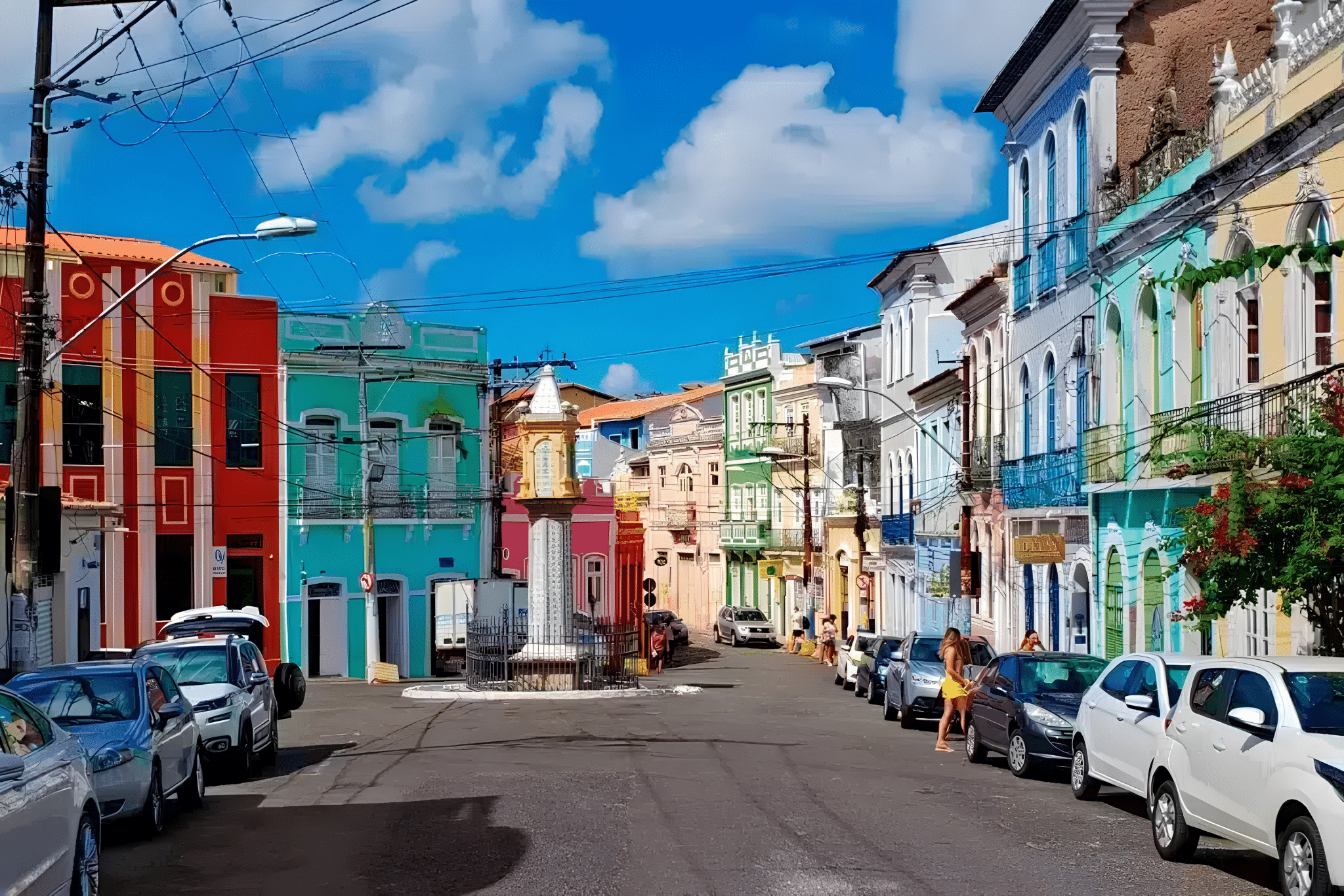
Santo Antônio Além do Carmo is a historic neighbourhood in the centre of Salvador that combines heritage, leisure, cuisine and beautiful views of the Bay of Todos-os-Santos. The walking tour takes in colonial houses, cobbled streets, art studios, bars and cafés, ending at the viewpoint for the sunset.
Originating around the Church of St Anthony (founded in 1594), the neighbourhood’s history is linked to the Dutch invasions (1624) and Portuguese resistance; the name ‘Além do Carmo’ refers to its location beyond the old gates of the Convento do Carmo. Until the early 20th century, it was an aristocratic area, as reflected in its well-preserved façades.
As well as its religious and architectural heritage, the neighbourhood is the venue for cultural events and popular festivals, such as rehearsals by carnival groups and the traditional Feast of St Anthony (a thirteen-day celebration from 1 to 13 June).

Practical tips for visitors
- Check opening hours and mass times (many churches have limited opening hours).
- Please observe the rules regarding photography and silence inside the temples.
- Bring water, sun cream and comfortable shoes for exploring the Historic Centre.
- Combine visits to churches with nearby museums and viewpoints to make the most of the cultural itinerary.

Publicações Relacionadas
Rio Vermelho is Salvador’s trendiest and most bohemian neighbourhood
Ponta de Humaitá — Lighthouse, church and the best sunset in Salvador
Pelourinho: what to do in Salvador’s Historic Centre
Discover the 23 beaches of Salvador — A complete guide and tips
7-day itinerary in Salvador and the surrounding area: Pelourinho, the islands and Praia do Forte
Bahia Maritime Museum: History of Navigation at the Barra Lighthouse
4 Must-See Museums in Salvador: Art, History and Culture
History of the Cathedral Basilica of Salvador
Cathedral Basilica of Salvador — History, Sacred Art and Collection
Where to Stay in Salvador for Your Best Experience

Church and Convent of Nossa Senhora da Palma in Salvador, Bahia

The most visited churches in Salvador — itinerary and tips

Discover the Magnificence Fort of Nossa Senhora de Monte Serrat

Solar do Unhão & MAM-BA — History, Architecture and a Visit

Tourist attractions in the Gamboa neighbourhood in Salvador BA

History and sights of Avenida Contorno in Salvador BA

Palaces in Salvador to visit and learn about Brazil's history

Basílica Santuário Nossa Senhora da Conceição da Praia — history and architecture

Church and Convent of Santa Clara do Desterro and its History in Salvador

Convent and Church of Santa Teresa and the UFBA Museum of Sacred Art in Salvador

Bahia Art Museum (MAB): Learn about its history and collection

The best beaches near Salvador (distance, facilities and tips)
Lacerda Elevator — history, construction and visits

Fort of Nossa Senhora de Monte Serrat History

Santo Antônio da Barra Fort — history, Barra Lighthouse and the Nautical Museu

History of São Marcelo Fort — Salvador, Bahia

Church of Nossa Senhora dos Mares (Salvador) — History and Architecture

Church of the Third Order of St Francis — History, Art and Baroque Architecture

Discover the reasons for a holiday in Salvador, Bahia

Churches of Salvador: Architectural and Historical Treasures

39 Museums in Salvador: Discover the history and culture of Bahia

Parks and Squares in Salvador for Leisure Activities

A History of the Forts and Lighthouses of Salvador (Bahia)

Places of interest in Salvador — A comprehensive guide

Tourist attractions for children in Salvador: Fun and learning

Find out how to celebrate Carnival in Salvador, Bahia
This post is also on:
 Português
  English
  Deutsch
  Español
  Français