The Gamboa neighbourhood: one of the best places to visit in Salvador
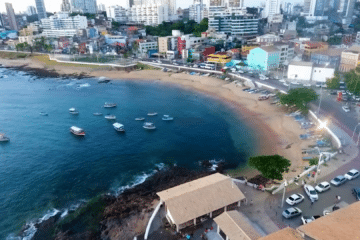
The Gamboa neighbourhood in Salvador is characterised by being a coastal community, which has been inhabited by fishermen for centuries, situated at the south-western entrance to the Bay of Todos os Santos, close to the historic city centre.
Gamboa – home to the communities of Solar do Unhão, Gamboa de Cima and Gamboa de Baixo – is bordered by Avenida Contorno and embraced by the vastness of Baía de Todos os Santos. No, that is no exaggeration.

A Neighbourhood with Stunning Views
Residents of these areas have a permanent view of the calm sea. According to the Post Office and Google Maps, these places belong to the Dois de Julho neighbourhood, but for residents and regular visitors, this stretch of land is a town in its own right.
Start of the tour: Solar do Unhão
The tour should begin at the Solar do Unhão, which houses the Bahia Museum of Modern Art (MAM).
In addition to MAM Beach (practically within the Sculpture Park), the area hosts the Jam at MAM project during the summer, which features jazz concerts at sunset.
Urban Art in the Community
There, you can also admire the graffiti by MUSAS – Salvador Street Art Museum – which brightens up the walls and façades of the neighbourhood.
Flavours of Gamboa
Within the community of Solar do Unhão lies the much-loved Dona Suzana’s restaurant, famous for its classic stingray moqueca (and plenty of warmth and hospitality to spare).
In Gamboa, there is also Mônica’s Bar, which, as well as serving delicious food, boasts a pier with sweeping views of the Bay of Todos os Santos.
Sport and Nature
The whole area is ideal for water sports, such as stand-up paddleboarding (SUP), particularly from the so-called “Praia das Pedrinhas”, as Praia do Solar is known.
The History of Gamboa
Gamboa was part of Salvador’s first residential area, due to its proximity to the old port, located in the Comércio district.
In 1962, the construction of Avenida Lafayete Coutinho (or Avenida do Contorno) defined the boundaries of the neighbourhood between Gamboa de Baixo and Gamboa de Cima. Both are neighbours of the traditional Dois de Julho neighbourhood.
Historical Heritage
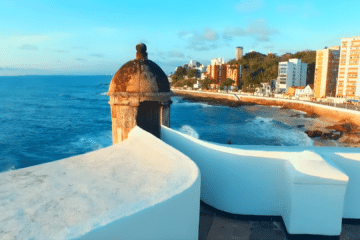
The ruins of Fort São Paulo form the backdrop to Gamboa de Baixo. The fortification, which opened in 1722, was part of the city’s defence plan. Now in ruins, the site is used by the community for gatherings and cultural activities.
Video about the tourist attractions in the Gamboa neighbourhood

Avenida Contorno em Salvador BA03:20
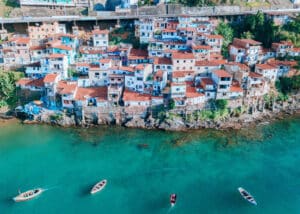
Comunidade do Solar do Unhão em Salvador25:49
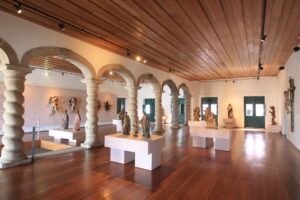
Museu de Arte Moderna da Bahia - MAM02:55
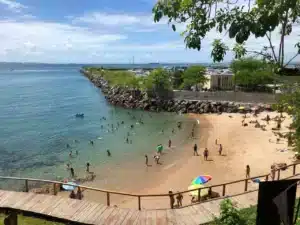
Praia do MAM em Salvador BA01:55
Places of Interest in the Gamboa Neighbourhood
1. Culture
Close to Avenida Carlos Gomes, right next to Largo dos Aflitos, lies one of Salvador’s most important cultural venues: the Teatro Gamboa. Although small – with just 80 seats – the theatre hosts performances and exhibitions of great significance to the city’s arts scene.
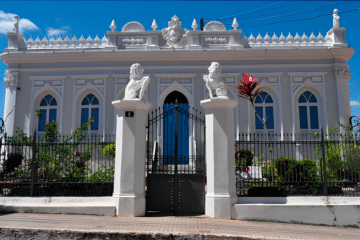
Nearby is the Passeio Público de Salvador, home to the traditional Teatro Vila Velha and the sumptuous Palácio da Aclamação, the seat of the State Government.


The Passeio Público offers a superb view of the Gamboa neighbourhood and the stunning Baía de Todos os Santos.
Prainha da Gamboa de Baixo, also known as Praia do Solar do Unhão by the local community, is a must-see for anyone visiting Salvador. With calm waters and picturesque scenery, it is ideal for a relaxing swim and creating beautiful memories.
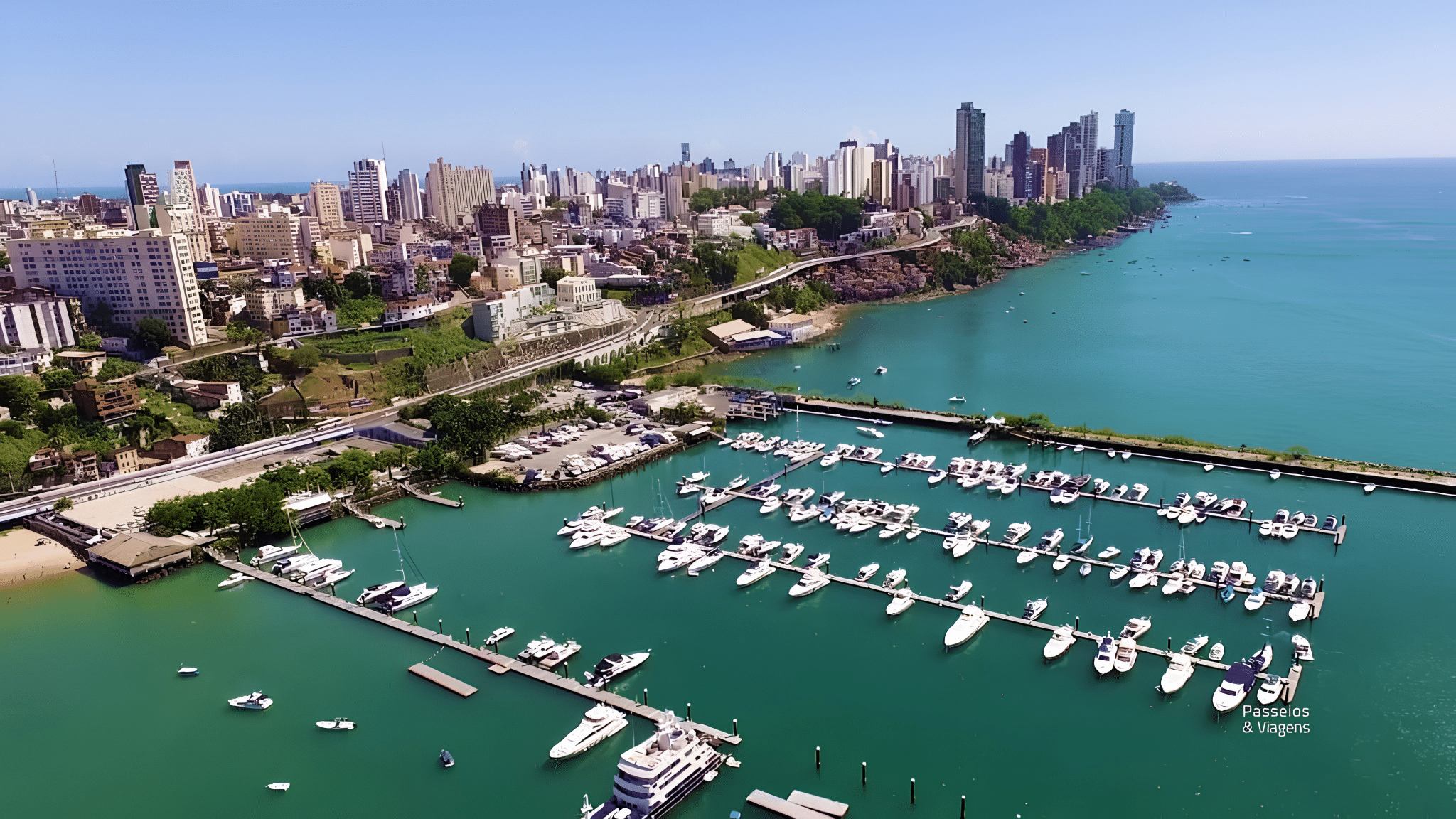
Right next door, practically within the MAM Sculpture Park, lies the charming MAM Beach. This small cove, situated between the Bahia Museum of Modern Art and Bahia Marina, has calm, crystal-clear waters and is the new hotspot for Salvador’s youth.

The place has become a hit with locals, tourists and trendy young people, turning into one of the liveliest spots in town.
After all, where else can you find a beach inside a museum? That’s what makes Salvador so unique!
2. Cuisine
Gamboa offers culinary treasures to suit all tastes and styles. In the upper part of the neighbourhood, on Rua Gamboa de Cima, is Restaurante Chez Bernard, the first French restaurant in Salvador, founded in 1963 by Monsieur Bernard Goethals. It is a benchmark for international cuisine.
But the real highlight is the local cuisine, especially the seafood. Two places stand out:
- Mônica’s Bar – famous for its good food and stunning views of Baía de Todos os Santos.
- Dona Suzana Restaurant – renowned for its moquecas, it was featured in the Street Food series on Netflix, where Dona Suzana shares her passion for Bahian cuisine.
Another must-visit spot is Bar A Novidade, which opened in the summer of 2019 and has won over the public with its colourful floats, fried fish, and a laid-back atmosphere with chairs on the rooftop terrace facing the sea. The bar is run by two members of MUSAS (Salvador Street Art Museum).
3. Gamboa on Screen and in Music
The neighbourhood has become a favourite spot for celebrities to film in. Gamboa Beach was the setting for the music video Bola Rebola by the singer Anitta, and also featured in the soap opera Segundo Sol, broadcast by TV Globo.
Netflix filmed an episode of the series Street Food there, exploring the flavours and stories of the local cuisine.
The singer Ivete Sangalo, a local resident, is also a regular visitor to the area, where she often goes stand-up paddleboarding (SUP) with her husband, Daniel Cady. In fact, the two met and started dating right there in the waters off Gamboa!
Gamboa de Baixo and Solar do Unhão are buzzing with cultural and commercial activities. Visit the Residents’ Association to find out more about local events and initiatives.
4. Gamboa, MAM and Solar do Unhão beaches: What they’re like and how to get there
4.1. Praia do MAM
A small stretch of sand located between the rocks of Bahia Marina and the Bahia Museum of Modern Art. Access is via the museum itself.
On the beach, you can hire sun loungers and parasols, and there are also vendors selling beer, coalho cheese and ice lollies.
You can also get there by boat, setting off from Praia do Solar do Unhão, known locally as Areinha.

4.2. Solar do Unhão Beach
It is a pebble beach, a feature that makes it quite unusual.
The pebble beach is slightly larger than the one at MAM. The pebbles are round, making it comfortable to walk in sandals. Going into the sea barefoot can be quite an adventure, especially on the way back.
The little beach is perfect for enjoying the sunset and watching the goings-on around the Solar do Unhão.
To get there, simply enter the neighbourhood, go under Avenida Contorno and follow the staircase on the right, before the Residents’ Association.
From there, you can take boats to Praia do MAM, Gamboa, Corredor da Vitória, Baía, Barra, and other destinations.

4.3. Praia da Gamboa
It covers virtually the entire stretch of sea in Baía de Todos os Santos that borders the region.
There isn’t always a sandy beach available – in many places, rocks predominate. There are stretches with a narrow strip of sand between the old Fort São Paulo da Gamboa and Bar da Mônica.


Publicações Relacionadas
Rio Vermelho is Salvador’s trendiest and most bohemian neighbourhood
Ponta de Humaitá — Lighthouse, church and the best sunset in Salvador
Pelourinho: what to do in Salvador’s Historic Centre
Discover the 23 beaches of Salvador — A complete guide and tips
7-day itinerary in Salvador and the surrounding area: Pelourinho, the islands and Praia do Forte
Bahia Maritime Museum: History of Navigation at the Barra Lighthouse

4 Must-See Museums in Salvador: Art, History and Culture
History of the Cathedral Basilica of Salvador
Cathedral Basilica of Salvador — History, Sacred Art and Collection
Where to Stay in Salvador for Your Best Experience

Church and Convent of Nossa Senhora da Palma in Salvador, Bahia

The most visited churches in Salvador — itinerary and tips

Discover the Magnificence Fort of Nossa Senhora de Monte Serrat

Solar do Unhão & MAM-BA — History, Architecture and a Visit

History and sights of Avenida Contorno in Salvador BA

Palaces in Salvador to visit and learn about Brazil's history

Basílica Santuário Nossa Senhora da Conceição da Praia — history and architecture

Church and Convent of Santa Clara do Desterro and its History in Salvador

Convent and Church of Santa Teresa and the UFBA Museum of Sacred Art in Salvador

Bahia Art Museum (MAB): Learn about its history and collection

The best beaches near Salvador (distance, facilities and tips)
Lacerda Elevator — history, construction and visits

Fort of Nossa Senhora de Monte Serrat History

Santo Antônio da Barra Fort — history, Barra Lighthouse and the Nautical Museu

History of São Marcelo Fort — Salvador, Bahia

Church of Nossa Senhora dos Mares (Salvador) — History and Architecture

Church of the Third Order of St Francis — History, Art and Baroque Architecture

Discover the reasons for a holiday in Salvador, Bahia

Churches of Salvador: Architectural and Historical Treasures
Churches in Salvador (BA) — a guide: history, architecture and itinerary

39 Museums in Salvador: Discover the history and culture of Bahia

Parks and Squares in Salvador for Leisure Activities

A History of the Forts and Lighthouses of Salvador (Bahia)

Places of interest in Salvador — A comprehensive guide

Tourist attractions for children in Salvador: Fun and learning

Find out how to celebrate Carnival in Salvador, Bahia
This post is also on:
 Português
  English
  Deutsch
  Español
  Français