Address: Rua da Conceição da Praia, s/n — Comércio, Salvador, BA (near the Lacerda Lift and the Mercado Modelo)

The Basílica Santuário Nossa Senhora da Conceição da Praia is a religious and architectural landmark in the historic centre of Salvador. Situated next to Todos os Santos Bay and just a few metres from the Lacerda Elevator and the Mercado Modelo, the church combines artistic merit (illusionist painting on the ceiling), colonial history and popular devotion.
Video: History and Architecture

Basílica Santuário Nossa Senhora da Conceição da Praia
A brief history
The religious presence at this site dates back to 1549, when Tomé de Sousa ordered the construction of a chapel by the beach. Work on the current stone-built structure began in 1739 and continued into the 19th century (it was completed around 1849). The design is attributed to the military engineer Manuel Cardoso de Saldanha.
Lioz stone and prefabricated construction
The building was constructed using lioz stone (Portuguese masonry) prepared in Portugal, cut and numbered for transport to Salvador. Portuguese craftsmen were involved in the preparation; the master builder responsible for the on-site assembly was Eugénio da Mota.
Architecture and interiors
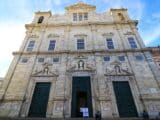
- Façade and exterior: a monumental design featuring pilasters, in a neoclassical style with influences from the Portuguese Alentejo region.
- Layout and dimensions: a wide, elongated nave (approx. 28.50 m × 19.80 m), with side chapels and altars on either side.
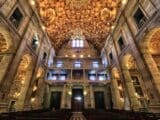
- Ceiling painting: the nave ceiling features an illusionist painting attributed to José Joaquim da Rocha, depicting the glorification of the Immaculate Conception.
- Woodcarvings and altars: high altar and side altars in gilded woodcarvings featuring Baroque and Joanine-style carvings.


The painting on the nave ceiling
The ceiling of the nave features a perspective (illusionist) painting traditionally attributed to José Joaquim da Rocha. The composition depicts the Immaculate Conception being crowned, with symbolic figures representing the four corners of the world and the Holy Trinity.
Festivities and popular devotion
The Basilica plays an active role in Salvador’s religious festivals, including celebrations linked to the Immaculate Conception (8 December) and the processions associated with the Lavagem do Bonfim. It is the starting point for historic processions that link the Comércio district to Senhor do Bonfim.
The title of Basilica and recognition as patron saint — explanatory note
The church was elevated to the status of Minor Basilica on 7 October 1946 (by a papal brief issued during the pontificate of Pius XII). Subsequent documents and acts (cited by the Archdiocese) refer to the recognition of Basílica Santuário Nossa Senhora da Conceição da Praia as the patron saint of the State of Bahia in other years (1971 is mentioned in some sources); it is therefore recommended that both facts be mentioned, making a distinction between the title of basilica and acts of pastoral/state recognition.
Sister Dulce — initial burial and subsequent reburials
Following her death, Sister Dulce was initially buried at the Church of the Immaculate Conception in Praia. Her remains were subsequently transferred to the Chapel of the Convent of St Anthony and, later, to the Shrine of Blessed Dulce of the Poor. Sister Dulce was canonised by Pope Francis on 13 October 2019. Note: Frei Galvão (2007) was the first Brazilian to be canonised; Sister Dulce is often cited as the first woman born in Brazil to be canonised.
Visiting hours
Visiting the Basilica is a cultural and spiritual experience: combine your visit with a tour of the Historic Centre (Lacerda Lift, Mercado Modelo). Check the times of Masses and guided tours directly with the parish.
References and sources
- IPHAN / HPIP — heritage and history record
- Archdiocese of São Salvador da Bahia — institutional information
- Wikipedia (pt/en) — history and dates
- Vatican News / national media — the canonisation of Sister Dulce

Publicações Relacionadas
Rio Vermelho is Salvador’s trendiest and most bohemian neighbourhood
Ponta de Humaitá — Lighthouse, church and the best sunset in Salvador
Pelourinho: what to do in Salvador’s Historic Centre
Discover the 23 beaches of Salvador — A complete guide and tips
7-day itinerary in Salvador and the surrounding area: Pelourinho, the islands and Praia do Forte
Bahia Maritime Museum: History of Navigation at the Barra Lighthouse
4 Must-See Museums in Salvador: Art, History and Culture
History of the Cathedral Basilica of Salvador
Cathedral Basilica of Salvador — History, Sacred Art and Collection
Where to Stay in Salvador for Your Best Experience

Church and Convent of Nossa Senhora da Palma in Salvador, Bahia

The most visited churches in Salvador — itinerary and tips

Discover the Magnificence Fort of Nossa Senhora de Monte Serrat

Solar do Unhão & MAM-BA — History, Architecture and a Visit

Tourist attractions in the Gamboa neighbourhood in Salvador BA

History and sights of Avenida Contorno in Salvador BA

Palaces in Salvador to visit and learn about Brazil's history

Church and Convent of Santa Clara do Desterro and its History in Salvador

Convent and Church of Santa Teresa and the UFBA Museum of Sacred Art in Salvador

Bahia Art Museum (MAB): Learn about its history and collection

The best beaches near Salvador (distance, facilities and tips)
Lacerda Elevator — history, construction and visits

Fort of Nossa Senhora de Monte Serrat History

Santo Antônio da Barra Fort — history, Barra Lighthouse and the Nautical Museu

History of São Marcelo Fort — Salvador, Bahia

Church of Nossa Senhora dos Mares (Salvador) — History and Architecture

Church of the Third Order of St Francis — History, Art and Baroque Architecture

Discover the reasons for a holiday in Salvador, Bahia

Churches of Salvador: Architectural and Historical Treasures
Churches in Salvador (BA) — a guide: history, architecture and itinerary

39 Museums in Salvador: Discover the history and culture of Bahia

Parks and Squares in Salvador for Leisure Activities

A History of the Forts and Lighthouses of Salvador (Bahia)

Places of interest in Salvador — A comprehensive guide

Tourist attractions for children in Salvador: Fun and learning

Find out how to celebrate Carnival in Salvador, Bahia
This post is also on:
 Português
  English
  Deutsch
  Español
  Français