Igatu: the jewel of the Chapada Diamantina
Igatu is one of the main attractions of the Chapada Diamantina. Located in the state of Bahia in Brazil, Igatu is a district of the municipality of Andaraí.
The town is famous for its historic 19th-century stone houses, which date back to the Diamond Cycle, a period that lasted mainly between the 18th and 19th centuries, when diamond mining was one of the region’s main economic activities.
For this reason, the district is known as “Machu Picchu Baiana”, a reference to the historic Peruvian stone city.

History of Igatu in the Chapada Diamantina
The architectural, urban and landscape ensemble of Igatu was declared a IPHAN World Heritage Site in 2000.
Also known as Xique-Xique do Igatu and Cidade de Pedras, it comprises the ruins of stone dwellings located between the bridge over the Coisa Boa river and the left bank towards the old mining road.
Iphan’s listing aims not only to preserve but also to enhance its cultural and historical heritage and to promote sustainable tourism.
The original mid-19th century foundations are in excellent condition and there are around 200 buildings on the site.
Igatu is considered the living museum of the history of diamond mining in Brazil.
The Art and Memory Gallery, an open-air museum, displays tools used by miners and slaves.
The small town of Igatu has seen both the heyday and decline of gold mining, leaving traces of its history in the architecture and lifestyle of today’s residents.
Situated on the Piaba River, a tributary of the Paraguaçu River, it borders the Chapada Diamantina National Park, which is home to a rich biodiversity. It is crossed by the Coisa Boa, Pombos, Laranjeiras and Tamburis rivers.
Videos of Igatu in Chapada Diamantina

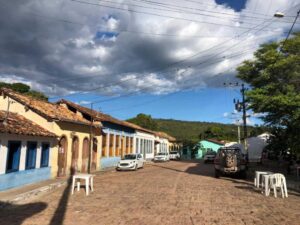
Igatu a “Machu Picchu” brasileira - Reportagem30:17

Igatu, Poço Encantado e Poço Azul13:59

Igatu na Chapada Diamantina11:08
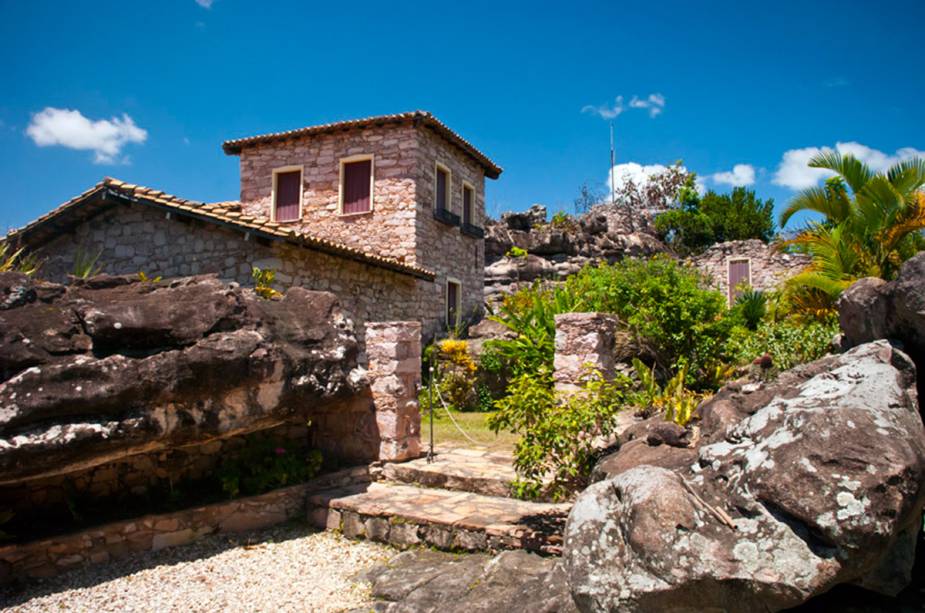
Igatu possui um casario histórico12:58
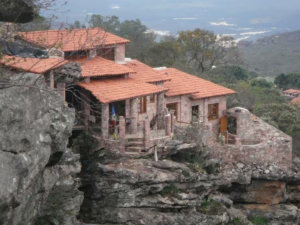
Casa das Nuvens em Igatu
See also the tourist attractions of Chapada Diamantina
Igatu’s architectural wealth
Igatu’s architecture has unique characteristics that set it apart from other historic cities in Brazil, although it shares some common elements.
1. Building materials and style
Igatu is famous for its historic stone houses, built mainly with irregular stones and masonry techniques using clay and ash as mortar. This gives the buildings a rustic and sustainable look, reflecting the history of diamond mining.


2. Historical context
Igatu’s architecture bears direct witness to the Diamond Cycle era, reflecting the transition from a mining village to a tourist centre. The stone buildings are remnants of a time of prosperity linked to mining.
3. Conservation and Listing
Igatu was listed by IPHAN in 2000, underlining the importance of its conservation. The town still has a large number of properties in good condition, unlike other places that may have suffered more wear and tear over time.
4. Integration with nature
Igatu’s location, surrounded by rocky outcrops, rivers and waterfalls, provides a unique integration between nature and architecture. This relationship is remarkable, as the buildings seem to emerge from the land itself, creating a harmonious landscape.
Churches and cemeteries
The Church of São Sebastião, built of stone and limestone, stands out in the landscape of Igatu, surrounded by equally well-preserved Byzantine cemeteries.


The Byzantine Cemetery takes its name from its architecture and style, which are reminiscent of the time and characteristics of the Byzantine Empire.
The cemetery has typical features of Byzantine architecture, such as the use of arches, domes and ornamentation reminiscent of the buildings of the time. This influence can be seen in the tombs and graves, which may have shapes and details reminiscent of this architectural tradition.
The Byzantine Cemetery is a notable example, with tombs that reflect the influence of Byzantine architecture and the rich history of the region. In October 2008, the village was the setting for the Brazilian film Besouro.


Tourist attractions in Igatu
1. Historical and Cultural Tourism
Igatu is a favourable location for historical and cultural tourism, as well as for nature and adventure tourism. It is also known as the birthplace of the writer Herberto Sales, who immortalised Colonel Aureliano Gondim in his novel Cascalho. Colonialism influenced the life and customs of local society.
2. Trail from Andaraí to Igatu
The trail from Andaraí to Igatu is one of the main attractions, offering an immersion in nature and local history. It’s a walk that allows visitors to explore the natural beauty of the region.

3. Garimpo do Brejo
The former Garimpo do Brejo mine has been restructured for tourist visits, allowing visitors to learn a little more about the history of mining in the region.
4. Igatu Art Gallery
Igatu’s Art Gallery is another point of interest where visitors can enjoy works by local artists and learn about the culture of the region.
5. Caim Ramp
The Caim Ramp is an easy hike of about ten kilometres that culminates in a viewpoint with spectacular views of the Pati and Paraguaçu valleys. This place is ideal for those seeking a deep connection with nature.
6. Climbing and adventure
In recent years, Igatu has become a popular destination for climbers, with several sectors such as the Labyrinth, which has around 50 routes of varying difficulty.
Conclusion
Today, Igatu attracts visitors from all over the world and tourism is its main economic activity. It has a population of around 380, most of whom are descendants of diamond miners. Igatu’s uniqueness, combined with its natural beauty and cultural richness, positions it as a unique tourist destination of great historical importance.

Publicações Relacionadas
Morro de São Paulo: Beach Guide and How to Get There
Santo Antônio da Barra Fort — history, Barra Lighthouse and the Nautical Museu
Ilhéus (BA) — Beaches, Cocoa Plantations and Cultural Itinerary
Serra Grande: Your Guide to Bahia's Paradise
Complete Guide to Visiting Arraial d'Ajuda in Bahia
Orchids of the Chapada Diamantina in Bahia
Arembepe: beaches (Piruí, Praia do Canto), Hippie Village and the Tamar Project
Porto Seguro's nightlife: Where to have fun
Maré Island (Bay of Todos os Santos) — beaches, culture and how to get there
Vila de Barra Grande na Bahia: Guia Completo para Turistas
Salinas da Margarida (BA) — Beaches, Attractions and a Complete Guide
Tourist Attractions in Bahia: main attractions, beaches and cities
Caravelas (BA) — Complete Guide: Beaches, History and Abrolhos
History of the Cathedral Basilica of Salvador
Costa do Sauípe: Discover Paradise in Bahia
Tourist Attractions and Documentaries about Chapada Diamantina
Lagoa Encantada in Ilhéus: A Preserved Natural Paradise
Prostitution, sex, massage parlours and nightclubs in Salvador
Paragliding at Pitinga Beach in Arraial d'Ajuda
Taipu de Fora: Discovering Natural Pools
Dive Sites of Chapada Diamantina: A Guide
Sempre-Viva: Symbol of Preservation in the Chapada Diamantina
Blue Fountain in Chapada Diamantina: a complete guide
Correntina: Discovering the Heart of Bahia
Santa Rita de Cássia: Attractions and Activities
Todos-os-Santos Bay (Bahia) — History, geography and conservation
Churches of Salvador: Architectural and Historical Treasures
Cathedral Basilica of Salvador — History, Sacred Art and Collection
Basílica Santuário Nossa Senhora da Conceição da Praia — history and architecture
39 Museums in Salvador: Discover the history and culture of Bahia
Valença: The Gateway to Morro de São Paulo
Palmeiras: A Gateway to Chapada Diamantina
Things to Do in Nova Viçosa (Bahia): Beaches, Islands and Abrolhos
Origin and History of Capoeira in Brazil Explained
Ventura Village: A Rich History of Diamonds
Relief, Fauna and Flora of Chapada Diamantina
This post is also on:
 Português
  English
  Deutsch
  Español
  Français