The Marimbus Pantanal: The mini-Pantanal of the Chapada Diamantina
Marimbus, located in the Chapada Diamantina between Lençóis and Andaraí, is a marshy region known as the “mini Pantanal”.
Its biodiversity and ecosystem are reminiscent of the Pantanal, but with the semi-arid characteristics typical of northeastern Brazil.
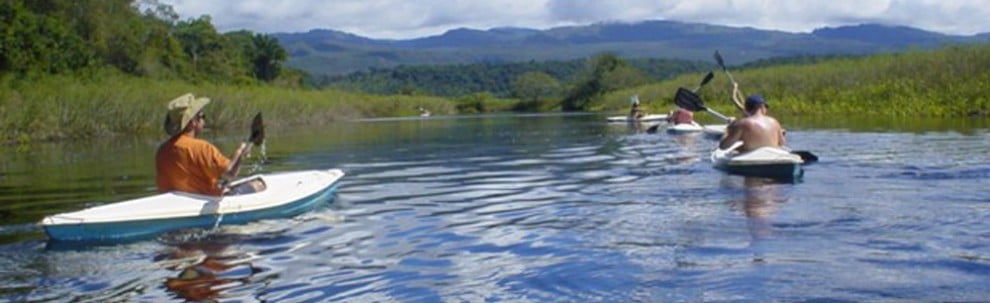
Marimbus in the Chapada Diamantina

Pantanal de Marimbus Parte 108:32

Pantanal de Marimbus Parte 205:12

Pantanal de Marimbus na Chapada Diamantina04:56

Pantanal de Marimbus - Natureza12:22
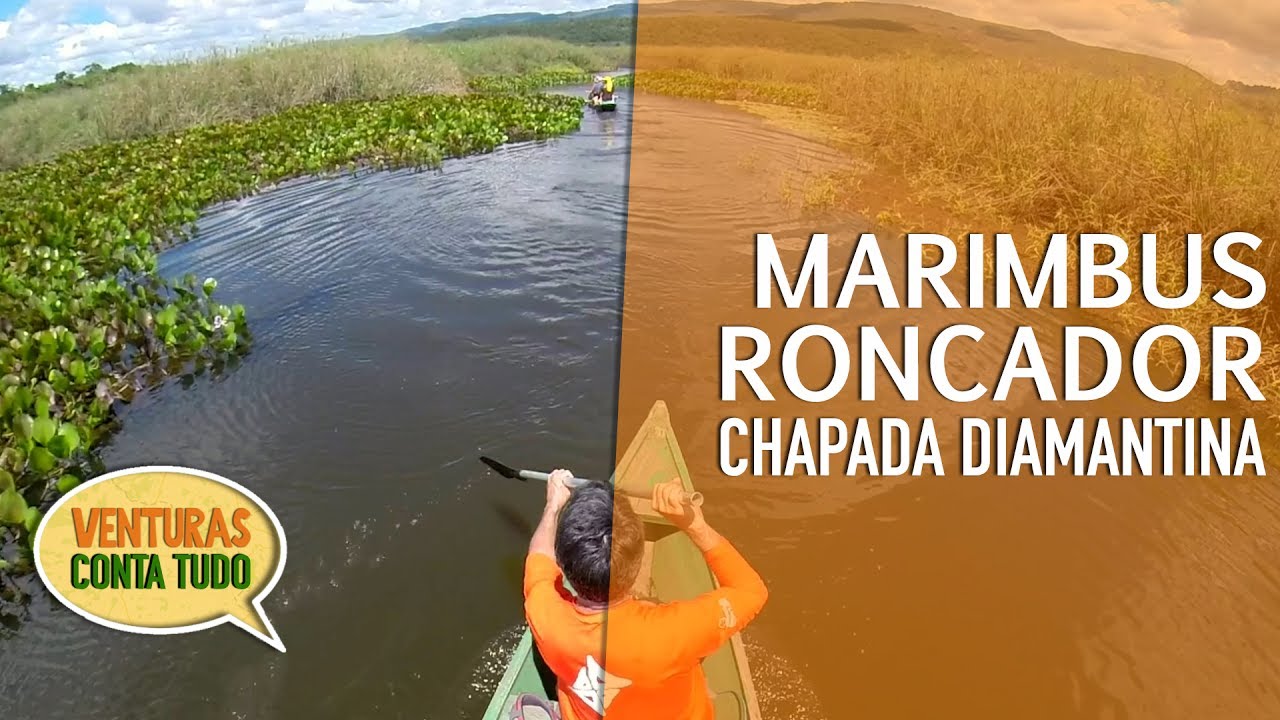
Marimbus e Rio Rocador na Chapada Diamantina02:43
The starting point for exploring Marimbus is the Quilombola Community of Remanso, about 20 kilometres from Lençóis.
Recognised as a Cultural Heritage Site by the Ministry of Culture, this community dates back to the 1920s and is home to around 300 Afro-Brazilians.
Visitors can hire canoes or rowing boats to travel down the river towards the Roncador Waterfall, where it joins the São José River.

The Marimbus ecosystem
Marimbus is a protected area, rich in fauna and flora, including water flowers similar to those of the Pantanal and the Amazon. In addition to its Caves, Waterfalls and Hills, the region offers the famous Marimbus Walk, a must for the adventurous.
The trip takes about an hour and a half of paddling to get there and another two hours to get back, braving the current.
Access route
A 40-minute drive will take you to Remanso.
After a 15-minute walk to the Santo Antônio River, visitors board a boat for a 1 hour 30 minute cruise through an area full of aquatic plants.
Then a 30 minute walk leads to the Roncador River, where it is possible to relax in natural pools.
The Marimbus Pantanal
Located at the foot of the Serra do Sincorá, the Marimbus Pantanal is a vast floodplain of interconnected lagoons fed by the Santo Antônio River. This water comes from the slopes of the mountain and covers an area from the Capão Valley to the Garapa River.
Unique ecosystem
The region is a unique ecosystem that links several tourist attractions, such as the Fumaça and Mixila Waterfalls.
Meaning of “Marimbus
The word “Marimbus” is of African origin, from a Bantu dialect spoken in Angola, and means “farmland, far from the village“. This name reflects the characteristics of the region, with its fertile soil and abundant water.
Composition of the Pantanal
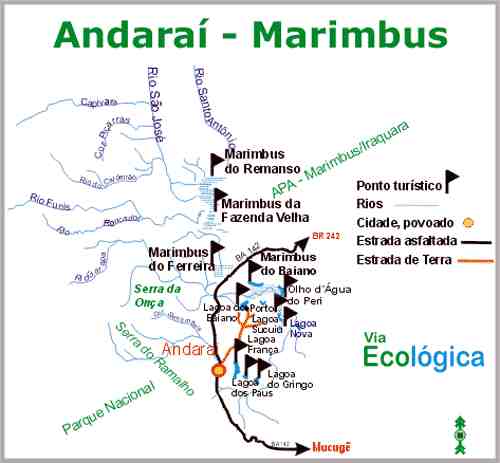
The Pantanal is divided into four main areas, stretching about 30 kilometres from north to south and varying in width. The areas are Marimbus do Remanso, Marimbus do Ferreira and Marimbus do Baiano or Andaraí.
Flora and fauna
The region is home to a variety of species such as Tucunaré, Capybaras, Caymans and various birds. The community of Remanso, 45 minutes from Lençóis, is the gateway to this mini-wetland.
Navigation and experiences
Visitors can cross the river in small wooden boats or kayaks (available for hire), taking about one hour and forty minutes to the mouth of the Roncador River, where they disembark and continue on foot.
Chapada Diamantina Tourist Guide in Bahia
Publicações Relacionadas
Torrinha Cave: A Speleological Marvel in Brazil
Piatã: The Highest Municipality in Bahia
Main caves in the municipality of Iraquara in Chapada Diamantina
Blue Fountain in Chapada Diamantina: a complete guide
Andaraí is the second largest town in the Chapada Diamantina
Trekking in the Pati Valley in Chapada Diamantina
Relief, Fauna and Flora of Chapada Diamantina
Tourist Attractions and Documentaries about Chapada Diamantina
Birds Found in Chapada Diamantina: A Guide
Mucugê: Discover the local history and culture
Tourist Attractions in Rio de Contas You Must Visit
The History of Lençóis in the Chapada Diamantina — Origins, the Diamond Cycle and Heritage
Iraquara is also known as the "city of caves"
The highest and most beautiful waterfalls in Chapada Diamantina
Chapada Diamantina's architectural style and influences
Trekking in the Pati Valley in Chapada Diamantina
Waterfalls and trails in the Capão Valley: Complete Guide
Palmeiras: A Gateway to Chapada Diamantina
Sempre-Viva: Symbol of Preservation in the Chapada Diamantina
Mining in the Chapada Diamantina History Explained
Rio de Contas: Learn about the history of how the city was founded
Dive Sites of Chapada Diamantina: A Guide
Trekking - Route through the Chapada Diamantina in 7 days
Enchanted fountain in Chapada Diamantina: How to get there
Trekking - Popular trails in Chapada Diamantina
Ventura Village: A Rich History of Diamonds
Waterfalls of Chapada Diamantina: A Guide for Adventurers
Chapada Diamantina - Tourist Attractions, Itineraries and Tips
Tourist Information about Chapada Diamantina
Campo Formoso: Explore Caves and Emerald Trade
Main Towns and Villages in the Chapada Diamantina Region
Things to do in Lençóis in the Chapada Diamantina — 15 attractions
How to get to Fumaça Waterfall in Chapada Diamantina
Curiosities about the Rio de Contas in Chapada Diamantina
Picos das Almas, Itobira and Barbado Trekking Guide
Orchids of the Chapada Diamantina in Bahia
This post is also on:
 Português
  English
  Deutsch
  Español
  Français