History of mining in the Chapada Diamantina
1. Gold in the Chapada
In the 18th century, gold was found in Rio de Contas and Jacobina and became the main wealth of the region. During this period, the Estrada Real was built to facilitate the transport of gold, and later diamonds, linking the mining areas with the commercial centres and the coast.

Historical origins of the Royal Road
The Royal Road is one of Brazil’s most important historical routes, dating back to the 17th century.
Its construction was driven by the need to transport gold, and later other minerals such as diamonds, from the mining regions of the interior to the coast, where they were shipped to Europe.
Initially, the trails were rudimentary, created by prospectors and travellers.
As the demand for gold increased, the colonial authorities began to formalise and improve the road, encouraging the construction of more solid infrastructure, including bridges and rest areas.
The economic importance of the Royal Road
The Royal Road was vital in transporting gold and diamonds to ports for export. This had a significant impact on the colonial economy, making Brazil one of Europe’s main sources of precious metals.
The road also facilitated cultural and commercial exchange between regions, allowing merchants and travellers to establish trade links.
Along the Estrada Real, several towns grew and developed, such as Ouro Preto, Tiradentes and Lençóis, becoming commercial and cultural centres.
Today, the Estrada Real is an important tourist corridor, attracting visitors interested in the culture and history of the region and providing a new source of income for local communities.
Video on the history of mining in the Chapada Diamantina

Igatu na Chapada Diamantina11:08
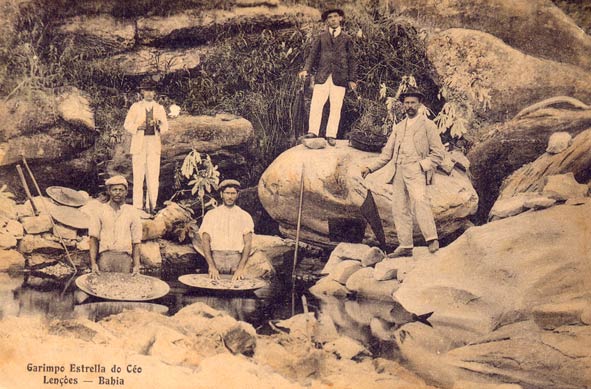
História do Garimpo da Chapada Diamantina03:32

Pedras Preciosas na Chapada Diamantina20:23
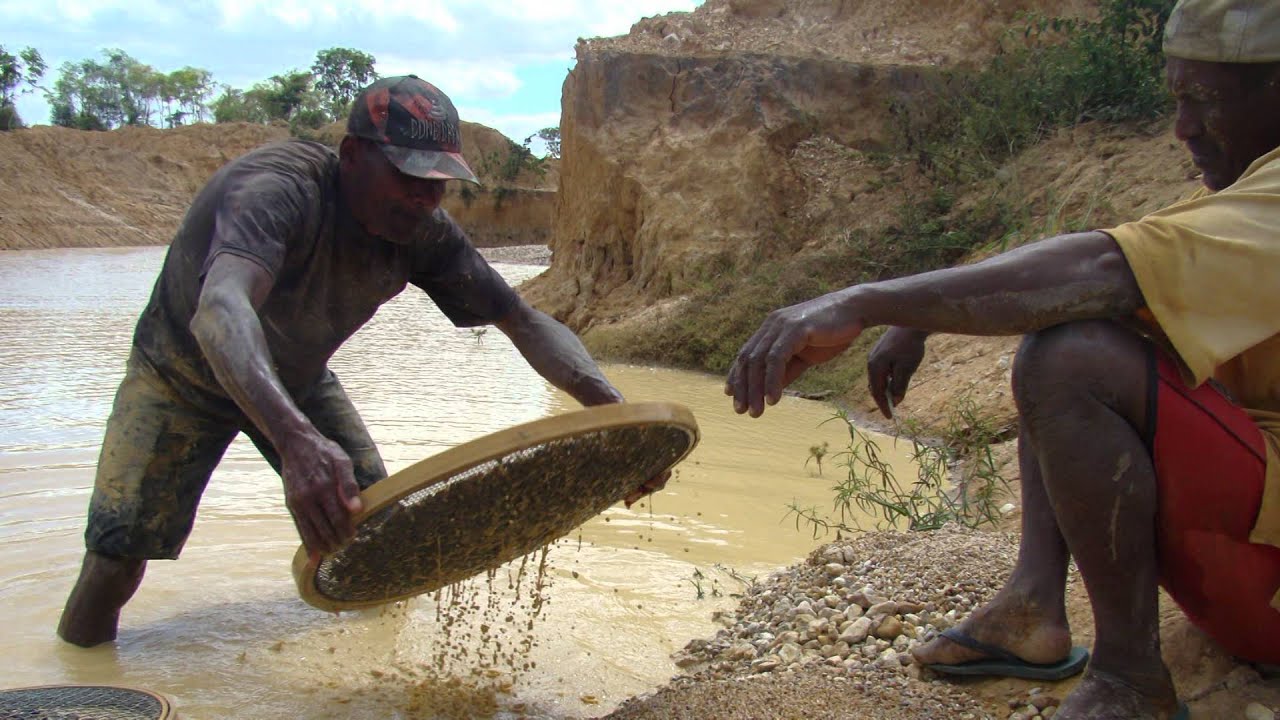
Garimpo na Chapada Diamantina04:00
Map of trails and tourist sites in Chapada Diamantina
2. The discovery of diamonds
At the beginning of the 19th century, the first diamond deposits were discovered in Mucugê.
In 1844, a prospector found diamonds in Mucugê, leading to an expedition that yielded six arrobas of “thick diamonds”.
3. Start of a new mining cycle
The discovery of diamonds led to a new cycle of exploration, with Mucugê, Andaraí, Palmeiras and Lençóis becoming wealthy towns. Lençóis became the third most important city in Bahia.
4. Gold and diamonds in the 19th century
For most of the 19th century, Bahia was the world’s largest producer of diamonds. However, the discovery of deposits in South Africa in 1867 caused the price of diamonds to fall, affecting Brazilian production.

5. The decline of mining
In the 1850s, Lençóis had a population of about 25,000, who lived from tourism.
Production of carbonado, a variety of diamond, continued, but mining began to decline in the early 20th century.


6. The era of the colonels and the economic crisis
Around 1870, diamond mining came to an end, marking the beginning of the Era of the Colonels.
The economic crisis of the mid-20th century was caused by the exhaustion of diamond mining.
Era of the Colonels
The Era of the Coronels refers to a period in Brazilian history that lasted roughly from the end of the 19th century to the beginning of the 20th century, especially in the 1920s and 1930s.
The term “colonels” refers to local leaders, usually landowners or political leaders, who exercised great influence and power in their regions, especially in the interior of Brazil.
7. Last gasps of garimpo
A significant last gasp of garimpo occurred in the 1980s with mechanised mining, but this practice was banned in 1996 due to environmental concerns. Mining ceased in 1994.
8. The age of the synthetic diamond
In the 20th century, the advent of synthetic diamonds led to the extinction of carbonado mining. However, gold and diamonds can still be found in the Chapada, albeit by artisanal methods, since Ibama banned the use of dredges for mining in 1998.
Gold is still found in Rio de Contas, while diamonds are more common near Mucugê and Igatu.
9. Development of artisanal mining
After the ban on mechanised mining, artisanal mining reemerged as a common practice in the region.
Miners began using traditional techniques, such as beaters and hoes, to adapt to the new regulations.
This form of garimpo is more sustainable and less damaging to the environment, allowing many locals to continue to make a living from artisanal diamond and gold mining, especially in areas such as Rio de Contas and Mucugê.
Despite the difficulties, many garimpeiros continue to work in difficult conditions, but with a deep respect for nature.
10. Tourism wealth
Since the 1990s, tourism has become the main source of income in Chapada Diamantina, with the creation of the Chapada Diamantina National Park and the listing of Lençóis as a National Heritage Site in 1973.
11. The reality of Garimpo today
Recently, some artisanal mining has continued, but exploitation is limited. Many locals believe that only 12% of the diamonds in the Chapada Diamantina have been explored.
History of diamond mining in the Chapada Diamantina
Chapada Diamantina and Bahia Tourist Guide

Publicações Relacionadas
Sempre-Viva: Symbol of Preservation in the Chapada Diamantina
How to get to Fumaça Waterfall in Chapada Diamantina
Municipality of Entre Rios has first official naturist beach
Rio Vermelho is Salvador’s trendiest and most bohemian neighbourhood
Tourist attractions in the Gamboa neighbourhood in Salvador BA
Barreiras: Where Carnival Meets Adventure Tourism
Tourist Areas in Bahia - Tourist Guide
Alameda do Sol — Vila da Praia do Forte (BA) | Things to do
Rafting in Taboquinhas: The Ultimate Adventure Guide
Best Beaches in Bahia: Your Guide to Paradise
Bahia Maritime Museum: History of Navigation at the Barra Lighthouse
Solar do Unhão & MAM-BA — History, Architecture and a Visit
Lagoa Encantada in Ilhéus: A Preserved Natural Paradise
Santa Rita de Cássia: Attractions and Activities
Things to Do in Rio de Contas (Bahia): A Complete Guide
História da Arte - Caracteristicas, Aspectos e Periodos
Igatu: Explore the 19th-Century Stone Houses
Barra do Cahy: Brazil's first beach - history and nature
Things to Do in Nova Viçosa (Bahia): Beaches, Islands and Abrolhos
Discover the reasons for a holiday in Salvador, Bahia
The Secret History of Salvador, Bahia: Caramuru and the City’s Early Day
Ilhéus (BA) — Beaches, Cocoa Plantations and Cultural Itinerary
History of the Convent and Church of Nossa Senhora da Piedade in Ilhéus
Beaches and Waterfalls of Itacaré: A Hidden Gem
Rio de Contas: Learn about the history of how the city was founded
Extreme Sports in Bahia: Adventure Awaits You
Madre de Deus Island (BA) — Beaches, Islands and Tourism in the Recôncavo
Cachoeira (BA) — National Monument and Historical Trail
Enchanted fountain in Chapada Diamantina: How to get there
Descobrimento National Park in Bahia: A Natural Heritage Site
Convent and Church of Santa Teresa and the UFBA Museum of Sacred Art in Salvador
The Municipality of Conde, Bahia: Beaches and a Comprehensive History
Comandatuba Island: Resort and Family Adventure
Ponta de Corumbau — an unspoilt paradise on the southern coast of Bahia
Iraquara is also known as the "city of caves"
Tourist Attractions and Documentaries about Chapada Diamantina
This post is also on:
 Português
  English
  Deutsch
  Español
  Français