The waterfalls and trails of the Capão Valley make the village, also known as Caeté-Açu, one of the best destinations in Chapada Diamantina. Capão is a district of Palmeiras, lies at an altitude of around 1,100 metres and features waterfalls, natural pools, viewing points and trails leading to the Fumaça Waterfall and the Pati Valley, without the crowds found at other spots in the region.

This guide presents the most popular waterfalls in Capão, the walking times for the trails, the National Park rules, the current fees and what has changed in 2025 and 2026. The information was verified in October 2026 and, where sources differ, the text sets out both versions.
Video about the waterfalls and walking trails in the Vale do Capão

Cachoeiras e Trilhas do Vale do Capão ou Caeté-Açu
Vale do Capão: where it is and how to get there
Vale do Capão is known for its ecotourism, art and laid-back, peaceful atmosphere. According to *A Tarde*, it has a population of around 3,000. It gets chilly at night: in June, night-time temperatures drop to around 15 °C, according to travel guides.
Distances and transport
From Salvador, it is between 440 and 480 km, taking around 7 hours by motorway, according to the source. From Lençóis, it is around 70 km (1 hour 45 minutes to 2 hours).
From Palmeiras, it is about 19 km along the BA-849, which was tarmacked and signposted in May 2025; older guidebooks still refer to it as a dirt track. Those travelling by coach usually go to Palmeiras (about 7 hours and 15 minutes from Salvador, according to guidebooks) and then continue by minibus, taxi or shuttle to Capão.
Lençóis Airport has scheduled Azul flights to Salvador and Confins, twice a week in 2026, according to reports in August. See also the Lençóis guide.

Waterfalls of the Capão Valley or Caeté-Açu
The five best-known waterfalls in Capão are:
- Águas Claras Waterfall
- Riachinho Waterfall
- Cachoeira das Rodas Waterfall
- Rio Preto Waterfall
- Fumaça Waterfall
1. Águas Claras Waterfall
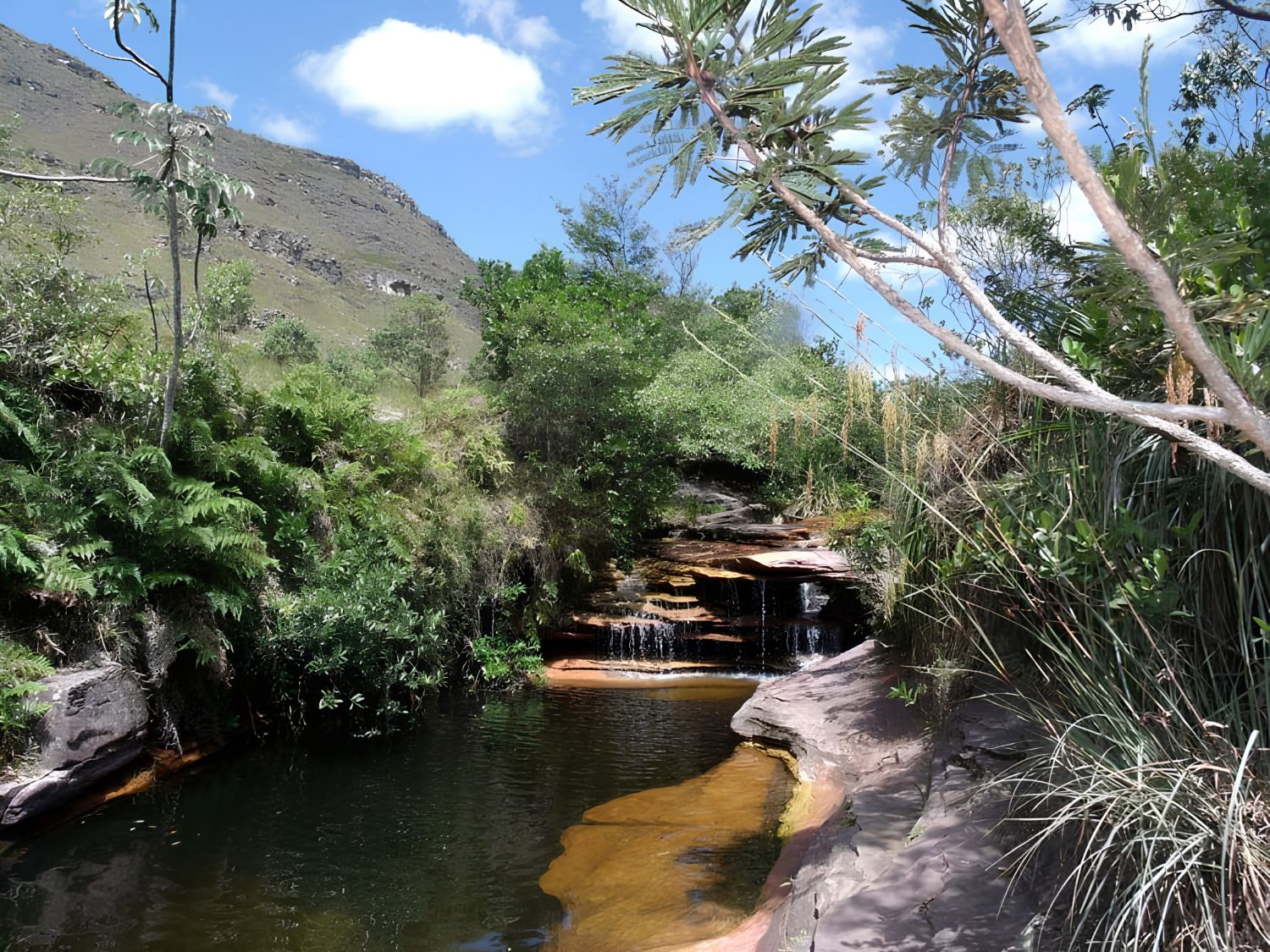
Águas Claras is a swimming spot with pools of crystal-clear water at the foot of Morrão, on the Mucugezinho River. An adventure guide describes it as a roughly two-hour walk there, along a moderate, almost flat trail, with three pools. ICMBio mentions the site as being on the Pai Inácio–Capão trail.
2. Riachinho Waterfall

Riachinho is situated in the Riachinho Municipal Nature Reserve, on the road linking Capão to Palmeiras, about 4 km from the village. According to guides, the waterfall is about 12 m high and forms a pool; there is a paved path of about 500 m leading to it, making it easily accessible. The entrance fee was increased from R$ 12 to R$ 20 by a municipal decree in 2026, according to A Tarde; please check the current price at the town hall.
3. Cachoeira das Rodas Waterfall
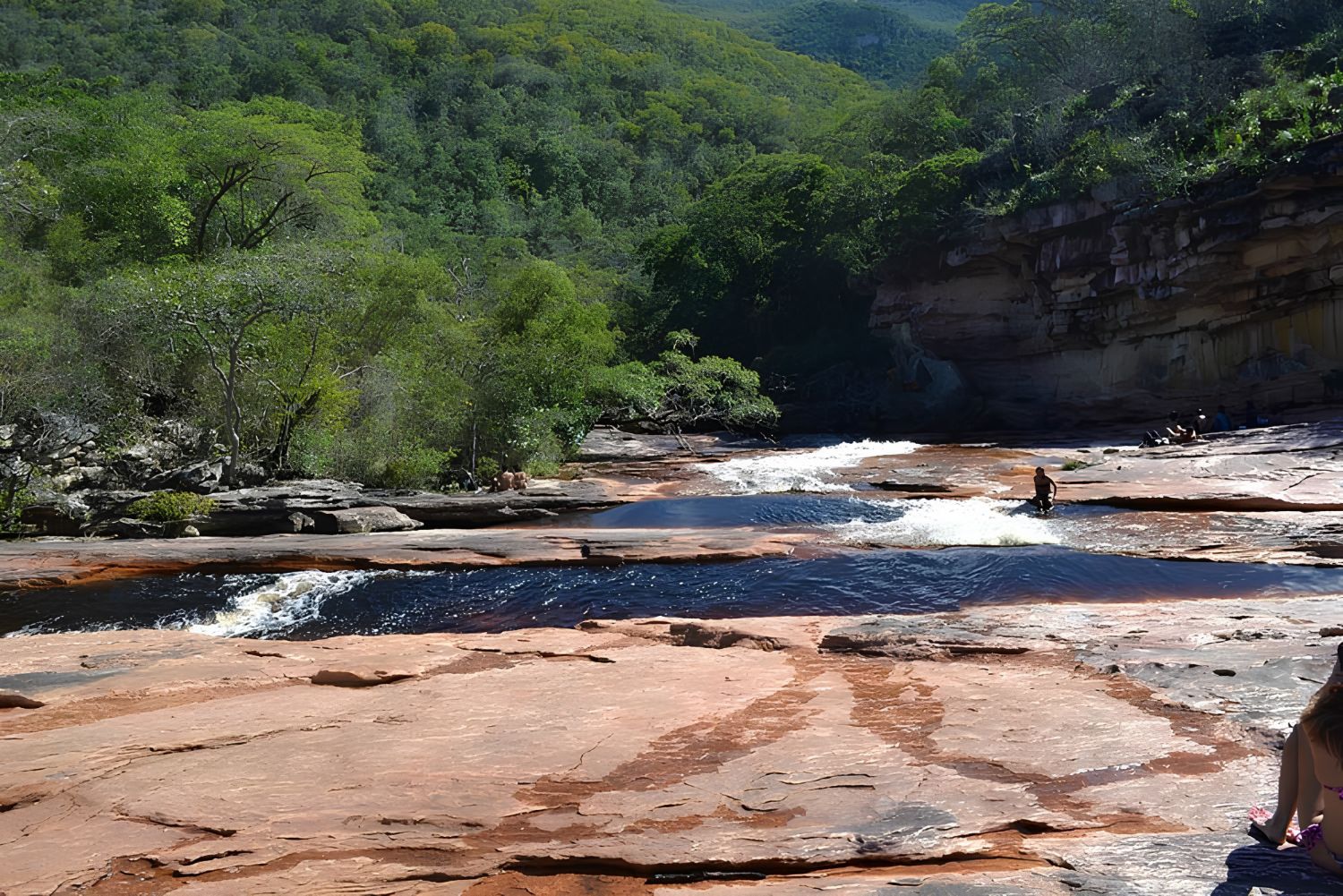
With easy access, the Cachoeira das Rodas waterfall is a good choice for families with children. The water cascades down a rocky face and forms several pools at the foot of a large valley.
4. Rio Preto Waterfall
The Rio Preto Waterfall is one of the closest to the village and is reached via the same path that leads to the Rodas.
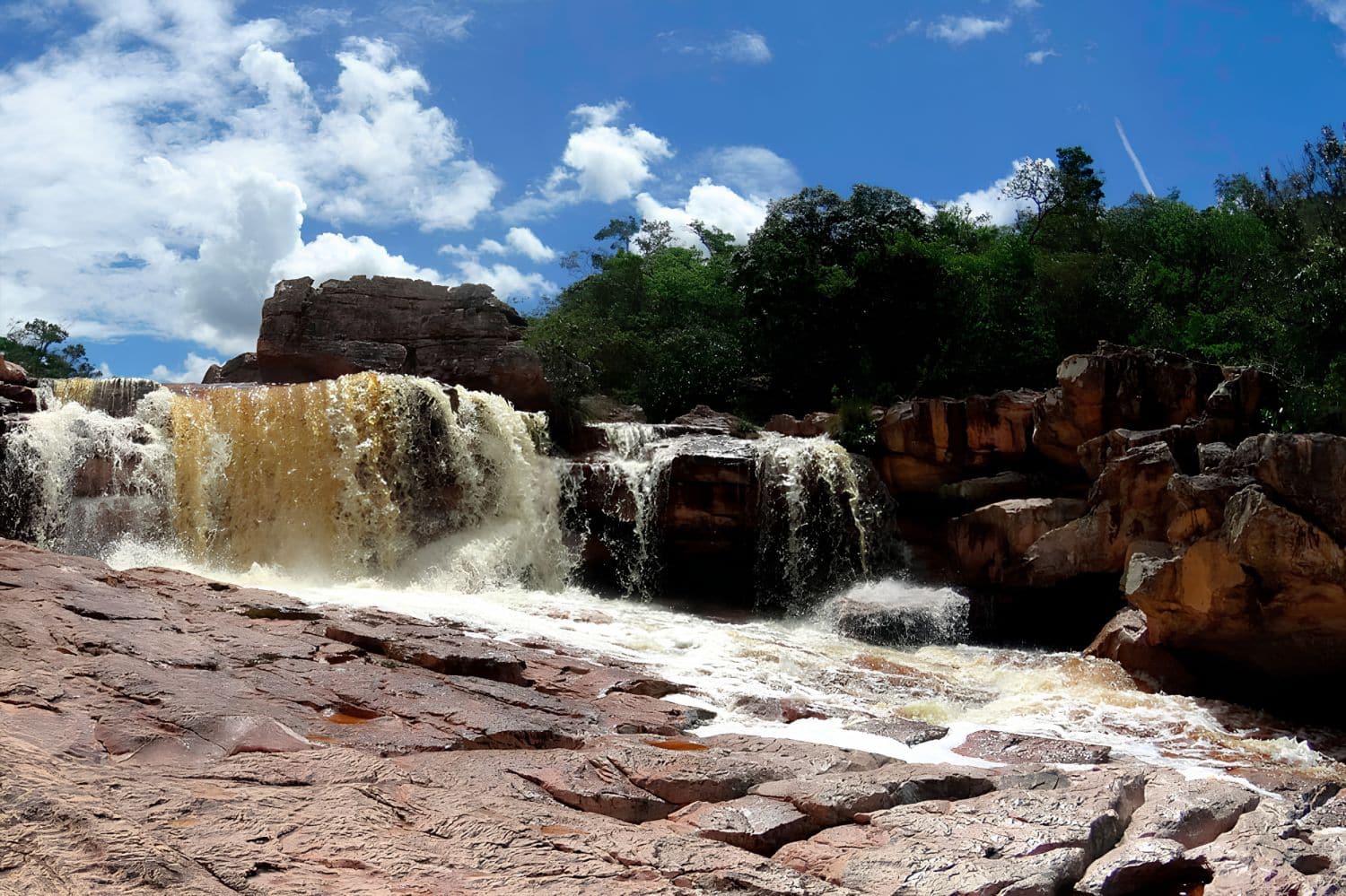
The waterfall, which is around 4 metres high, plunges into a large pool with no visible edge and views of the mountains. A guide says it takes about 20 minutes from the village to the start of the trail and a further 40 minutes to reach the pool. There are unmarked forks in the path, so hiring a guide is recommended. Those who enjoy exploring can continue upwards and take in the pools formed amongst the rocks of the Rio Preto, sheltered by Morrão, one of the most photogenic hills in the region.
5. Fumaça Waterfall
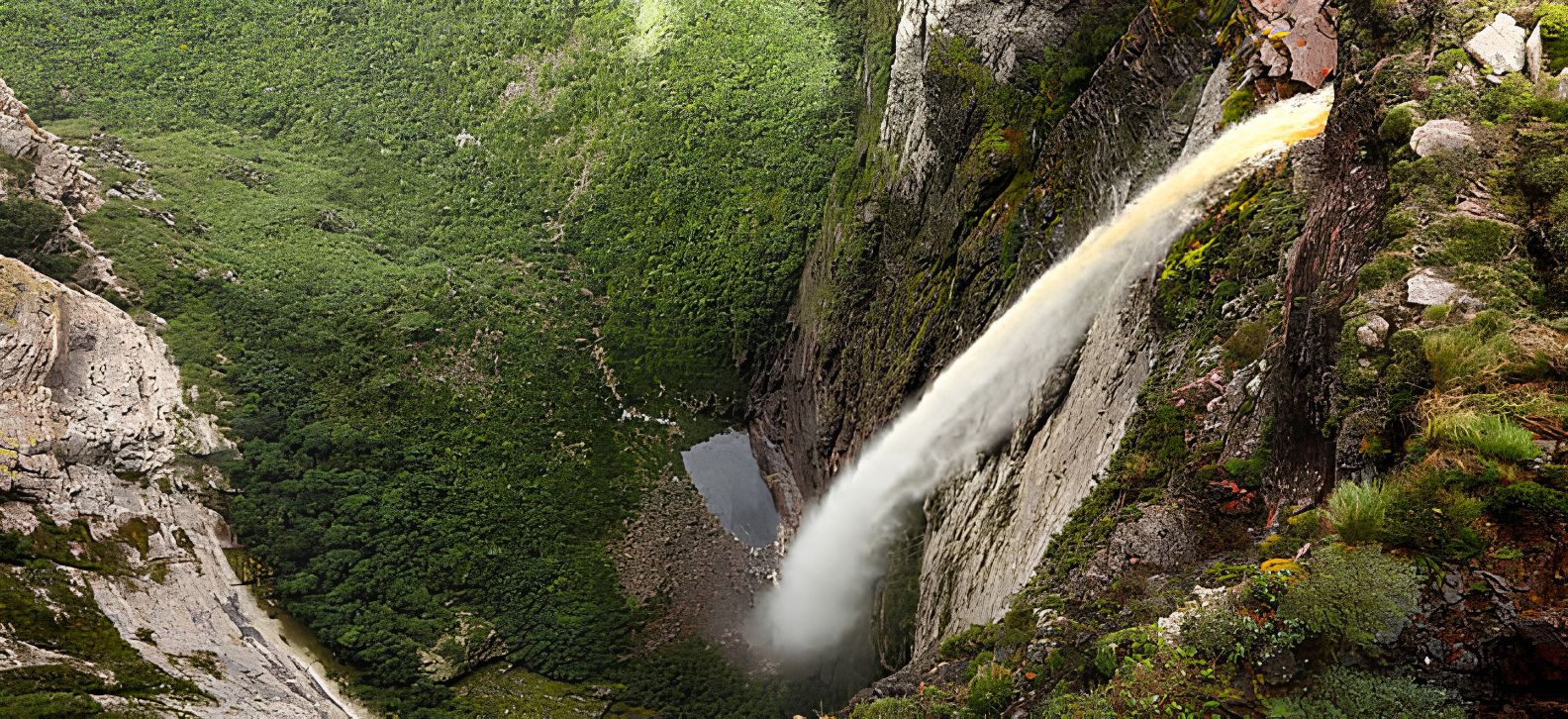
The Fumaça Waterfall is one of Brazil’s best-known sights. It is situated in Palmeiras, within the National Park. Its height varies depending on the source: ICMBio puts it at around 380 m (390 m at another point), whilst the Giant Waterfalls Project measures it at around 340 m.
There is no official ranking: it is often cited as one of the country’s highest waterfalls, but it is not “the highest in Brazil”, as previously stated in this guide.
According to Wikipedia, the El Dorado Waterfall, or Aracá (353 m, in Barcelos, AM), is taller than the recorded height of 340 m. The name comes from the wind: gusts blow the water upwards and turn it into mist before it reaches the pool below. This effect is most common during the dry season (guides mention May to October, or June to September) and, at this time of year, the river can almost run dry. During the rainy season, from November to March, the waterfall has a greater flow. See the complete guide to Fumaça Waterfall.
The Fumaça Trail leading out of Capão
The most popular trail starts from the village of Campos, in the Capão Valley, where the Guides’ Association is based. ICMBio estimates the route to be around 5 km and take about 2 hours, including around 1 hour of steep climbing. Travel guides put the one-way distance at 6 km and the ascent time at around 2 hours 30 minutes, so set aside the whole day.
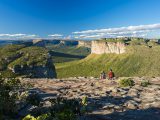
The destination is a viewing point on the cliff, with a view of the waterfall and the mountains in the background; watch out for the wind.
ICMBio does not require a guide, but recommends one, particularly on difficult trails, and does not charge an entrance fee for the park. Guides advise that visitors register with the association and ask for a voluntary contribution towards the fire brigade. There is also a trek lasting around three days, starting from Lençóis and ending at the base of the waterfall, led by an experienced guide.
Other trails and cross-country routes starting from Capão
Vale do Pati
Capão is one of the entrances to the famous Vale do Pati, one of the most beautiful routes in Brazil. From Capão, the trail passes through the village of Bomba and reaches the Gerais do Rio Preto, a plateau from which the descents into the valley begin: the Ruinha, which is steeper (around 40 minutes), and the Arrodeio, which is gentler (around 1 hour 40 minutes).
The quickest way in is via Guiné, in Mucugê, taking around 3 hours. ICMBio recommends treks lasting 3 to 5 days, with overnight stays in local residents’ homes. See also the Mucugê guide.
ICMBio crossings
Lençóis–Capão: 18.6 km (9.5 km within the Park), with a viewpoint overlooking Lençóis, Vale do 21, Poço da Piaba and Toca dos Noivos. Pai Inácio–Capão: 15.3 km (13 km within the Park), with a view of Morrão, ending in Campos. Capão–Mucugê: 40 km. Capão–Andaraí: around 60 km.
Purification and other attractions
The Purificação Waterfall has three cascades and very cold water; a guide says the walk takes about an hour and is of easy to moderate difficulty, starting from the village of Bomba, 8 km from Capão. The Conceição dos Gatos Waterfall (Cachoeira do Meio), which is on private land, charges an entrance fee.
See other waterfalls in the tallest and most beautiful waterfalls in the Chapada Diamantina and in the guide to the Buracão Waterfall. The vegetation is transitional: according to ICMBio, the Park encompasses Atlantic Forest,
The Cerrado and the Caatinga, with rocky plains and the Gerais region. The previous text stated that Fumaça is surrounded by Atlantic Forest, which is not the case. To find out more about the wildlife, read about the birds of the Chapada Diamantina.
Fees, rules and security
- Palmeiras tourism levy: On 29 December 2025, the Town Council approved the Levy for the Development of Tourism and Sustainable Infrastructure in the Capão Valley. Reported rates: R$ 13.32 per week in high season, capped at R$ 53.28, and R$ 6.66 in low season, capped at R$ 26.64. Residents with proof of residence, children under 12, drivers and researchers are exempt. I could not find confirmation of the by-law’s approval, when the charges will come into effect, or where to pay; please check with the local council before you go.
- Morro do Pai Inácio: R$ 20 (full price) and R$ 10 (concession) from 6 April 2026.
- National Park: no entrance fee; a guide is recommended. On 12 January 2026, ICMBio reiterated its advice to hire a guide, particularly on difficult trails.
- Park contact details: Rua Barão do Rio Branco, 80, Palmeiras, telephone (75) 3332-2310, parnadiamantina@icmbio.gov.br. There is no mobile phone signal in the park and the trails are poorly signposted.
- Morro do Castelo (Pati): Internal visits to the cave have been suspended since 5 November 2024 (Ministerial Order 3.299/2024), although there is an external footpath leading to the viewing points; I have not checked whether the suspension is still in place.
- Fires: On 28 March 2025, a fire broke out on Morro do Pai Inácio, Mucugezinho and Serra dos Brejões. Please do not light fires on the trails.
Events and wellbeing in the Capão Valley
The Capão Jazz Festival, which is free and takes place at the Circo do Capão and the Coreto da Vila, held its 12th edition on 19 and 20 September 2025 and its 13th on 18 and 19 September 2026. The São João festival attracts locals and visitors alike; in 2025, the celebrations lasted six days. The Circo do Capão hosts cultural events, usually in the evenings. For those seeking relaxation, there are yoga and Ayurveda retreats in the Valley, such as the Yoga & Ayurveda Retreat. The growing demand has also led to pressure on the property market: residents reported in 2025 that land prices in Capão had almost tripled.
The best time of year to visit the Capão Valley
Sources differ on which months are dry and which are wet. Guidebooks cite May to September as the dry season and October to April as the wet season, with September, October and April considered the best months. To see the ‘Fumaça’ at its best, opt for the wet season; to see the mist, choose the dry season. See also the main towns and villages of the Chapada Diamantina and the Chapada Diamantina category.
Frequently Asked Questions
What are the main waterfalls in the Capão Valley?
The most popular are Águas Claras, Riachinho, Rodas, Rio Preto and the Fumaça Waterfall. There are also Purificação and Conceição dos Gatos.
How high is the Fumaça Waterfall?
It depends on the source: ICMBio puts it at around 380 m (390 m at another point), whilst the Gigantes Waterfalls Project measures it at around 340 m. It is one of the largest in Brazil, but it is not the highest.
How long does the Cachoeira da Fumaça trail take?
ICMBio states that it is about 5 km and takes about 2 hours from Campos, with a steep climb of about 1 hour. Guides say it is 6 km and takes about 2 hours 30 minutes just to get up there; set aside the whole day.
Do I need a guide for the Fumaça Waterfall?
According to ICMBio, a guide is recommended but not compulsory. You can register with the Guides’ Association near the start of the trail, and the National Park does not charge an entrance fee.
When is the best time to visit the Fumaça Waterfall?
To see the falls at their fullest, from November to March, during the rainy season. In the dry season, the wind turns the water into mist and the flow can almost disappear.
How do you get to Vale do Capão?
By car, it is about 70 km from Lençóis and about 19 km from Palmeiras, via the BA-849, which was tarmacked in 2025. From Salvador, it is between 440 and 480 km, taking about 7 hours.
Is there a tourist tax in the Capão Valley?
Palmeiras Town Council approved the charge on 29 December 2025, setting the rate at R$ 13.32 per week (high season, with a maximum of R$ 53.28). I have not confirmed whether the by-law has been signed into law or when the charge will come into effect, so please check with the town hall.
In which town is the Capão Valley located?
In the municipality of Palmeiras. The district is called Caeté-Açu and is known as Capão.
How do you get to Vale do Pati from Capão?
Through the village of Bomba and the Gerais do Rio Preto region, from where the Ruinha and Arrodeio trails begin. The trek takes between 3 and 5 days, and ICMBio recommends a guide.
Sources consulted
- ICMBio, visitor information for the Chapada Diamantina National Park and increased security in January 2026.
- A Tarde, Palmeiras’ municipal parks, access to Pai Inácio and the Capão Jazz Festival.
- Bahia News, Palmeiras tourism tax.
- Correio, the new Vale do Capão road and the fire in March 2025.
- Adventure and travel guides: Viagens e Caminhos, Mala de Aventuras and Quanto Custa Viajar (heights and rankings of falls, no official survey).
- Movimento Econômico (Lençóis Airport).

Publicações Relacionadas

Lençóis, Bahia: Origins, the Diamond Cycle and Heritage

Architectural Style of the Chapada Diamantina, Bahia: A Guide

History of the Settlement of the Chapada Diamantina, Bahia

Birds found in the Chapada Diamantina: Exotic Species

Main Towns and Villages in the Chapada Diamantina, Bahia
Waterfalls in the Chapada Diamantina, Bahia: 5 Worth Visiting

The highest and most beautiful waterfalls in Chapada Diamantina

Candombá in the Chapada Diamantina, Bahia: the Flower of Fire

Mining in the Chapada Diamantina History Explained

Ventura Village: A Rich History of Diamonds

Igatu: Explore the 19th-Century Stone Houses

Marimbus Pantanal: Adventure in Chapada Diamantina
Picos das Almas, Itobira and Barbado Trekking Guide

Sempre-Viva: Symbol of Preservation in the Chapada Diamantina

Dive Sites of Chapada Diamantina: A Guide

Rio de Contas, Bahia: things to do, history and peaks

Things to Do in Piatã, Bahia: The Highest Town in the North-East

Palmeiras: A Gateway to Chapada Diamantina

Mucugê: Discover the local history and culture
Ecological tourism in Morro do Chapéu

Things to do in Lençóis in the Chapada Diamantina — 15 attractions

Iraquara is also known as the "city of caves"

Ibicoara: An Unmissable Tourist Destination

Andaraí is the second largest town in the Chapada Diamantina

Tourist Information about Chapada Diamantina

Trekking in the Pati Valley in Chapada Diamantina
Trekking - Route through the Chapada Diamantina in 7 days

Blue Fountain in Chapada Diamantina: a complete guide

Enchanted fountain in Chapada Diamantina: How to get there

Torrinha Cave: A Speleological Marvel in Brazil

Lapão Cave: The Ultimate Adventure Experience

Main caves in the municipality of Iraquara in Chapada Diamantina

Trekking in the Pati Valley in Chapada Diamantina
Trekking - Popular trails in Chapada Diamantina

Orchids of the Chapada Diamantina in Bahia
Chapada Diamantina: A Complete Guide to Attractions and Itineraries
This post is also on:
 Português
  English
  Deutsch
  Español
  Français