Discover Andaraí: Natural treasure of Chapada Diamantina
Andaraí is full of attractions, located in the centre of the National Park. This municipality stands out for its economic and population boom during the diamond cycle.
History and heritage
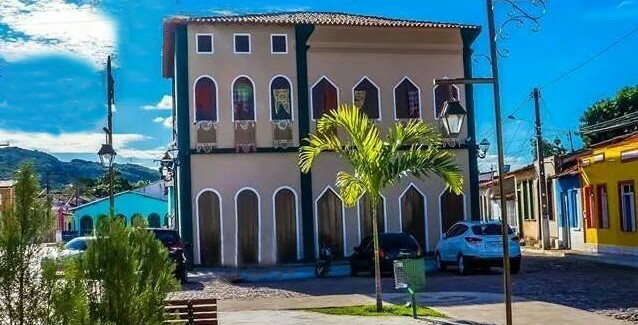
Its preserved houses in the historic centre date back to the golden days of the 19th century. Situated on the banks of the Paraguaçu River, the town has many watercourses, giving it the nickname of Reduto das Águas.

Waterfalls and natural beauties
The commune is home to four of the ten largest waterfalls in the region:
- Cristais, at 110 metres,
- Herculano and Samuel, at 100 metres,
- Ramalho, at 90 metres.
Its strategic location allows access to various natural attractions in the neighbouring municipalities, such as Mucugê, Ibicoara, Nova Redenção and Itaetê.
The village of Igatu, the Marimbus Pantanal, the Baths of Roncador River and the various waterfalls and caves are some of the local tourist attractions.
Conservation Units
Andaraí is home to five Conservation Units (UCs), which protect numerous natural attractions:
- PNDC,
- Igatu Urban Park,
- Marimbus-Iraquara APA,
- Manga do Céu Nature Reserve,
- Rota das Cachoeiras Municipal Nature Park.
Extreme sports and tourism
Andaraí attracts extreme sports enthusiasts and visitors who don’t mind facing natural obstacles to get good photos and enjoy beautiful landscapes.
Nearby attractions
Important distances:
Andaraí is one of the best known towns in the Chapada Diamantina for tourism, due to its strategic location for visiting attractions further away from Lençóis.
From Andaraí you can visit
- Poço Azul,
- Poço Encantado,
- Roncador Waterfall,
- Pantanal Marimbus,
- Lapa do Bode Cave,
- Passion Cave,
- Marota Cave,
- the attractions of Igatu and Mucugê.
Origin of the name and origins of the town
The name Andaraí, which means “river of bats”, was given by the Cariris Indians who inhabited the region when the first adventurers arrived in search of metals and precious stones.
The place began to take on the characteristics of a settlement in 1845, when Captain Joaquim de Figueiredo came from Minas Gerais to settle with his family and search for diamonds that “sprang from the earth”.
Current economy
Andaraí currently lives from agriculture and tourism. If you don’t feel like hiking or climbing, you can visit Marimbus, Vila do Remanso, Recanto das Orquídeas and the Xique-Xique village of Igatu.
See the map of Chapada Diamantina
Video about Andaraí
Andaraí e Mucugê09:42

Andaraí na Chapada Diamantina06:55
Marimbus e Rio Rocador na Chapada Diamantina02:43

Poço Azul, Poço Encantado e Olho d'Agua11:53

Gruta da Paixão na Chapada Diamantina07:28

Gruta da Marota em Andaraí05:07
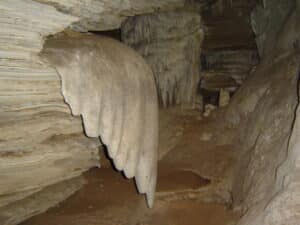
Gruta da Paixão em Andaraí
Attractions in and around Andaraí
Andaraí offers strategic access to various natural attractions in the surrounding municipalities, such as Mucugê, Ibicoara, Nova Redenção and Itaetê.
The village of Igatu, the Marimbus Pantanal, the pools of the Roncador River, the various waterfalls and caves are some of the local tourist attractions.
- Blue Fountain
- Enchanted Well
- Passion Cave
- Marota Cave
- Marimbus
- Roncador Farm
- Igatu in the Chapada Diamantina
- Igatu Art and Memory Gallery
1. The Blue Fountain
The Poço Azul (Blue Well), located in the municipality of Andaraí in the Chapada Diamantina, is one of the region’s most fascinating natural attractions.
It is a flooded cave with incredibly clear water, allowing perfect visibility at depths of up to 20 metres.
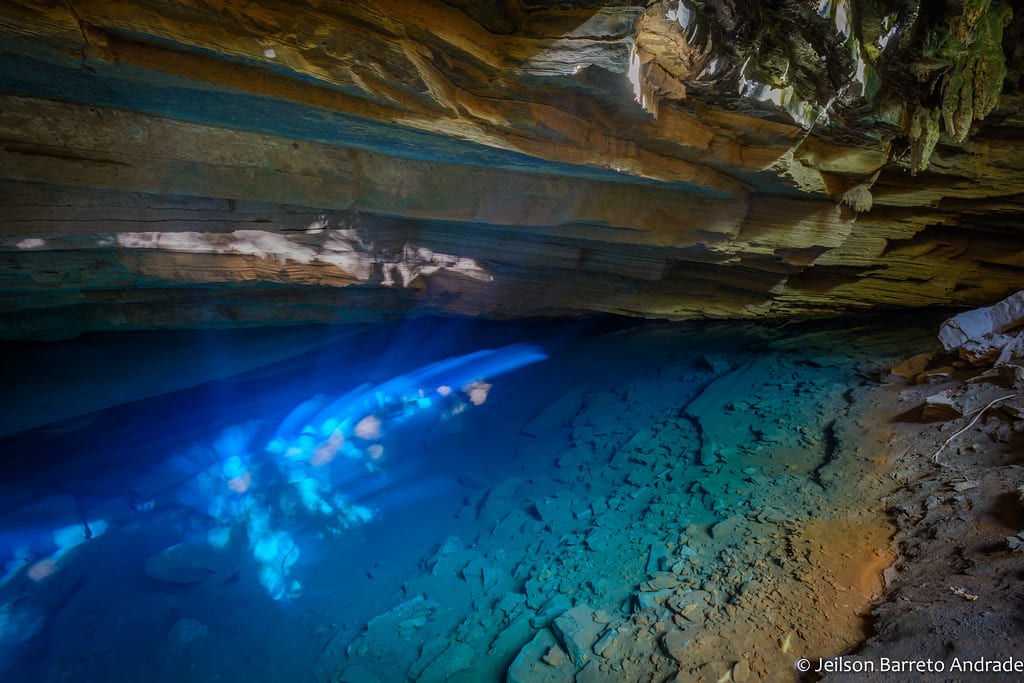
The combination of pure water and limestone walls creates a spectacle of light and colour, especially during the phenomenon of the ray of sunlight that passes through the upper opening of the cave and illuminates the water, creating a magical effect.
Main features
- Depth: Approximately 16 metres.
- Crystal clear water: The transparency is so impressive that visitors can see the bottom and swim among the submerged formations.
- Luminous phenomenon: The best time to see the beam of light is between February and October, between 10am and 2pm, when the sun is in an ideal position.
- Geological formation: The cave was formed by the dissolution of limestone over thousands of years, creating a unique environment.
To visit
- Activities The Blue Well allows you to float (with a snorkel) and offers a unique experience of observing the inside of the cave and its fossils.
- Access: To get there, you have to walk a short path of medium difficulty that leads to a staircase that leads to the inside of the cave.
- Rules: For environmental reasons, it is compulsory to shower before entering the water to avoid contaminating the ecosystem.
Its importance
In addition to its beauty, Poço Azul is an important palaeontological site, where fossils of large prehistoric mammals such as giant sloths and sabre-toothed tigers have been found. These finds help tell the story of the region’s extinct fauna.
The Poço Azul is undoubtedly a must for anyone visiting the Chapada Diamantina, combining natural beauty, history and an unforgettable experience of contact with nature.
Poço Azul is located on a private property on the banks of the Paraguaçu River, about 40 km from the centre of Andaraí. It can usually be reached by car on good gravel roads.
2. Enchanted Fountain
This site, which attracts more than 7,000 visitors a year, is one of the Chapada’s must-see attractions.
The Enchanted Well, also located in the municipality of Andaraí, is one of the most iconic attractions of the Chapada Diamantina. Famous for its surreal beauty, it is a cave with a lake of crystal clear water that takes on bluish tones when the sun hits it, creating a unique visual spectacle.

Main features
- Depth: The lake is around 61 metres deep, with crystal clear water that allows full visibility of the bottom.
- Light phenomenon: The spectacle takes place between April and September, usually between 10am and 1pm, when a beam of sunlight passes through a crack in the cave and illuminates the water, creating the famous “enchantment” that gives the place its name.
- Geology: The formation of the cave is limestone and the environment is surrounded by stalactites and other impressive natural formations.
Visiting Rules
- No diving: Unlike Poço Azul, Poço Encantado does not allow swimming or floating in order to preserve the delicate environment and avoid ecological impact.
- Controlled access: The number of visitors is limited and the use of helmets is compulsory.
- Access: To enter the cave, you must go down a flight of stairs leading to the lookout point.
How to get there
Poço Encantado is located about 25 km from the centre of Andaraí, on a private estate. It is accessed by a dirt road and can be reached by car in about 40 minutes. It is often combined with a visit to the Poço Azul, which is relatively close by.
3. Cave of the Passion
The Passion Cave, located in the municipality of Andaraí, is one of the lesser known but equally fascinating jewels of the Chapada Diamantina. It enchants visitors with its impressive geological formations, including stalactites, stalagmites and other natural sculptures formed over millions of years.

Main features
- Size: The cave has a system of galleries and chambers that are remarkable for the size and beauty of the limestone formations.
- Rock formations: Visitors can observe figures that resemble objects or animals, such as curtains, columns and even human forms, thanks to the imagination that the formations inspire.
- History: The cave is called “of the Passion” because of the belief that some of the formations resemble scenes from the Passion of Christ, such as a cross or kneeling figures.
Activities
- Trails and Exploration: To reach the cave, visitors walk along trails that pass through landscapes typical of the Chapada Diamantina, such as rupestrian fields, cerrado vegetation and rivers.
- Photography: The site is ideal for those who enjoy photographing natural environments and geological formations.
- Guided Tours: It is highly recommended to hire a local guide to better understand the geology and cultural aspects of the cave.
How to get there
The Gruta da Paixão is located a few kilometres from the centre of Andaraí, and can be reached via trails and secondary roads. It is important to be prepared with
- Suitable footwear for walking.
- Torches and helmets as some parts of the cave are dark and may have narrow passages.
4. Marota Cave
The Marota Cave, located in the municipality of Andaraí, in the Chapada Diamantina, is one of those natural attractions that combine adventure and scenic beauty. Although less well known than other caves in the region, such as Poço Encantado and Poço Azul, Gruta da Marota offers an authentic experience for those wishing to explore the geological formations and natural wealth of the Chapada.

Main features
- Geological formations: The cave has stalactites, stalagmites and other formations characteristic of limestone caves, formed over millions of years by the action of water and time.
- Interior: The interior of the cave is dark, making the use of torches essential, but it reveals a fascinating underground world of galleries and small halls.
- Vicinity: The walk to the cave is an attraction in itself, passing through typical Chapada vegetation and offering breathtaking views.
How to get there
The Gruta da Marota is located in a rural area of Andaraí and can be reached by dirt roads and tracks. We recommend
- Hire a local guide as the entrance to the cave can be difficult to find.
- Be prepared for a moderate-to-difficult hike, depending on the time of year and terrain.
5 Marimbus
The Marimbus is partly located in the municipality of Andaraí, but also extends to other nearby areas in the Chapada Diamantina, such as the district of Remanso and parts of Iraí do Mandú. The most visited part of the Marimbus, known as the Marimbus do Remanso, is located about 12 km from the centre of Andaraí.
Marimbus is a veritable swamp in the heart of Bahia, probably formed by the action of mining drains, which created a large plain with interconnected lagoons.
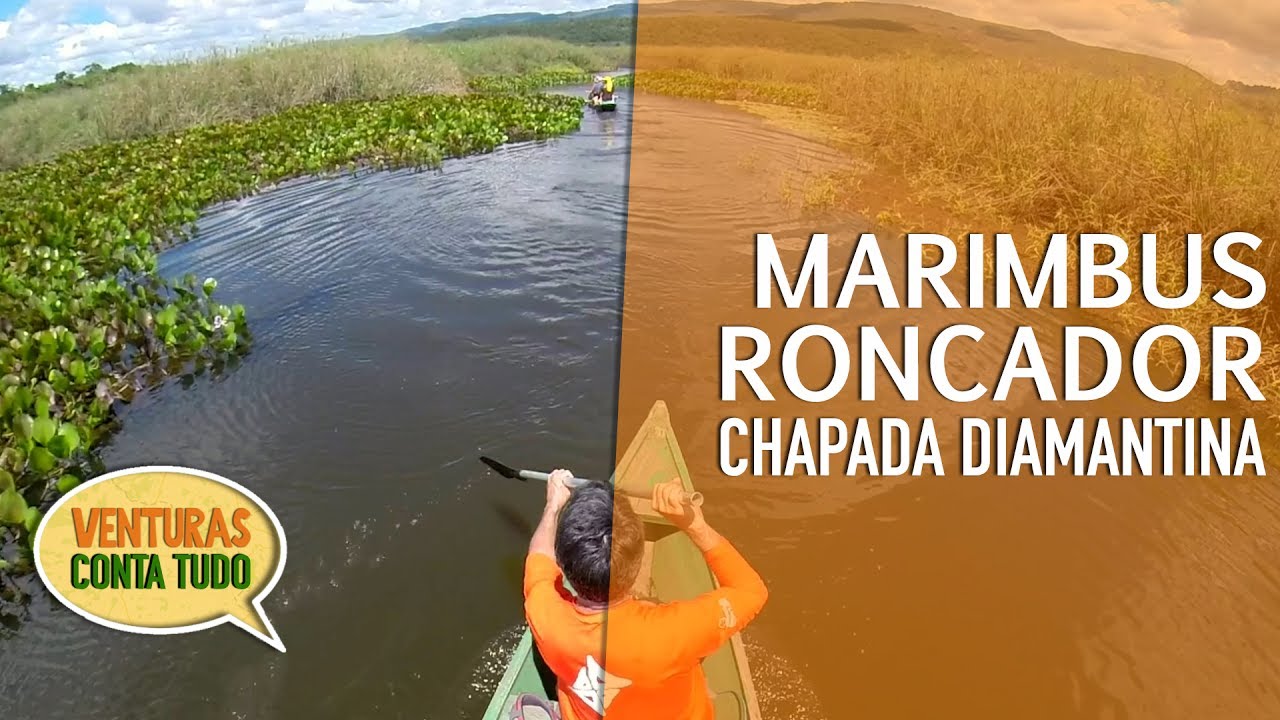
In fact, its name, of African origin, means “flooded land”. Known as the “Pantanal of the Chapada”, the region is home to typical Pantanal and Amazonian fauna such as tucunaré, caimans and a wide variety of birds. Examples of Amazonian flora, such as the Victoria Regia, can be found here.
Tours of the lagoons in rubber dinghies led by professional oarsmen are relaxing experiences. Diving in these waters, not so much, as it would be a bit stressful to swim among the alligators.
Key features
- Size: The Marimbus covers about 8,000 hectares and is divided into two main parts: the Marimbus do Remanso (near Andaraí) and the Marimbus de Baiano.
- Biodiversity: It is a refuge for various species of birds, fish, reptiles and aquatic vegetation, and has a unique interaction with the typical flora of the Caatinga and Cerrado.
- Hydrography: Formed by the Santo Antônio and Utinga rivers, the Marimbus is a flooded area all year round, but its volume increases significantly during the rainy season.
6. Roncador Farm
Fazenda Roncador, located in the municipality of Andaraí, in the Chapada Diamantina, is a reference point for those wishing to explore the natural beauty of the region. This farm is particularly well known for being the gateway to the Marimbus Pantanal and the Roncador River, two of the region’s main attractions.

What to find at Fazenda Roncador
Roncador River
- The river forms natural pools and small waterfalls, ideal for swimming.
- It is a setting of impressive natural beauty, with crystal clear waters surrounded by rocks and vegetation typical of the Chapada.
Marimbus
- The farm is the starting point for canoe trips through the Marimbus, the “Pantanal of the Chapada Diamantina”.
- The flooded ecosystem is perfect for observing birds and local biodiversity.
Trails and nature
- There are trails that start from the farm and take you to areas of woodland, rock formations and viewpoints.
- It’s an opportunity to walk among the rich flora of the Chapada Diamantina.
Historical link
- The farm has a historical link with the development of the region, being one of the properties that contributed to the local culture and economy.
Activities available
7. Igatu in the Chapada Diamantina
Igatu is located in the municipality of Andaraí, in the Chapada Diamantina, Bahia. Igatu is a small, charming village known for its cobbled streets and rustic, cosy atmosphere, and is a popular destination for tourists visiting the Chapada Diamantina.
To get to Xique-Xique from Igatu, you have to drive up a mountain road lined with flowers, from where you can enjoy an unusual view.
In this town, once one of the mining capitals, everything is made of stone: the cobblestones of the streets, the fences and even the roofs of the houses, which take advantage of the cavities in the rocks.
That’s why Igatu is known as the “Brazilian Machu Picchu”.
The area where the prospectors lived in the 19th century, now uninhabited and in ruins, is an interesting “ghost town”.
In the village, Dona Alzira’s house, the former residence of Igatu’s only gold digger, preserves mining tools and period furniture and is a place to visit.

Characteristics of Igatu
- History and architecture: Igatu is known as the “Pearl of the Chapada”, with its stone buildings and narrow streets reminiscent of the old colonial structure.
- Natural Beauty: The village is surrounded by mountains, rivers and areas of native vegetation, providing an ideal setting for hiking, trails and ecological tours.
- Tourism: In addition to its architecture and history, Igatu is famous for its adventure tourism options, such as trails leading to viewpoints and the Buracão waterfall.
Access to Igatu
- The village of Igatu is located about 25 kilometres from Andaraí, accessible by dirt roads, and is often visited by those exploring the Chapada Diamantina, mainly due to its proximity to other tourist attractions in the region.
If you’re in Andaraí, it’s easy enough to get to Igatu to explore its unique charm, natural landscapes and peaceful atmosphere.
8. Igatu Art and Memory Gallery
The Igatu Art and Memory Gallery is a cultural space located in the village of Igatu, in the municipality of Andaraí, in Chapada Diamantina, Bahia. The gallery aims to preserve and promote local history and culture, and is an important meeting place for local residents and visitors.

Features and functions
- Art exhibitions: The gallery displays works by local and foreign artists, with a focus on productions that depict the life, culture and landscapes of the Chapada Diamantina.
- Preserving local memory: The space is also dedicated to preserving the history of Igatu and the Chapada Diamantina, offering exhibitions and activities that revive the traditions, customs and history of the region.
- Education and culture: In addition to exhibitions, the gallery promotes educational activities such as workshops and cultural events that help to spread knowledge about the art, history and cultural roots of the community.
Location.
The Igatu Art and Memory Gallery is located in the centre of the village of Igatu, a place accessible to tourists and locals alike. Its location in one of the most charming and historic villages of Chapada Diamantina makes the gallery a point of cultural and tourist interest.
Bahia.ws is the largest tourist guide in Bahia and Salvador.
Tourist guide to Andaraí in the Chapada Diamantina

Publicações Relacionadas
Ecological tourism in Morro do Chapéu
Orchids of the Chapada Diamantina in Bahia
Bom Jesus dos Passos Island: A Complete Guide (Beaches, Church and How to Get There)
Discover the Abrolhos Archipelago: a haven for humpback whales and a biodiversity hotspot
Bay of Todos os Santos: nature, history and cultur
The Coconut Coast and its tourism heritage
Things to Do in Piatã, Bahia: The Highest Town in the North-East
Trekking - Popular trails in Chapada Diamantina
Municipality of Entre Rios has first official naturist beach
City of Camamu: Rich History by the Bay
Historic Towns in Bahia: A Journey Through Time
Island of Fear: Mysteries and Hauntings
The highest and most beautiful waterfalls in Chapada Diamantina
History, the Festival of Nossa Senhora das Candeias and Tourist Attractions
Marimbus Pantanal: Adventure in Chapada Diamantina
Torrinha Cave: A Speleological Marvel in Brazil
Whale Coast (BA) — Complete guide: Abrolhos, beaches and whale-watching
São Desidório: Explore Caves and Biodiversity
Salvador’s Historic Centre, Pelourinho, Baroque churches and museum
Main islands of Todos os Santos Bay | Visitor’s Guide
Trail to Buracão Waterfall in Chapada Diamantina
Tourist Information about Chapada Diamantina
Church of São Pedro dos Clérigos — History, architecture and religious art
São Sebastião Cathedral (Ilhéus) — History, architecture and tourism
Cocoa farms attract tourists to Bahia - Chocolate Road
Mining in the Chapada Diamantina History Explained
Things to Do in Rio de Contas (Bahia): A Complete Guide
History of the Cathedral Basilica of Salvador
Todos-os-Santos Bay (Bahia) — History, geography and conservation
Coast of Discovery: Bahia's Historical Treasures
Bom Jesus da Lapa Sanctuary: A Complete Visitor’s Guide
Barreiras: Where Carnival Meets Adventure Tourism
Church and Convent of Nossa Senhora da Palma in Salvador, Bahia
Fort of Nossa Senhora de Monte Serrat History
Costa do Sauípe, Bahia: Resorts and Tourist Guide
Lagoa Encantada in Ilhéus: A Preserved Natural Paradise
This post is also on:
 Português
  English
  Deutsch
  Español
  Français