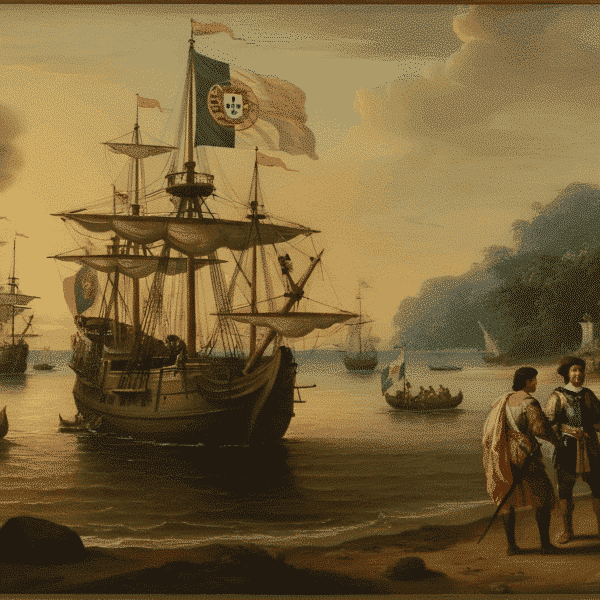
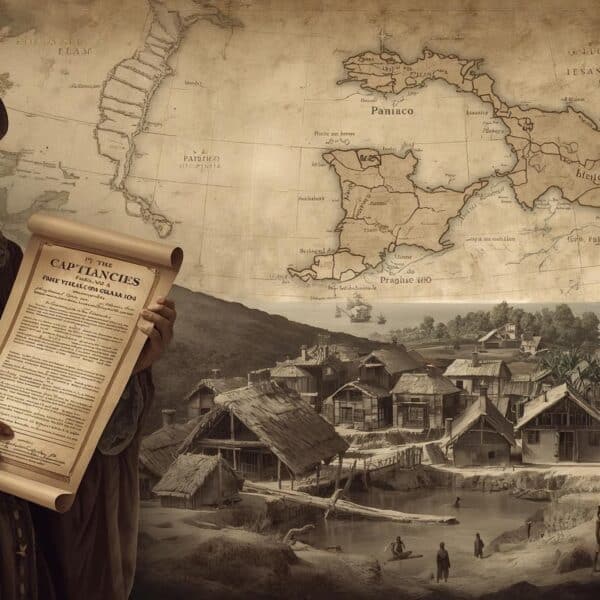
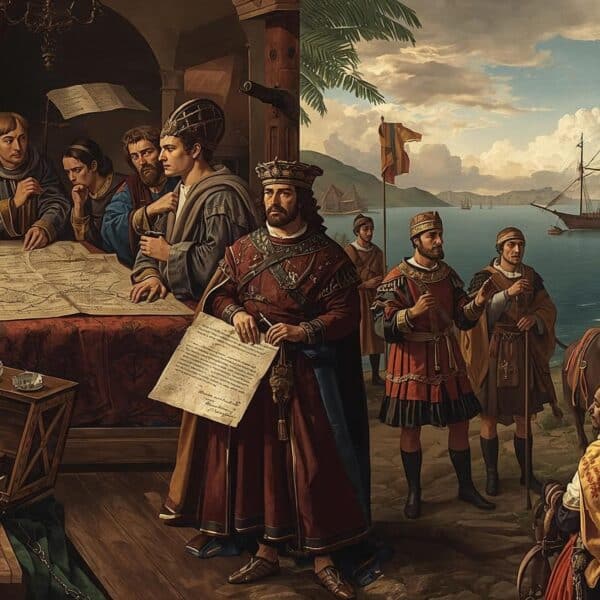
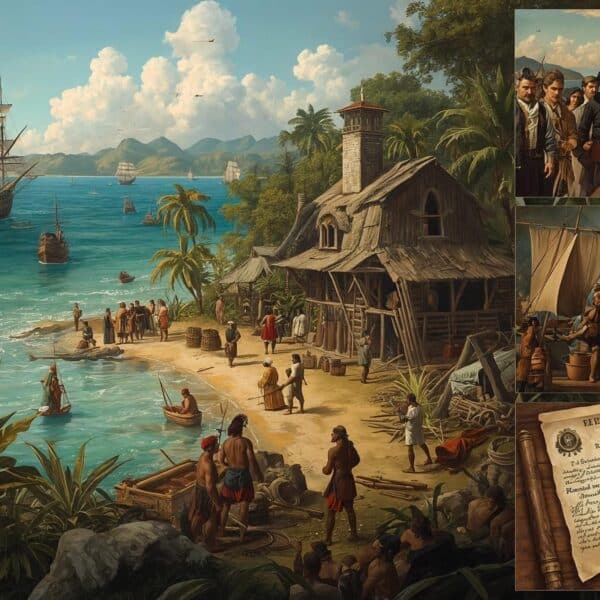
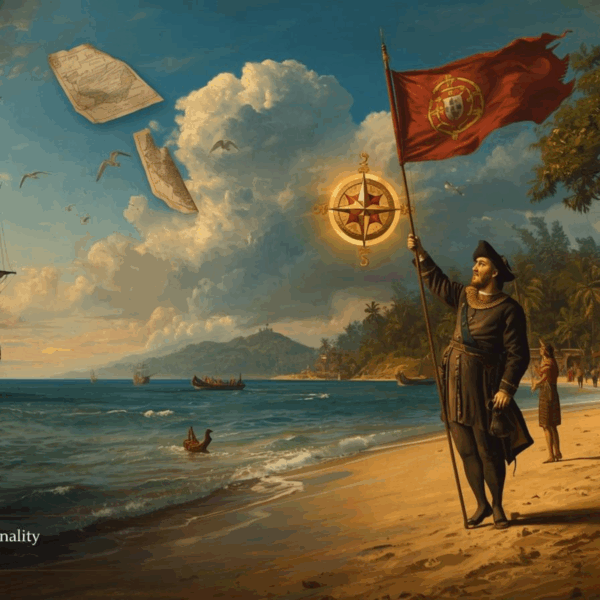
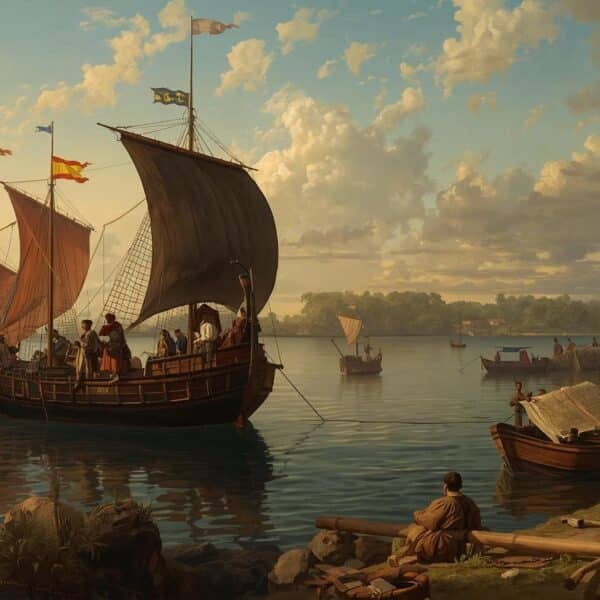
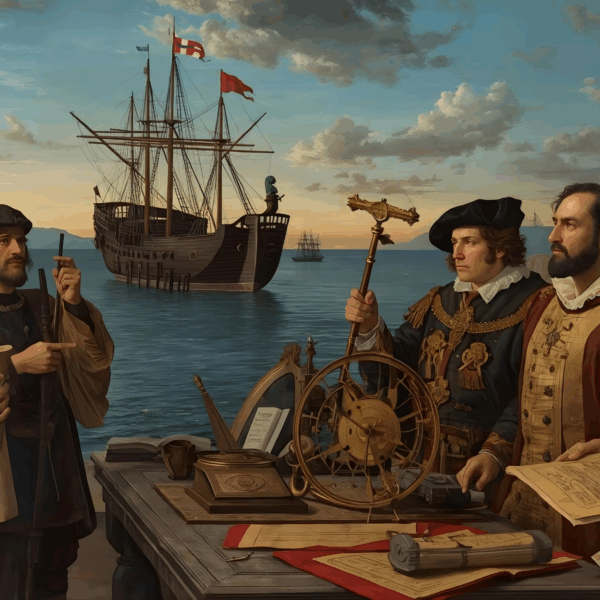
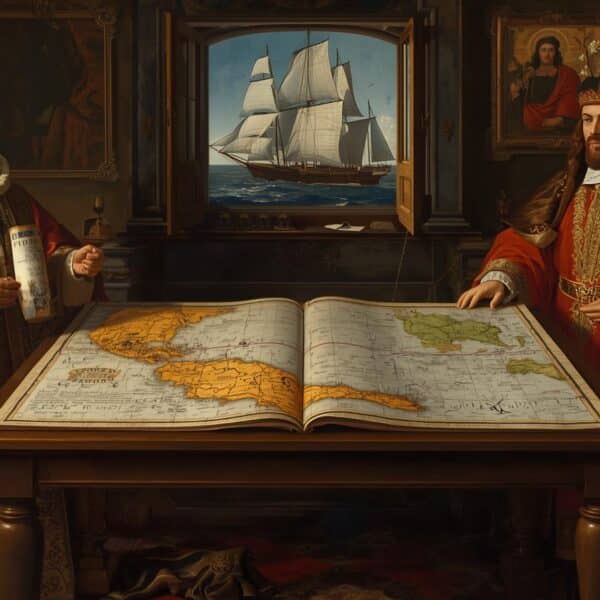
The expedition of Martim Afonso de Sousa: towards the colonisation of Brazil. Martim Afonso de Sousa came from one of the most notable families in Portugal. He was a descendant of Dom Afonso III through illegitimacy — meaning he had a blood tie to the royal family through an ancestor […]
History of Brazil
History of Brazil: Overview
The history of Brazil is marked by a long and complex process of struggles over various national projects, passing through moments of significant political, social and economic instability.
Although there is no universally defined starting point, the arrival of the Portuguese, led by Pedro Álvares Cabral, on the southern coast of what is now Bahia on 22 April 1500 is generally regarded as the beginning of the European presence in the territory. This event is traditionally known as the Discovery of Brazil.
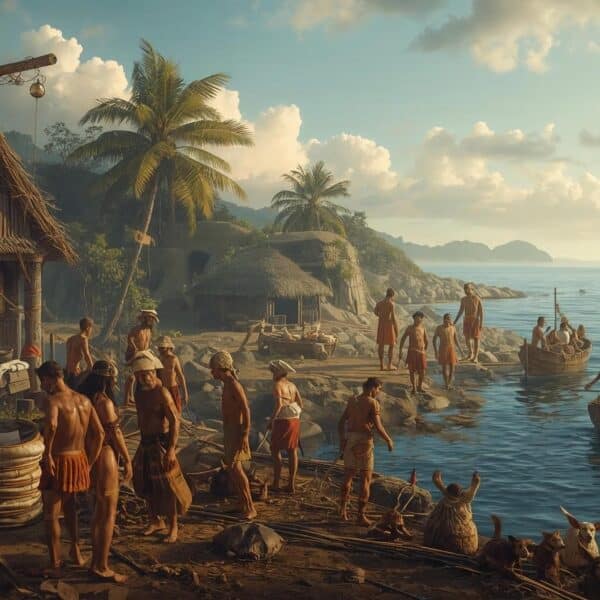
However, it is important to emphasise that this was a discovery from a European point of view. Various indigenous peoples had inhabited Brazilian territory for thousands of years, with their own cultures, languages and social organisations.
Brazil is the historical result of several different projects that took place within a specific geographical delimitation. Initially, it was a project of conquest; later, a project of colonisation; in the 19th century, a project of empire and the constitution of a nation-state; and finally, a project of Republica Brasileira, which we are still trying to maintain today.
Main periods of Brazilian history
1. Pre-Cabral period (until 1500)
Refers to the period before the arrival of the Portuguese, characterised by the presence of various indigenous peoples in Brazilian territory, which marked a diversity of cultures, languages and social practices.
2. Pre-colonial period (1500-1530)
It began with the arrival of Cabral and lasted until the beginning of actual colonisation. During this period, the first contacts between colonists and indigenous peoples took place, with cultural exchanges, conflicts and exploratory activities standing out.
3. Colonial period (1530-1822)
Covers the period when Brazil was a colony of the Kingdom of Portugal. It is characterised by economic exploitation, especially through agriculture and mining, and by the establishment of colonial administrative structures.
4. Imperial period (1822-1889)
It began with the independence of Brazil in 1822 and lasted until the proclamation of the Republic in 1889. This period was marked by the consolidation of the Brazilian state, internal conflicts and the abolition of slavery in 1888.
5. Republican period (1889-present)
Divided into several phases:
- First Republic (1889-1930): also known as the Old Republic, characterised by politics dominated by state oligarchies.
- Vargas Era (1930-1945): a period of centralisation of power and implementation of labour policies.
- Populist Republic (1945-1964): characterised by political instability and economic growth.
- Military dictatorship (1964-1985): Authoritarian regime established after a military coup.
- New Republic (1985-present): a period of redemocratisation and consolidation of democratic institutions.
These periods show how Brazilian history is made up of ruptures and continuities, always centred on the search for a national identity and more stable forms of political and social organisation.
Martim Afonso de Sousa’s colonising mission
The colonising expedition led by Martim Afonso de Sousa and sent by the King of Portugal in 1530 was the first official attempt at permanently occupying the territory that would become Brazil. The expedition comprised ships, soldiers, settlers and technicians. Its objectives were to combat French trading posts, explore the […]
Spanish presence and navigation along the Brazilian coast in the 16th century
From the start of the 16th century until its midpoint, the Brazilian coast saw frequent passages and incursions by Spanish navigators, either en route to the Antilles and Venezuela or searching for a passage to the Pacific and the Moluccas. The Moluccas, now known as the Maluku archipelago, are a […]
The brazilwood trade and European presence on the Brazilian coast
European interest in and conflict over Brazilwood in the 16th and 17th centuries. This chapter examines the exploitation and trade of Brazilwood along the Brazilian coast during the early years of colonisation. It highlights the commercial practices of the Portuguese, the significant involvement of French shipowners, and the repressive measures […]
The Portuguese expedition to Brazil in 1503
The Portuguese expedition to Brazil in 1503: discoveries, controversies and developments. Several printed and handwritten sources from the early 16^(th) century — many of which are attributed to Amerigo Vespucci — describe a second Portuguese expedition to Brazil between 1503 and 1504, in which the Florentine navigator is said to […]
The 1501 Expedition: exploration, routes and accounts of the Brazilian coast
The captains of Pedro Álvares Cabral’s fleet proposed sending an expedition to explore the new land further. In 1501, King Manuel accepted the proposal and organised three ships for the mission. The main objective was to explore the newly discovered land in greater detail. This involved recognising and mapping the […]
Priority and intentionality in the discovery of Brazil in 1500
The Portuguese intention behind Cabral’s discovery of Brazil. Some historians debate whether it was Spanish sailors or the Portuguese who first sighted the lands of Brazil. Even without documentary evidence, French writers claimed French precedence regarding the voyage of a certain Jean Cousin in 1488. However, the Brazilians Ramiz Galvão […]
Discovery of Brazil by Pedro Álvares Cabral: The Voyage
Although the Spanish navigator Vicente Yánez Pinzón is considered to have discovered Brazil first, according to the Treaty of Tordesillas, the official discovery is attributed to the Portuguese explorer Pedro Álvares Cabral. We will now study his voyage. 1. The Expedition Upon receiving news of Vasco da Gama’s successful voyage […]
First Spanish contacts with the Brazilian coast between 1499 and 1500
Spanish exploration of the South American coast between 1499 and 1500: Ojeda, Pinzón, and Diogo de Lepe. Following the discovery of America by Christopher Columbus, who was working for the Kingdoms of Castile and León, a series of maritime explorations of the New World began. Christopher Columbus was the first […]
Sharing of Discovered Lands – Treaty of Tordesillas
The Treaty of Tordesillas (1494) divided overseas territories. 1. Context King John II protested to the Roman Curia and neighbouring kings who benefited from the bulls issued by Alexander VI. He sent agents to Spain to propose a new dividing line for the overseas territories that was less harmful than […]
Sharing of the Discovered Lands – Ratifications of Portuguese expansion by the Holy See
1 — Ratifications of Portuguese expansion by the Holy See 1. Context and authority of the Holy See In the Middle Ages and early Modern Age, the Holy See occupied a position superior to other Christian nations. As a supranational authority, its moral influence was recognised and reaffirmed — including […]
Ships used by Portuguese navigators in the 15th and 16th centuries
This text brings together and compares the main types of ships used by Portuguese navigators in the 15th and 16th centuries — nau, caravel (and its variants) and galleon — highlighting their construction characteristics, types of sails, operational functions and uses in exploration, trade and warfare. Reading it allows us […]
Portugal’s Maritime Expansion – Navigation in the 15th and 16th Centuries
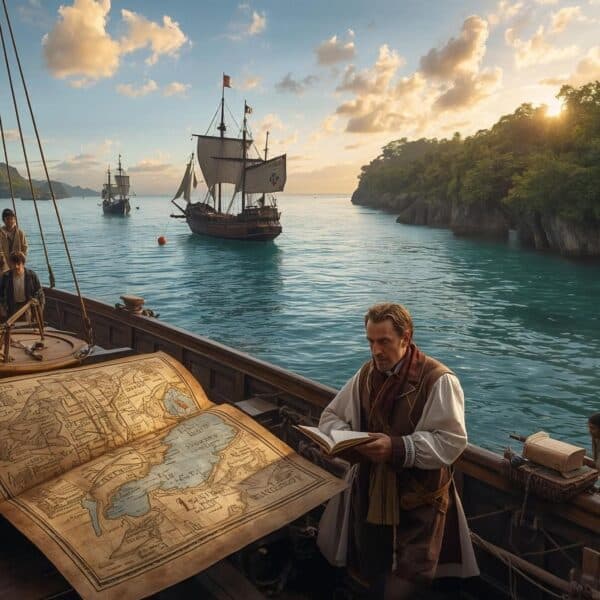
The Age of Discovery transformed Portugal into a maritime power whose nautical knowledge had a profound impact on world history. This text examines the technical and scientific advances — navigational instruments, charts, route maps, cosmographers and types of vessels — that made it possible to cross oceans and explore new […]
Portugal’s Maritime Expansion – The Portuguese in North America
The Portuguese in North America The Portuguese presence in North America dates back to the 15th and 16th centuries, a period marked by intense maritime exploration. Motivated by the search for new trade routes and the desire to expand geographical knowledge, Portuguese navigators were pioneers in various areas of the […]
Portugal’s Maritime Expansion – The discovery of the sea route to India
The discovery of the sea route to India was a decisive milestone in the age of great navigation. At the end of the 15th century, the search for direct trade routes to the rich eastern lands became a priority for European powers, especially Portugal. Driven by the growing demand for […]
Portugal’s Maritime Expansion – Exploration of the West Coast of Africa
The exploration of the west coast of Africa was a milestone in Portuguese maritime expansion in the 15th and 16th centuries, driven by economic, strategic and scientific motivations. The initiative of Prince Henry and the expeditions of navigators such as Gil Eanes, Diogo Cão and Bartolomeu Dias opened up new […]
Portugal’s Maritime Expansion – Discovery of the Atlantic Islands
The Atlantic islands — Madeira, Porto Santo, the Azores and Cape Verde — played a central role in the early days of Portuguese maritime expansion. This text presents their discovery, the model of exploration adopted, the economic activities implemented and the demographic consequences that led to emigration to the mainland […]
Portugal’s Maritime Expansion – Prince Henry the Navigator
Infante Dom Henrique, known as the ‘Navigator,’ was a central figure in the early days of Portuguese discoveries: born in 1394, he participated in the expedition to Ceuta and, as Master of the Order of Christ and 1st Duke of Viseu, founded a centre for nautical studies in the region […]
Portugal’s Maritime Expansion – Navigation before the Discoveries
Navigation before the discoveries was a crucial period in maritime history, marked by innovations and adaptations that paved the way for the great explorations of the 15th century. During this time, Portuguese navigators began to improve their navigation techniques, developing more agile and resistant vessels, such as caravels, which became […]
Portugal’s Maritime Expansion – First Naval Operations
Portugal’s first naval operations marked the beginning of the systematic use of the navy as a military and political instrument. Since the time of Afonso Henriques, ships and coastal pilots began to play a decisive role in combat, sieges of cities and protection of routes, supporting both offensive actions and […]
Portugal’s Maritime Expansion – Fishing as the Origin
Portugal’s Maritime Expansion – Fishing as the origin of navigation The need to fish on the high seas led coastal communities to improve their vessels, navigation techniques, knowledge of winds and currents, and trade networks, which ultimately led to increasingly longer voyages and maritime exploration. 1. Dependence on Fishing Portugal, […]
Carlos Julião: The Military Engineer and Draughtsman Who Portrayed Colonial Brazil
Carlos Julião, a military engineer and draughtsman of Italian origin in the service of the Portuguese crown, never lived or settled in Brazil. He lived in Portugal, where he worked in the colonial administration, but produced a vast body of work on the Portuguese colonies, including Brazil. His drawings and […]
Jews in Colonial Brazil: A Hidden History
Jews in colonial Brazil faced a complex and often difficult situation. During the colonial period, Brazil was a Portuguese colony, and the Inquisition had a great influence on social and religious life. Judaism was therefore prohibited, and any Jewish practices were strictly repressed. Judaism had four phases in colonial Brazil […]
Chronology of Portuguese discoveries and maritime expansion
Portuguese discoveries were the result of Portuguese maritime expansion, which marked the history of Portugal and the world. Throughout the 15th century, the Portuguese transformed and perfected all known shipbuilding and navigation techniques. Portuguese maritime expansion was an unprecedented development. One gets the impression that if it took eighty years […]
Chronology of slavery in colonial and imperial Brazil – History
Sunday 13 May 1888 dawned sunny in Rio de Janeiro, the capital of the Brazilian Empire. It was a day of celebration. Slavery was ended by a law passed by the Senate and signed by Princess Isabel. Brazil was the last country in the Americas to abolish slavery. Over the […]
Historical periods of Brazil – Colonial period to the New Republic
Brazil’s historical periods have emerged from a long and complex period of struggles over national projects, marked by strong moments of instability. Brazilian history does not have a clearly defined starting point. Traditionally, however, the arrival of the Portuguese with Pedro Álvares Cabral in the coastal region of present-day Bahia […]
Independence of Brazil – breaking of colonial ties in Brazil
Brazilian Independence – The End of Colonial Ties in Brazil 1. introduction As you may have noticed, we have presented a reading of various factors related to the emancipation of Portuguese America. The growth and diversification of society, the establishment of the Portuguese Court in Brazil, and the protest movements […]
Portuguese Empire in Brazil – Portuguese Royal Family in Brazil
Portuguese Empire in Brazil – Portuguese Royal Family in Brazil 1. introduction We have seen the influence of revolutionary ideas on the main liberation movements in Portuguese America. We have also studied certain events linked to the arrival of the Court in Brazil. In this chapter, we will look at […]
Transfer of the Portuguese court to colonial Brazil
Transfer of the Portuguese Court to Brazil 1. Introduction In the previous chapter we looked at the main liberation movements influenced by French and English revolutionary ideals. However, these egalitarian ideals were part of the projects of an educated elite who looked to the Old Continent as an example to […]
Foundation of the city of São Paulo and the Bandeirantes
The founding of the city of São Paulo and the Bandeirantes 1 Introduction In this chapter we will study the founding of the city of São Paulo and its importance in the process of colonisation and settlement in colonial Brazil. We will also examine the actions of the São Paulo […]
Transition between colonial and imperial Brazil
Between the colonial regime and the establishment of empire in Brazil Brazil’s independence did not come about overnight, based on the individual wishes of the Prince Regent, but was in fact the result of a political, economic and cultural process involving a series of circumstances and interests. After reading this […]
The Iberian Union and the Dutch invasion of colonial Brazil
The Iberian Union and the Dutch Invasion of Brazil 1. introduction In the first part of this chapter we will study the so-called “Iberian Union”, which was the union of the Portuguese and Spanish crowns. This was due to the death of the king of Portugal, whose closest relative was […]
Sugar Mills in Colonial Brazil: A Historical Insight
Colonial sugar mills in Brazil 1 Introduction In this chapter we will study the establishment of the so-called colonial sugar mills in Brazil. The sugar mills established by the Portuguese, mainly in the Northeast and in the region of São Vicente, were to become a lucrative industry responsible for the […]
Monoculture, Slave Labour and Latifundia in Colonial Brazil
Monoculture, Slave Labour and Latifundia in Colonial Brazil 1 Introduction In this chapter we will study the historical process of the introduction of the Portuguese civilisational project for the settlement and colonisation of Brazil. Colonial Brazil, in Brazilian history, is the period from 1530 to 1822. This period began when […]
Installation of the General Government in Brazil and foundation of Salvador
Installation of the General Government in Brazil and foundation of Salvador 1. introduction In this topic we will study the establishment of the General Government. This historical event was an important milestone in Brazilian colonial history, as it led to the intensification of the settlement and colonisation of Brazil. This […]
Portuguese maritime expansion and the conquest of Brazil
The causes of Portuguese maritime expansion 1. introduction We are beginning our study of Brazilian colonial history. This whole process is characterised by the problematisation of the various causes that motivated the so-called Portuguese maritime and commercial expansion. This historical event is of paramount importance if we want to critically […]
The occupation of the African coast and Vasco da Gama’s expedition
Occupation of the African coast, the Atlantic islands and Vasco da Gama’s voyage to India Introduction. In this topic we will study the occupation of the African coast and the Atlantic islands, which were colonised by the Portuguese from the 15th century onwards. We will also study the voyage of […]
Pedro Álvares Cabral’s expedition and the conquest of Brazil
Pedro Álvares Cabral ‘‘s Expedition and the Conquest of Brazil 1. introduction In this chapter we begin our study of the “discovery” of Brazil. The word “discovery” is inappropriate because before the Portuguese arrived in the region we now call Brazil, it was inhabited by a wide variety of peoples. […]
Pre-colonial Brazil – The forgotten years
Pre-colonial Brazil – The forgotten years 1. introduction In this chapter we will study the pre-colonial period, also known as the “forgotten years” of Brazil’s colonisation. The pre-colonial period in Brazil stretches from 1500, with the “discovery” of Brazil, to 1531, with the arrival of Martim Afonso de Sousa’s “civilising […]
Establishment of the Portuguese colony in Brazil
Establishing the Portuguese colony in Brazil In this chapter you will be able to Understand the historical process that led to the establishment of the colony; Reflect on the power relations established in the process of colonisation of Brazil; Be aware of the historical consequences of colonisation in Brazil today; […]
Learn about the periods of Brazil’s colonial history
The study of the following periods of Brazilian colonial history is of paramount importance, as it is from this period that the foundations of Brazilian history were laid. The history of colonial Brazil has been divided into the following periods: Portuguese maritime expansion and the conquest of Brazil, the stages […]
Catas Altas MG – History and Monuments
Catas Altas is a charming colonial town founded in 1712. Located 110 kilometres from Belo Horizonte, on the MG-129 and BR-381 highways, it borders Santa Bárbara, Mariana and Alvinópolis. Located at the foot of the Caraça mountain range, especially the peak of Catas Altas, at an altitude of 1,820 metres, […]
Pico do Itacolomi – Attractions, history and itineraries
Pico do Itacolomi in the Pico do Itacolomi State Park (“Stone Child” in Tupi-Guarani), at 1772 metres, was the reference point for bandeirantes looking for gold in the hills of Minas Gerais at the end of the 15th century. Gold was eventually discovered in the streams that crisscrossed its surroundings, […]
Sabará: A Journey Through Its Rich History
Founded in 1674 with the arrival of the Fernão Dias flag under the command of Borba Gato, Arraial de Sabarabuçu became Vila Real de Nossa Senhora da Conceição de Sabarabuçu in 1711. The alluvial gold that flowed from the now polluted and pale Rio das Velhas gave the city a […]
Summary of the history of Minas Gerais
For more than three hundred years, Minas Gerais supported the Portuguese crown, helped build the idea of an independent Brazilian nation and always managed to remain influential in Brazilian political decisions. In the beginning, it was the interior. In the first centuries of colonisation, the territory that we now call […]
Baroque of Minas Gerais in Focus: History, Techniques and Works
Baroque appeared in Brazil a little later, in the 18th century. The Baroque of Minas Gerais was a peculiar version of the Baroque that developed in Minas Gerais between the 18th and 19th centuries. Architecture, Painting, Sacred Sculpture and Music played an important role in the Minas Gerais Baroque. Evoking […]
Tourist Attractions and History of the Caraça Sanctuary MG
The Caraça Sanctuary Complex is the only Private Nature Reserve (RPPN) with 11.233 hectares of Enchanting Landscapes, the result of the transition between the Atlantic Forest and the Cerrado, framed by a Mountain Range with peaks over 2,000 metres high, forming part of the Serra do Espinhaço. The Serra do […]
Tourist attractions and routes in Serra do Cipó MG
The Serra do Cipó National Park is located in the south of the Serra do Espinhaço mountain range, in Minas Gerais. The Serra do Cipó includes the parishes of Jaboticatubas and Santana do Riacho, both of which have a good infrastructure of hotels and restaurants. The Serra do Cipó National […]
Royal Road Route – History, routes and attractions
In the early days of the exploitation of the gold region, at the end of the 17th century, a long road connected the mining settlements with the port of Paraty, crossing the Mantiqueira mountain range. The journey took three months. In 1698 the bandeirante Garcia Rodrigues received authorisation to open […]
Tourist Attractions and History of Serro in Minas Gerais
The city of Serro, known in its early days as the former Vila do Príncipe do Serro Frio, was the seat of one of the first four districts of the Captaincy of Minas Gerais. A city with preserved colonial architecture, its streets are characterised by the characteristics of the eighteenth-century […]
Diamantina – Tourist Attractions, History and Architecture
Diamantina is located 280 kilometres north of Belo Horizonte, via BR-040, and is the gateway to the Jequitinhonha Valley. Its formation dates back to the 18th century, when it was called Arraial do Tijuco, and it grew out of the diamond exploitation, ruthlessly controlled by the Portuguese Crown: no one […]
São João del Rei MG – Attractions, History and Architecture
Modern buildings mix with colonial relics in São João del Rei, whose history begins at the end of the 17th century. In 1713, the village founded by bandeirantes on the banks of the River Mortes was elevated to the status of a town with its current name, in honour of […]
History and Monuments of Tiradentes MG
With its colonial charm and unspoilt atmosphere, Tiradentes, in Minas Gerais, is one of Brazil’s most charming destinations. Founded at the height of the gold rush, the city combines historical wealth with cultural and gastronomic attractions. Among the main tourist attractions are the Igreja Matriz de Santo Antônio, with its […]
Little Church of Pampulha MG: history, architecture and religious importance
The famous Igrejinha da Pampulha in Belo Horizonte is also known by other names, such as Igreja de São Francisco de Assis or Capela Curial de São Francisco de Assis. History and Architecture of the Little Church of Pampulha Little Church of Pampulha or Curial Chapel of St Francis of […]
Church of St Francis of Assisi – Ouro Preto: History, architecture and art
The Church of St Francis of Assisi, located in Ouro Preto, Minas Gerais, is considered one of the masterpieces of Brazilian Baroque. During the colonial period, no city grew as much and as fast as the curvaceous Ouro Preto in Minas Gerais. The abundance of gold and precious metals meant […]
Aleijadinho: Biography and works that shaped the Brazilian Baroque
Aleijadinho is considered the greatest representative of the Minas Gerais Baroque style, known for his soapstone sculptures, wood carvings, altars and churches. Biography of Antônio Francisco Lisboa or Aleijadinho Antônio Francisco Lisboa (1738-1814), better known by his nickname Aleijadinho, was born in Ouro Preto, the capital of colonial Minas Gerais. […]
Sanctuary of Bom Jesus de Matozinhos – History and Architecture
The Sanctuary of Bom Jesus de Matosinhos, one of the most valuable monuments in the world, is located in the city of Congonhas, in the central region of Minas Gerais. Geniuses such as Aleijadinho and Mestre Ataíde not only created true masterpieces, but also promoted a remarkable fusion of the […]
Mariana: A journey through time to colonial Brazil
The city of Mariana, in Minas Gerais, is one of the most important historical cities on the Gold Route. Together with its districts, it contains valuable relicts from the colonial period, which marked the beginning of the construction of the state’s history. Mariana was the first capital of Minas Gerais, […]
Ouro Preto: Historic City of Tourist and Cultural Interest
Ouro Preto, a World Heritage Site, is one of the most important tourist destinations in Brazil. With its baroque churches, colonial mansions and rich cultural life, the city attracts visitors interested in history, art and nature. Ouro Preto: From gold to World Heritage The city of Ouro Preto, formerly Vila […]
History of the sugar mills of Pernambuco – Beginning and end
From the very beginning of the colonisation of Brazil, Portugal tried to use the experience gained in the production of sugar on the islands of Madeira and the Azores to introduce the “white gold”, as sugar was called at the time, to the vast Brazilian territories, due to its high […]
Shipwreck of the Galeão Sacramento in Salvador: Learn the story
Learn about the history of the Galeão Sacramento shipwreck in Salvador and its relationship to the famous Barra lighthouse. The Shipwreck of the Galeão Sacramento occurred in 1668 off the coast of Salvador, Bahia and is one of the most famous nautical events in the maritime history of colonial Brazil. […]
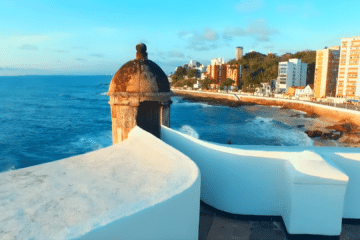
Defences of Porto da Barra – Fortifications of Santa Maria and São Diogo
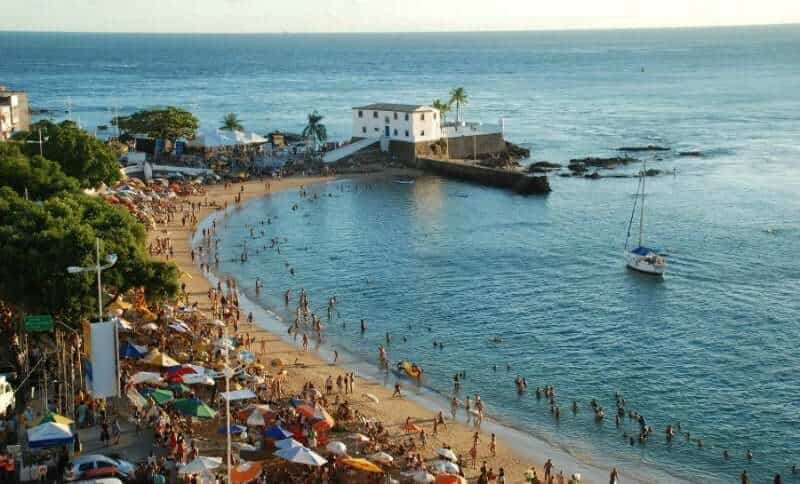
The defences of the Porto da Barra: The forts of Santa Maria and São Diogo in the history of Salvador The Defences of the Porto da Barra represent an important historical and cultural heritage of the city of Salvador, Bahia. Built during the colonial period, these fortifications were designed to […]
History of the Captaincy of Todos os Santos Bay between 1500 and 1697
The Captaincy of Todos os Santos Bay was one of the most important hereditary captaincies established by the Kingdom of Portugal at the beginning of the colonisation of Brazil in 1534. Granted to the grantee Francisco Pereira Coutinho, it occupied a strategic position on the Brazilian coast, centred on the […]
History of the Fortresses and Defences of Salvador de Bahia
The history of the fortifications and defence of Salvador da Bahia reflects the evolution of defensive strategies and the military and colonial context of Brazil. Since its foundation in the 16th century, Salvador has established itself as a crucial strategic point for the defence of the Portuguese Empire in the […]
Dutch Invasion of Salvador in 1624: Overview
The Dutch invasion of Salvador in 1624 Historical context In the late 16th and early 17th centuries, Brazil, still under the rule of the Portuguese Crown, became the target of foreign interests due to its strategic and economic importance. In particular, the Bay of All Saints became a vital point […]
The history of sugar cane in the colonisation of Brazil
Discover the fascinating history of sugar cane, from its origins in Papua New Guinea, its introduction to the Algarve and its expansion to Madeira and Brazil. Learn how sugar cultivation fuelled the colonial development and economy of Pernambuco in the 16th century. Sugar cane, which originated in Papua New Guinea, […]
The Origin of Sugarcane and Sugar Mills in Colonial Brazil
Learn more about the origins of sugar cane, which began in Asia and spread to Europe and the Americas, arriving in colonial Brazil where it became one of the most important economic activities. The expansion of sugarcane cultivation encouraged the development of different types of mills, varying in size and […]
History of the Discovery Coast in Bahia – History of Brazil
The story of the Costa do Descobrimento begins on 22 April 1500, when Pedro Álvares Cabral‘s squadron spotted a rounded hill, Mount Pascoal, to the south of Bahia. In search of a safe place to dock, the thirteen ships sailed north along the coast and, at dusk on April 24, […]
History of Bahia during colonisation, the Empire and the Republic
The history of Bahia began with the arrival of the Portuguese in Porto Seguro and continued with Colonisation, Empire and Republic. The official history of Brazil began in Bahia; history records that the discoverer, Pedro Álvares Cabral, landed on the coast of the region where Porto Seguro is now located, […]