Ricardo Brennand Institute (Recife) — visit the “castle-museum” that brings together art, history and gardens, and discover unique collections, permanent exhibitions and beautiful outdoor spaces. The Institute in Recife is a castle-style cultural complex housing an art gallery (featuring works by Frans Post), one of the world’s largest private collections […]
Pernambuco Travel Guide
Tourism in Pernambuco: Culture, History and Natural Beauty
The state of Pernambuco is one of Brazil’s most important tourist centres, offering a wide range of activities from paradisiacal beaches and historic cities to cultural events of national and international importance.
1. Historical and Cultural Heritage
Pernambuco has one of the oldest churches in Brazil, located in Igarassu, in the metropolitan region of Recife. The Church of São Cosme e Damião, dating from 1535, is part of a Historical Centre listed by the National Institute of Historical and Artistic Heritage (IPHAN).
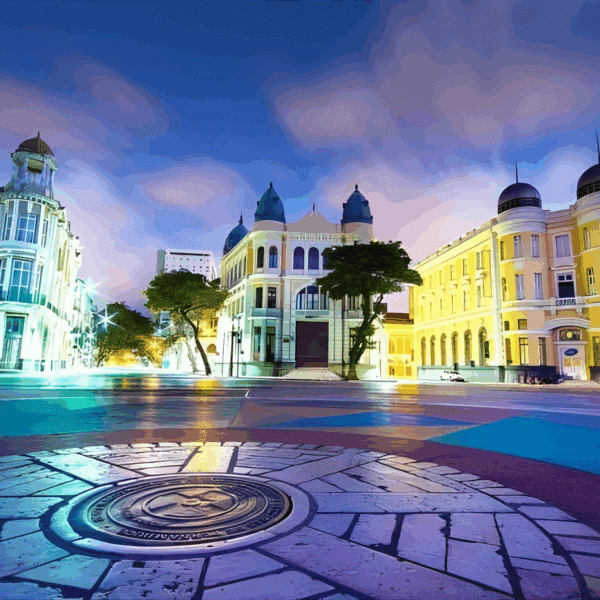
The capital of Pernambuco, Recife, is home to Recife Antigo, a traditional neighbourhood with strong tourist appeal, where you’ll find Marco Zero, Rua do Bom Jesus and the Kahal Zur Israel Synagogue, the first in the Americas.
Also noteworthy are the Ricardo Brennand Institute, a national reference in artistic and historical collections, and the Casa da Cultura, a former prison that has been transformed into an arts and crafts centre.
In Olinda, the Historic Site, declared a World Heritage Site Site by UNESCO, is one of the most important colonial architectural complexes in Brazil. The city is the stage for the Olinda Carnival, famous for its giant puppets and frevo and maracatu rhythms.
2. Sun and beach tourism
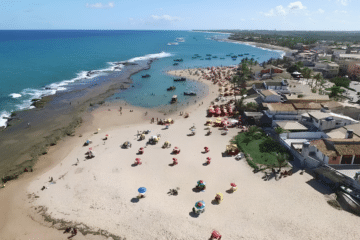
Pernambuco’s 187-kilometre-long coastline is one of the state’s biggest tourist attractions. The main beaches include
- Port de Galinhas: famous for its natural pools and marine life.
- Muro Alto: Calm waters protected by reefs.
- Maracaípe: Ideal for surfing and kitesurfing.
- Boa Viagem: Recife’s urban beach with excellent infrastructure.
The Fernando de Noronha Archipelago, also recognised by UNESCO as a World Natural Heritage Site, is an ecological sanctuary, with the Sancho Bay and the Bay of Pigs being ideal for diving.
3. Agreste and Sertão: Ecotourism and festivities
In the Agreste region of Pernambuco, the town of Bonito stands out for its waterfalls and adventure tourism activities such as abseiling, trekking and tree climbing. In Gravatá, at an altitude of 447 metres, the mild climate and rural traditions attract tourists during the months of June and July.
In Garanhuns, the Winter Festival, which has been running for over 20 years, offers a varied programme of music, theatre and dance. In the Sertão, the city of Triunfo, the highest in the state, hosts the Student Theatre and Dance Festival and the Film Festival in the historic Cine Teatro Guarany.
4. Popular culture and traditional events
- Caruaru Fair: the largest open-air fair in the world, recognised by IPHAN as a Brazilian Intangible Heritage.
- Saint John’s Festival in Caruaru: one of the largest celebrations in the country in June.
- New Jerusalem Theatre: Considered the largest open-air theatre in the world, famous for its production of the Passion of the Christ.
- Festival Pernambuco Nação Cultural: Promoted by the state government, it tours different regions, bringing art and culture.
- Festival Virtuosi, Festival Janeiro de Grandes Espetáculos and Rec-Beat: consolidate the state as a centre of contemporary musical and artistic production.
5. Nature and Wine Tourism
The Catimbau National Park, located between Agreste and Sertão, impresses with its rock formations, gorges and archaeological sites. In Bezerros, Serra Negra has a cold climate and landscapes of rare beauty.
In the São Francisco Valley, wine production stands out, with wineries open to visitors in towns such as Petrolina and Lagoa Grande, which offer wine tourism routes along the banks of the São Francisco River.
Sights in Recife: 5 must-see attractions
Sights in Recife: a practical guide for those with 1–2 days. Beaches, the historic centre, museums and outdoor art — tips on how to get there, how long to spend at each attraction, and local recommendations to help you make the most of the city. Contents Boa Viagem Beach Old […]
The history of the Golden Chapel and the Third Order of Recife
Olinda was the cradle of Franciscanism in Portuguese America and the starting point for the expansion of convents in Pernambuco. The history of the Golden Chapel stems from the economic and social transformations that took place in Recife during the 17th century, which elevated the prominence of the merchants known […]
Boa Viagem Beach (Recife) — A Complete Guide for Visitors
Boa Viagem Beach is Recife’s main urban beach, with a long stretch of shoreline, beach huts, hotels and reefs that form natural pools at low tide. This guide brings together practical information, attractions, safety advice and tips to help you make the most of your visit. Where is it and […]
The best beaches in Pernambuco — a 5-day itinerary
5-day itinerary — The beaches of Pernambuco Explore the coast of Pernambuco on a 5-day itinerary featuring unmissable beaches, lush landscapes and activities to suit all tastes. Setting off from Recife, you’ll experience everything from the bustling streets of Boa Viagem to the natural pools of Porto de Galinhas, the […]
Praia dos Carneiros voted one of the most beautiful beaches in the Northeast
Praia dos Carneiros is a photogenic beach located about an hour from Recife. Just a few kilometres from Recife, the beach of Praia dos Carneiros in Tamandaré, Pernambuco, is a haven of crystal-clear seas and coconut trees, offering perfect photo opportunities. The picturesque Church of São Benedito, nestled against the […]
7-Day Itinerary in Pernambuco with Historical Highlights
Pernambuco is a state in north-eastern Brazil known for its rich combination of history, culture and diverse landscapes. It has a coastline with idyllic beaches and reefs — such as Porto de Galinhas and Praia dos Carneiros —, passes through the agreste with its lively popular traditions and reaches the […]
History and architecture of the Palácio do Campo das Princesas in Recife
The Campo das Princesas Palace, the seat of government of the state of Pernambuco, was built in 1841, originally in the neoclassical style. Over time, however, the building underwent several reconstructions and extensions, incorporating elements characteristic of architectural eclecticism. Neoclassicism was a artistic and literary movement that emerged in the […]
Giant Puppets and Their Role in Olinda Carnival
The Olinda Carnival in Pernambuco is an important cultural event in the Brazilian scene, characterised by the rhythm of frevo, popular expressions and the presence of giant puppets. The giant puppets were introduced in 1932 with the Midnight Man, and these papier-mâché visual elements have become icons of local cultural […]
Graça Church and Olinda Seminary Historical Significance
The city of Olinda, in Pernambuco, is home to one of the most important landmarks in the religious and educational history of colonial Brazil: the Church of Nossa Senhora da Graça and the Seminary of Olinda. This religious complex dates back to the 16th century and is of great historical […]
Monastery of São Bento de Olinda: A Historic Landmark
São Bento de Olinda Monastery: History, Architecture and Cultural Importance The Monastery of São Bento de Olinda, located in the state of Pernambuco, is one of the most important monuments of the historical, religious and artistic heritage of colonial Brazil. Founded in the context of the Benedictine expansion in the […]
Olinda Cathedral: A Historical Landmark in Brazil
Olinda Cathedral: History and Architecture The Olinda Cathedral, also known as the Church of Saint Saviour of the World, is located in the Historic Site of Olinda and occupies a prominent position in the city’s landscape. As well as being the first religious building constructed by the Portuguese on their […]
Franciscan Monastery of Olinda: A Historic Landmark
Although they had been present in Brazil since the first Portuguese expeditions, the Franciscans did not settle here permanently until several decades later. In this respect, the Franciscan Monastery of Olinda is considered the oldest establishment of the disciples of St Francis on Brazilian soil, the cradle of the Order […]
Igarassu: Discover the historic city of Pernambuco
Igarassu is a historic city in the state of Pernambuco, Brazil. It is one of the oldest cities in the country, founded in 1535. The city is known for its rich cultural heritage and colonial architecture, especially its historic churches. The city of Igarassu is located in the state of […]
Sugar mills on the outskirts of Porto de Galinhas PE
Sugar mills on the outskirts of Porto de Galinhas PE, date back to colonial Brazil. The historical origins and the social and economic development of the state of Pernambuco are closely linked to the sugar agro-industry, which, after four centuries at its peak, has left the Pernambucans a legacy of […]
The oldest churches in Pernambuco and the first church in Brazil
More than just expressions of faith, Pernambuco’s churches have been preserving traces of our history and culture since the 16th century. The oldest religious buildings in Pernambuco date back to the 16th century. They were built between 1526 and 1580. The first Brazilian church, located on the island of Itamaracá, […]
Gravatá: Your Guide to the Best Attractions
Gravatá: The charm of the interior of Pernambuco and its attractions not to be missed Gravatá, located in the interior of Pernambuco, is 80 km from Recife, on the BR-232 highway, which connects Recife to Caruaru. With a altitude of 447 metres above sea level and a pleasant climate with […]
Goiana: A Historical Treasure in Pernambuco
The sacred heritage of Goiana in Pernambuco: Preserving stories Goiana, in Pernambuco, was founded in the 16th century and is home to eight churches listed by Iphan. In addition, the Museum of Sacred Art houses a centuries-old collection that preserves the region’s rich history. Historical context As the administrative centre […]
Main historical landmarks of Pernambuco and Recife
Pernambuco and its capital Recife have a rich history, marked by important events that have shaped not only the region, but also Brazil. Pernambuco and its capital, Recife, have a turbulent history. The history of Recife began in 1537: the King of Portugal divided the large colony into strips of […]
Main Tourist Attractions in Recife You Must Visit
Recife, one of Brazil’s oldest cities, was founded by the Portuguese in 1537. With a rich cultural mix resulting from the coexistence of Portuguese, Indians and Africans, the city offers a number of tourist attractions for all tastes. In addition to its beautiful beaches, Recife has a wealth of historical […]