Published on · Updated on
The coast of Pernambuco has about 187 km of beaches with natural pools, coral reefs, cliffs and coconut groves. In addition, the state includes the Fernando de Noronha archipelago, one of the most beautiful sea destinations in Brazil. In this guide, you will find the map and the best beaches in Pernambuco, a 5-day itinerary from Recife and tips on tides and safety.
- South coast – Porto de Galinhas, Muro Alto, Cupe, Carneiros, Calhetas and São José da Coroa Grande.
- Recife and north coast – Boa Viagem, Coroa do Avião and Itamaracá Island.
- Fernando de Noronha – Sancho, Baía dos Porcos and Atalaia, with controlled access.
- Tides – the natural pools appear mainly at low tide, so check the tide table.
- Safety – in Boa Viagem and Piedade, respect the shark warning signs.

Map of the beaches of Pernambuco
The coast divides into three stretches. South of Recife lie the most popular beaches, such as Porto de Galinhas and Carneiros, down to the border with Alagoas. In the Metropolitan Region are Boa Viagem, Piedade and the beaches of Cabo de Santo Agostinho. Finally, to the north lie Igarassu, Itamaracá and Goiana, with calmer sea and fewer crowds.


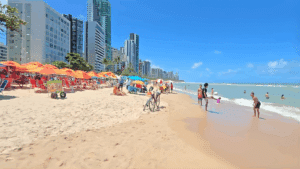
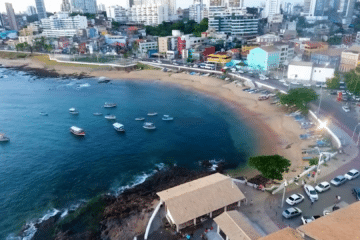
Praia de Boa Viagem em Recife PE

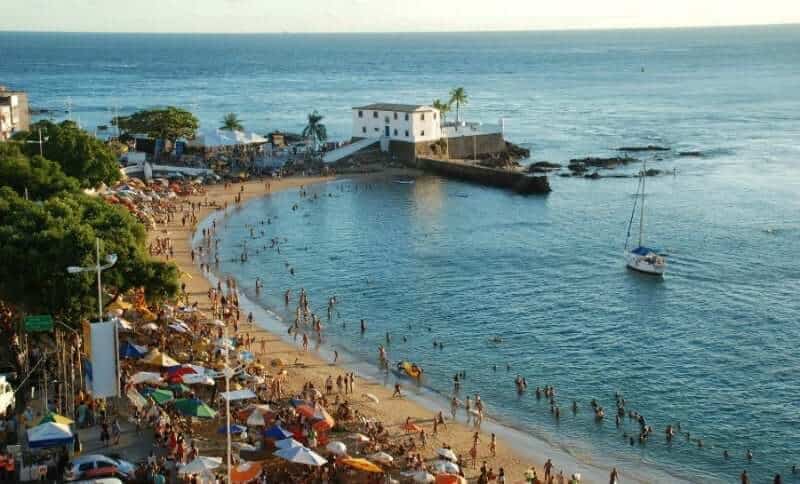
Porto de Galinhas em Pernambuco04:36
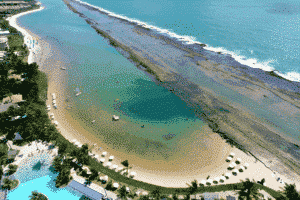
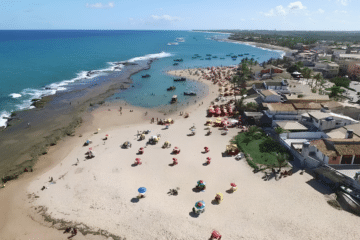
Praia de Muro Alto em Porto de Galinhas PE02:52
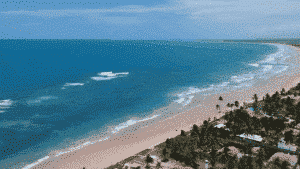
Praia do Cupe em Ipojuca PE

Praia dos Carneiros em Pernambuco06:15
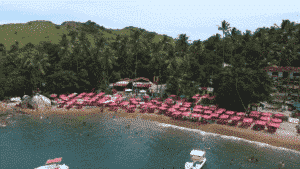
Praia de Calhetas em Cabo de Santo Agostinho PE
Best beaches on the south coast
The south coast concentrates the most famous natural pools in the state. For this reason, it is the base of most itineraries. See also the guide to the beaches of the south coast of Pernambuco.
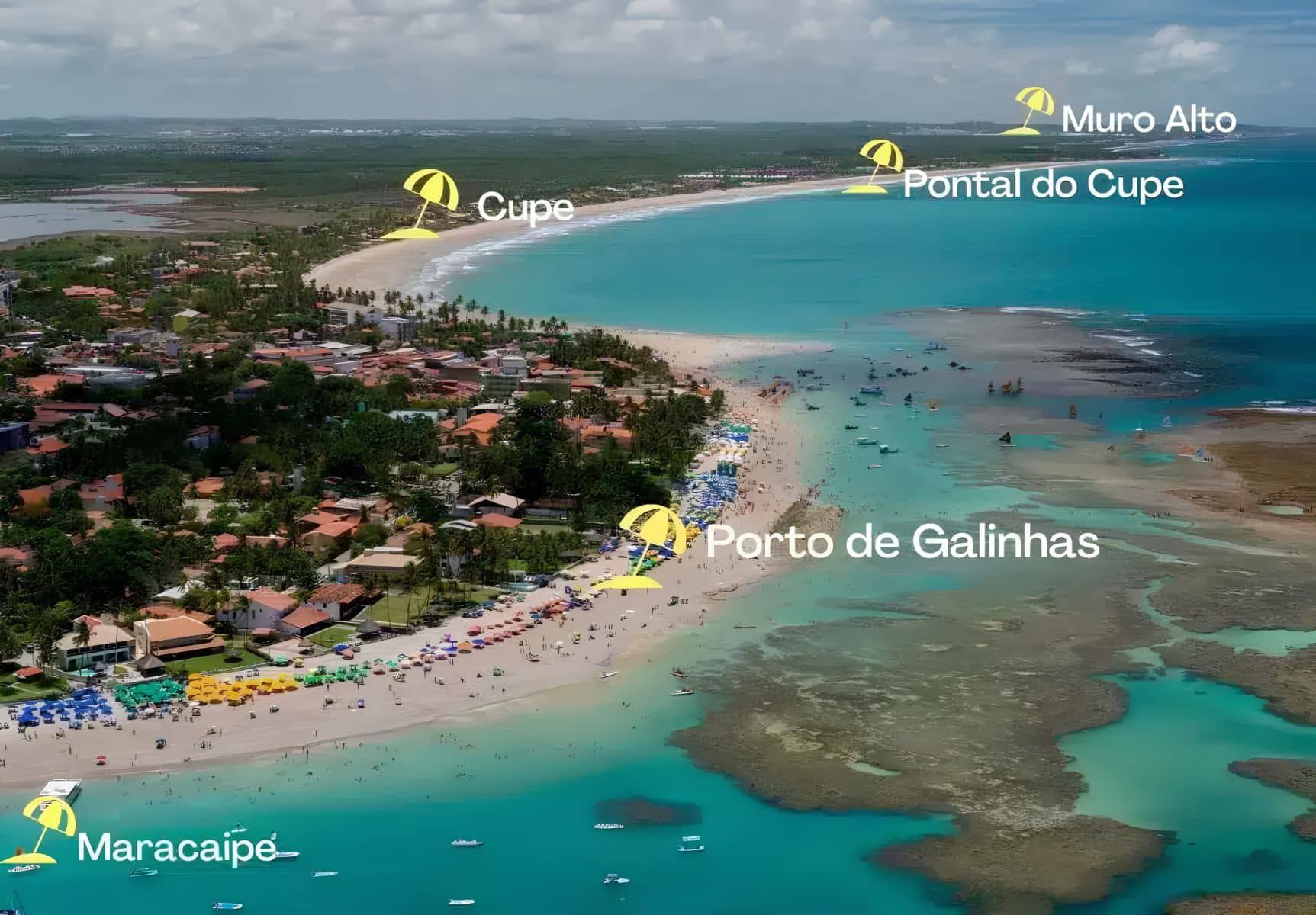
Porto de Galinhas, Muro Alto and Cupe
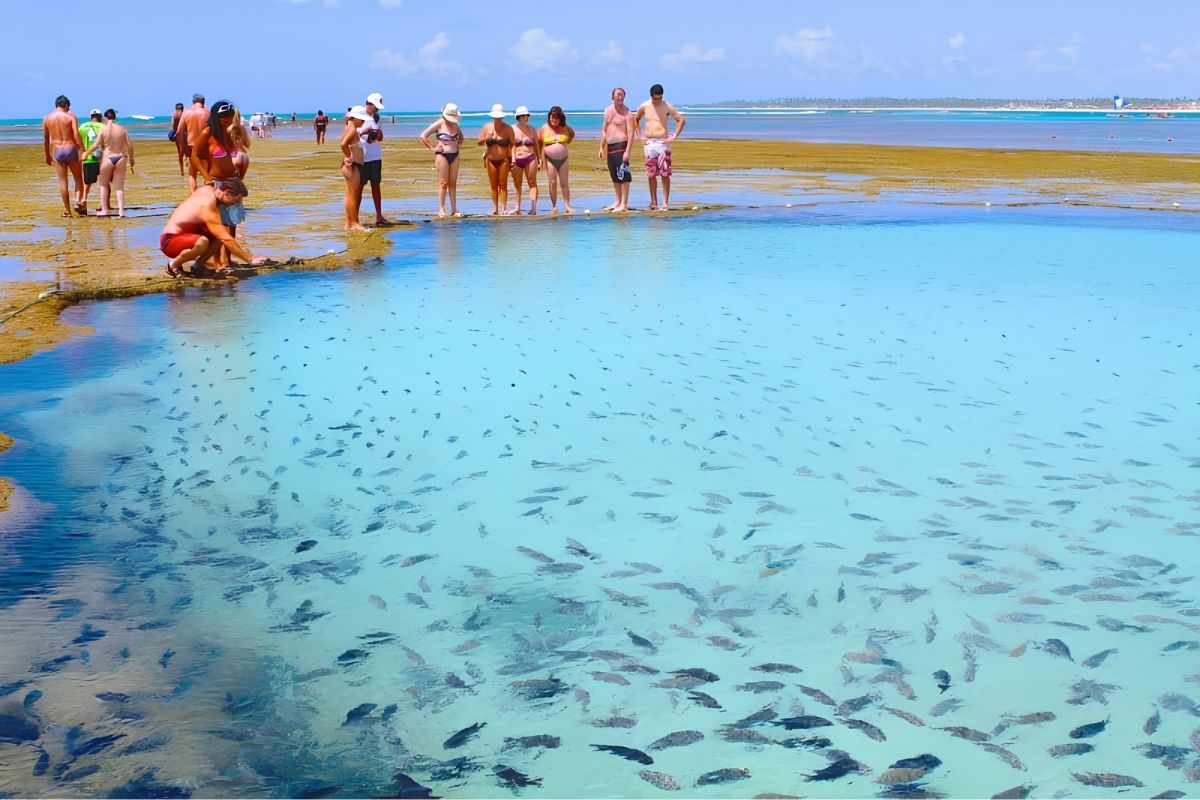
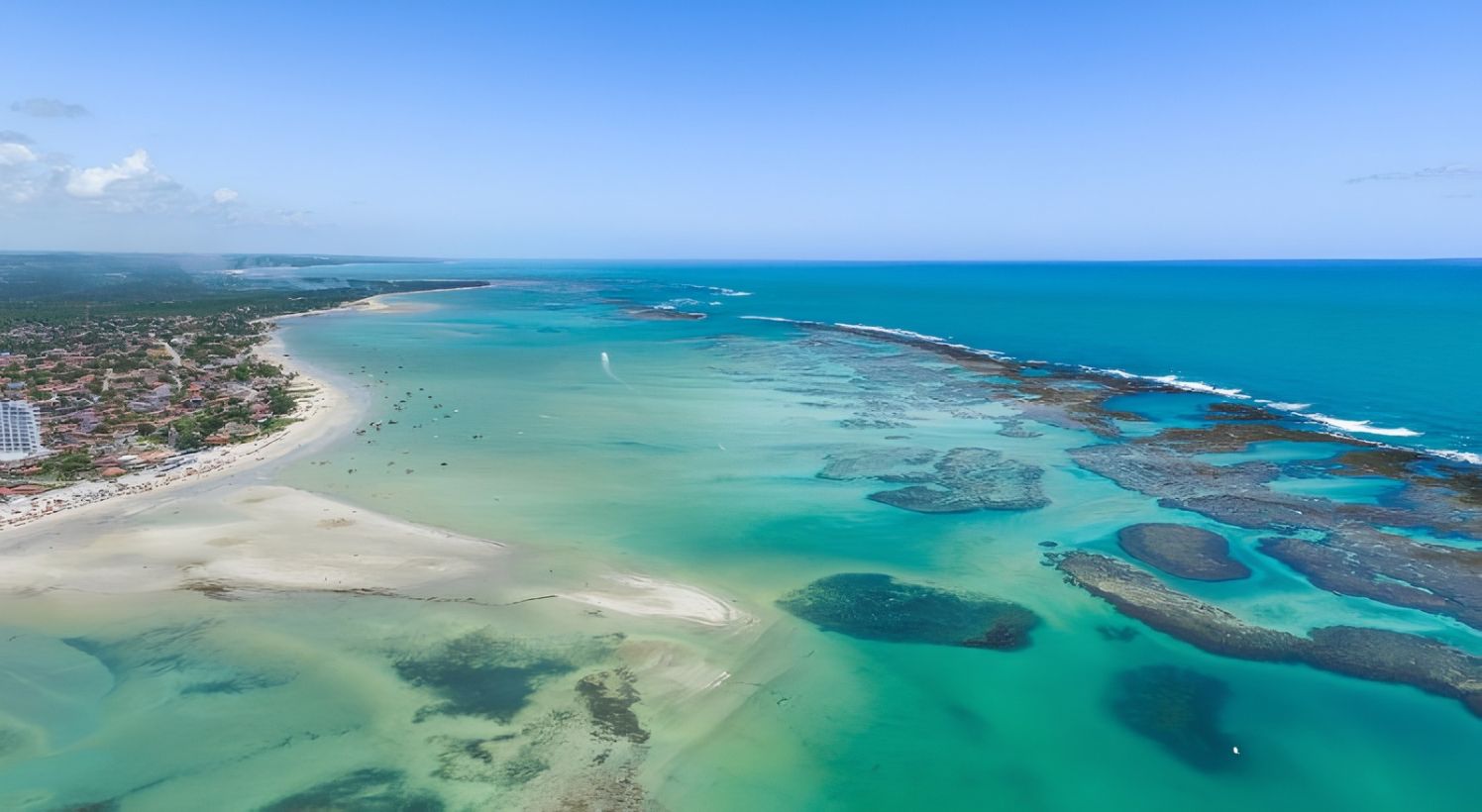
In Ipojuca, about 60 km from Recife, Porto de Galinhas is one of the most famous beaches in the Northeast. The reefs form natural pools, and the raft trip to them is the main attraction. In the past, the place was called Porto Rico; later, the name changed to Porto de Galinhas.
North of the village, Muro Alto Beach has a large natural pool protected by a reef barrier. Thus, the water stays calm, ideal for families and stand-up paddle. Between the two, Cupe Beach has stronger waves and attracts surfers.
Carneiros Beach
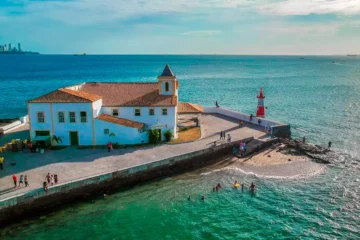
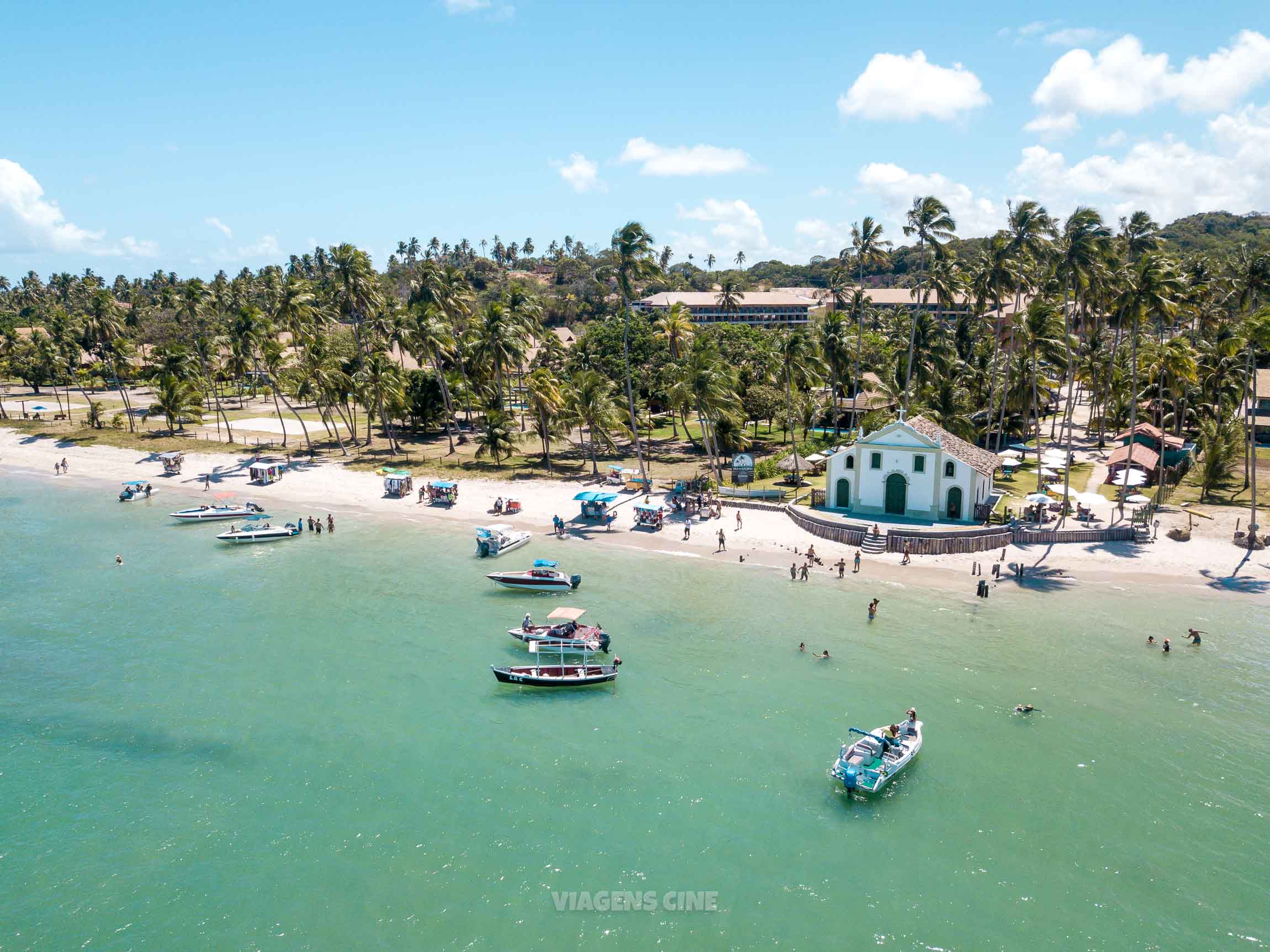
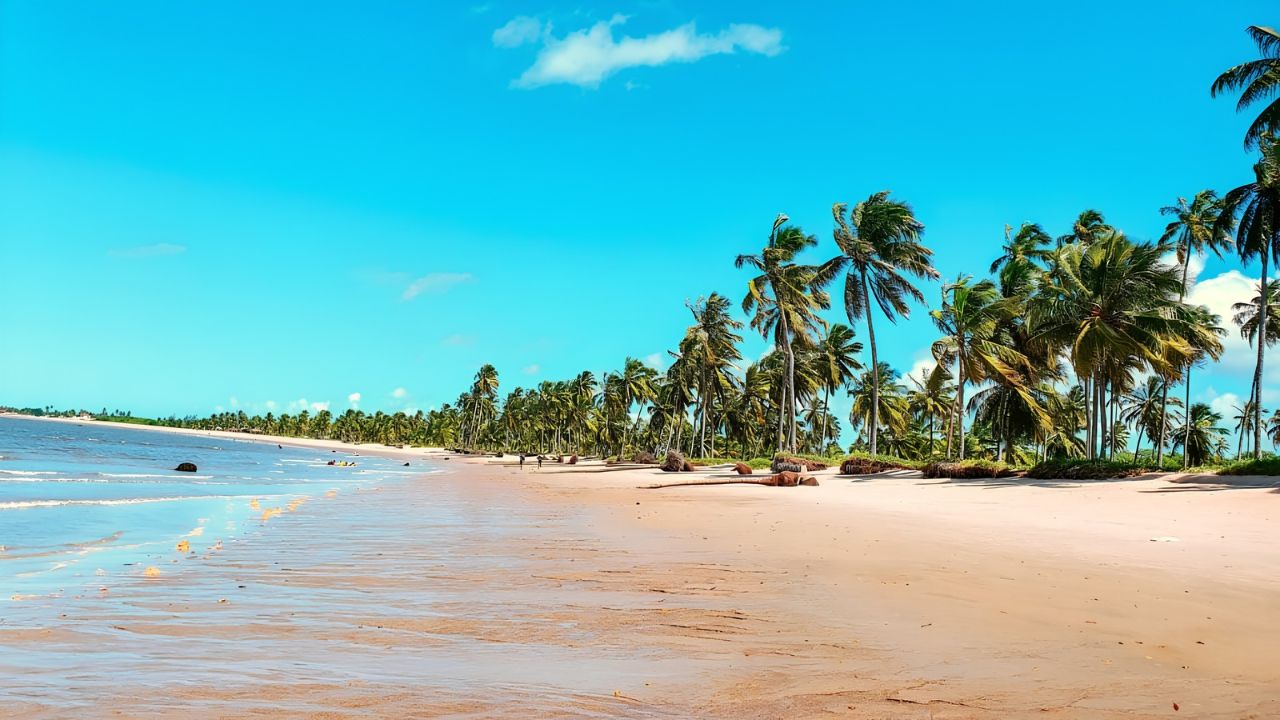
In Tamandaré, about 100 km from Recife, Carneiros Beach lies where the Formoso River meets the sea. There, coconut groves, sandbanks and natural pools form one of the most photographed settings in the state. In addition, the 18th-century chapel of São Benedito stands by the sea. See also the Tamandaré guide.
Calhetas and Cabo de Santo Agostinho
In Cabo de Santo Agostinho, about 40 km from Recife, Calhetas Beach is a small cove between cliffs and rocks. For this reason, the water is usually calm and good for snorkelling. Nearby are also Gaibu and Paiva.
São José da Coroa Grande
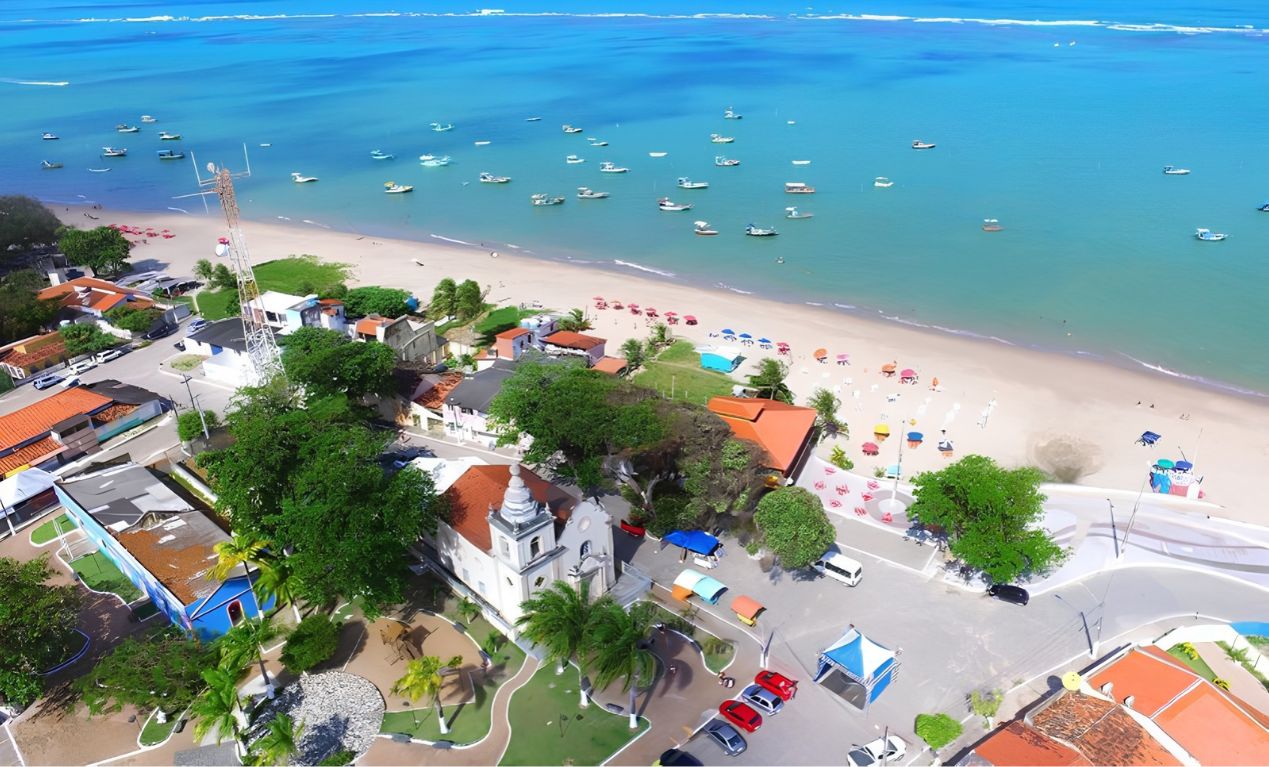
Near the border with Alagoas, São José da Coroa Grande lies on the Coral Coast. At low tide, the “coroas” appear, sandbanks and reefs that form natural pools. Then raft trips take visitors out to them. In addition, Gravatá Beach, near the village of Abreu do Una, has white sand and calm water.
Beaches of Recife and the north coast
In the capital, Boa Viagem Beach has a promenade, kiosks and natural pools at low tide. However, in Boa Viagem and Piedade you must respect the shark warning signs and only swim inside the reefs.
To the north, Coroa do Avião, in Igarassu, is a small sand island famous for its sunsets. Moreover, Itamaracá Island combines calm beaches and history. See the north coast guide.

Beaches of Fernando de Noronha
The archipelago lies about 545 km from Recife and has controlled access. For this reason, visitors pay an environmental preservation fee and, for the national park beaches, a separate ticket. See the guide to the beaches of Fernando de Noronha.
- Sancho Beach – coral reefs and rich marine life; access is via a narrow ladder between the rocks.
- Baía dos Porcos – volcanic rocks and emerald-green water, especially good for free diving.
- Atalaia Beach – a natural pool protected by reefs, with visitor numbers limited by ICMBio.


5-day itinerary along the beaches of Pernambuco
This itinerary starts in Recife and follows the south coast. In addition, it separates the tide-dependent trips, such as the Porto de Galinhas rafts, from the freer days. For a longer trip, see 7 days in Pernambuco.
Day 1 – Recife and Boa Viagem Beach
- Morning – arrival and check-in in Boa Viagem.
- Afternoon – walk along the promenade and swim only in the marked areas; then, if there is time, visit Old Recife.
- Evening – seafood dinner.
- Tip – wear sunscreen and, above all, watch out for areas with reefs.


Day 2 – Porto de Galinhas
This day focuses on the village and the raft trip to the natural pools. Since the trip depends on low tide, it usually takes place in the morning. Thus, you can stay overnight in the village or return to Recife in the late afternoon.
- Transport – early start, about 1h to 1h30 by car from Recife.
- Morning – raft to the natural pools, with snorkelling and photos.
- Afternoon – stroll around the village, craft shops and the central stretch of the beach.
- Tip – book the raft according to the tide table and, in addition, bring small change.


Day 3 – Muro Alto and Cupe Beach
This day brings together two neighbouring beaches with different profiles. Separating it from the raft trip therefore lets you make better use of the tides and have a relaxed lunch.
- Morning – Muro Alto and its large natural pool, ideal for families and stand-up paddle.
- Afternoon – lunch at a beach kiosk and a visit to Cupe, with the option of a buggy ride.
- Tip – if you stay in Porto de Galinhas, swap days 2 and 3 according to the tide and the weather.


Day 4 – Carneiros Beach
- Transport – about 1h30 to 2h by car from Recife or Porto de Galinhas.
- Morning – boat trip to the natural pools and the mangrove; then a photo at the chapel of São Benedito.
- Afternoon – rest under the coconut palms and lunch by the sea.
- Tip – avoid weekends and holidays, because the beach gets crowded.


Day 5 – Calhetas Beach and return
- Morning – Calhetas, a cove between cliffs, good for photos and snorkelling.
- Afternoon – stop in Gaibu if there is time, and then return to Recife.
- Tip – allow spare time to reach the airport or the bus station.


Practical tips for the beaches of Pernambuco
- Accommodation – stay 2 to 3 nights in Recife or Porto de Galinhas and then 1 to 2 nights in Tamandaré.
- Transport – a rental car gives more freedom; in addition, there are transfers between Recife and the beaches.
- Tides – check the tide table, above all for Porto de Galinhas, Carneiros and São José da Coroa Grande.
- Safety – drink water, wear sunscreen and watch your belongings on crowded beaches.
- What to bring – swimwear, flip-flops, a snorkel mask and a waterproof phone case.
See also: Porto de Galinhas · Carneiros Beach · Fernando de Noronha · Recife Guide · Pernambuco
Frequently asked questions about the beaches of Pernambuco
What are the best beaches in Pernambuco?
Porto de Galinhas, Muro Alto, Carneiros and Calhetas on the mainland, plus Sancho and Baía dos Porcos in Fernando de Noronha.
Therefore, many visitors combine the south coast with a few days in Noronha.
When is the best time to visit the beaches of Pernambuco?
In general, from September to March, when it rains less on the coast.
However, the natural pools depend above all on low tide.
Can you swim at Boa Viagem?
Yes, but only at low tide, inside the reefs and away from the signposted areas.
After all, Boa Viagem and Piedade concentrate the state’s shark incidents.
How many days do you need to see the beaches?
Five days are enough for Recife and the south coast.
In addition, Fernando de Noronha needs at least three or four more days.
How far is Porto de Galinhas from Recife?
About 60 km, that is, 1h to 1h30 by car.
So a day trip is possible, but staying overnight in the village is more comfortable.

Publicações Relacionadas

Ricardo Brennand Institute — Castle Museum, Armory, and Art Gallery
Boa Viagem Beach (Recife) — A Complete Guide for Visitors

Praia dos Carneiros voted one of the most beautiful beaches in the Northeast

7-Day Itinerary in Pernambuco with Historical Highlights

History and architecture of the Palácio do Campo das Princesas in Recife

Giant Puppets and Their Role in Olinda Carnival
Graça Church and Olinda Seminary Historical Significance

Monastery of São Bento de Olinda: A Historic Landmark

Olinda Cathedral: A Historical Landmark in Brazil
Franciscan Monastery of Olinda: A Historic Landmark

Igarassu, Pernambuco: Where It Is, History and Sights

Sugar Mills near Porto de Galinhas: Gaipió and Massangana

Oldest Churches in Pernambuco and in Brazil

Gravatá: Your Guide to the Best Attractions

Goiana: A Historical Treasure in Pernambuco

Main historical landmarks of Pernambuco and Recife

Vale do Catimbau National Park: Your Guide to Ecotourism
Santo Aleixo Island: A tourist paradise in Pernambuco
Interior of Pernambuco: Nature, Wine, and Tradition

Tracunhaém, Brazil: Clay Crafts and Ceramic Saints

Basilica of Our Lady of Penha: A Historical Overview

Church of Santa Teresa D'Ávila da Terceira Ordem do Carmo History

Kahal Zur Israel Synagogue — Jewish Museum and Cultural Centre (Recife)

Nossa Senhora da Boa Viagem Church in Recife: history

History of the Basilica of Our Lady of Mount Carmel in Recife

History of the Church of Our Lady of the Rosary of the Black Men

Golden Chapel in Recife: History, Art and Visiting Tips

Sacred Recife and Religious Tourism in Recife, Pernambuco
Carne de Vaca Beach, Pernambuco: where it is and tips
Maria Farinha Beach: Activities and Attractions
Triunfo, Pernambuco: attractions, climate and things to do

Serra Talhada: A Journey Through Pernambuco's Culture

Petrolina: Exploring Its Wine and Tourism

Museu do Homem do Nordeste: A Cultural Journey

The Stage of the Passion of Christ in New Jerusalem: A Guide