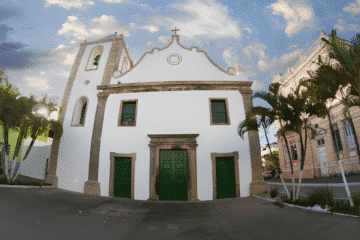
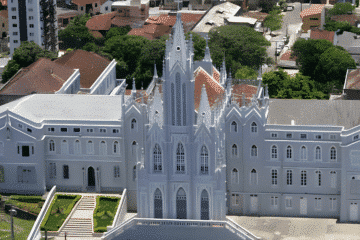
The Basílica de Nossa Senhora do Carmo, located in the centre of Recife, is one of the most important and historic churches in Pernambuco. Its rich history and imposing architecture reflect the deep religious devotion and cultural heritage of the region.

History of the Basílica de Nossa Senhora do Carmo
- Foundation: The history of the Basílica de Nossa Senhora do Carmo is closely linked to the Carmelite Order, which arrived in Recife in the 17th century. The church was originally part of a convent founded by the Carmelites in 1687. However, the construction of the present church began in 1710 and took several decades, being completed in 1767.
- Nossa Senhora do Carmo: The church is dedicated to Nossa Senhora do Carmo, the patron saint of Recife. The devotion to Nossa Senhora do Carmo is one of the oldest and most popular in the city, and the basilica is the centre of festivities in her honour, especially during the Carmel Festival, which takes place in July and attracts thousands of worshippers.
- Elevation to Basilica: In 1909, Pope Pius X elevated the church to the status of a minor basilica, a title given to churches of great historical and spiritual importance. Since then, the Basilica of Our Lady of Mount Carmel has been an important place of pilgrimage and devotion in Recife.
Architecture
- Architectural Style: The Basílica de Nossa Senhora do Carmo is an outstanding example of Brazilian Baroque, with Rococo influences. The façade of the church is large and imposing, with ornamental details typical of the Baroque, including volutes, carvings and bell towers.
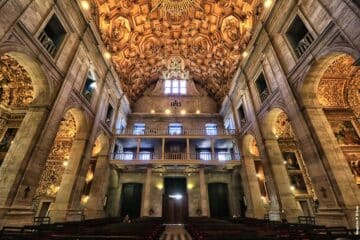
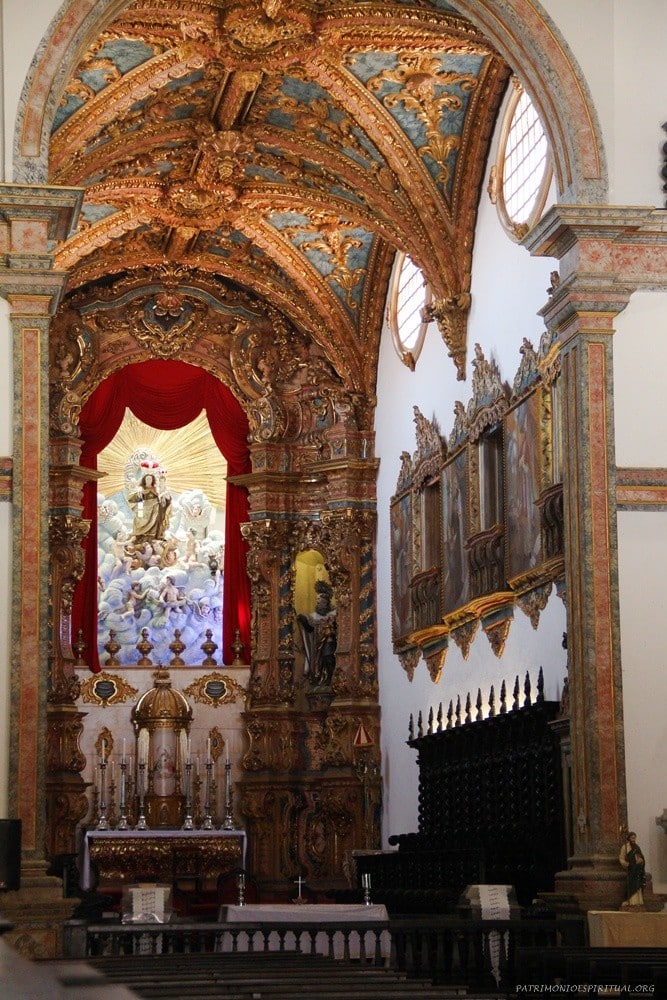
- Interior: The interior of the basilica is richly decorated with gilded altars, panels of Portuguese tiles and a series of side chapels dedicated to different saints. The high altar is particularly impressive, with an enthroned image of Our Lady of Mount Carmel.
- Chapel of the Lord of the Stairs : One of the highlights of the interior architecture is the Chapel of the Lord of the Steps, which houses a venerated image of the Lord of the Steps, a representation of Christ carrying the Cross. This chapel is a focal point of devotion, especially during Holy Week.
- Tiles and paintings: The basilica has beautiful tile panels depicting biblical scenes and the lives of Carmelite saints, as well as paintings on the ceiling illustrating religious passages and figures of saints.
Cultural and Religious Importance
- Cultural Heritage: The Basílica de Nossa Senhora do Carmo is considered a historical and cultural heritage site in Pernambuco. Its architecture and artistic collection reflect the richness of the Baroque tradition in Brazil and the importance of the Catholic faith in the history of Recife.
- Festa do Carmo: The Basilica is the centre of the Festa de Nossa Senhora do Carmo, which includes processions, novenas, masses and other religious and cultural activities. This festival is one of the most traditional and important in the religious calendar of Recife.
The Basilica of Our Lady of Mount Carmel is not only a place of worship, but also a symbol of the cultural and spiritual heritage of Recife, attracting both the faithful and lovers of art and historical architecture.
Video about the Basílica de Nossa Senhora do Carmo in Recife
Basílica de Nossa Senhora do Carmo em Recife - História e Arquitetura
Historical and Architectural Details of the Basílica de Nossa Senhora do Carmo
The Basílica de Nossa Senhora do Carmo is a Catholic architectural complex of the Carmelite Order, located in Recife.
After the expulsion of the Dutch from Pernambuco, the authorities were reluctant to build a Carmelite convent in Recife – preferring to concentrate their efforts on renovating the convent in Olinda, which had been destroyed after the Dutch invasion.
After some time, however, a consensus was reached and the land on which the ruins of the former palace of Maurício de Nassau stood was given to the Carmelites, who built a church dedicated to Our Lady of Desterro.

At the same time, there was an institutional reform in the Carmelite Order, known as the Touraine or Turonian Reform (from Tours, France).
The Carmelites of Recife accepted the reform, while those of Olinda rejected it.
Thus, after a while, the Carmel of Recife flourished, while the convent of Olinda stagnated and even went through a few years of decadence.
Towards the end of the 17th century, with the support of Captain Diogo Cavalcanti de Vasconcelos, a veteran of the war against the Dutch and brother-in-law of André Vidal de Negreiros, the Carmelites of Recife undertook the construction of a new church dedicated to Our Lady of Mount Carmel.

Work on the church and convent of the Basílica de Nossa Senhora do Carmo lasted over a hundred years, beginning around 1680 and continuing until the end of the 18th century, when the tower and façade were completed.
The church has nine altars: the main altar (dedicated to Our Lady of Mount Carmel), six side altars and two large altars in the transept (one dedicated to the Blessed Sacrament and the other to Bom Jesus and St Joseph).

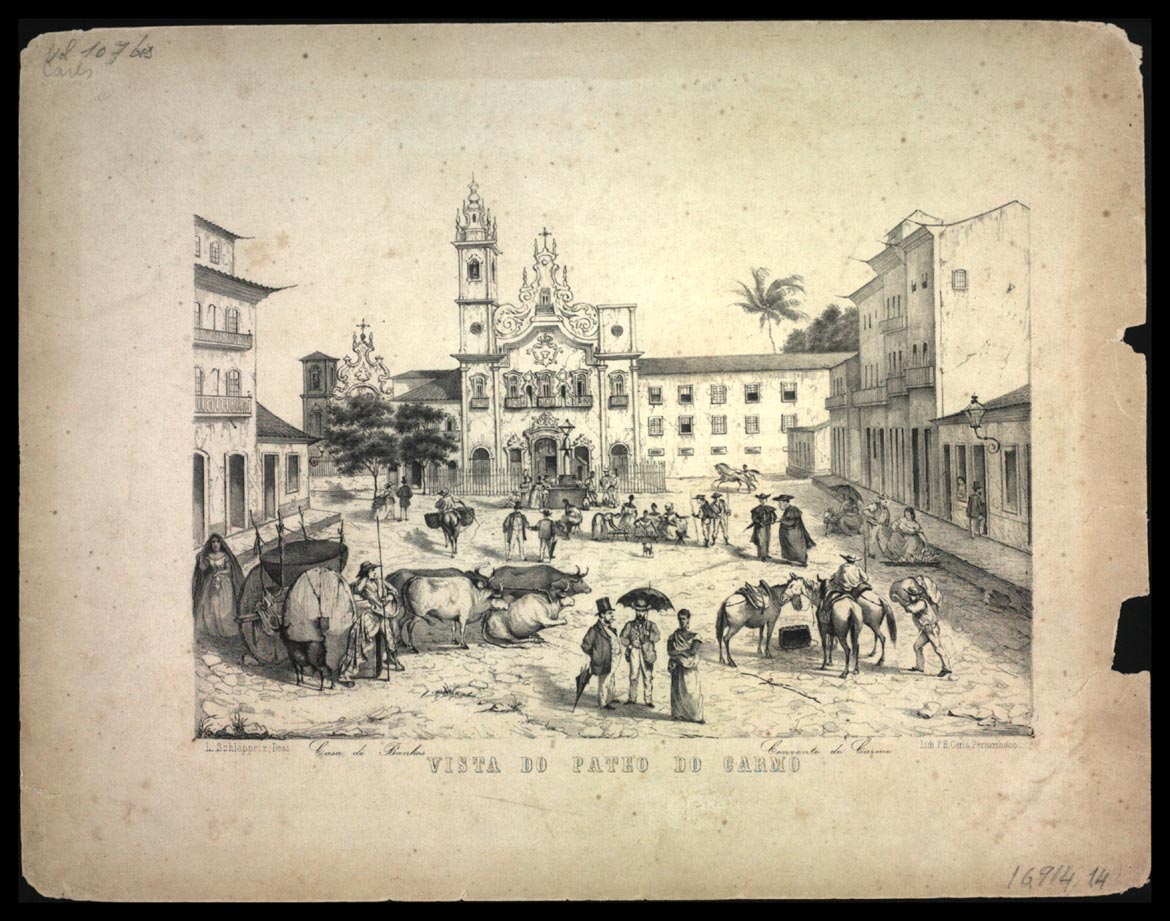
The front of the church is one of the most imposing in Pernambuco, with many volutes carved in stone, and the 50-metre-high tower is topped by one of the most elaborate onions of Brazilian Baroque.
In 1917, Pope Benedict XV raised the church to the dignity of “Patriarchal Vatican Basilica”, granting it various indulgences and specific jurisdictional characteristics.
And in 1919, Our Lady of Mount Carmel was proclaimed the patron saint of Recife.
Throughout the 20th century, under the pretext of promoting progress, local politicians made disastrous changes to Recife’s historic centre, which contributed to the degradation of the area and the de-characterisation of this important part of Brazilian history.
However, the Basílica do Carmo and other churches in the area still retain their original beauty and are a reminder of a time when Pernambuco was one of Brazil’s most prosperous regions.
According to historian Flávio Guerra, this is the same image that was brought from Portugal to Olinda and saved from destruction by the Dutch (Calvinists) when they invaded the city.
Tourist Guide to Recife, Pernambuco and the Northeast
Religious Tourism and Sacred Recife

Publicações Relacionadas
The history of the Golden Chapel and the Third Order of Recife
History and architecture of the Palácio do Campo das Princesas in Recife
Tamandaré: Explore the Best of Pernambuco
Itamaracá Island: Best Attractions and Activities
Franciscan Monastery of Olinda: A Historic Landmark
Boa Viagem Beach (Recife) — A Complete Guide for Visitors
The best beaches in Pernambuco — a 5-day itinerary
Pernambuco's Rural Tourism Route: A Traveler's Guide
Main tourist towns in Pernambuco's Zona da Mata
Santo Aleixo Island: A tourist paradise in Pernambuco
Igarassu: Discover the historic city of Pernambuco
Sacred Recife and Religious Tourism in Recife, Pernambuco
Pernambuco: History and must-see attractions
Giant Puppets and Their Role in Olinda Carnival
Golden Chapel: A Jewel of Brazilian Baroque
Maria Farinha Beach: Activities and Attractions
Tourist Attractions in Agreste de Pernambuco
Petrolina: Exploring Its Wine and Tourism
Monastery of São Bento de Olinda: A Historic Landmark
Serra Talhada: A Journey Through Pernambuco's Culture
Vale do Catimbau National Park: Your Guide to Ecotourism
Church of Santa Teresa D'Ávila da Terceira Ordem do Carmo History
Main historical landmarks of Pernambuco and Recife
Dutch Recife and the Dutch Invasion of Brazil
Cais do Sertão Museum: Discover Sertanejo Culture
Cabo de Santo Agostinho: A Complete Tourist Guide
Sights in Recife: 5 must-see attractions
Church of Nossa Senhora da Boa Viagem History
Kahal Zur Israel Synagogue — Jewish Museum and Cultural Centre (Recife)
Interior of Pernambuco: Nature, Wine, and Tradition
Sertão of Pernambuco: A Cultural Diversity Hub
The oldest churches in Pernambuco and the first church in Brazil
Triunfo: The Oasis of the Sertão in Brazil
Sugar mills on the outskirts of Porto de Galinhas PE
Mata Sul Region of Pernambuco: Waterfalls to Explore
Pernambuco's best beaches and their attractions
This post is also on:
 Português
  English
  Deutsch
  Español
  Français