Triunfo (PE): sights, climate and things to do in the Oásis do Sertão
Triunfo lies in the Sertão do Pajeú (the semi-arid backlands of the Pajeú region), in Pernambuco, about 400 km from Recife. At an altitude of 1,004 metres, the town has a mild climate that contrasts with the heat of the sertão, which is why it is called the “Oásis do Sertão” (Oasis of the Backlands). In addition, it brings together old mansions, the century-old Cine Theatro Guarany, the Pico do Papagaio, waterfalls and the carnival of the Caretas.
- Where it is: Sertão do Pajeú, about 400 km from Recife.
- Altitude: 1,004 m in town and 1,260 m at the Pico do Papagaio.
- Population: 14,705 inhabitants (IBGE 2022 Census).
- Climate: cool all year round; in winter, however, nights can drop to 5 °C.
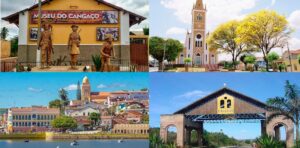
- Highlights: Cine Theatro Guarany, Lago João Barbosa Sitônio, Museu do Cangaço, Pico do Papagaio and Cachoeira do Pinga.
- Festivals: the Caretas carnival, the Festa dos Estudantes (July) and the Festival de Cinema (August).

Video about Triunfo in Pernambuco

Guia completo de Triunfo PE
Guia Turístico de Triunfo PE07:02
Atrações turísticas de Triunfo PE07:39
The town of Triunfo and its history
In the 1920s, the town enjoyed a few years of wealth, thanks to its sugarcane and coffee plantations. Even so, that period was enough for it to earn the nickname “Princesa do Sertão” (Princess of the Backlands). Later, with economic and political decline, the local elite lost its power.
However, the marks of that era remain visible. After all, the steep cobblestone streets, the 19th-century houses and the rough-stone buildings make the centre a true lesson in architecture. For this reason, the historic core is in the process of being listed as heritage.
According to the IBGE, the municipality has 14,705 inhabitants, who are called triunfenses.
Climate of Triunfo
Because of the altitude, the climate contradicts the aridity of the northeastern sertão. In fact, during the cold months, temperatures usually range between 6 °C and 15 °C, and nights can drop to 5 °C. In summer, on the other hand, the days are pleasant and rarely very hot. So pack light clothes for the day and, above all in winter, a good warm jacket for the night.
Sights in Triunfo
1. Cine Theatro Guarany

Opened in 1922, the Guarany was built by the merchant brothers Manoel and Carolino Siqueira Campos. According to tradition, the builders used stone and whale oil to support its three floors. Still in the 1920s, however, it fell into decline along with the town and even operated as a bar.
Today, the building is run by the Government of Pernambuco together with the town hall. After accessibility works, tourist visits resumed in 2025. In addition, there are film screenings from Thursday to Sunday, as well as theatre, circus and music.
2. Lago João Barbosa Sitônio

Right in the centre, the lake is the heart of the town, surrounded by green areas and mansions. The waterfront was built after the reservoir burst in 1952, under the mayor who gives the lake its name. Therefore, it is the ideal place to go for a walk, have a picnic or ride a pedal boat.
3. Cable car

Considered the first cable car in the Northeast of Brazil, it links the centre to the top of the hills, where the Sesc Leisure Centre is located. During the ride, moreover, it passes over the lake and offers a panoramic view of the mountains. The trip generally takes about 25 minutes. Before you go, however, check that it is running.
4. Museu do Cangaço

First of all, the museum tells the story of the cangaço, with a focus on Lampião and Maria Bonita. Open since 1975, it holds more than 500 items, such as weapons, clothing, photographs, Corisco’s dagger and a tray from 1916 that belonged to Lampião.
In addition, the same building houses the Museu da Cidade, with everyday objects from local families, and the Arte Sacra museum (Museu de Arte Sacra). There, incidentally, you will find the roda dos enjeitados (foundling wheel), where mothers left babies to be raised by nuns.
5. Igreja Matriz de Nossa Senhora das Dores

With its neo-Gothic lines, the main church is the symbol of local faith and stands in the centre, near the lake. Around it, the houses with old, well-kept façades also deserve a stroll on foot.

6. Pico do Papagaio

At 1,260 metres, the Pico do Papagaio is considered the highest point in Pernambuco. To reach the summit, however, you drive about 9 km along a rough, rocky road. In return, from the top the view stretches over several towns in the vale do Pajeú.
7. Cachoeira do Pinga
About 4.5 km from the town, the Cachoeira do Pinga (or dos Pingas) has six falls, and the main one reaches about 60 metres. As a result, it is the most popular nature outing. Besides the waterfall, the hills also have viewpoints, caves and trails for hiking and horseback riding.
8. Casa Grande das Almas

At Sítio Almas, on the border between Pernambuco and Paraíba, this plantation manor house preserves its architecture and period furniture. Moreover, it is linked to the history of the cangaço, which makes the visit even more interesting.
9. Rapadura mills

Furthermore, Triunfo is known as the rapadura (block of unrefined cane sugar) capital of the Pernambuco sertão. In fact, dozens of rustic old mills produce, mainly between July and December, the “sugar brick” that is never missing from the northeastern table. Among them, the Engenho São Pedro, at Sítio Bela Vista, near the centre, also produces cachaça and liqueurs.
10. Chico Santeiro’s studio
Before settling in Triunfo, Francisco Pinheiro, known as Chico Santeiro, travelled widely through the sertão. Today, he is the best-known artist in the town. After all, his wooden saints stand out for their expressive faces, rich garments and careful finish. Finally, the studio is on Avenida Getúlio Vargas.
Caretas and festivals in Triunfo
Without a doubt, the most famous tradition of the town is the Caretas (masked carnival revellers). According to local history, they first appeared in 1917, during the reisado (Epiphany folk celebration), and today they take to the streets at carnival, in groups called “trecas”. With masks, colourful costumes, rattles and the relho (whip), which cracks like a gunshot, more than a thousand revellers take part in the festivities. To get to know the tradition all year round, incidentally, visit the Casa do Careta, in the Alto da Boa Vista neighbourhood.
Apart from carnival, the Festa dos Estudantes, in July, closes the winter season. Meanwhile, the Festival de Cinema de Triunfo, held in August since 2008, takes over the Cine Theatro Guarany. Therefore, check the dates before planning your trip.
Food and practical tips
- Food: first of all, try the bode guisado (goat stew), the carne de sol (sun-dried beef), the rapadura and the sweets made from local fruit.
- Clothing: bring a warm jacket, especially between May and August, when the nights are cold.
- Getting around: the centre is small and can be explored on foot; however, there are steep slopes, so wear comfortable shoes.
- Trips into the hills: for the Pico do Papagaio and the waterfalls, on the other hand, go by car or with a local guide.
- Surroundings: combine your trip with Serra Talhada, Lampião’s birthplace, and other destinations in the Sertão de Pernambuco.
Frequently asked questions about Triunfo
Where is Triunfo, in Pernambuco?
In short, Triunfo lies in the Sertão do Pajeú, about 400 km from Recife.
In addition, it sits at an altitude of 1,004 metres.
Why is Triunfo called the Oásis do Sertão?
Because, thanks to its altitude, it has a cool climate and green hills, unlike the dry landscape around it.
In winter, in fact, nights can drop to 5 °C.
What are the main sights in Triunfo?
The highlights are the Cine Theatro Guarany, the Lago João Barbosa Sitônio, the Museu do Cangaço, the Pico do Papagaio and the Cachoeira do Pinga.
It is also worth visiting the Casa do Careta and a rapadura mill.
When is the best time to visit Triunfo?
It depends on what you are looking for. Between May and August, it is colder, and the Festa dos Estudantes and the Festival de Cinema take place.
At carnival, on the other hand, the town fills up with the Caretas.
What are the Caretas of Triunfo?
They are masked revellers who take to the streets at carnival, with colourful costumes, rattles and the relho.
According to local tradition, moreover, the figure first appeared in 1917.

Publicações Relacionadas

Ricardo Brennand Institute — Castle Museum, Armory, and Art Gallery
Sights in Recife: 5 must-see attractions

The history of the Golden Chapel and the Third Order of Recife

Boa Viagem Beach (Recife) — A Complete Guide for Visitors

The best beaches in Pernambuco — a 5-day itinerary
Praia dos Carneiros voted one of the most beautiful beaches in the Northeast

7-Day Itinerary in Pernambuco with Historical Highlights

History and architecture of the Palácio do Campo das Princesas in Recife

Giant Puppets and Their Role in Olinda Carnival
Graça Church and Olinda Seminary Historical Significance

Monastery of São Bento de Olinda: A Historic Landmark
Olinda Cathedral: A Historical Landmark in Brazil
Franciscan Monastery of Olinda: A Historic Landmark
Igarassu: Discover the historic city of Pernambuco

Sugar mills on the outskirts of Porto de Galinhas PE

The oldest churches in Pernambuco and the first church in Brazil
Gravatá: Your Guide to the Best Attractions
Goiana: A Historical Treasure in Pernambuco
Main historical landmarks of Pernambuco and Recife

Main Tourist Attractions in Recife You Must Visit

Pernambuco's best beaches and their attractions
Vale do Catimbau National Park: Your Guide to Ecotourism
Santo Aleixo Island: A tourist paradise in Pernambuco
Interior of Pernambuco: Nature, Wine, and Tradition
Tracunhaém and Its Rich Clay Handicraft Tradition

Basilica of Our Lady of Penha: A Historical Overview
Church of Santa Teresa D'Ávila da Terceira Ordem do Carmo History
Kahal Zur Israel Synagogue — Jewish Museum and Cultural Centre (Recife)
Church of Nossa Senhora da Boa Viagem History
History of the Basilica of Our Lady of Mount Carmel in Recife
History of the Church of Our Lady of the Rosary of the Black Men
Golden Chapel: A Jewel of Brazilian Baroque
Sacred Recife and Religious Tourism in Recife, Pernambuco

Carne de Vaca Beach: A Hidden Gem in Pernambuco
Maria Farinha Beach: Activities and Attractions
Serra Talhada: A Journey Through Pernambuco's Culture
This post is also on:
 Português
 English
 Deutsch
 Español
 Français