The Convent and Church of Nossa Senhora da Piedade: a neo-Gothic heritage site and religious symbol of Ilhéus (BA)
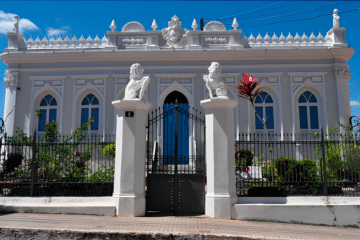
The Church of Nossa Senhora da Piedade in Ilhéus (Bahia) is a prime example of the Neo-Gothic style in the cocoa-growing region.
It was built between 1927 and 1929 based on plans commissioned from France and adapted by Salomão da Silveira, and was consecrated on 31 August 1929.


History
História do Convento e Igreja Nossa Senhora da Piedade em Ilhéus (BA)
In 1916, the first Bishop of Ilhéus, Dom Manuel de Paiva, invited Mother Maria Thaís Paillart to found a girls’ school, which led to the establishment of the Nossa Senhora da Piedade Institute.
In 1927, following the demolition of the old Church of São Sebastião and discussions regarding the new site for the church, construction of the present church began.
The plant, ordered from France by Mother Thaís, was adapted locally by Salomão da Silveira.
The building was completed in 1929 and consecrated on 31 August of that year. Community fundraising campaigns and regional support made the construction possible.
Artistic and religious features
- Style: Neo-Gothic with French influences in the floor plan.
- High altar: houses the statue of Our Lady of Mercy, depicting Mary holding the body of Christ.
- Stained-glass windows: a series depicting the Seven Sorrows of Mary, bringing a splash of colour to the interior.

Social and cultural role
Linked to the Nossa Senhora da Piedade Institute, the chapel has supported the institution’s educational and social work since 1916.
Over the decades, it has been the venue for masses, baptisms, weddings and collective memory, and is regarded as a significant part of the built heritage of Ilhéus and Bahia.
Practical information
Before visiting, please check the Mass times, addresses and official contact details with the Institute/Parish.
Visit the Church of Nossa Senhora da Piedade and admire its Neo-Gothic architecture, stained-glass windows and high altar. For bookings and opening hours, please contact the Institute or the local parish.

Publicações Relacionadas
Arembepe: beaches (Piruí, Praia do Canto), Hippie Village and the Tamar Project

Paranaguá Palace — History, architecture and visiting information | Ilhéus (BA)

São Jorge Parish Church in Ilhéus — history, architecture and religious art

São Sebastião Cathedral (Ilhéus) — History, architecture and tourism
The 15 Most Visited and Well-Known Beaches in Bahia
The 3 most paradisiacal beaches in Bahia

Skydiving, Paragliding and Ballooning in Bahia

Historic Towns in Bahia: A Journey Through Time
Places to visit on the south coast of Bahia

História da Arte - Caracteristicas, Aspectos e Periodos
Tourist Attractions in Bahia: main attractions, beaches and cities

Subaúma, Bahia: where it is, things to do and where to stay
Massarandupió Naturist Beach, Bahia: Rules and Access
Beaches on the South Coast of Bahia: 10 Best and Tips
Towns and the Abrolhos Archipelago — The southernmost tip of Bahia

Baixio: Between lagoons, dunes and the charm of a village surrounded by nature
Best Beaches in Bahia: Your Guide to Paradise
Salinas da Margarida (BA) — Beaches, Attractions and a Complete Guide

Guarajuba Beach, Bahia: Natural Pools and Tips

Barra do Cahy: Brazil's first beach - history and nature

Garcez Beach: Discover Paradise in Jaguaripe

Barreiras: An Ecological Paradise in Bahia
Catabrigas Waterfall — A natural haven in Ibirajá, Itanhém (BA)

Serra Grande: Your Guide to Bahia's Paradise
Corumbau, Bahia: Ponta de Corumbau, beaches, map, how to go

Taipu de Fora: Discovering Natural Pools

Iguaí: A Guide to Waterfalls and Relaxation
Morro de São Paulo: Map, Beaches & How to Get There (2026)
Tourism in São Francisco do Conde (BA) — Tips and Attractions
Todos-os-Santos Bay (Bahia) — History, geography and conservation
Todos os Santos Bay — Nature, History and Water-based Tourism
Bay of Todos os Santos: nature, history and cultur

Rafting in Taboquinhas: The Ultimate Adventure Guide
Abseiling Sites in Bahia: Top Locations to Explore

Diving Spots in Bahia: Discover Underwater Treasures
Paragliding at Pitinga Beach in Arraial d'Ajuda
This post is also on:
 Português
  English
  Deutsch
  Español
  Français