Rafting in Taboquinhas: Discover rafting and the natural beauty of Bahia
Taboquinhas, a charming village near Itacaré in Bahia, is a must-see destination for adventure lovers.
With its thrilling rapids on the Rio de Contas, Taboquinhas is one of the best rafting spots in Brazil.
This guide will help you discover everything you need to know for an unforgettable experience.
What to expect from rafting
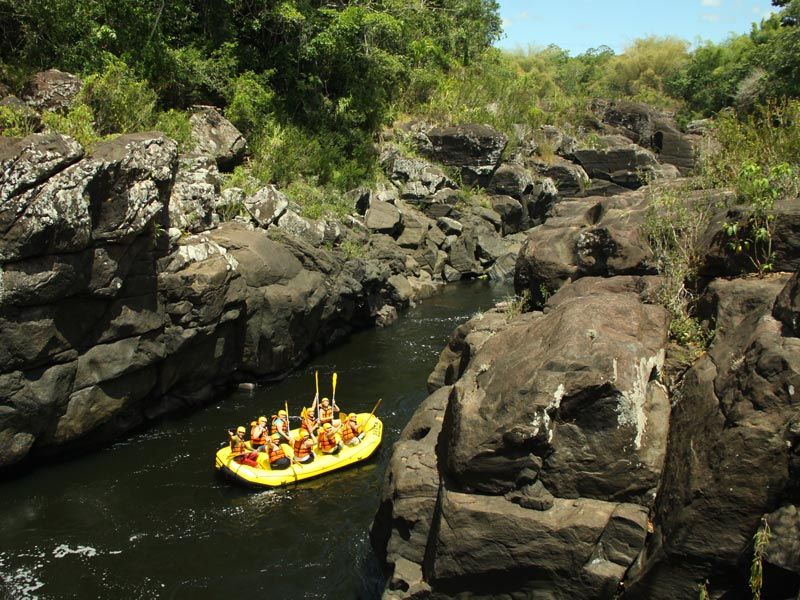
Rafting in Taboquinhas is an exciting adventure that includes
- Route: Approximately 3.5 kilometres down the rapids of the Rio de Contas, with class II to IV rapids, suitable for beginners and experienced adventurers.
- Length: The average duration of this activity is 2 hours.
- Equipment: Participants are provided with all necessary safety equipment, including life jackets, helmets and paddles.
Watch a video about rafting in Taboquinhas

The best time to go rafting
The best time of year to go rafting in Taboquinhas is during the rainy season, usually between November and March. During this period, the volume of water in the Rio de Contas increases, providing more exciting and challenging rapids.
However, it’s important to remember that the rainy season can bring changes in weather conditions, such as heavy rainfall. It is always advisable to check the weather forecast before planning your activities.
The months of April to October are also suitable, especially for beginners, as the rapids tend to be calmer. The ideal time to go depends on your level of experience and the type of adventure you’re looking for.
The Experience
- Start of the adventure: The adventure begins in Itacaré, where a Land Rover jeep will take you to Taboquinhas. The 34-kilometre journey is on a gravel road, adding a touch of excitement from the start.
- Safety instructions: On arrival, the guides give instructions on how to row, the importance of working as a team and the safety rules for the descent.
- River descent: The boats are christened with war cries to build team spirit. The rapids begin with calm waters but soon become exciting with falls and challenges for all participants.
- Stops for fun: Along the way there are stops at waterfalls where you can practise free-jumping and abseiling for unforgettable moments.
The difference between rafting and kayaking
The difference between rafting and kayaking lies mainly in the type of boat used, the navigation technique and the experience of the practitioner:
- Rafting: This is done in large, sturdy inflatable boats that can carry several people. Participants row together, coordinating their movements to manoeuvre the boat through the rapids. It’s a communal experience, ideal for beginners and groups.
- Kayaking: Performed in smaller, more manoeuvrable kayaks designed for one or two people. Practitioners use double paddles, allowing greater control of the boat. Kayaking can be done alone or in pairs for a more intimate and challenging experience.
How to get there
- By car: From Salvador take the BR-324 to the junction with the BR-101 towards Ilhéus. Another option is the BA-654, a dirt road that connects Itacaré to the BR-101, but which can be in poor condition.
- By Bus: There are daily bus services from Ilhéus to Itacaré, making the region easily accessible.
Publicações Relacionadas
Skydiving, Paragliding and Ballooning in Bahia
Abseiling Sites in Bahia: Top Locations to Explore
Kitesurfing in Trancoso: A Guide for Adventurers
Skydiving in Bahia: An Unforgettable Experience
Trekking in the Pati Valley in Chapada Diamantina
Extreme Sports in Bahia: Adventure Awaits You
Iguaí: A Guide to Waterfalls and Relaxation
Extreme sports in the Northeast of Brazil: Destinations not to be missed
Diving Spots in Bahia: Discover Underwater Treasures
Paragliding at Pitinga Beach in Arraial d'Ajuda
Barreiras: An Ecological Paradise in Bahia
Quixadá: Exploring the Unique Rock Formations
This post is also on:
 Português
  English
  Deutsch
  Español
  Français