Trekking in the Pati Valley is considered one of the most beautiful in the country.
The Pati Valley, located in the heart of the Chapada Diamantina in Bahia, is considered one of the best trekking destinations in Brazil.
The region offers a unique landscape of canyons, waterfalls, rivers, mountains and vegetation that mixes savannah, Atlantic forest and caatinga. Trekking in the Pati Valley is a challenging but rewarding experience in the midst of nature and local culture.
Trekking enthusiasts can choose from easy trails of a few hours to an unforgettable adventure of up to six days in the Pati Valley.
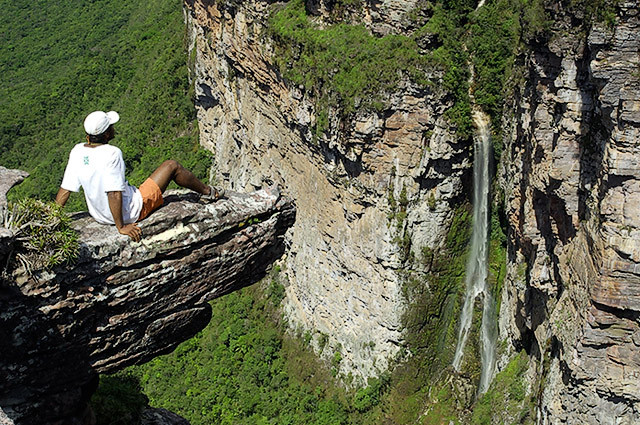
A fantastic place that combines rare examples of mountain vegetation with the exuberance of the caatinga.
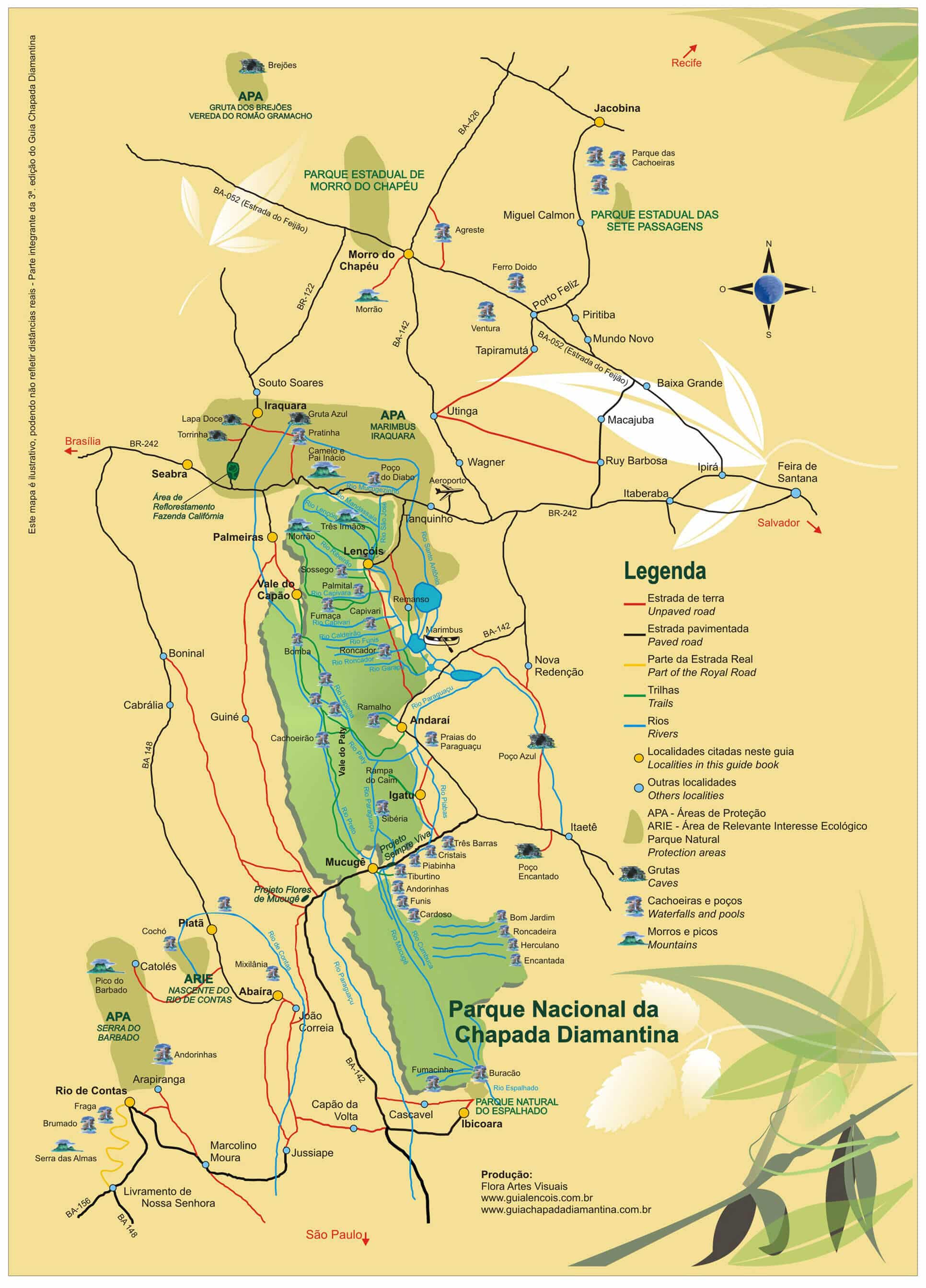
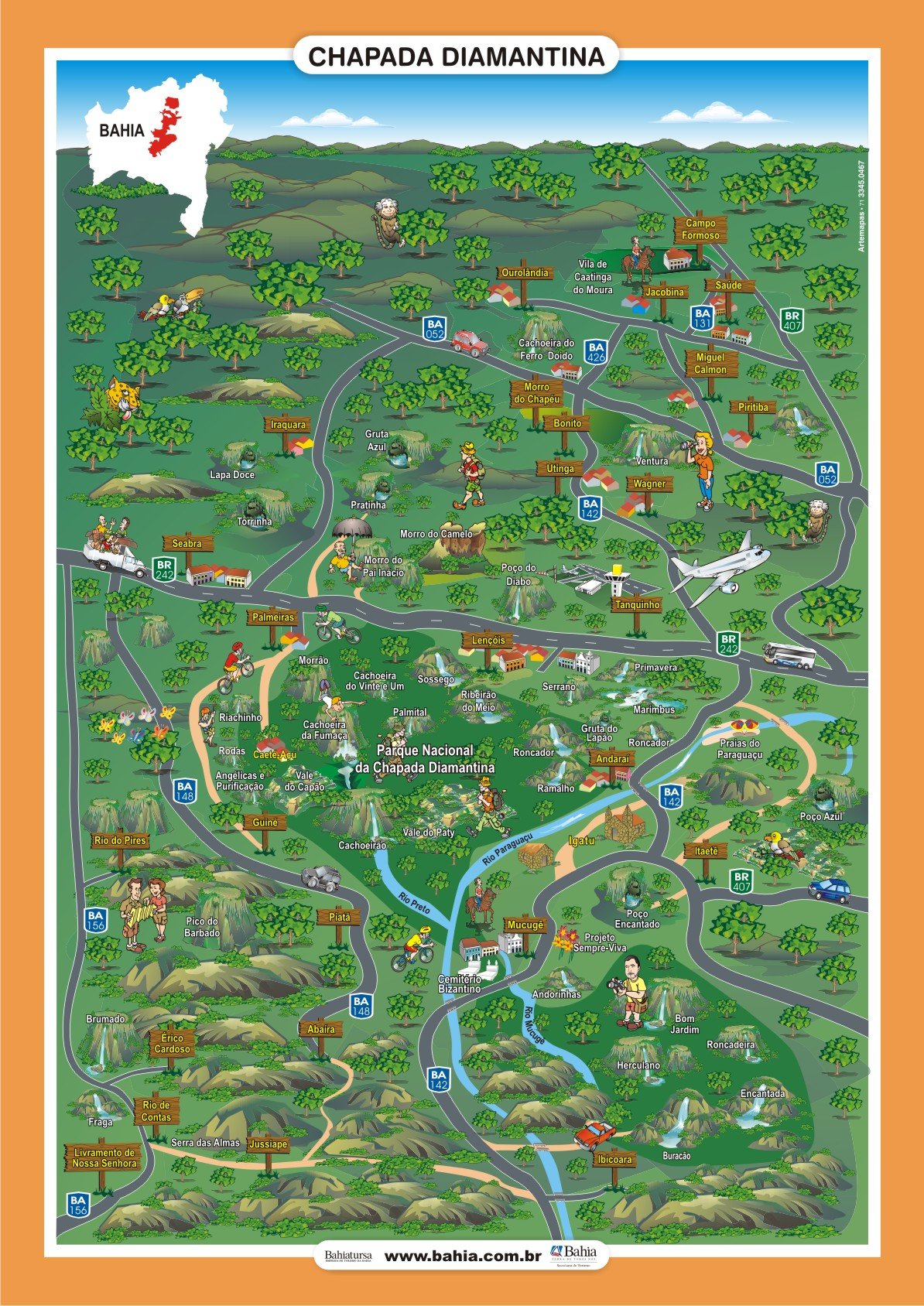
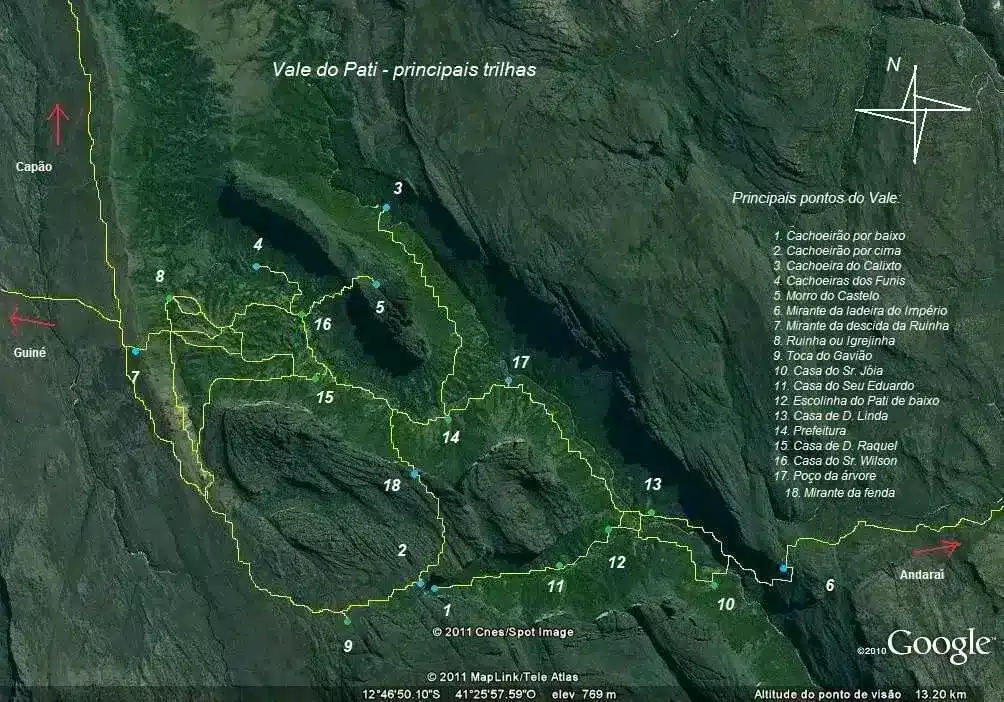
Map of Chapada Diamantina trails and tourist sites
The journey through the Pati Valley requires a good level of physical fitness, but during the trek the difficulty of the steep hills and closed forests becomes an added motivation to challenge yourself and discover the dozens of waterfalls scattered throughout the valley.
See the map of Chapada Diamantina
Videos about trekking in Vale do Pati and Vale do Capão
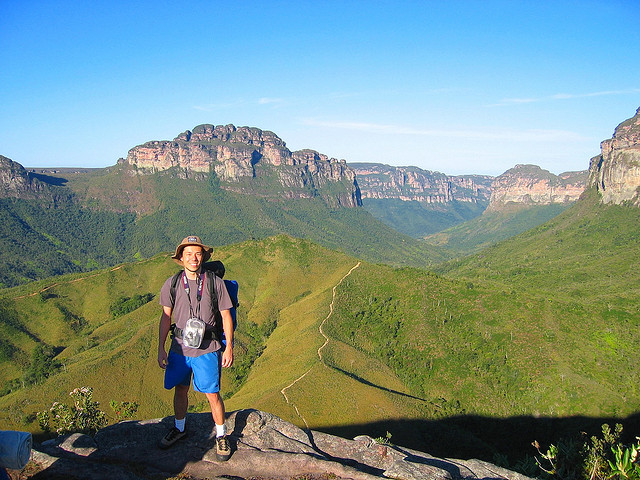
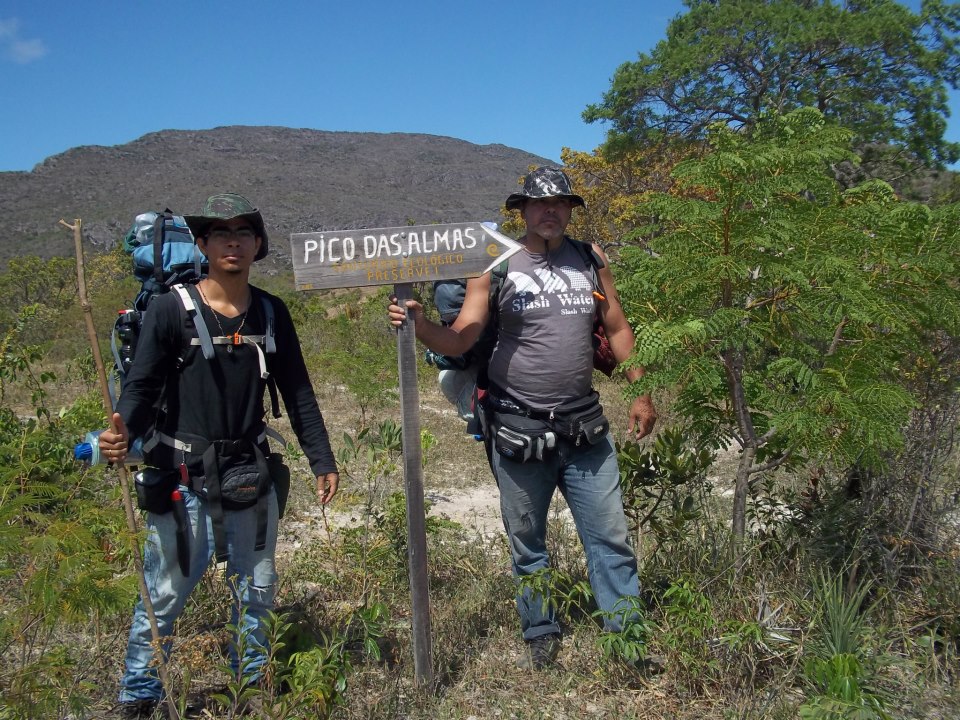

Trekking in the Pati Valley
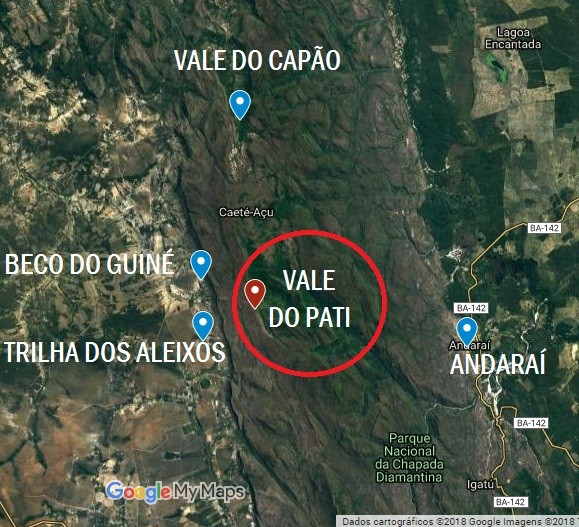
The Pati Valley has three main access points: Guiné (district of the municipality of Mucugê), Vale do Capão (district of the municipality of Palmeiras) and Andaraí.
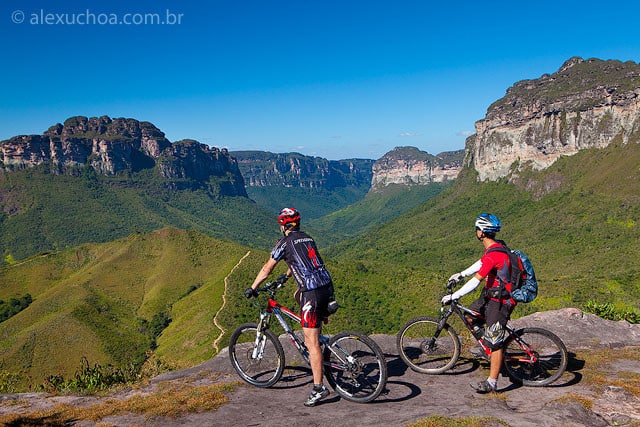
It’s possible to enter or leave through either of these two valleys, but either way the route involves many kilometres of ups and downs.
The route goes from the village of Guiné to Andaraí, passing through Gerais do Vieira, Gerais do Rio Preto, Morro do Castelo, Cachoeirão and at the end we’ll visit the Fumacinha Waterfall.
The crossing of the Pati Valley can be done in different ways. There are those who spend only one night there, with one day to enter the valley and another to leave it, and who can visit attractions such as the Mirante do Pati.
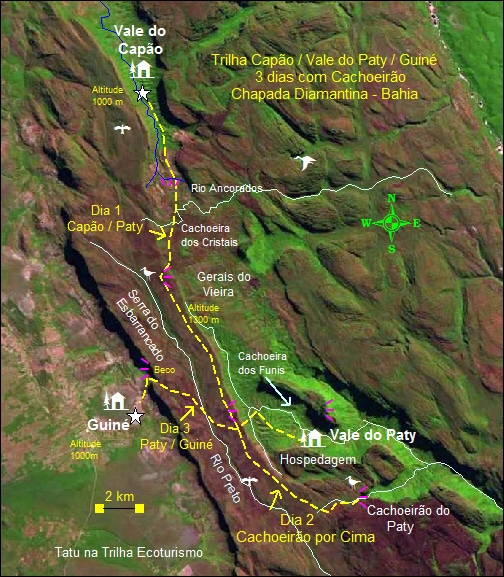
Characteristics of the Pati Valley Trekking
Duration
- In general, the walks take between 3 and 7 days, depending on the route chosen and the fitness of the participants.
Level of difficulty
- Moderate to difficult. The route includes steep climbs, steep descents, river crossings and long walks.
Main attractions
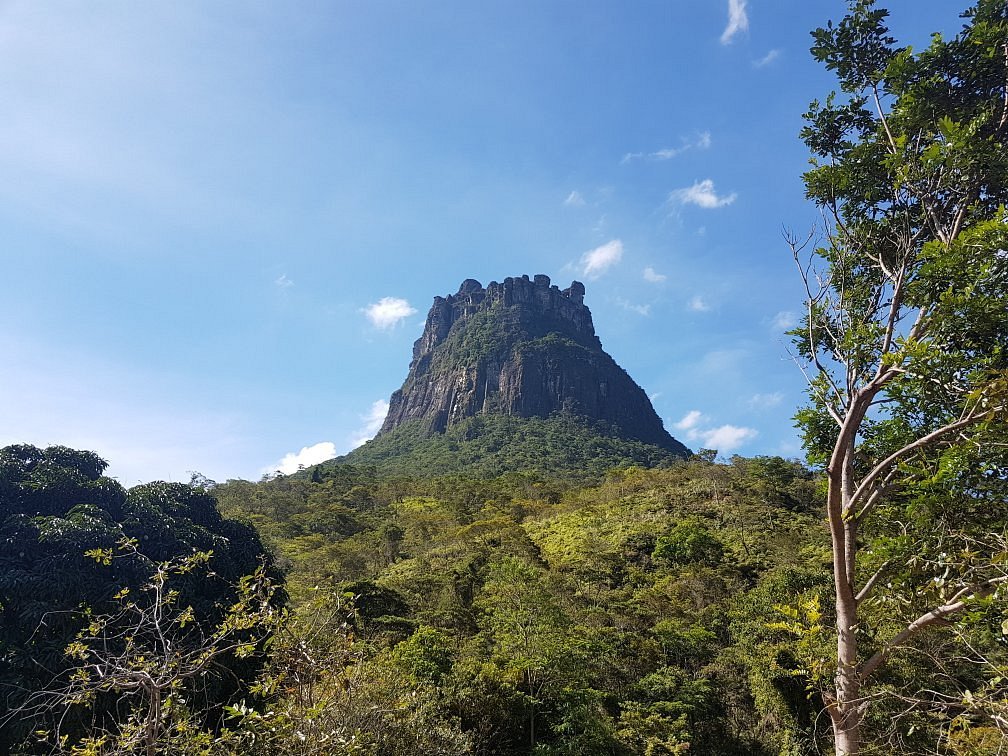
- Morro do Castelo: One of the most famous walks, with rock formations resembling a castle and spectacular views over the valley.
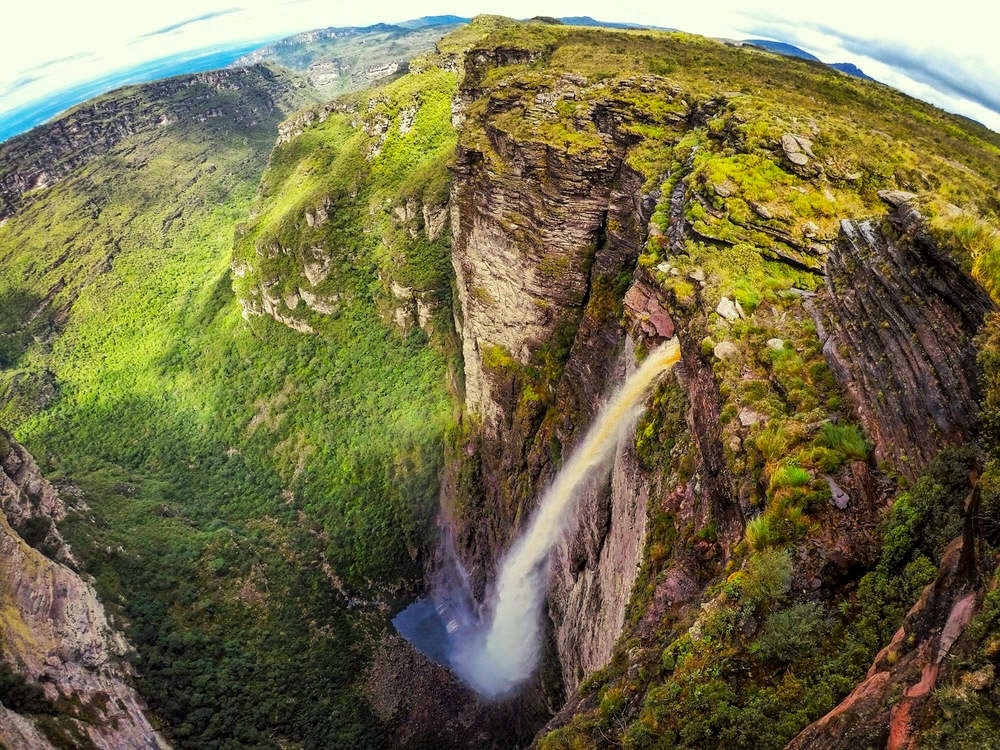
- Cachoeirão por Cima: One of the most emblematic points, with several waterfalls plunging from great heights.
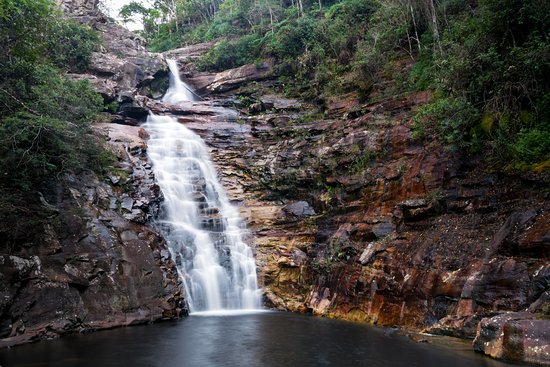
- Funil Waterfall: Ideal for relaxing and swimming.
- Viewpoints: Several points along the trails offer panoramic views of the Pati Valley.
Unforgettable trekking in the Pati Valley: Itineraries from 2 to 5 days
1. Trekking in the Pati Valley in 2 days
If you only have 2 days, the idea is to enter via Guiné and leave via Capão or vice versa.
First day: Waterfall
At the entrance to Guiné, walk to Cachoeirão. The first day will be dedicated to this trail, while the second day will be spent travelling through the general area to Capão. This route is ideal for those who don’t have much time but want to see the beauty of the Pati Valley, such as the Cachoeirão Valley.
Physical condition required
You need to be in good physical condition to do this walk as it is full of challenges, including steep paths, rocks and drivers.
Tips for the walk
We recommend taking basic snacks to replenish your energy, such as fruit, cereal bars and biscuits, as well as water.
Your accommodation
You’ll need to stay with locals, who are very welcoming and provide an incredible experience. Rooms are usually clean and tidy, and bathrooms are shared between tourists and hosts.
2. Trekking in the Pati Valley in 3 days
If you have 3 days, you can explore more incredible and magical places that will change the way you look at life.
Day one: Start in Guiné
Start the trail in Guiné, walking along the Gerais do Rio Preto. If you like, stop for a swim in the river. Then head to the Mirante do Vale, where you can feel the gentle breeze and watch the magical scenery.
Day two: Funis Waterfall
On the second day, visit the Funis Waterfall, Lajedo and Morro do Castelo, which offers a spectacular view from the top of the mountain through a beautiful cave.
Third day: Vale do Capão
On the third day, head for Vale do Capão via Gerais do Vieira. The route is breathtaking, with mountains forming a landscape that blends with the green and blue of the sky. The Pati Valley is considered one of the most beautiful valleys in the world, carved out of pink quartzite and covered in Atlantic rainforest.
3. Trekking in the Pati Valley in 4 days
For those who have 4 days, the logistical itinerary of the Pati Valley offers good attractions.
Day One: Leaving Vale do Capão
Leave Vale do Capão, passing through Bomba and up the slope of “Quebra Bunda” to the Generals of Rio Preto, continuing to the houses of the locals in Pati de cima.
Day two: Cachoeirão from above
On the second day, visit Cachoeirão from above, where you can see a series of waterfalls that form a breathtaking sight.
Days three and four: Down the valley
On days three and four, walk down the valley to the houses of the inhabitants of Pati de Baixo. Then climb the slope of Império to complete your route to Andaraí.
4. Trekking in the Pati Valley in 5 days
For a complete and incredible experience, we recommend 5 days in the Pati Valley.
Day one: Adventure in the Capão Valley
Start your adventure by driving up the Capão Valley to the Gerais do Rio Preto, from where you can see Morro do Castelo. Take the opportunity to swim in the river and enjoy some time with friends and family.
Day two: Morro do Cruzeiro
On the second day, climb the Morro do Cruzeiro, passing the Córrego das Laranjeiras and the Serra da Sampa, until you reach the imposing Cachoeirão Waterfall, with a free fall of around 300 metres.
Day three: Morro do Castelo
On the third day, climb Morro do Castelo. Beware of the altitude! The trail goes from Igrejinha to the top, where you can cross the cave and look out over the Pati Valley.
Day four: Waterfalls and knowledge
On the fourth day, enjoy the Lageado and Funis waterfalls in the morning, then head to the houses of the inhabitants of Pati de Baixo. Visit the City Hall, a historic site that still attracts tourists.
Final day: Ladeira do Império
On your last day, visit the Ladeira do Império, which is paved and about 16 kilometres long. The walk starts out easy but soon becomes challenging. At the top, you’ll come across a large waterfall and the Serra do Ramalho mountain range, before continuing on to Andaraí, where you say goodbye to the valley.
History of the Pati Valley
Hidden away, with limited access (there is no road for cars), the Pati Valley saw its first inhabitants at the beginning of the 20th century.
A severe drought in the region led the locals to seek survival in the fertile and humid valley.
With the strengthening of the coffee culture, Vale do Pati and Vale do Capão became the largest coffee producers in the region. It was during this period that the valley reached its peak, with more than two thousand inhabitants, a community centre, shops and a church.
Coffee was also the reason for its decline, when the republican policy of the time decided to nationalise and eradicate coffee growing in order to increase prices on the world market.
prices on the world market. This policy led to the exodus of most of the population, allowing the valley to recover its forests, which had been cleared to make way for coffee plantations.
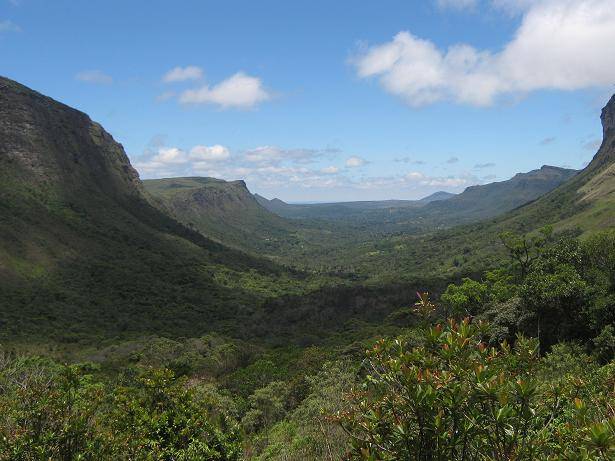
Today, the Pati Valley is protected by its 50 inhabitants and the Chapada Diamantina National Park.
In order to preserve the ecological balance of the Pati Valley and its resilient inhabitants, we at Terra Chapada Diamantina provide transport, accommodation and food services, while avoiding other more destructive activities such as cattle ranching, agriculture, hunting and the extraction of palm hearts and wood.
Bahia.ws is the largest tourist guide in Bahia and Salvador.
Trekking in the heart of Bahia in the Chapada Diamantina
Publicações Relacionadas
The History of Lençóis in the Chapada Diamantina — Origins, the Diamond Cycle and Heritage
Trekking in the Pati Valley in Chapada Diamantina
Sempre-Viva: Symbol of Preservation in the Chapada Diamantina
Tourist Attractions in Rio de Contas You Must Visit
Diving Spots in Bahia: Discover Underwater Treasures
Andaraí is the second largest town in the Chapada Diamantina
Trekking - Route through the Chapada Diamantina in 7 days
Mining in the Chapada Diamantina History Explained
Dive Sites of Chapada Diamantina: A Guide
Chapada Diamantina - Tourist Attractions, Itineraries and Tips
Lapão Cave: The Ultimate Adventure Experience
Igatu: Explore the 19th-Century Stone Houses
Main caves in the municipality of Iraquara in Chapada Diamantina
Ventura Village: A Rich History of Diamonds
Ecological tourism in Morro do Chapéu
Orchids of the Chapada Diamantina in Bahia
Ibicoara: An Unmissable Tourist Destination
Mucugê: Discover the local history and culture
Tourist Attractions and Documentaries about Chapada Diamantina
Waterfalls and trails in the Capão Valley: Complete Guide
Trekking - Popular trails in Chapada Diamantina
The highest and most beautiful waterfalls in Chapada Diamantina
Enchanted fountain in Chapada Diamantina: How to get there
Waterfalls of Chapada Diamantina: A Guide for Adventurers
Extreme sports in the Northeast of Brazil: Destinations not to be missed
Rafting in Taboquinhas: The Ultimate Adventure Guide
Palmeiras: A Gateway to Chapada Diamantina
Iraquara is also known as the "city of caves"
Piatã: The Highest Municipality in Bahia
Marimbus Pantanal: Adventure in Chapada Diamantina
Campo Formoso: Explore Caves and Emerald Trade
Main Towns and Villages in the Chapada Diamantina Region
Abseiling Sites in Bahia: Top Locations to Explore
Picos das Almas, Itobira and Barbado Trekking Guide
Torrinha Cave: A Speleological Marvel in Brazil
Birds Found in Chapada Diamantina: A Guide
This post is also on:
 Português
  English
  Deutsch
  Español
  Français