Iraquara: Discover the city of caves and its cultural and natural wealth in Bahia
Iraquara is a Brazilian municipality in the state of Bahia, located in the Chapada Diamantina micro-region.
The municipality stands out for its large number of caves, waterfalls and caverns, many of which are open to the public, earning it the title of City of Caves.
Historical and cultural wealth
The town of Iraquara is included in the Estrada Real tourist project, which connects Jacobina to the Rio de Contas, linking the mines of Bahia and Minas Gerais to Rio de Janeiro.
The history of Iraquara goes back more than 12,000 years, when various prehistoric nomadic peoples passed through the region, leaving traces of their presence through cave paintings, fossils and archaeological records found in the caves.

Colonisation and development
Colonists began arriving in the region in the mid-19th century, attracted by the local diamond, forming garimpos that gave rise to various settlements.
The main settlements in Iraquara include ancient Parnaíba (now Iraporanga), Vila do Riacho do Mel, Água de Rega, Canabrava and Estiva (now Afrânio Peixoto).
Historical roads
The exploitation of gold and diamonds led to the construction of a road through the Chapada Diamantina, linking Jacobina to Rio de Contas, passing through the municipalities of Iraquara and Seabra.
This road, known as the Estrada Real, is in the process of being declared a Historical Heritage Site.
Traditional routes and stops
The paths of the Estrada Boiadeira included stops such as the village of Cochó do Malheiro in Seabra, Riacho do Mel, Estiva, Campo de São João and Iraporanga, all with a group of houses of historical value.
Natural wealth
The discovery of diamonds in the region contributed to the development of villages that preserve the colonial ambience and culture of a hospitable population.
The fertility of the red soil and the abundance of water in the valleys and caves were also important factors in the settlement of the region.

The city of Iraquara
The settlement that would become the city of Iraquara was founded after a muleteer named Manoel Félix discovered a well of abundant water in the bed of the Água de Rega stream.
The municipality has the largest speleological collection in South America, with a large concentration of caves.
Natural attractions
Iraquara’s main attractions include the Pratinha Cave, Lapa Doce, Torrinha, Mané Ioiô and Fumaça, all of which are located in a limestone-rich subsoil. In the Tupi language, Iraquara means ‘honey pot’, ‘honey well’ or ‘honey stream’.

Culture and folklore
Iraquara’s cultural heritage is enriched by its folklore, represented by the Ternos de Reis and Reisados, as well as the popular festivals that take place throughout the year, such as São João, the patron saint festivals of Nossa Senhora do Livramento, Santo Antônio, São José, São Judas Tadeu, São Pedro, Senhora Santana, Senhor do Bonfim and Carnamel.
Environmental protection
Part of Iraquara’s territory is protected in the 125,400 hectare APA Marimbus-Iraquara, adjacent to the Chapada Diamantina National Park. This area is characterised by a large number of limestone caves and the lake formation known as Marimbus.
Archaeological importance
Archaeological sites such as Lapa do Sol, Lapa do Caboclo and Abrigo Santa Marta are notable for the presence of cave inscriptions, showing the human presence in prehistoric Brazil.
The cave route is very popular and diving in interconnected caves, such as the Blue Cave, is an unmissable attraction.

Scientific research
Considered the largest of its kind in Brazil, the Iraquara Speleological Park concentrates hundreds of caves and grottoes, where scientific research is carried out in the fields of paleontology, biology and anthropology.
The region is home to fossils of giant sloths and sabre-toothed tigers, while the local fauna includes ocelots, jaguars and deer.
Location
Iraquara is located 427 kilometres from Salvador, making it an accessible destination for those wishing to explore its natural beauty and rich history.
Videos of Iraquara in Chapada Diamantina

Iraquara na Chapada Diamantina22:05

Gruta da Fumaça na Chapada Diamantina

Caverna da Torrinha em Iraquara09:53

Caverna da Torrinha na Chapada Diamantina07:11

Gruta da Fumaça na Chapada Diamantina
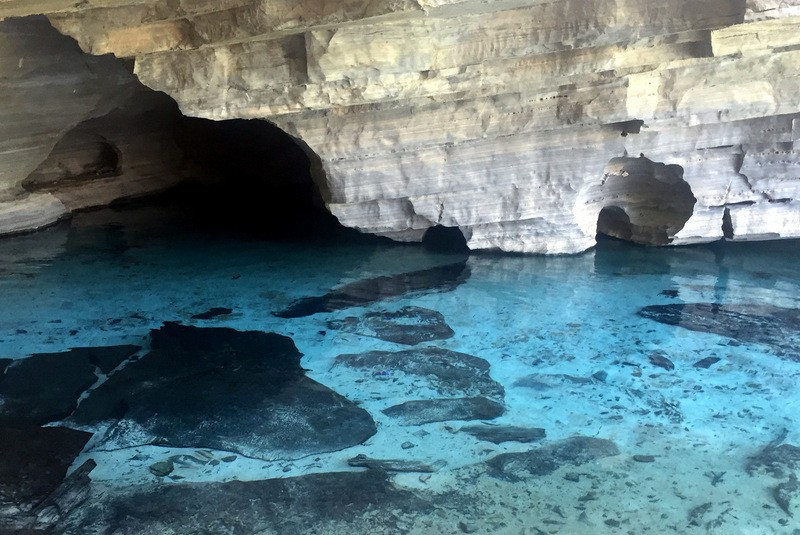
Grutas da Lapa Doce, Gruta da Pratinha e Gruta Azul
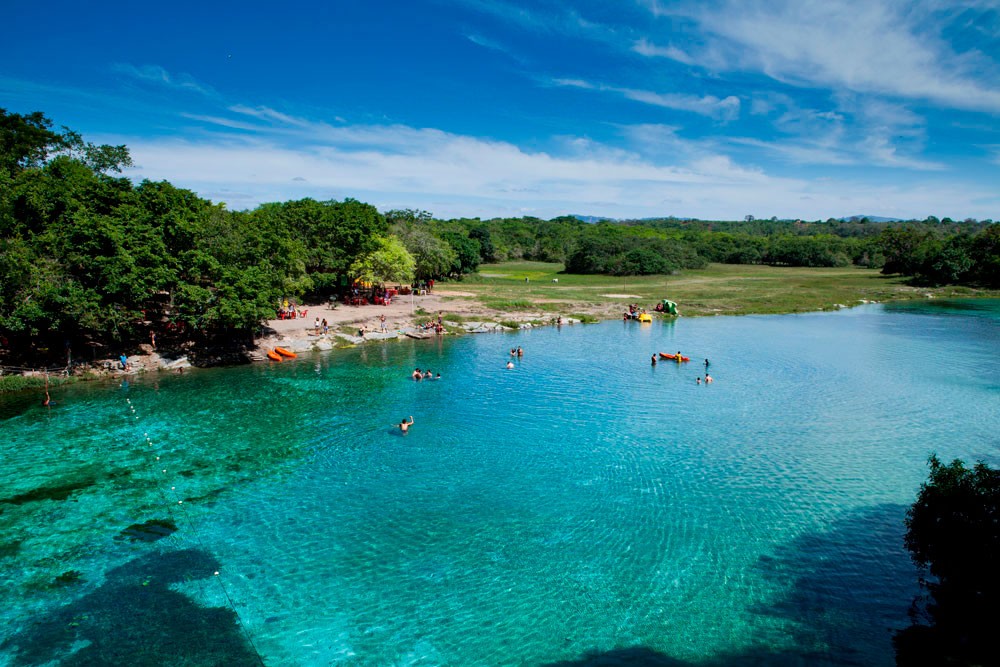
Rio e Gruta da Pratinha na Chapada Diamantina03:55
Map of trails and tourist sites in the Chapada Diamantina
Caves of Iraquara in the Chapada Diamantina
1. Lapa Doce Cave
Home to rare species such as the blind albino catfish, this cave is part of a complex known as Lapa I, II and III.
Considered the third largest cave in the country, Lapa Doce is 17 kilometres long, of which 850 metres are open to visitors. In this space, full of large halls, you can see a variety of stalactites, stalagmites, curtains and other beautiful formations.
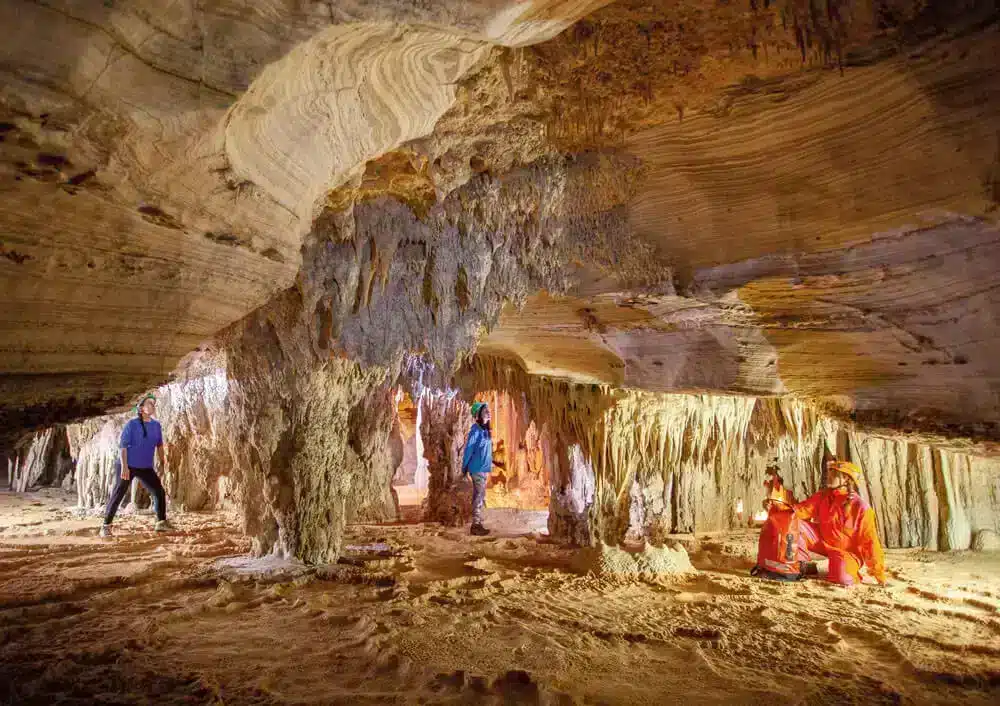
The entire route must be accompanied by a guide equipped with a torch and lantern. The path to Lapa Doce is easy and beautiful.
The cave is entered through a beautiful doline (limestone wall) and the descent is 70 metres.
2. Pratinha Cave
Access to Pratinha Cave is by river with diving equipment and a guide. Inside the cave there is a great variety of speleothems (mineral formations) such as gypsum needles and aragonite flowers.
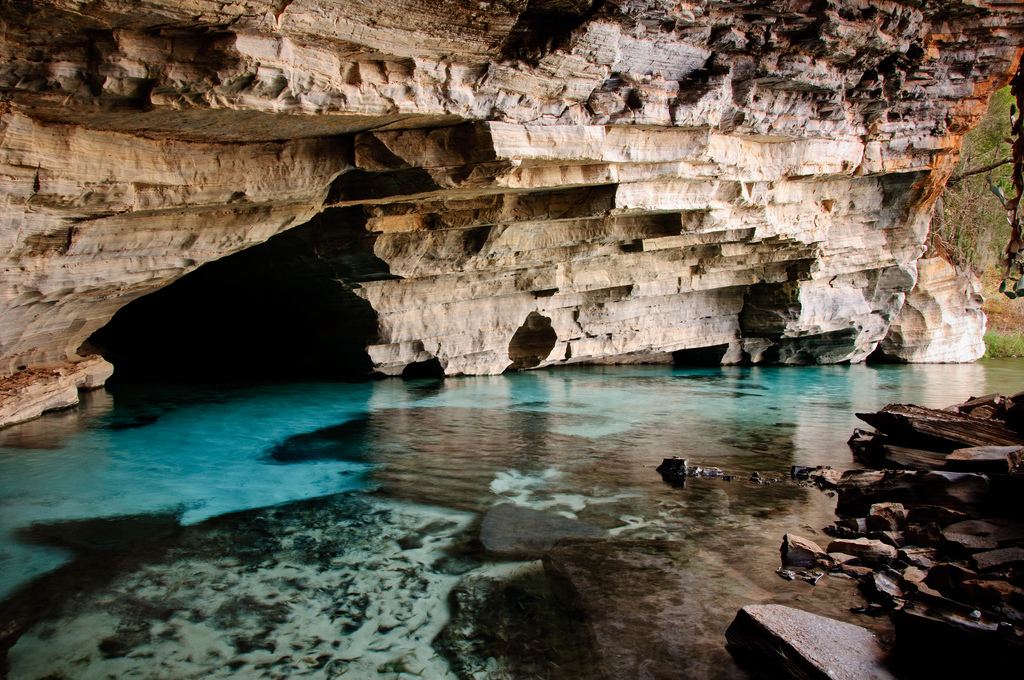
Some of the most interesting can be seen in the Hall of Bells and the Hall of Volcanoes. After the tour you can swim in the crystal clear waters of the San Antonio River, have fun on the zip line or eat fish in the nearby restaurants.
3. Blue Grotto
A lake of transparent blue water formed by the underground Pratinha Cave.

The scenery is even more beautiful at 10am and 3pm when the sun hits the inside of the cave. The dive must be done carefully so as not to wear away the limestone of the rocks.
4. Torrinha Cave
It contains a veritable treasure trove of crystals, such as gypsum needles – considered the most perfect in the world – and aragonite flowers of incomparable beauty. Part of it is reserved for research, but the area open to the public is breathtaking.

The Gruta da Torrinha is the most interesting cave in the Chapada Diamantina, full of ornaments such as the 60 centimetre long gypsum needles, considered the most perfect in the world, and the rare aragonite flowers, which appear to be made of glass.
Part of the cave is reserved for research, but the area open to the public is breathtaking. Access via the BR-122, km 18, on the right, another 1 km to the cave.
5. Iraporanga
This small old village of well-preserved mansions is famous for its good cachaça, made in artisanal stills.
6. Smoke Cave
Gruta da Fumaça is full of distinctive stalactites and stalagmites that look like drops falling from the ceiling.

Narrow, stuffy and with small rooms, it is not suitable for those who are claustrophobic or have difficulty moving around. Despite the heat and stumbling on the uneven steps, it’s worth a visit!
Bahia.ws is the biggest tourist guide for Bahia and Salvador.
Chapada Diamantina Tourist Guide

Publicações Relacionadas
The Secret History of Salvador, Bahia: Caramuru and the City’s Early Day
Paranaguá Palace — History, architecture and visiting information | Ilhéus (BA)
Santa Cruz Cabrália in Bahia — beaches, history and things to do
Bahia Art Museum (MAB): Learn about its history and collection
Picos das Almas, Itobira and Barbado Trekking Guide
Solar do Unhão & MAM-BA — History, Architecture and a Visit
History and Historical Attractions of Itacaré Reveale
History of the Church and Convent of São Francisco in Salvador
Trekking - Route through the Chapada Diamantina in 7 days
Camamu Bay — A Hidden Paradise in Bahia
Church of Nossa Senhora dos Mares (Salvador) — History and Architecture
Palaces in Salvador to visit and learn about Brazil's history
Santo Antônio da Barra Fort — history, Barra Lighthouse and the Nautical Museu
Places of interest in Salvador — A comprehensive guide
Subaúma Beach: The Perfect Escape in Bahia
The War of Canudos: Rescuing historical memory
Todos-os-Santos Bay (Bahia) — History, geography and conservation
History of the Senhor do Bonfim Ribbons — Origin, Meaning and Traditions
Mata de São João and Praia do Forte: A Complete Guide
Tinharé Archipelago: Discover Hidden Island Gems
Waterfalls of Chapada Diamantina: A Guide for Adventurers
Ecotourism in Bahia: discover village of Santo André
Tourist Attractions in Bahia: main attractions, beaches and cities
Prado (BA) — Beaches, Cliffs and Whale Watching | Whale Coast
Chapada Diamantina's architectural style and influences
Ilha dos Frades — History, beaches and tourist attractions
Municipality of Entre Rios has first official naturist beach
Historic Towns in Bahia: A Journey Through Time
Correntina: Discovering the Heart of Bahia
Humpback whales in Brazil — characteristics, migration and sanctuaries (Abrolhos)
Comandatuba Island: Resort and Family Adventure
São Sebastião Cathedral (Ilhéus) — History, architecture and tourism
History of grape and wine production in the São Francisco Valley
Discover the reasons for a holiday in Salvador, Bahia
Discover the São Francisco River Valley Region - Tourist Guide
Cairu Archipelago: A Guide to Its Enchantment
This post is also on:
 Português
  English
  Deutsch
  Español
  Français