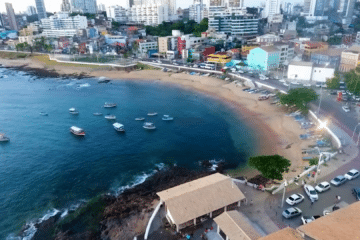
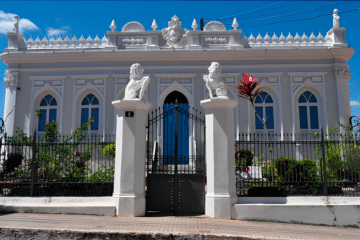
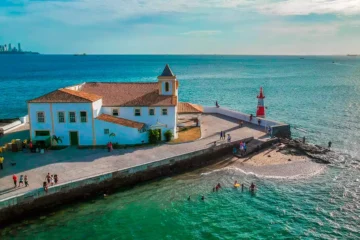
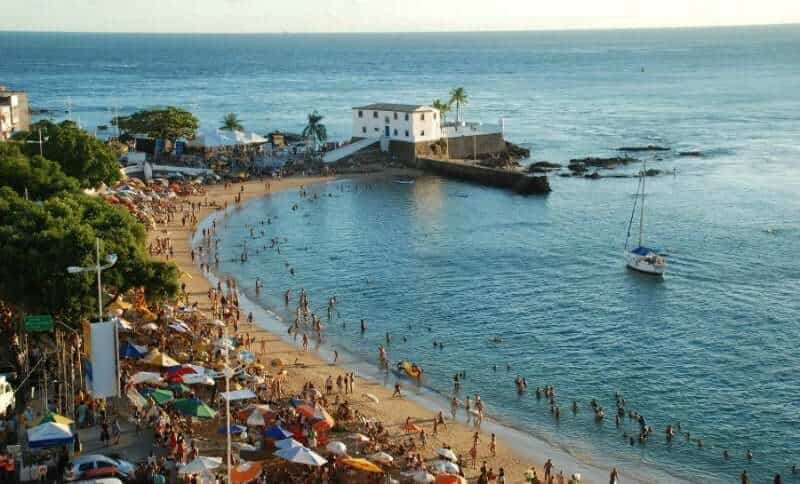
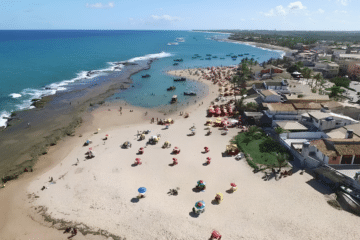
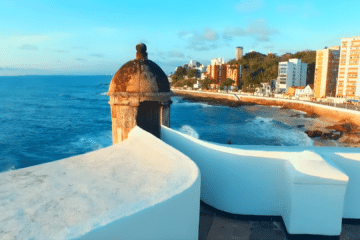
The history of Itaparica Island follows that of Brazil itself. As the largest island in the Baía de Todos os Santos (Bay of All Saints), Itaparica brings together a rich historical, cultural and natural heritage: from the Tupinambá settlement and the first European contacts to whaling, the Dutch invasion, the battles of Independence and, today, its tourism calling.
| Year | Event |
|---|---|
| Before 1500 | Island inhabited by Tupinambá peoples |
| 1552 | Tomé de Sousa grants the island as a sesmaria to D. Antônio de Ataíde, Conde da Castanheira |
| 1556 | The Capitania de Itaparica e Tamarandiva is created |
| 17th century | Igreja de São Lourenço and whaling stations |
| 1647 | Then, the Dutch occupy part of the island |
| 1711 | Construction of the Forte de São Lourenço |
| January 7, 1823 | Battle of Itaparica, during the Independence of Bahia |
| 1980 | Itaparica’s historic center listed by IPHAN |
Origins and first inhabitants
First of all, before the arrival of the Portuguese, the island was inhabited by Tupinambá peoples, who lived from fishing, hunting and farming. Then, in the early 16th century, the first contacts took place with European navigators entering the bay.
Later, over the course of that century, the first settlements took shape, with the presence of Jesuit missionaries. One example of this is the old church of Baiacu, now in ruins, one of the oldest buildings on the island.

Colonial period: the Capitania de Itaparica
Shortly after the founding of Salvador, in 1552, Governor-General Tomé de Sousa granted the islands of Itaparica and Matarandiba as a sesmaria (land grant) to D. Antônio de Ataíde, the Conde da Castanheira. Soon afterwards, in 1556, King D. João III turned these lands into the Capitania de Itaparica e Tamarandiva, which lasted until Independence in 1822.
At the same time, Diogo Álvares Correia, known as Caramuru, acted as a mediator between Indigenous peoples and colonizers throughout the bay region. For this reason, he is a central figure in the memory of the Capitania da Baía de Todos os Santos. Meanwhile, agrarian settlement, with land grants and sugar mills, shaped the island’s territory.

Economy: sugarcane, cattle and whaling
Over the centuries, the local economy included sugarcane farming, cattle raising and, most notably, whaling. In fact, from the 17th century onwards, the so-called whaling stations operated on the island, where the animals’ blubber was turned into oil for lighting.
The activity remained intense until the 19th century and, therefore, had a strong impact on the environment and the communities. Later on, artisanal fishing and tourism became the main economic activities.

The Dutch invasion
In 1647, during the wars against the Netherlands, Dutch troops led by Sigismund von Schkoppe occupied part of Itaparica. Soon after, at Ponta da Baleia, they built a small earthen fort, which withstood a Portuguese attack in October of that year.
However, the Dutch abandoned the island shortly afterwards and destroyed the fort as they withdrew to Recife. Later, in 1711, the Portuguese built the Forte de São Lourenço on the same site in order to strengthen the defense of the bay.
Itaparica and the Independence of Bahia
Thanks to its strategic position at the entrance to the bay, the island played a decisive role in the Independence of Bahia. Thus, on January 7, 1823, Brazilian forces stationed at the Forte de São Lourenço repelled an attack by Portuguese troops in what became known as the Battle of Itaparica.
First of all, the heroes of this episode include Tenente João das Botas (Lieutenant João das Botas), who commanded the Brazilian flotilla in the bay. In addition, local tradition celebrates Maria Felipa de Oliveira, a Black woman and shellfish gatherer who, according to accounts, led island residents against the Portuguese. To this day, January 7 is Itaparica’s main civic holiday.

Geography and administrative division
In short, Itaparica is the largest of the islands of the Baía de Todos os Santos and lies opposite Salvador, with regular ferry and speedboat crossings. Administratively, the island is divided between the municipalities of Itaparica, to the north, and Vera Cruz, which covers most of the territory.
In addition, the coastline features reefs, coves, beaches with natural pools, mangroves and stretches of Atlantic Forest.
Historic ensemble and heritage listing
First, in 1980, IPHAN (Brazil’s National Historic and Artistic Heritage Institute) listed the Architectural, Urban and Landscape Ensemble of Itaparica’s center, with its squares, streets, alleys and mansions. Before that, the Forte de São Lourenço had already been listed since 1938 and the Igreja de São Lourenço since 1952.
More recently, in 2020, the city government recognized the Fonte da Bica and the Capela de Nossa Senhora da Piedade as municipal cultural heritage. As a result, the historic ensemble guides the town’s preservation efforts.
Videos about the Beaches and History of Itaparica Island

Centro Histórico da Ilha de Itaparica10:31
7 Melhores praias de Vera Cruz22:57
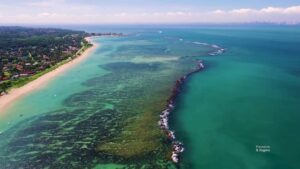
Praia da Penha na Ilha de Itaparica04:04
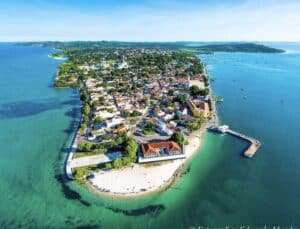
Guia de Turismo da ILHA DE ITAPARICA - Dicas13:18
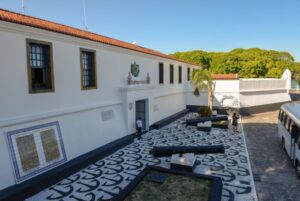
O BRASIL COMEÇOU NA ILHA DE ITAPARICA11:40
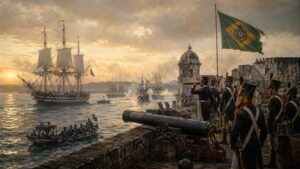
História da Ilha de Itaparica
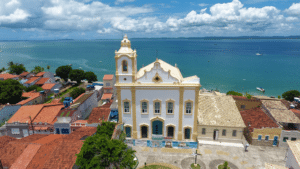
Ilha de Itaparica - Dicas de Viagem07:23
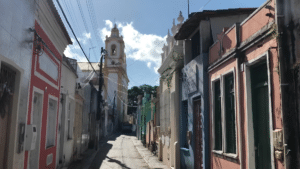
Ilha de Itaparica - Documentário26:02
To plan your trip, also see our complete guide to Itaparica Island, with beaches, how to get there and tips.
Monuments and heritage sites
In summary, Itaparica’s heritage inventory includes churches, forts, manor houses, fountains and ruins that tell centuries of the history of Itaparica Island. The main ones include:
Forts and churches
- Forte de São Lourenço – built in 1711 on the site of a former Dutch fort, it was the setting of the Battle of January 7, 1823. Moreover, it has been listed by IPHAN since 1938.
- Igreja Matriz do Santíssimo Sacramento – the main church in the center, with a collection of sacred art. For this reason, it is part of the ensemble listed in 1980.
- Igreja de São Lourenço – a 17th-century colonial church, among the oldest buildings on the island. It is also listed by IPHAN, since 1952.
- Capela Nossa Senhora do Bom Despacho – a historic chapel that is part of the local religious heritage.
Mansions, fountains, ruins and cultural spaces
- Historic townhouses and mansions – among them, the Solar d’el Rei and the 17th-century Sobrado Tenente João das Botas, which make up the preserved urban fabric.
- Fonte da Bica – built in 1842, it became a symbol of the town. Consequently, since 2020 it has been municipal cultural heritage.
- Ruins of the Igreja de Baiacu (Igreja do Senhor da Vera Cruz) – in Vera Cruz, the ruins stand out because the roots of large gameleira fig trees wrap around the walls.
- Igreja de Nossa Senhora da Penha – a historic church still in use, which is a religious landmark on the island.
- Biblioteca Juracy Magalhães Júnior and cultural spaces – the library, opened in 1968, is located in the historic center. Furthermore, the island preserves the memory of the writer João Ubaldo Ribeiro, born in Itaparica in 1941.
- Squares, streets and landscapes of the historic center – the preserved urban ensemble, with squares and churchyards that are also part of the listed heritage.


Beaches and nature
Today, the island has more than 40 km of coastline, with beaches of different kinds. For example, there are stretches with facilities and kiosks, more secluded coves, beaches with natural pools at low tide, and areas of mangrove and restinga (coastal scrub). In this way, the combination of historical heritage and nature lends itself to cultural and ecological itineraries.

Tourism and cuisine
Visitors will find guesthouses, restaurants and kiosks serving traditional Bahian cuisine, especially fish and seafood dishes, as well as the famous acarajé. Because the island is close to Salvador, it is easy to make either a day trip or a longer stay.
Practical tips
- Before your visit, check the opening hours and access conditions of churches, forts and cultural spaces.
- In addition, respect conservation areas such as mangroves, reefs and trails, and do not collect shells or corals.
- If possible, hire local guides to learn about the stories, figures and details of the heritage.
- Finally, plan your transportation and crossing times according to the season and tourist traffic.
Frequently asked questions about the history of Itaparica Island
What is the history of Itaparica Island?
The island was inhabited by the Tupinambá and, in 1556, became the Capitania de Itaparica e Tamarandiva. After that, it lived from sugarcane, cattle and whaling, was occupied by the Dutch in 1647 and played a decisive role in the Independence of Bahia in 1823.
What happened in Itaparica on January 7, 1823?
On that day, in short, Brazilian forces at the Forte de São Lourenço repelled a Portuguese attack in the Battle of Itaparica.
For this reason, January 7 is the town’s main civic holiday.
Who was Maria Felipa?
In fact, Maria Felipa de Oliveira is a popular heroine of Independence on the island.
According to local tradition, she was a shellfish gatherer and led residents against the Portuguese troops.
How do I get to Itaparica Island from Salvador?
Currently, there are regular crossings by ferry and by speedboat.
The travel time, however, varies depending on the departure point and the type of vessel.
Is Itaparica the largest island in the Baía de Todos os Santos?
Yes. In fact, Itaparica is the largest island in the bay and has an extensive coastline, with many beaches and coves.
What are the main historical sites?
Among others, the highlights are the Forte de São Lourenço, the Igreja de São Lourenço, the Igreja Matriz do Santíssimo Sacramento, the Solar d’el Rei, the Baiacu ruins and the Fonte da Bica.
In addition, the entire historic center has been listed by IPHAN since 1980.
Does the Fonte da Bica have medicinal properties?
Indeed, a local tradition attributes therapeutic properties to the water of the Fonte da Bica.
However, for health purposes, it is best to consult professionals and up-to-date technical analyses.

Publicações Relacionadas
Arembepe: beaches (Piruí, Praia do Canto), Hippie Village and the Tamar Project

Paranaguá Palace — History, architecture and visiting information | Ilhéus (BA)

São Jorge Parish Church in Ilhéus — history, architecture and religious art

History of the Convent and Church of Nossa Senhora da Piedade in Ilhéus

São Sebastião Cathedral (Ilhéus) — History, architecture and tourism
The 15 Most Visited and Well-Known Beaches in Bahia
The 3 most paradisiacal beaches in Bahia

Skydiving, Paragliding and Ballooning in Bahia

Historic Towns in Bahia: A Journey Through Time
Alcatrazes Archipelago: Secrets of Evolution Revealed
Jararaca-ilhoa: Endemic Species of Queimada Grande
Places to visit on the south coast of Bahia

História da Arte - Caracteristicas, Aspectos e Periodos
Tourist Attractions in Bahia: main attractions, beaches and cities

Subaúma, Bahia: where it is, things to do and where to stay
Massarandupió Naturist Beach, Bahia: Rules and Access
Beaches on the South Coast of Bahia: 10 Best and Tips
Towns and the Abrolhos Archipelago — The southernmost tip of Bahia

Baixio: Between lagoons, dunes and the charm of a village surrounded by nature
Best Beaches in Bahia: Your Guide to Paradise
Salinas da Margarida (BA) — Beaches, Attractions and a Complete Guide

Guarajuba Beach, Bahia: Natural Pools and Tips
Trindade and Martim Vaz: Discovering the Archipelago

Barra do Cahy: Brazil's first beach - history and nature

Garcez Beach: Discover Paradise in Jaguaripe

Barreiras: An Ecological Paradise in Bahia
Catabrigas Waterfall — A natural haven in Ibirajá, Itanhém (BA)

Serra Grande: Your Guide to Bahia's Paradise
Corumbau, Bahia: Ponta de Corumbau, beaches, map, how to go

Taipu de Fora: Discovering Natural Pools

Iguaí: A Guide to Waterfalls and Relaxation
Anchieta Island: History, Beaches, and Nature
Morro de São Paulo: Map, Beaches & How to Get There (2026)
Tourism in São Francisco do Conde (BA) — Tips and Attractions
Ponta do Boi Lighthouse: History and Significance
Marajó Archipelago: A Unique Ecological Paradise
This post is also on:
 Português
  English
  Deutsch
  Español
  Français