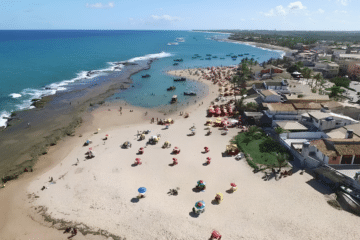
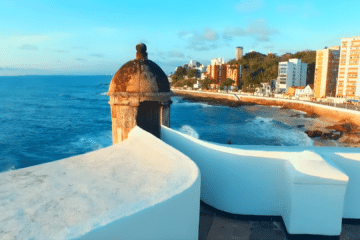
Madre de Deus is an island municipality in the Baía de Todos os Santos (Bay of All Saints), about 60 km from Salvador. Connected to the mainland by a bridge, it has calm-water beaches, a developed waterfront with a promenade and a bike path, and boat trips to neighboring islands. In addition, it preserves historic churches and a set of 19th-century houses.
- Where it is: at the far end of the Baía de Todos os Santos, next to Candeias and São Francisco do Conde.
- Is it an island? Yes, but it is connected to the mainland by a bridge, so you can get there by car.
- Distance: about 60 km from Salvador.
- Population: 18,504 inhabitants (IBGE 2022 Census).
- Beaches: Praia da Costa, Ponta do Suape and Praia do Cação.
- Trips: boats to Ilha de Maria Guarda, Ilha das Vacas and other islands in the bay.

Where Madre de Deus is and how to get there
In fact, the island lies about 100 meters from the mainland, at the far end of the bay. Since the 1950s, when Petrobras set up its maritime terminal there, a bridge has connected it to Candeias. Therefore, access is by car or bus.
- From Salvador: it is about 60 km via the BR-324 and the Candeias road; the trip takes from 45 minutes to 1h30, depending on traffic.
- Maritime terminal: boats to the neighboring islands leave from here; so check the schedules before you go.

Video about Madre de Deus

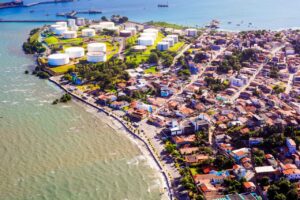
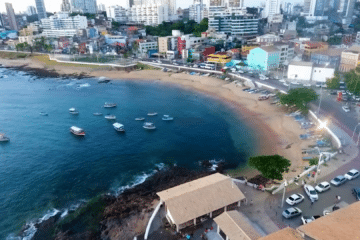
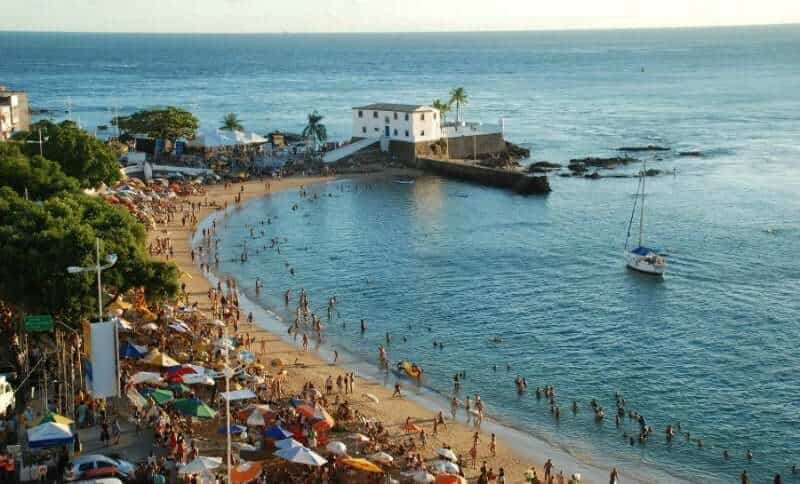
Beaches and waterfront of Madre de Deus
The urban waterfront stretches for about 3.5 km, with a promenade, a bike path and standardized beach kiosks. As a result, it is the city’s main meeting point, especially in the late afternoon.
Praia da Costa
Praia da Costa is the most famous, with calm water, and it is great for swimming and for walks along the promenade. That is why it is the favorite of families.
Ponta do Suape
Ponta do Suape, on the other hand, has rougher waters and, therefore, appeals to those who prefer a livelier sea.
Praia do Cação
Surrounded by mangroves, Praia do Cação attracts, above all, people who love nature and enjoy watching birds and crabs.

Islands and boat trips
In addition, boats to the neighboring islands leave from the maritime terminal. This way, you can take day trips around the bay.
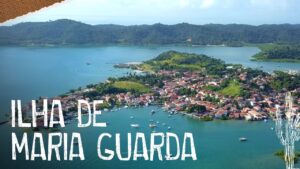
- Ilha de Maria Guarda: a small island that belongs to the municipality, with quiet beaches.
- Ilha das Vacas: part of it is private property; therefore, check access before you go.
- Coroa do Capeta: a sandbank that appears at low tide.
- Islands of Salvador: there are also crossings to Ilha de Maré, Ilha dos Frades, with Paramana beach, and Ilha de Bom Jesus dos Passos.

Churches and historical heritage
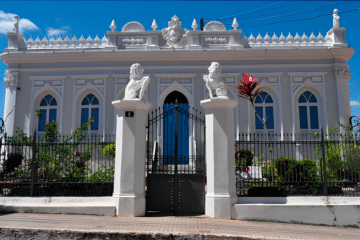
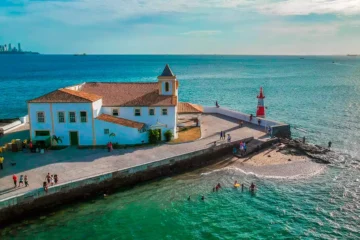
First of all, the main monument is the Igreja Matriz de Nossa Senhora de Madre de Deus, on top of a hill, with a lookout over the bay. Besides this church, the Igreja Sagrada Família and the 19th-century houses, which preserve the old atmosphere of the city, are also worth a visit.


History of Madre de Deus
According to the IBGE, the island was originally called Ilha dos Cururupebas, in honor of a tupinambá chief who resisted the colonizers. Later, in 1696, the district of Madre de Deus do Boqueirão was created.
Throughout the 20th century, the place belonged to São Francisco do Conde and, later, to Salvador. In the 1950s, the arrival of the Petrobras terminal brought the bridge and changed the local economy. Finally, state law no. 5,016 of June 13, 1989 created the municipality, which was installed on January 1, 1990.
Today, the economy revolves around the maritime terminal, artisanal fishing and tourism. To get to know the neighboring region, also see São Francisco do Conde.
Food and handicrafts
The local cuisine is, above all, based on seafood, and caldo de sururu (mussel broth) is the typical delicacy. Meanwhile, local handicrafts include renda de bilro (bobbin lace), tapestries, miniature boats and pieces made of wood and shells.
Practical tips
- Bring cash for kiosks and the islands.
- Check boat schedules at the maritime terminal, since they depend on the tide.
- Don’t step on the mangroves, take your trash with you and, if possible, use biodegradable sunscreen.
Frequently asked questions about Madre de Deus
Where is Madre de Deus?
It is in the Baía de Todos os Santos, about 60 km from Salvador, next to Candeias.
In other words, at the far end of the bay, near the Recôncavo.
Is Madre de Deus an island?
Yes. However, it has been connected to the mainland by a bridge since the 1950s.
That is why you can get there by car.
Does Madre de Deus have beaches?
Yes, the main ones are Praia da Costa, Ponta do Suape and Praia do Cação.
In addition, there are beaches on the neighboring islands.
How long does it take to get from Salvador to Madre de Deus?
By car, between 45 minutes and 1h30, depending on traffic.
There are also intercity buses.
Can you visit the islands on the same day?
Yes, there are day trips from the maritime terminal.
Even so, check the schedules with the boatmen.

Publicações Relacionadas
Arembepe: beaches (Piruí, Praia do Canto), Hippie Village and the Tamar Project

Paranaguá Palace — History, architecture and visiting information | Ilhéus (BA)

São Jorge Parish Church in Ilhéus — history, architecture and religious art

History of the Convent and Church of Nossa Senhora da Piedade in Ilhéus

São Sebastião Cathedral (Ilhéus) — History, architecture and tourism
The 15 Most Visited and Well-Known Beaches in Bahia
The 3 most paradisiacal beaches in Bahia

Skydiving, Paragliding and Ballooning in Bahia

Historic Towns in Bahia: A Journey Through Time
Places to visit on the south coast of Bahia

História da Arte - Caracteristicas, Aspectos e Periodos
Tourist Attractions in Bahia: main attractions, beaches and cities

Subaúma, Bahia: where it is, things to do and where to stay
Massarandupió Naturist Beach, Bahia: Rules and Access
Beaches on the South Coast of Bahia: 10 Best and Tips
Towns and the Abrolhos Archipelago — The southernmost tip of Bahia

Baixio: Between lagoons, dunes and the charm of a village surrounded by nature
Best Beaches in Bahia: Your Guide to Paradise
Salinas da Margarida (BA) — Beaches, Attractions and a Complete Guide

Guarajuba Beach, Bahia: Natural Pools and Tips

Barra do Cahy: Brazil's first beach - history and nature

Garcez Beach: Discover Paradise in Jaguaripe

Barreiras: An Ecological Paradise in Bahia
Catabrigas Waterfall — A natural haven in Ibirajá, Itanhém (BA)

Serra Grande: Your Guide to Bahia's Paradise
Corumbau, Bahia: Ponta de Corumbau, beaches, map, how to go

Taipu de Fora: Discovering Natural Pools

Iguaí: A Guide to Waterfalls and Relaxation
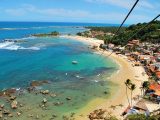
Morro de São Paulo: Map, Beaches & How to Get There (2026)
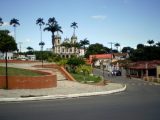
Tourism in São Francisco do Conde (BA) — Tips and Attractions
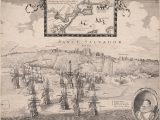
Todos-os-Santos Bay (Bahia) — History, geography and conservation
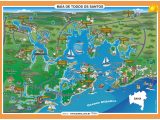
Todos os Santos Bay — Nature, History and Water-based Tourism
Bay of Todos os Santos: nature, history and cultur

Rafting in Taboquinhas: The Ultimate Adventure Guide
Abseiling Sites in Bahia: Top Locations to Explore

Diving Spots in Bahia: Discover Underwater Treasures
This post is also on:
 Português
  English
  Deutsch
  Español
  Français