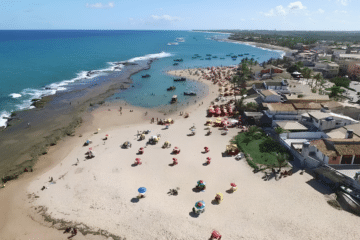
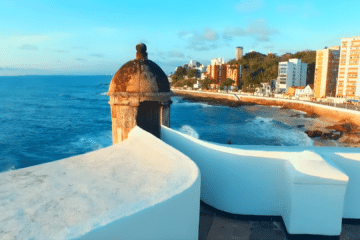
Santo Amaro, situated in the Recôncavo Baiano, is a town rich in history, culture and traditions. The settlement dates back to the 16th century (c. 1557), having initially been established on the banks of the Traripe River and subsequently expanding along the Subaé River.
Over the centuries, Santo Amaro (also known as Santo Amaro da Purificação) has seen its economic and architectural development strongly influenced by the sugar cane cycle, which spurred the establishment of sugar mills and trading posts in the region.
As well as being the birthplace of important cultural traditions, such as the samba-de-roda of the Recôncavo, Santo Amaro preserves its roots through traditional religious festivals, most notably the festival of Nossa Senhora da Purificação (2 February).
The city was also home to Claudionor “Dona Canô” Velloso (1907–2012), mother of the singers Caetano Veloso (b. 1942) and Maria Bethânia (b. 1946), both of whom were born in Santo Amaro.
Historical overview
The original settlement dates back to the 16th century and was established on the banks of the Traripe and Subaé rivers. Between the 17th and 19th centuries, the region was home to many sugar mills (records mention around 61 mills in the mid-18th century) and served as a trading post for the Recôncavo region. In 1837, the town was granted city status.
In the 19th century, steam navigation linked Santo Amaro to Salvador, and the city faced outbreaks of epidemics, such as cholera in 1855.

Video about Santo Amaro, Bahia

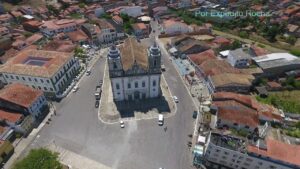
História de Santo Amaro da Purificação BA07:08

Santo Amaro da Purificação na Bahia05:00
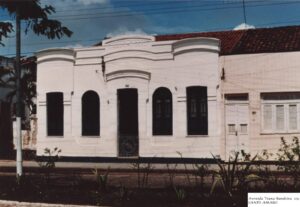
Casa de Dona Canô02:51
Architectural and religious heritage
1. Parish Church of Our Lady of the Purification
The Parish Church of Nossa Senhora da Purificação is the main architectural and religious landmark in Santo Amaro; the main body of the building was constructed in the early 18th century (c. 1700) and the interior is adorned with Portuguese tiles and oil paintings on wood attributed to artists of the colonial period, such as José Joaquim da Rocha.
The feast of the patron saint, celebrated on 2 February with a novena and processions, brings the local community together in rituals that combine devotion and folklore — notably the traditional washing of the steps by hundreds of Baianas using scented water, a ceremony with strong popular appeal that is reminiscent of rites such as the Lavagem do Bonfim.


2. Church of Our Lady of the Rosary
The chapel/church has colonial origins and, according to IPHAN’s inventory records, the Chapel of the Rosary was completed in 1755; reports indicate that the building dates back to the 18th century, forming part of the town’s religious complex and representing the devotional brotherhoods that shaped local community life.

Popular culture
The samba-de-roda of the Recôncavo, a tradition recognised by UNESCO, has a strong presence in Santo Amaro and the district of São Braz. The religious festivals — particularly that of Nossa Senhora da Purificação (2 February) — combine religious rites with local folklore; a highlight is the ritual in which the baianas wash the church steps.
Famous People
Dona Canô (Claudionor Viana Teles Velloso) is a local cultural icon; her children Caetano Veloso and Maria Bethânia are leading figures in Brazilian music, with roots in and a strong emotional connection to Santo Amaro.
Main tourist attractions
1. Museum of the Recollection of the Humble
The church houses a valuable collection of 19th-century furnishings and works of religious art, some of which date back to the 17th century and once belonged to sugar mill chapels.

2. Dona Canô’s House
The home of Claudionor Viana Telles Velloso, the matriarch of the family of Caetano Veloso and Maria Bethânia, is a place of interest that preserves the memory of the local culture.

3. Santa Casa de Misericórdia

The Santa Casa de Misericórdia de Santo Amaro, the construction of which began in 1778 and which underwent extensions throughout the 19th century, is now home to the Nossa Senhora da Natividade Hospital; recognised as a building of historical significance, the institution combines its role in providing charitable care with its architectural importance to the urban heritage of Santo Amaro.
4. Santo Amaro Town Hall and Prison
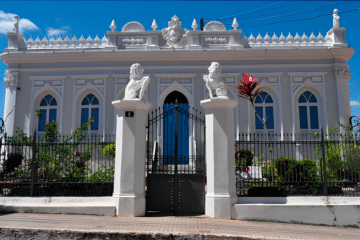
The Santo Amaro Town Hall and Prison, a building dating from the colonial period which served as both the town hall and the local prison, forms part of the historic quarter of the town centre and illustrates the administrative and judicial organisation of colonial Brazil; it has been preserved as part of the town’s architectural heritage.
Santo Amaro Town Hall and Prison
5. The fountain in Praça da Purificação
The fountain known as the Chafariz da Praça da Purificação, dating from the 18th century, forms part of the urban and landscape ensemble of the historic centre of Santo Amaro; it originally served as a public water supply and an urban ornament, reflecting colonial design and hydraulic infrastructure, and is now part of the municipal heritage.

6. Rio Subaé
The river is an important natural landmark of the city, on the banks of which settlements and farms sprang up, driving the local economy during the sugar-cane boom.
7. Paths of Samba-de-Roda
Santo Amaro is one of the birthplaces of authentic samba-de-roda, and you can experience performances of this cultural heritage, particularly in the São Braz District, with traditional groups such as Samba Chula de João do Boi.
8. Urubu Waterfall
The waterfall, which is 38 metres high, has five cascades.
Access is permitted only when accompanied by accredited guides from the Department of Culture, who can be contacted to arrange a visit.

Responsible tourism — practical tips
- Hire accredited local guides for hiking trails and waterfalls.
- Please respect religious rituals; ask for permission before taking photographs at ceremonies.
- Check the opening hours of museums and churches and confirm whether they are open on public holidays.
- Best time to visit: the drier months (May to September) for hiking and visiting waterfalls.
- Check the river’s water quality before going for a swim — some sections have already experienced environmental problems.
FAQ — Quick questions
When was Santo Amaro founded?
It originated around 1557; its growth and consolidation took place in the following centuries.
Why is it culturally important?
For its colonial architectural heritage, religious traditions, samba-de-roda (Intangible Cultural Heritage) and local cultural figures.
Can I visit Dona Canô’s house?
There are some tours and events taking place, but please check with the town hall or local tourist attractions before planning your visit.
How do you visit Urubu Waterfall?
Access is via a country road; a local guide, suitable footwear and checking the weather conditions and obtaining prior authorisation are recommended.

Publicações Relacionadas
Arembepe: beaches (Piruí, Praia do Canto), Hippie Village and the Tamar Project

Paranaguá Palace — History, architecture and visiting information | Ilhéus (BA)

São Jorge Parish Church in Ilhéus — history, architecture and religious art

History of the Convent and Church of Nossa Senhora da Piedade in Ilhéus

São Sebastião Cathedral (Ilhéus) — History, architecture and tourism
The 15 Most Visited and Well-Known Beaches in Bahia

The 3 most paradisiacal beaches in Bahia

Skydiving, Paragliding and Ballooning in Bahia

Historic Towns in Bahia: A Journey Through Time
Places to visit on the south coast of Bahia

História da Arte - Caracteristicas, Aspectos e Periodos
Tourist Attractions in Bahia: main attractions, beaches and cities

Subaúma, Bahia: where it is, things to do and where to stay

Massarandupió Naturist Beach, Bahia: Rules and Access

Beaches on the South Coast of Bahia: 10 Best and Tips
Towns and the Abrolhos Archipelago — The southernmost tip of Bahia

Baixio: Between lagoons, dunes and the charm of a village surrounded by nature
Best Beaches in Bahia: Your Guide to Paradise
Salinas da Margarida (BA) — Beaches, Attractions and a Complete Guide

Guarajuba Beach, Bahia: Natural Pools and Tips

Barra do Cahy: Brazil's first beach - history and nature

Garcez Beach: Discover Paradise in Jaguaripe

Barreiras: An Ecological Paradise in Bahia
Catabrigas Waterfall — A natural haven in Ibirajá, Itanhém (BA)

Serra Grande: Your Guide to Bahia's Paradise
Corumbau, Bahia: Ponta de Corumbau, beaches, map, how to go

Taipu de Fora: Discovering Natural Pools

Iguaí: A Guide to Waterfalls and Relaxation
Morro de São Paulo: Map, Beaches & How to Get There (2026)
Tourism in São Francisco do Conde (BA) — Tips and Attractions

Todos-os-Santos Bay (Bahia) — History, geography and conservation
Todos os Santos Bay — Nature, History and Water-based Tourism
Bay of Todos os Santos: nature, history and cultur

Rafting in Taboquinhas: The Ultimate Adventure Guide

Abseiling Sites in Bahia: Top Locations to Explore

Diving Spots in Bahia: Discover Underwater Treasures
This post is also on:
 Português
  English
  Deutsch
  Español
  Français