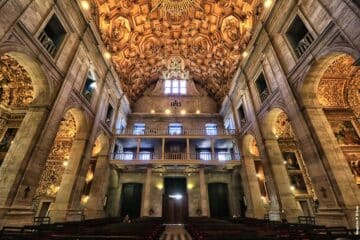
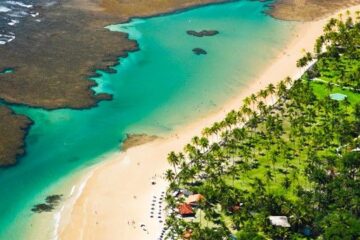
Salvador, Brazil’s first capital, is a city marked by its rich history, vibrant culture and impressive architecture.
Salvador’s tourist attractions and architectural heritage reflect the diversity of influences that have shaped the city over the centuries, from Portuguese colonisation to its Afro-Brazilian heritage.
Salvador has countless tourist attractions, architectural heritage, attractions such as beaches, historical sites, music and religious sites.
Salvador is one of the most beautiful and visited cities in Brazil.

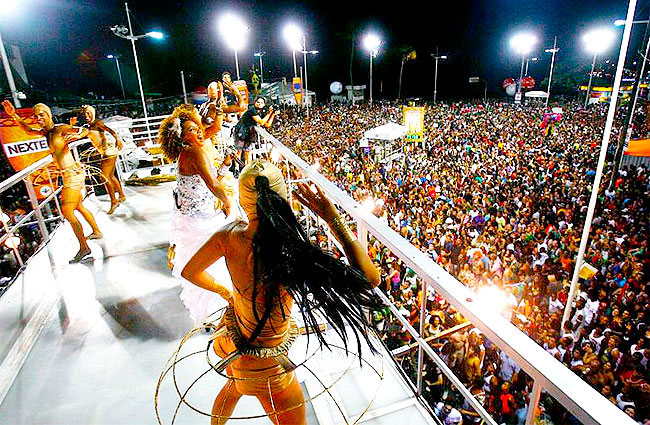
Salvador offers countless attractions and tourist spots for all tastes: beaches and natural beauty, historical sites from the beginning of Brazilian colonisation, lots of music, typical cuisine, religion, capoeira and the largest carnival in the world.
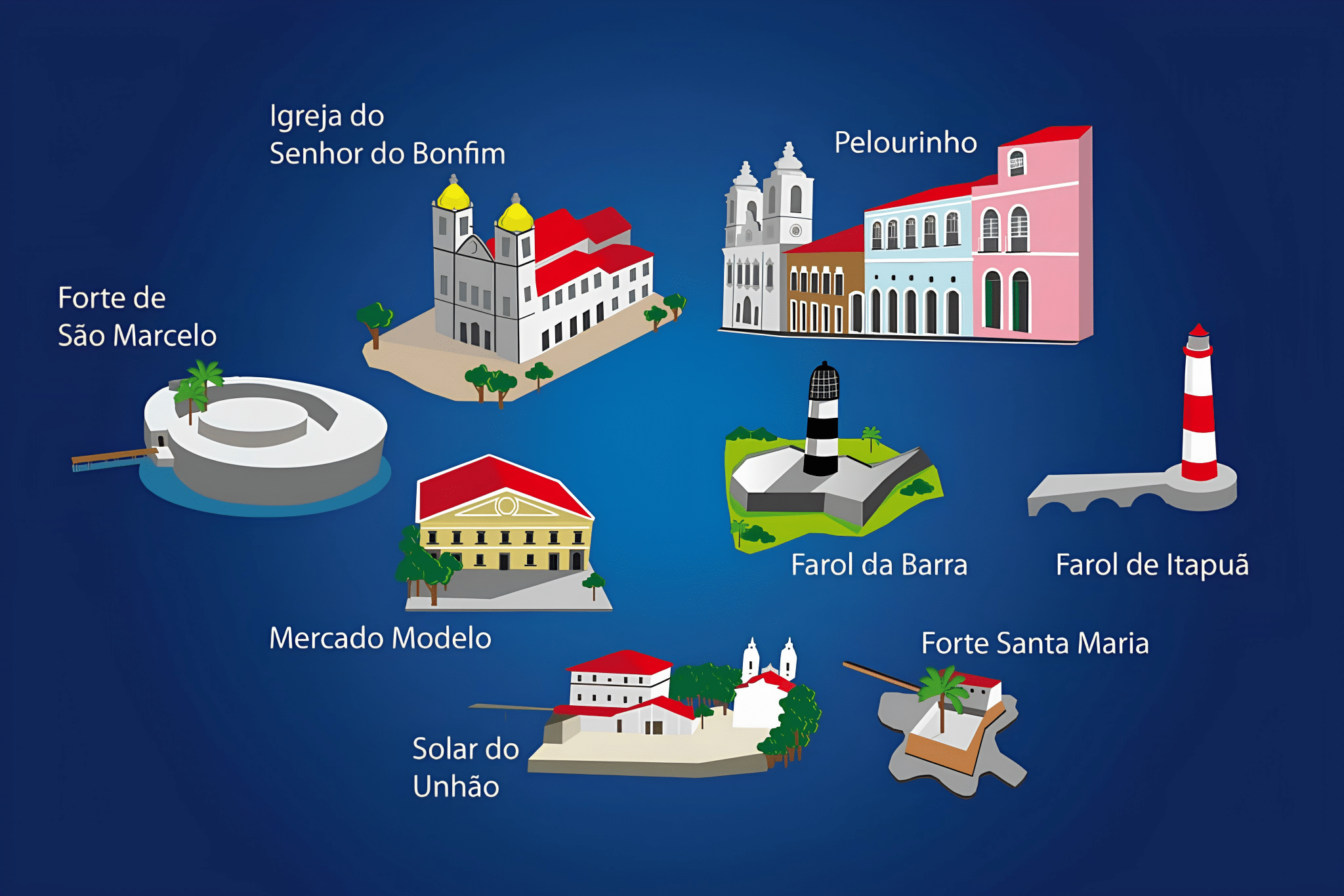
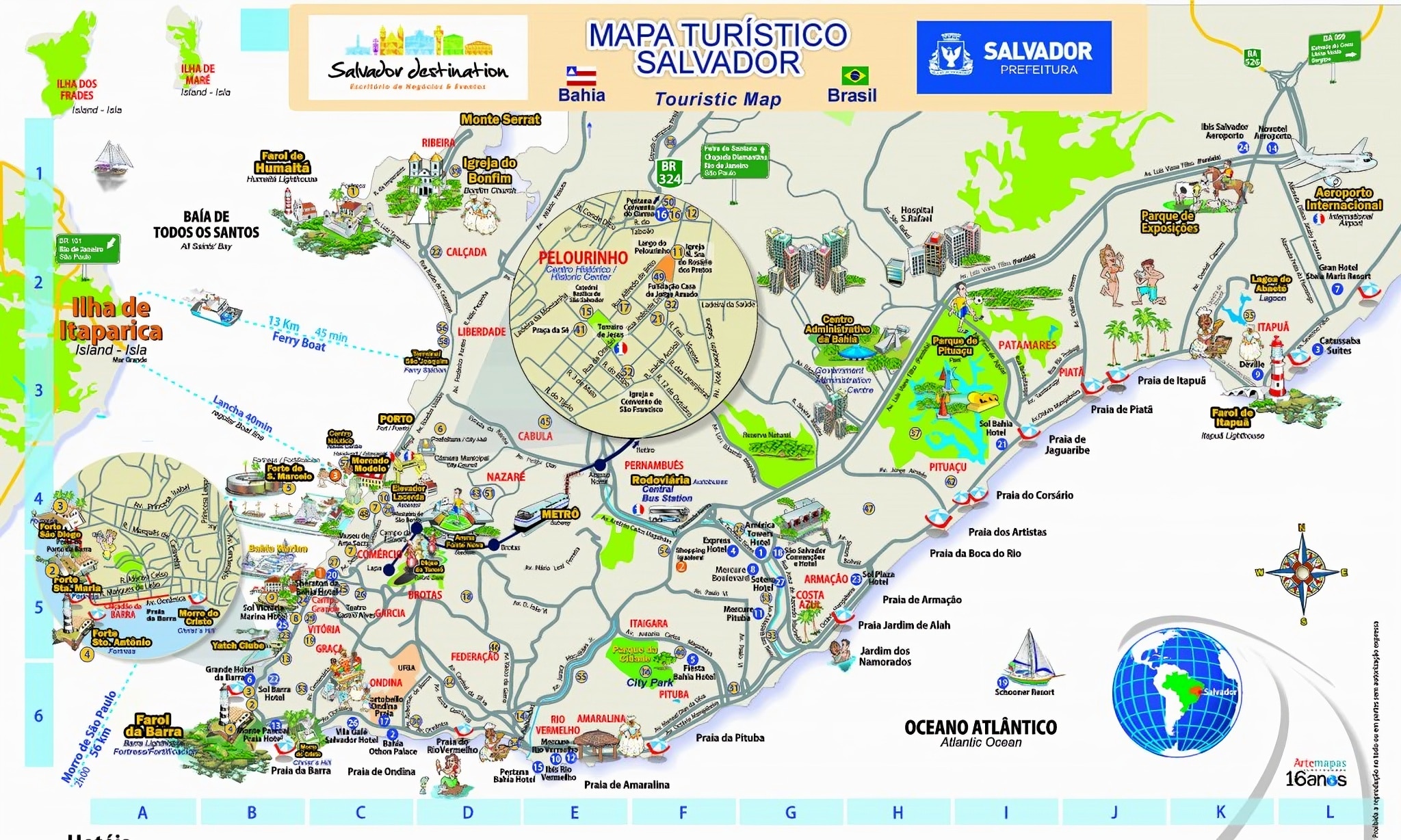
It is impossible to think of Salvador without immediately remembering places such as the Lacerda Elevator, the Barra Lighthouse, the Modelo Market, Pelourinho and the Church of Senhor do Bonfim.
It is no wonder that Salvador is known as the Capital of Joy, as the city is very welcoming to all who visit, welcoming visitors from all over the world with many smiles and offering the best and most surprising itineraries.
The mixture of races, faiths and colours has created a unique culture in Salvador, which is present in all parts of the city throughout the year and can be enjoyed in its many different forms, such as capoeira, candomblé, percussion, dances and carnival.

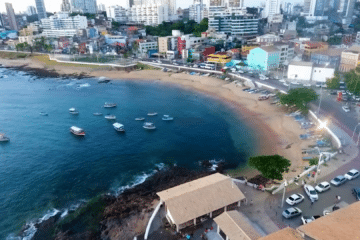
Salvador is one of the sunniest cities in the world, with an ideal climate for its 50 kilometres of beaches, divided between the Upper City and the Lower City, bathed by the waters of the Atlantic Ocean and the Bay of All Saints.
For this reason, Salvador offers the possibility of a deep immersion in time and its historical events.

Os mais importantes pontos turísticos de Salvador BA06:50

Barra e Pelourinho em Salvador da Bahia02:33
Centro Histórico de Salvador da Bahia04:13
Guia Turístico de Salvador33:46
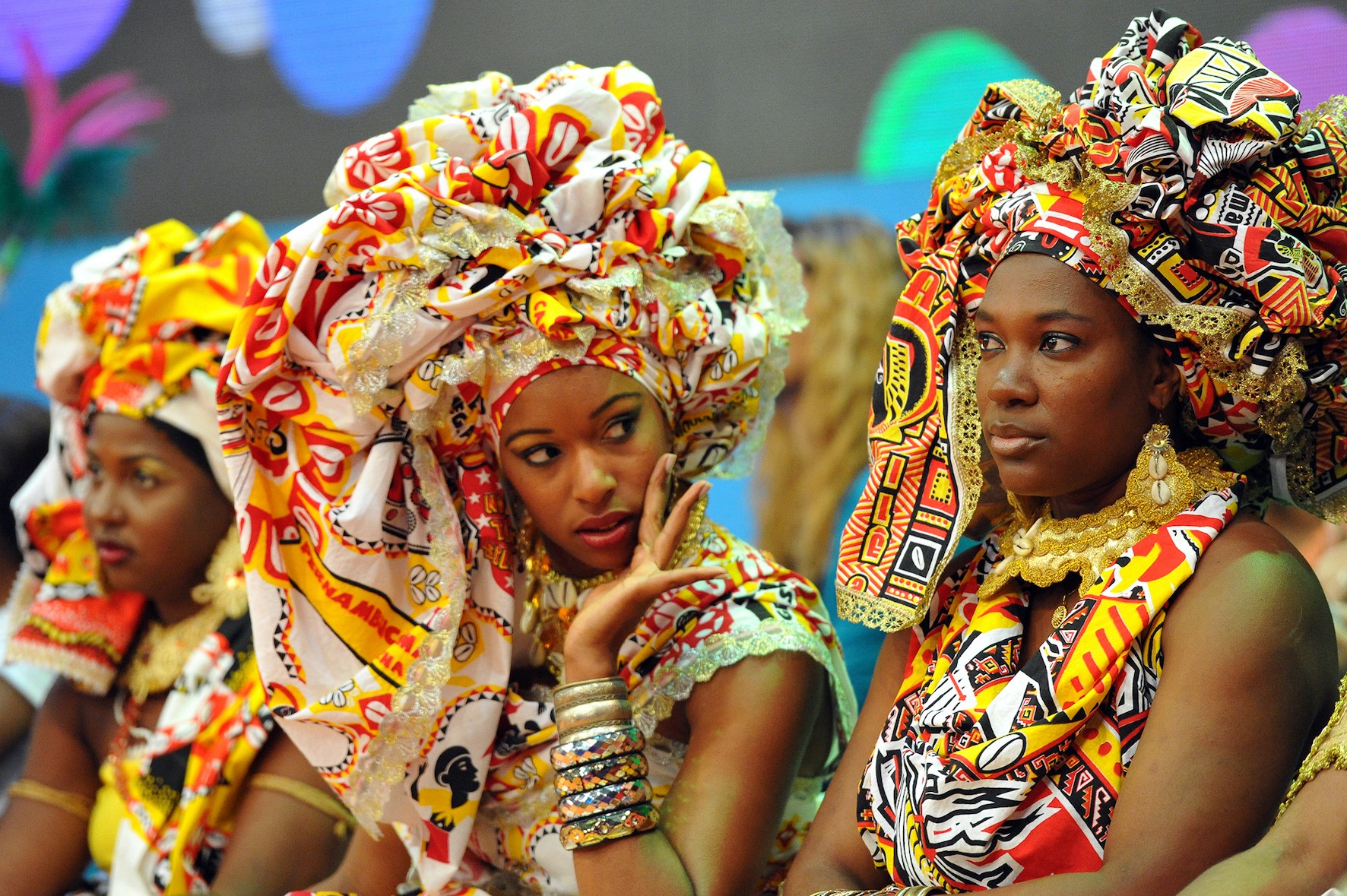
Guia Turístico Detalhado - Salvador28:00

A Fundação de Salvador - Praça Tomé de Souza
5 Atrações Incríveis no Pelourinho em Salvador03:37
Tourist Attractions and Architectural Heritage of Salvador
Discover the tourist attractions of Salvador, Bahia. Explore beaches, historical sites, music, religion and more.
1. Historic Centre of Salvador – Upper Town
1.1. Pillory
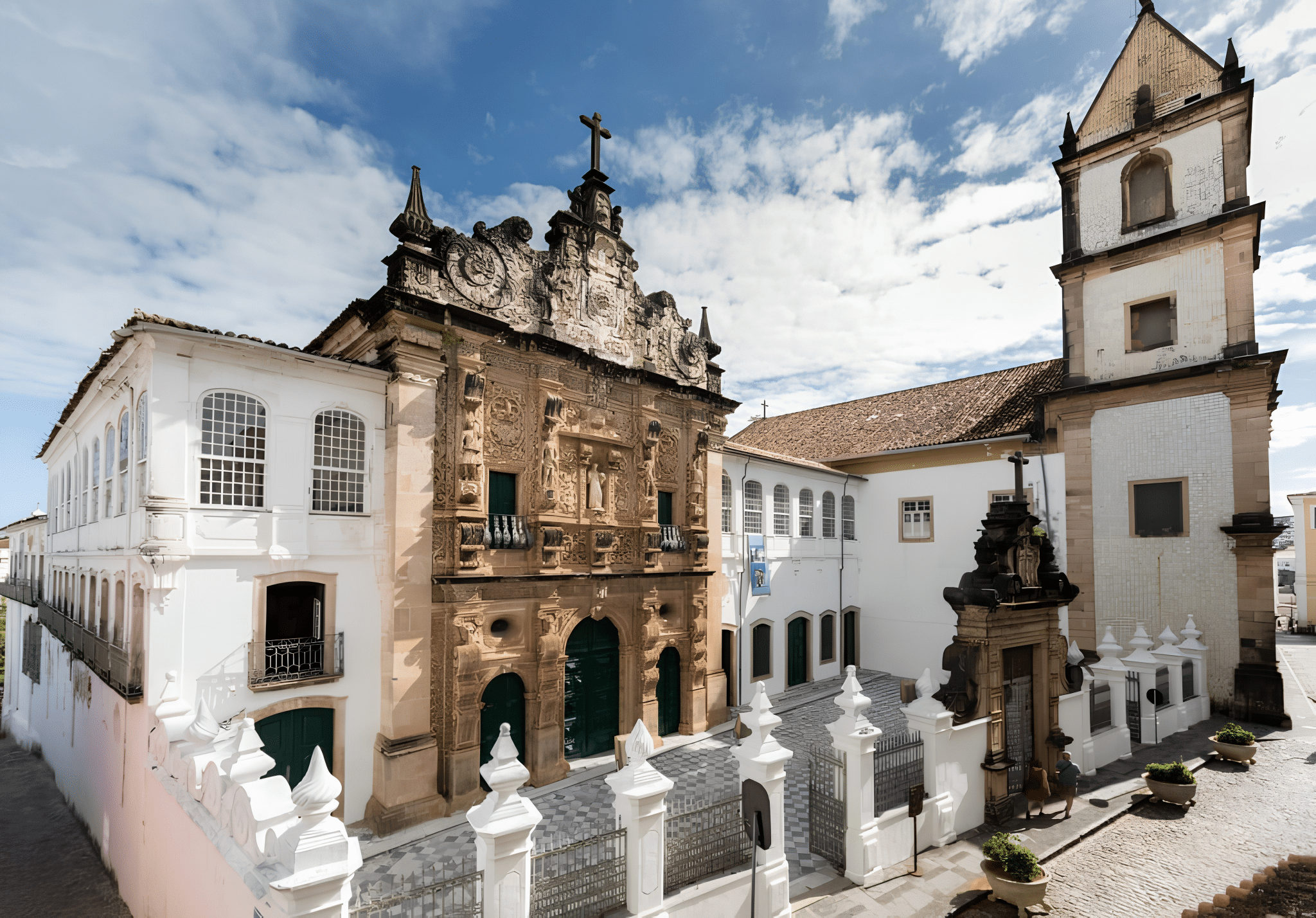
- Church of the Third Order of Saint Francis
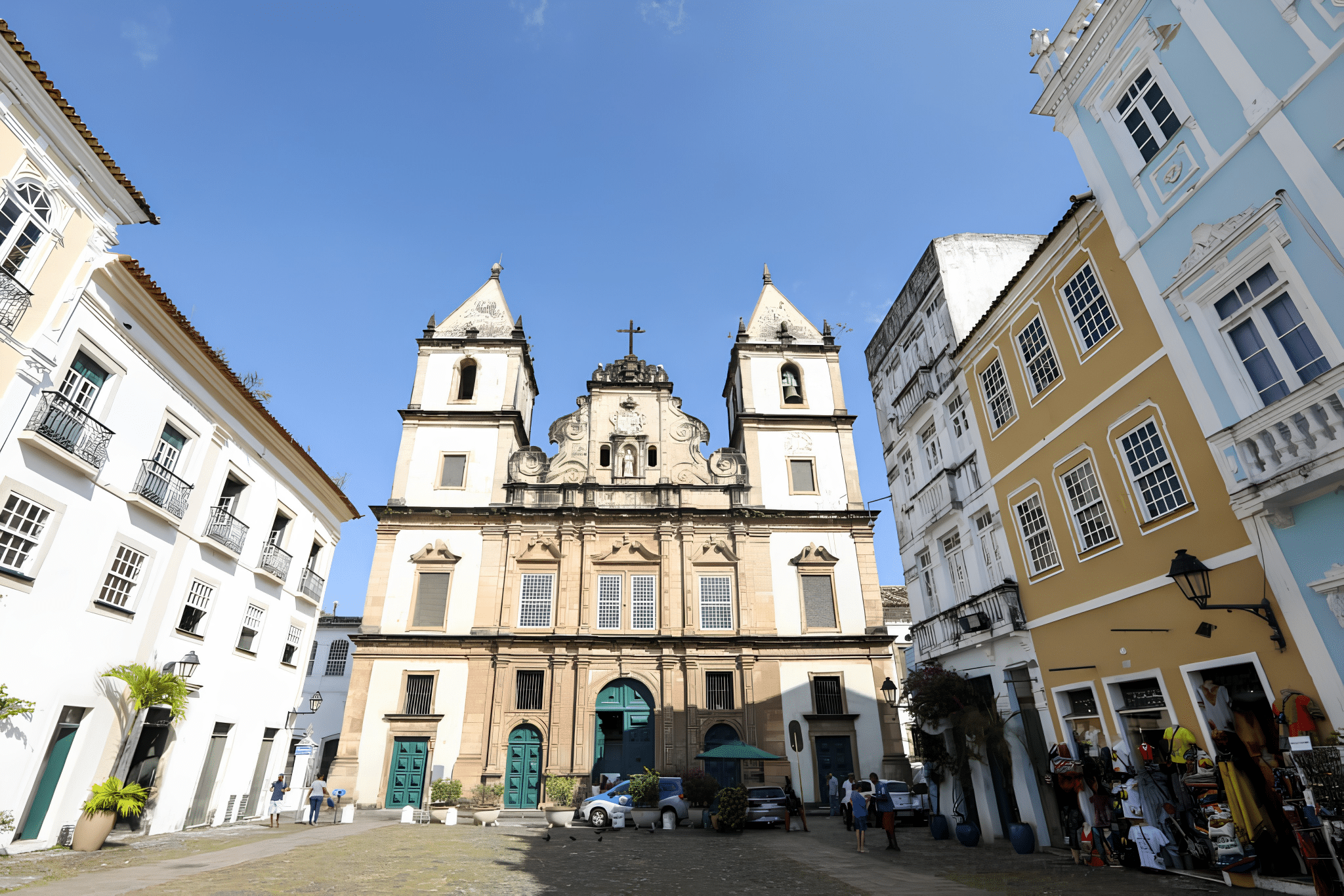
- Church of Saint Francis
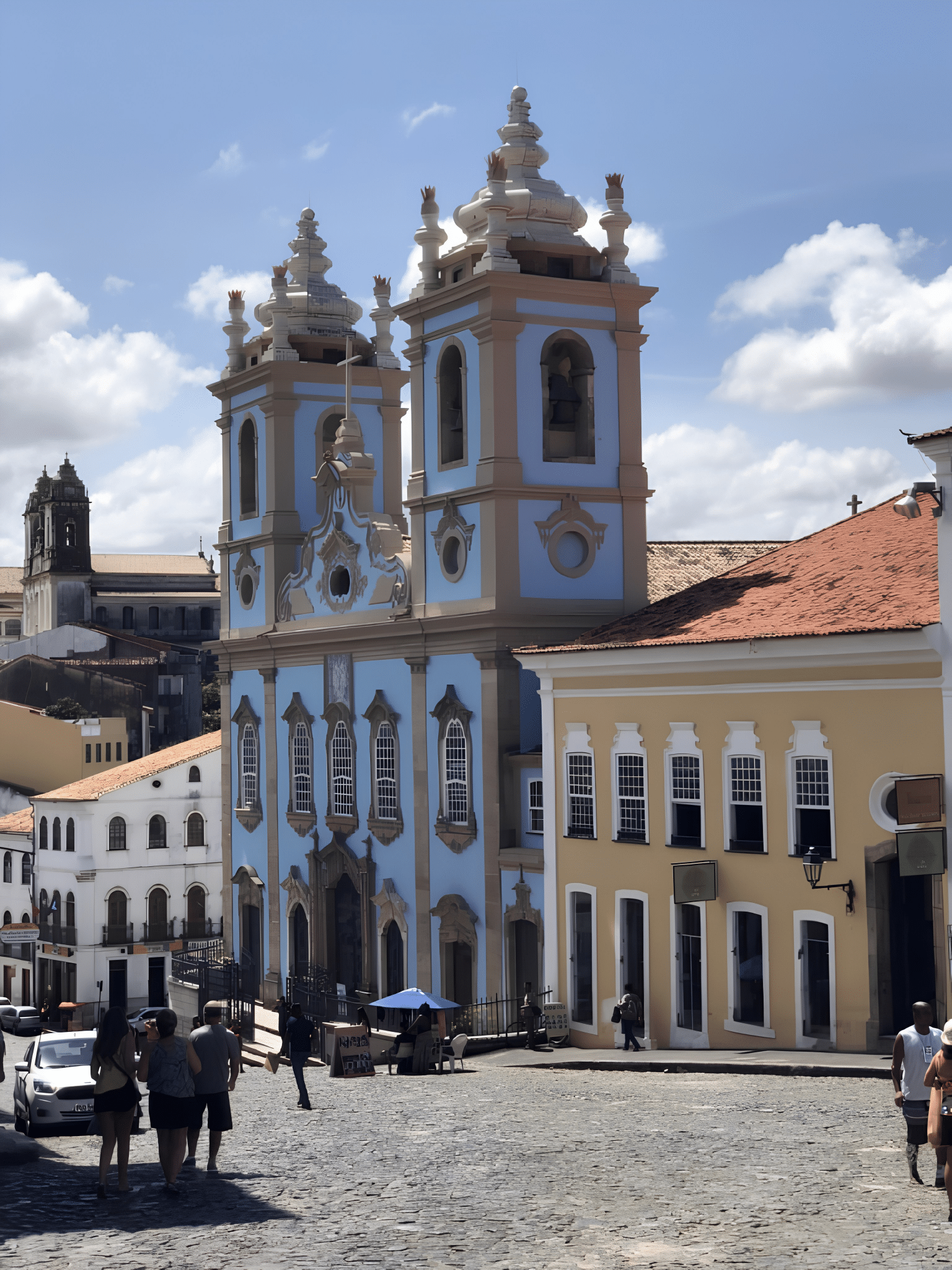
- Church of the Black Rosary
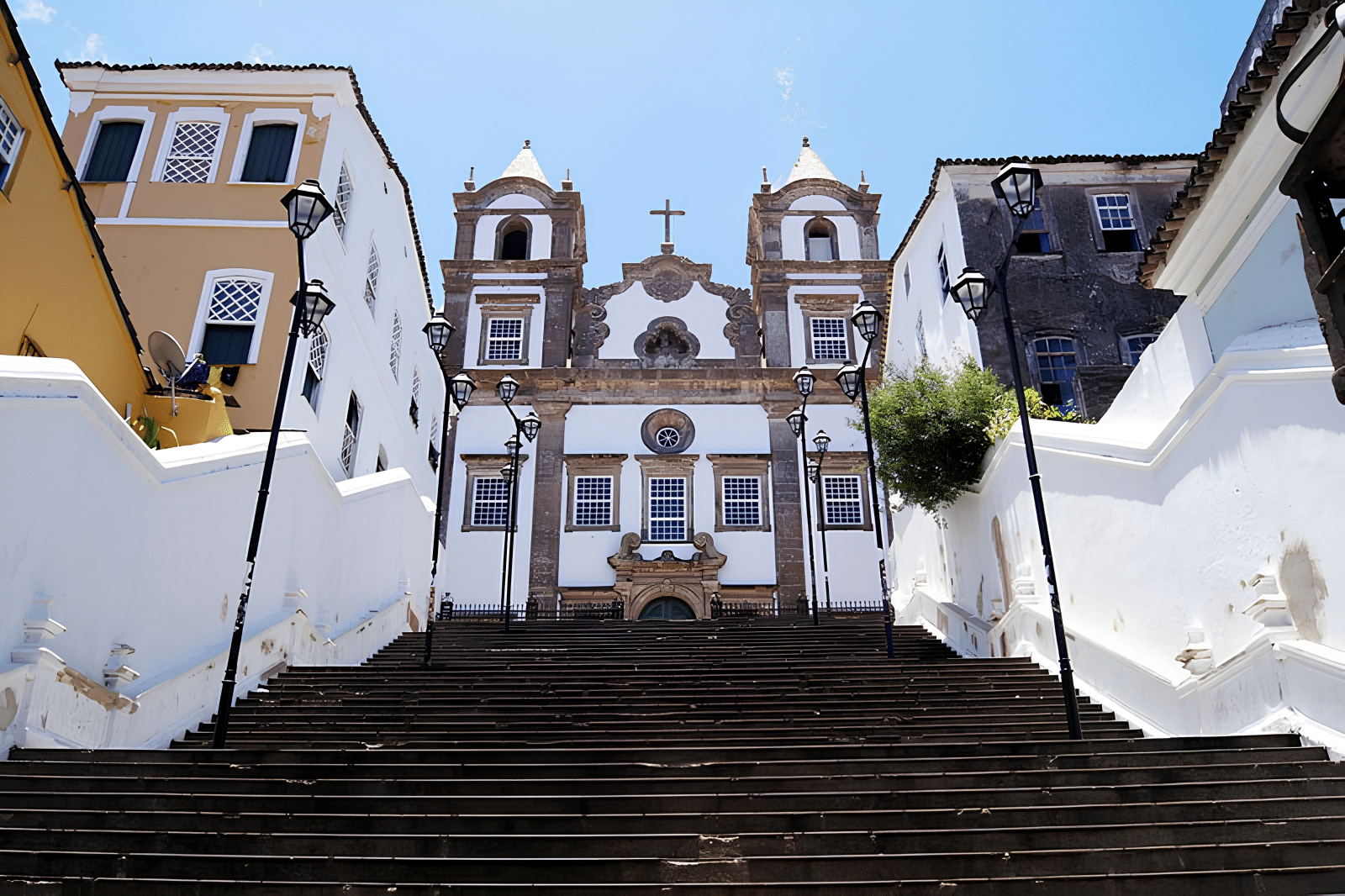
- Church of the Passo
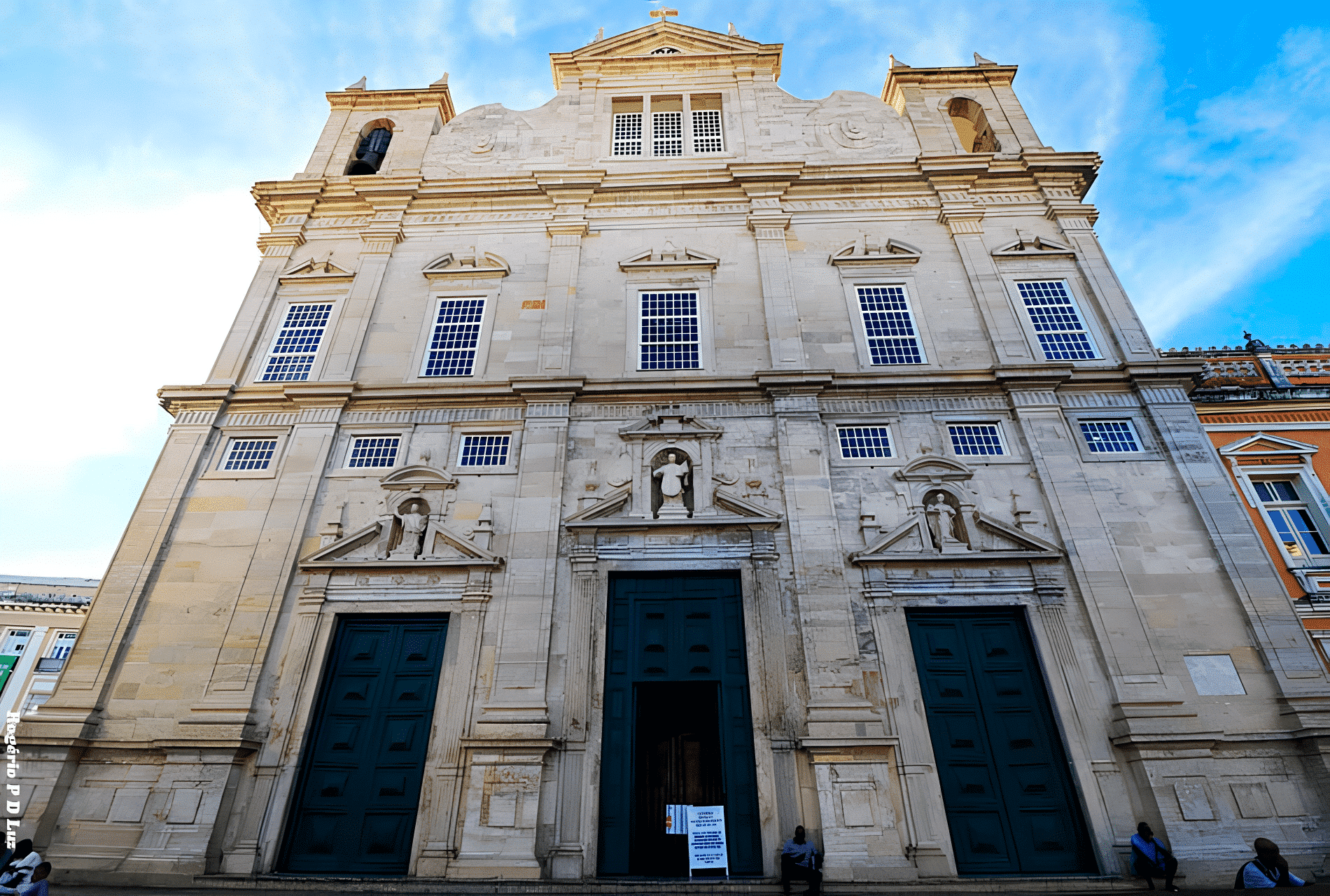
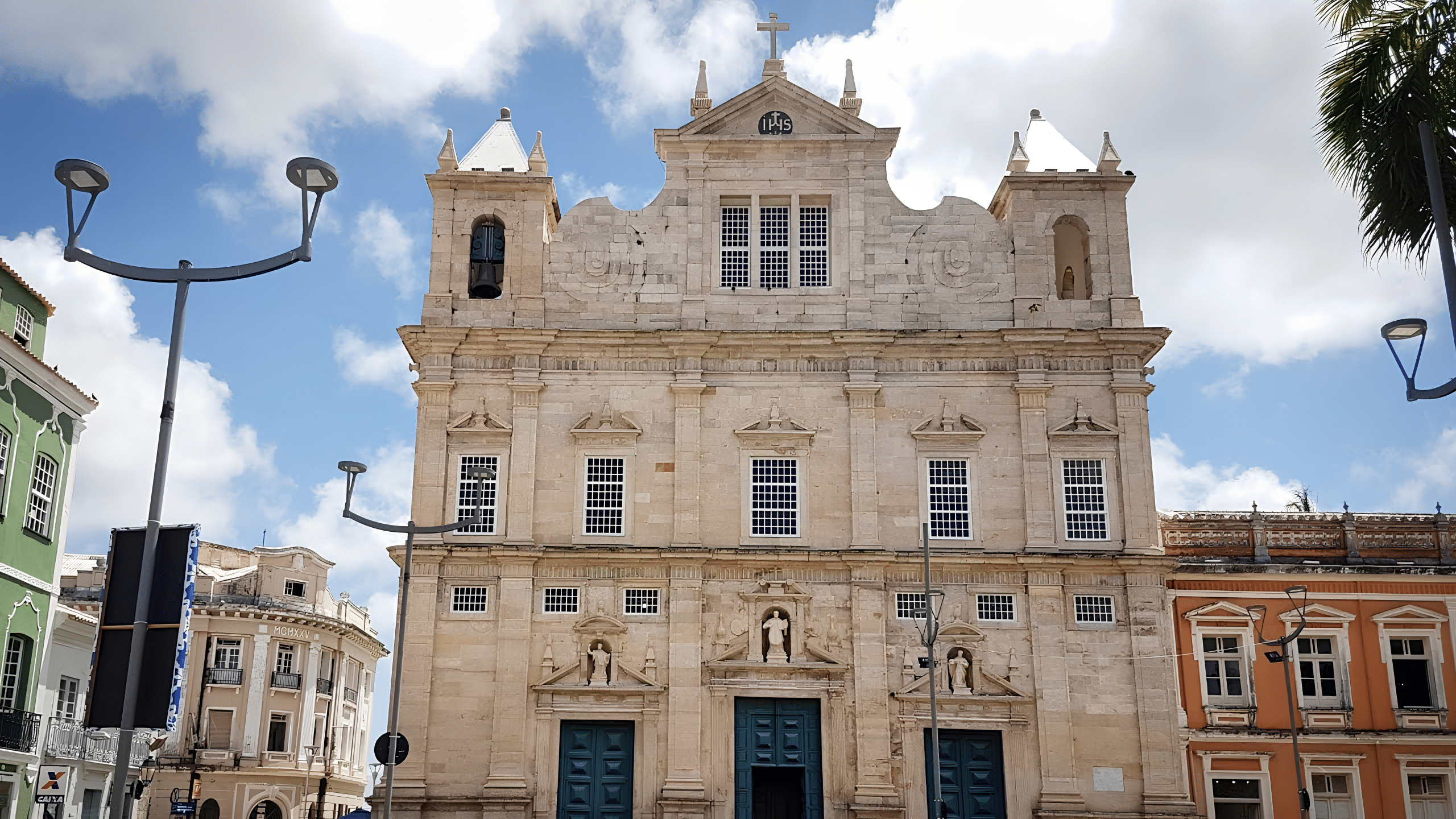
- Basilica Cathedral of Salvador
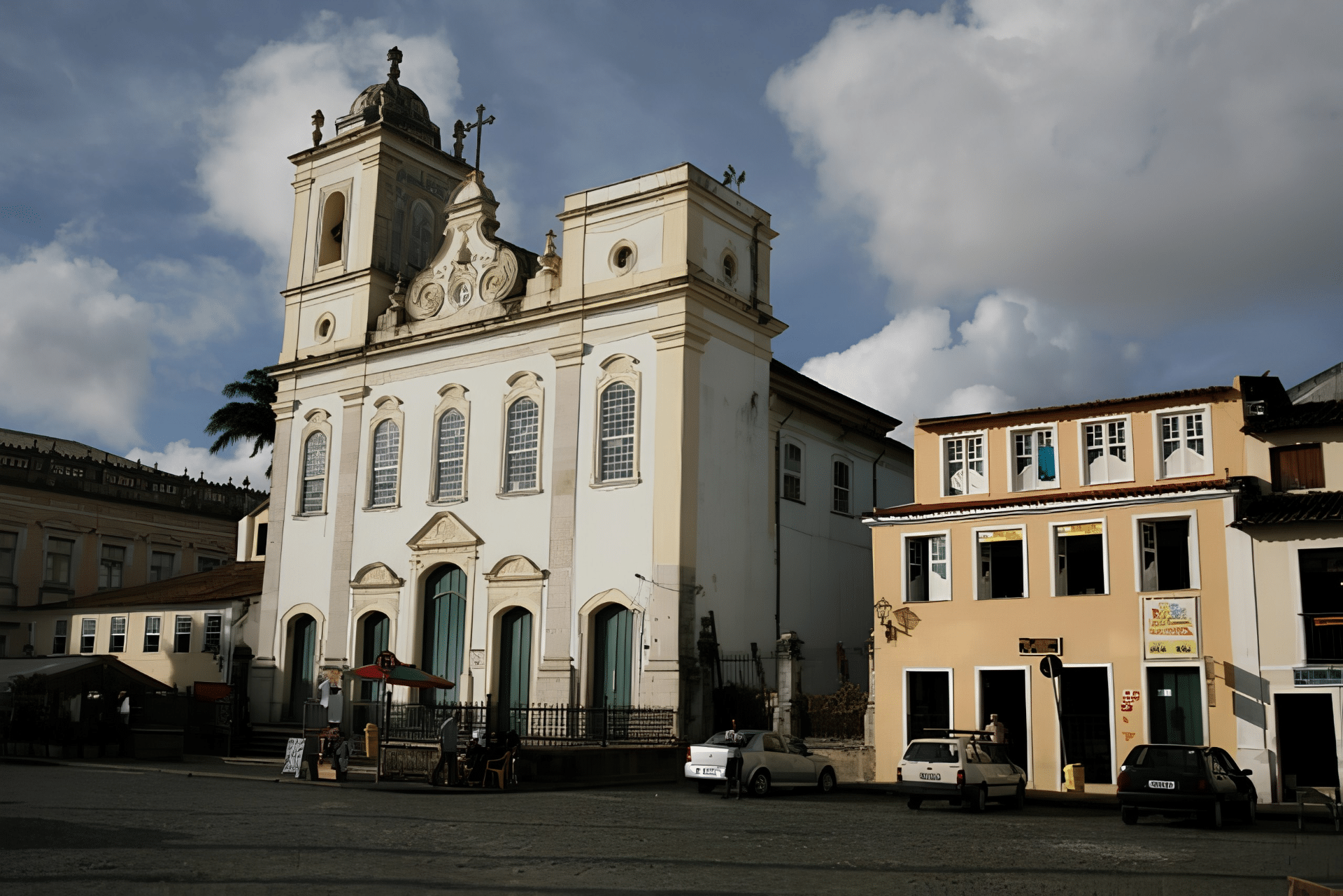
- Church of Saint Peter of the Clerics
- Carmo Monastery and Church of Our Lady of Carmo
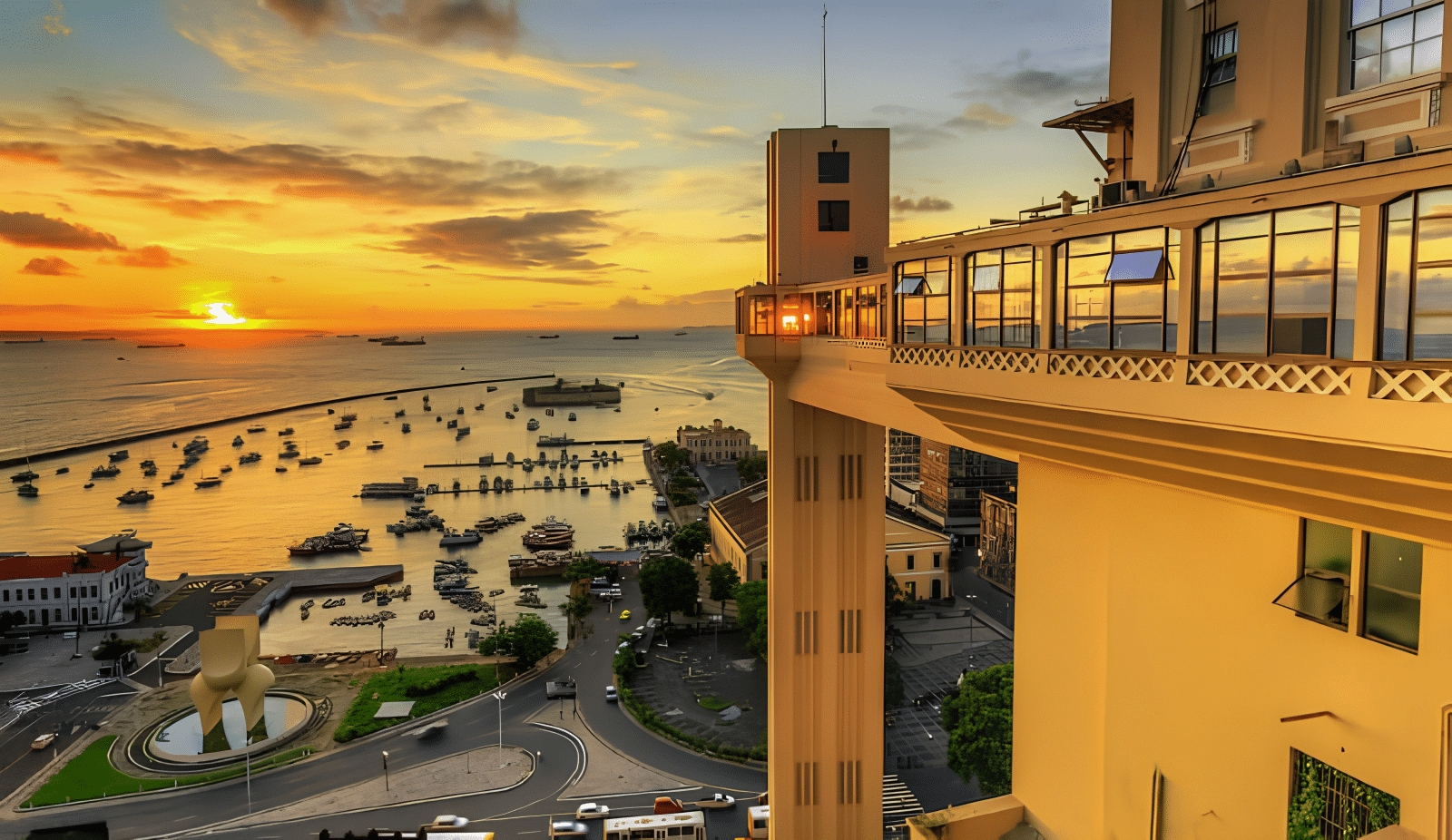
- Lacerda lift
1.2. Tomé de Souza Square
- Tomé de Souza Palace
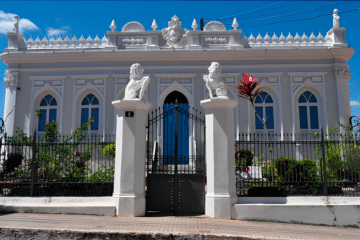
- Rio Branco Palace
- Salvador City Council
- Lacerda lift
1.3. Bars in Santo Antônio Além do Carmo
2. Lower Town
- Nosso Senhor do Bonfim Church
- Model Market
- Fortress of Our Lady of Monte Serrat
- Humaitá Point
- Museum of Sacred Art
- Fort of São Marcelo or Fort of the Sea
- Bahia Marina
- Unhão Mansion
- Church of Our Lady of the Conception of Praia
- Beach at the Museum of Modern Art of Bahia – MAM
- Swimming at Porto da Barra beach
- Barra lighthouse
- Nosso Senhor do Bonfim Church
- Bohemian Rio Vermelho
- Gamboa Neighbourhood
- Basilica of Our Lady of the Conception of Praia
- Church of Our Lady of the Sea
- Churches of Salvador, Bahia – History and Architecture
- Attractions for families with children
- Discover the 23 beautiful beaches of Salvador, Bahia
- History and culture of Bahia: The 39 Museums of Salvador
- Itapuã Lighthouse
- Fort of Santa Maria
1. Tourist Attractions in the Upper City of Salvador
The Historic Centre of Salvador is one of the richest in tourist attractions and architectural heritage in Brazil.
Main features of the Historic Centre of Salvador
1.1. Pelourinho – Tourist Attractions and Architectural Heritage

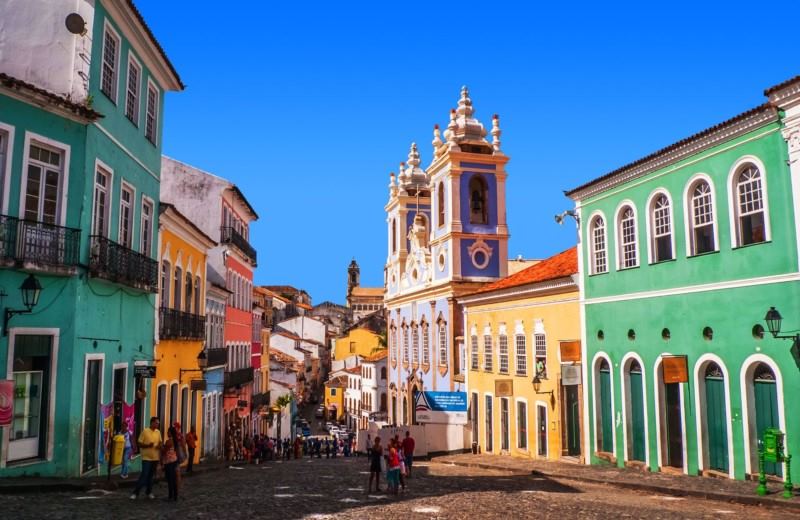
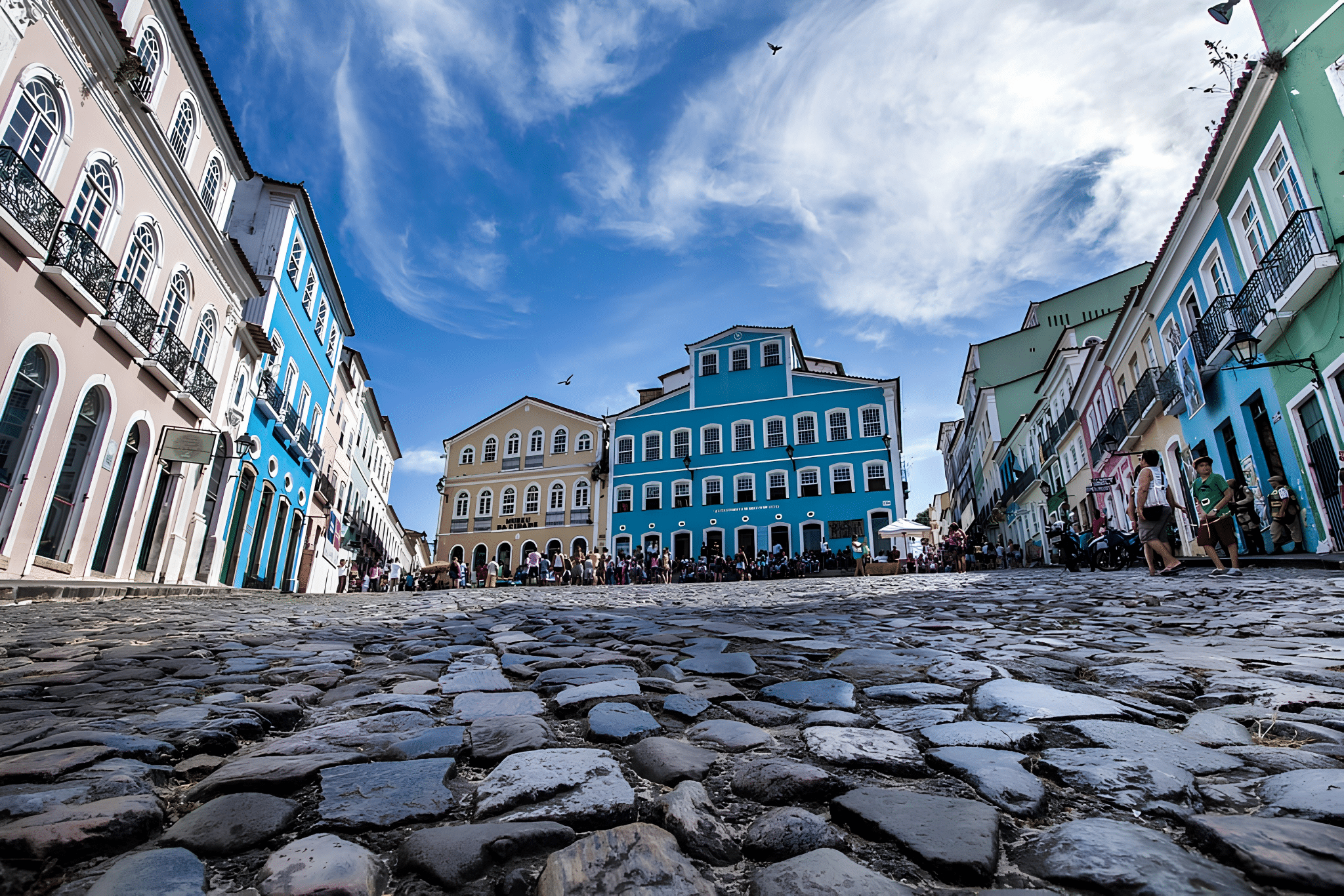
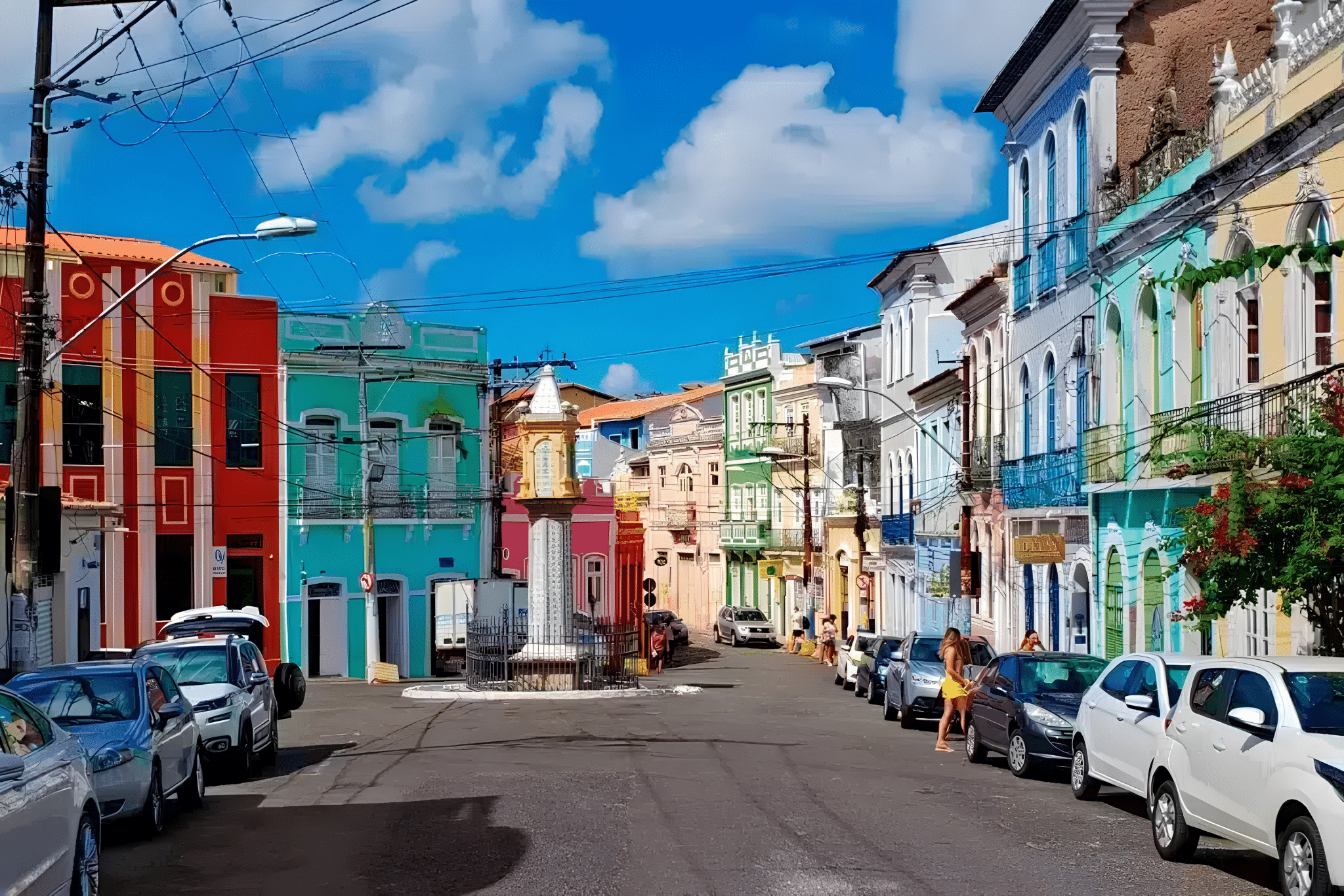
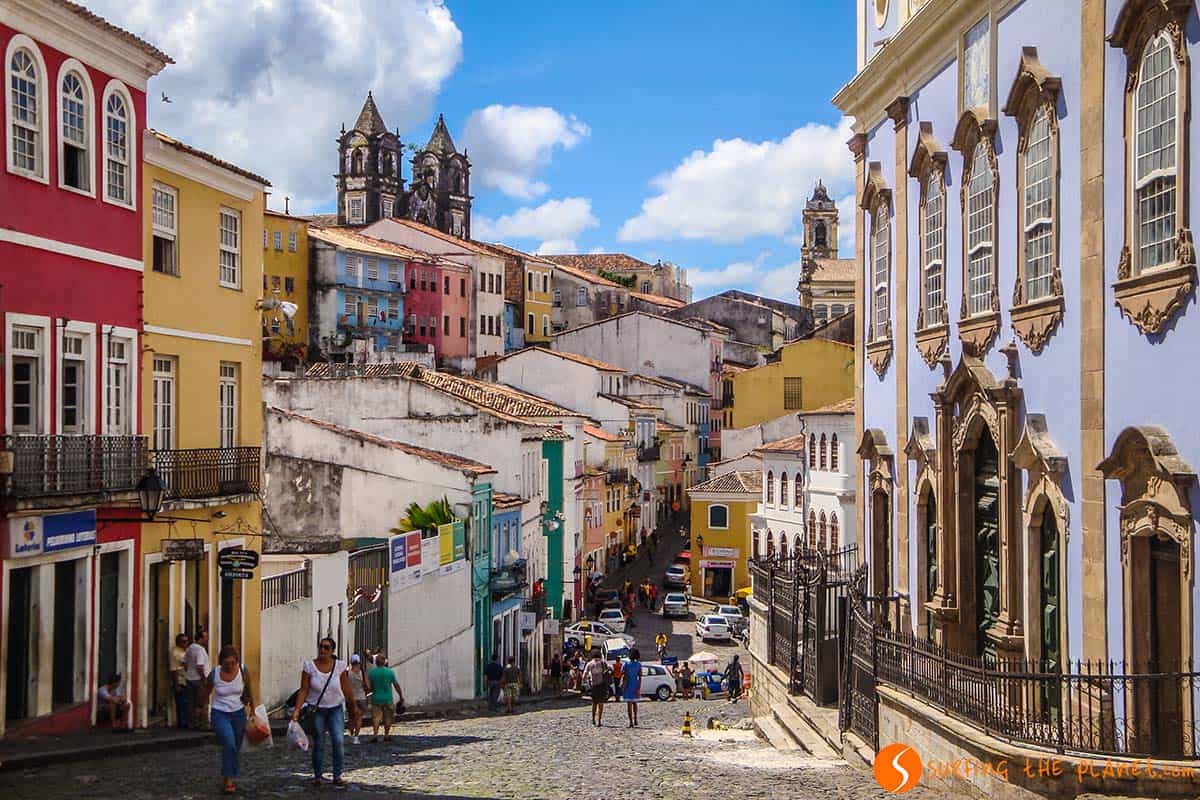
The heart of the historic centre, known for its cobbled streets and colourful colonial buildings. It is an important cultural centre with various events and attractions. The attractions of Pelorinho include churches, museums, craft shops and restaurants.
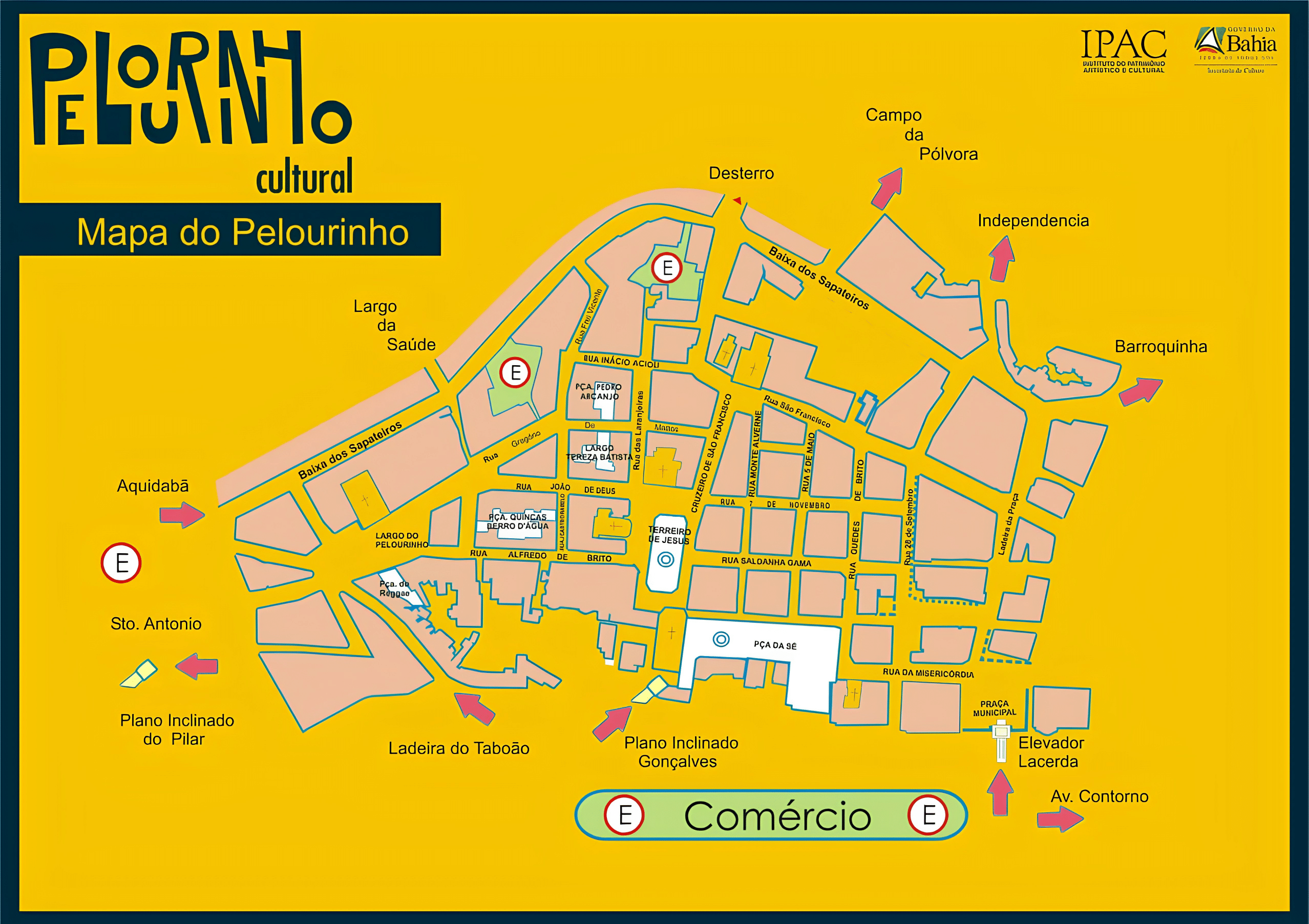
In Pelourinho, located in the historic centre of Salvador, some of the main squares that stand out are
- Largo do Pelourinho (Praça José de Alencar): The most iconic centre of the area, famous for its colourful colonial buildings and baroque churches. It is a lively tourist spot surrounded by museums, galleries and restaurants.
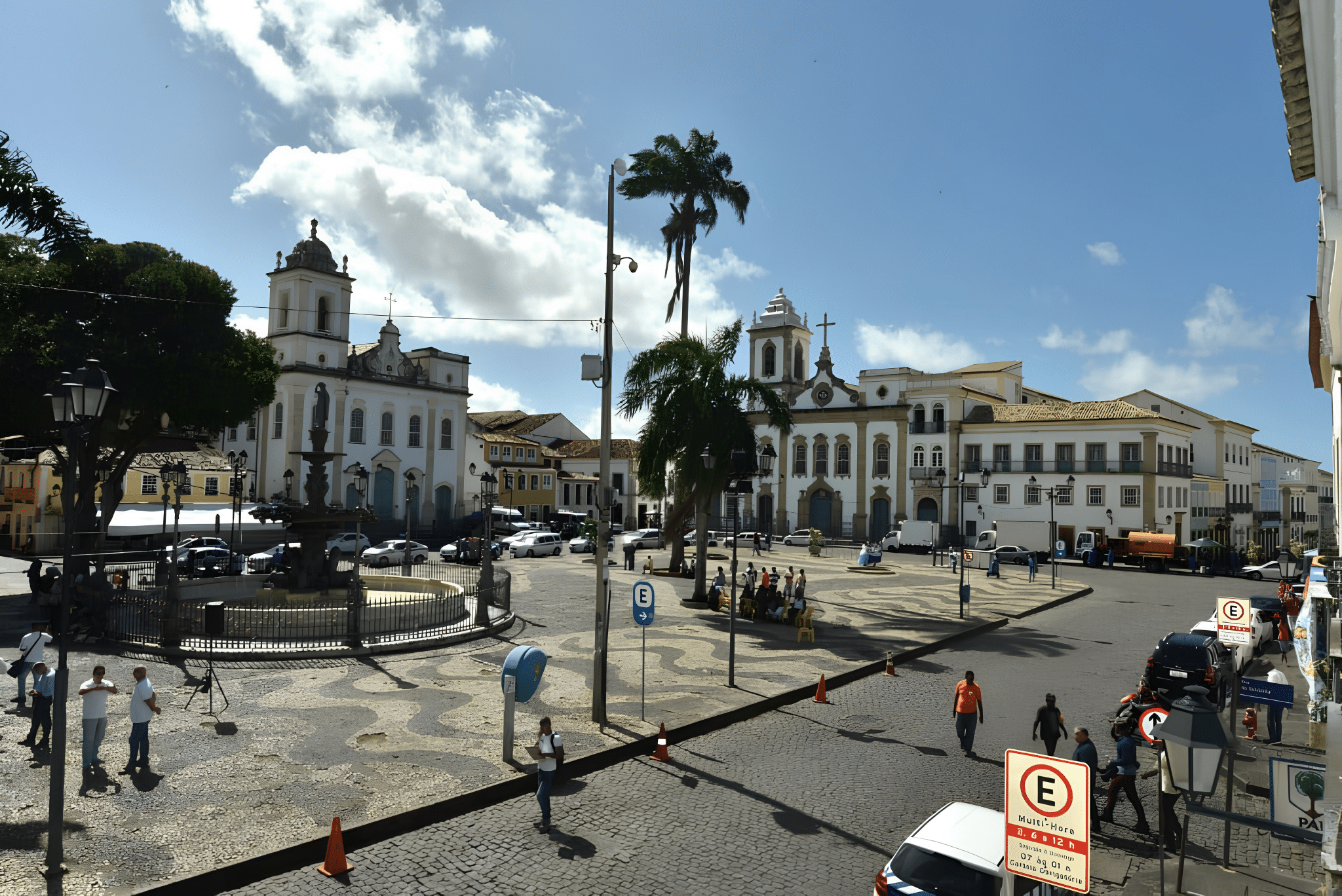
- Terreiro de Jesus (15 de Novembro Square): One of the busiest squares in the historic centre, surrounded by several churches, including the Cathedral of Salvador and the Church of São Pedro dos Clérigos. It is a venue for cultural events and religious celebrations, with street vendors and capoeira performances.
- Largo do Carmo: Located near the Convento do Carmo and the Igreja de Nossa Senhora do Carmo, this is a peaceful square that combines Baroque architecture with a quieter and more historic atmosphere.
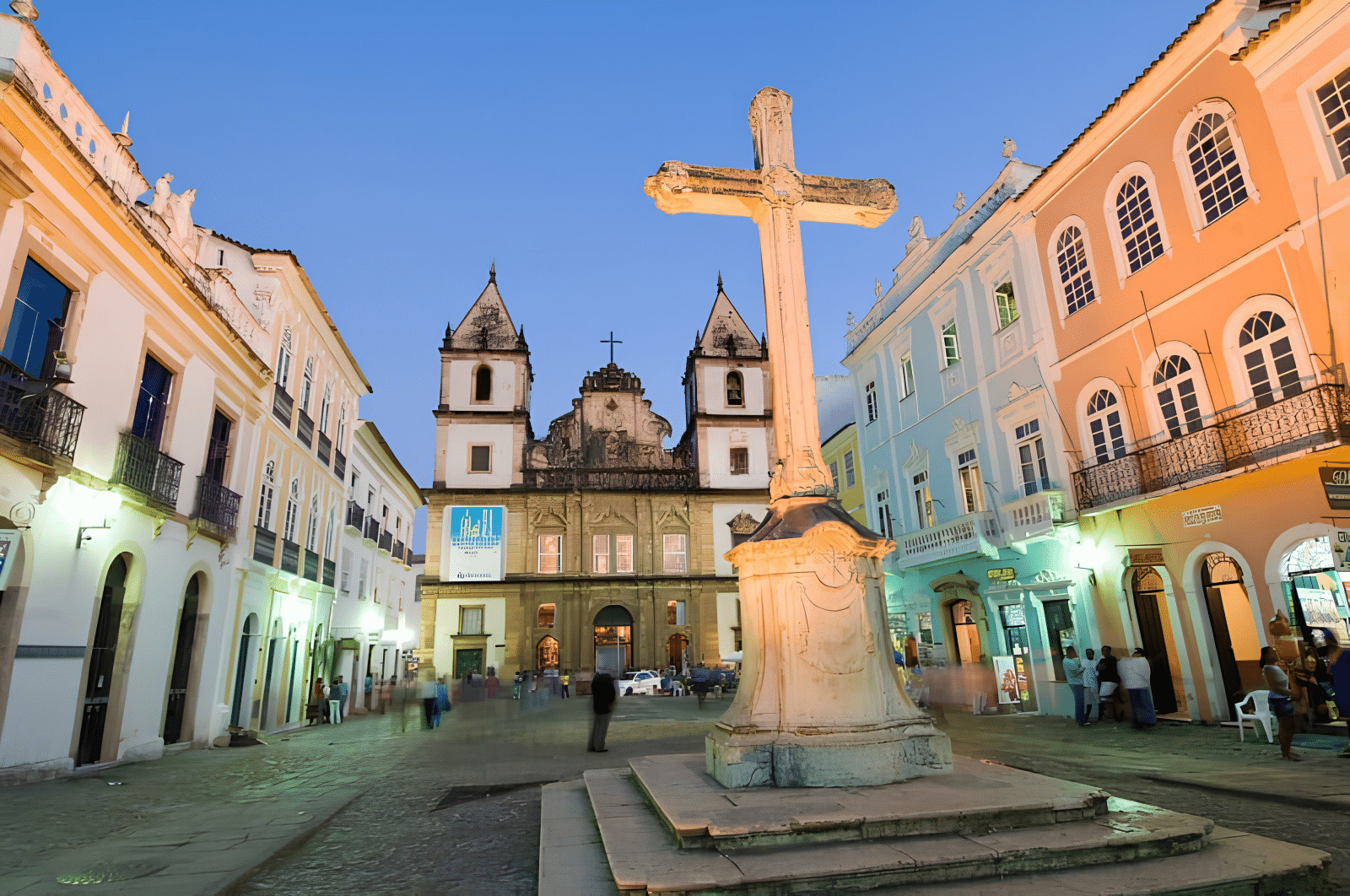
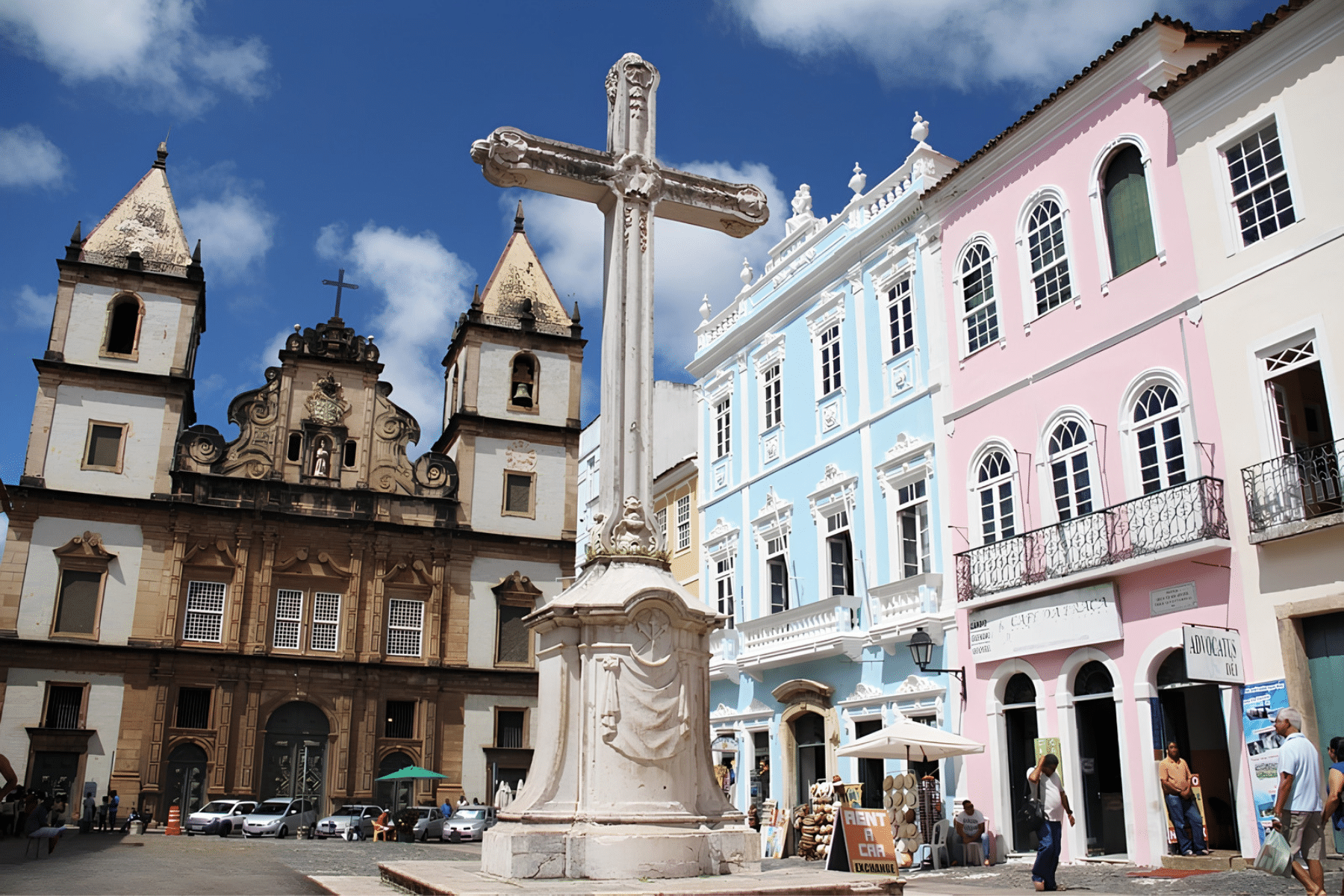
- Largo do Cruzeiro de São Francisco: Famous for the Church and Convent of São Francisco, this square is home to one of the greatest treasures of Brazilian Baroque architecture. The stone cross in the centre of the square is a symbol of local religious devotion.

Groups of Baroque Churches in Pelourinho
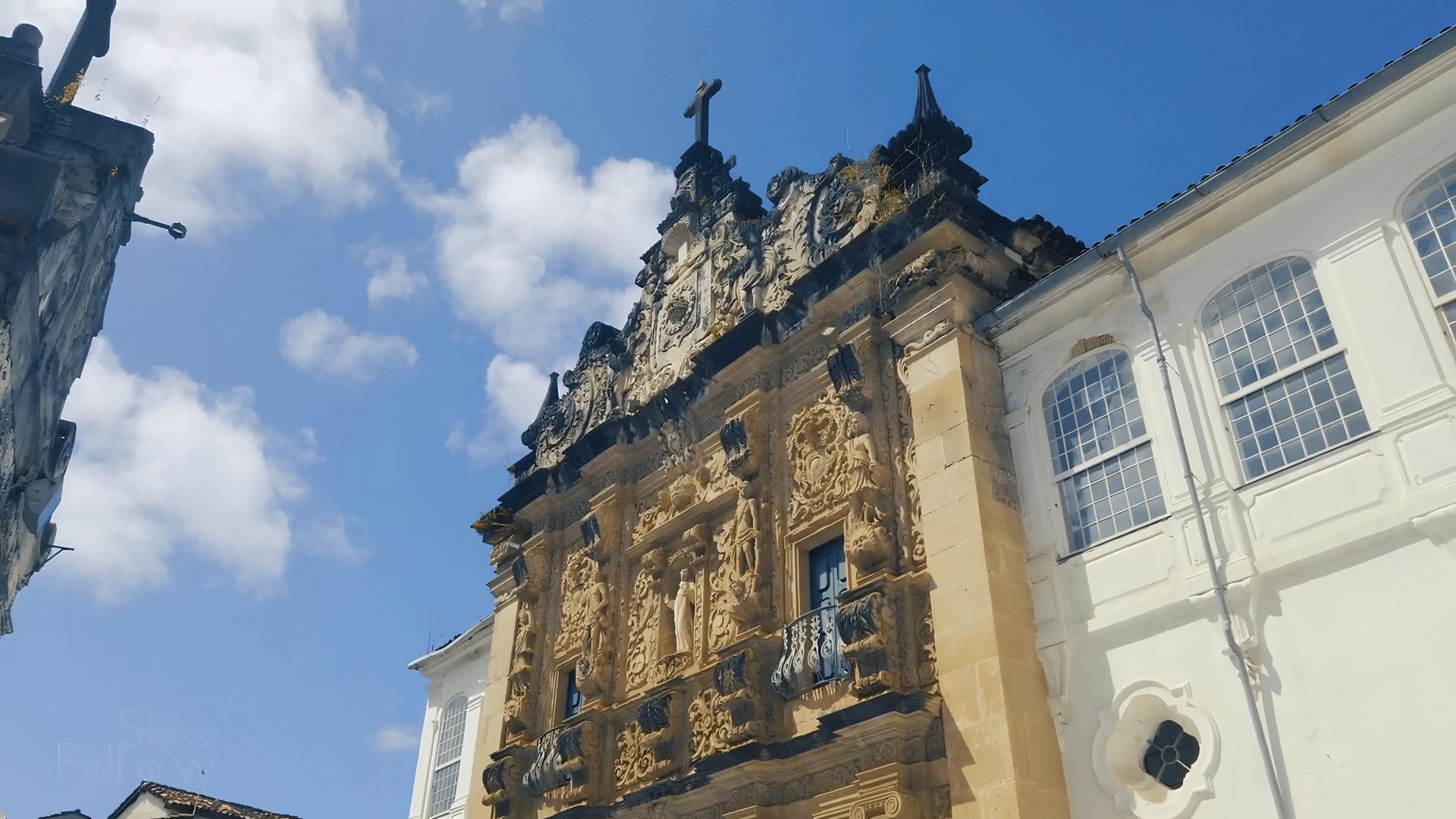
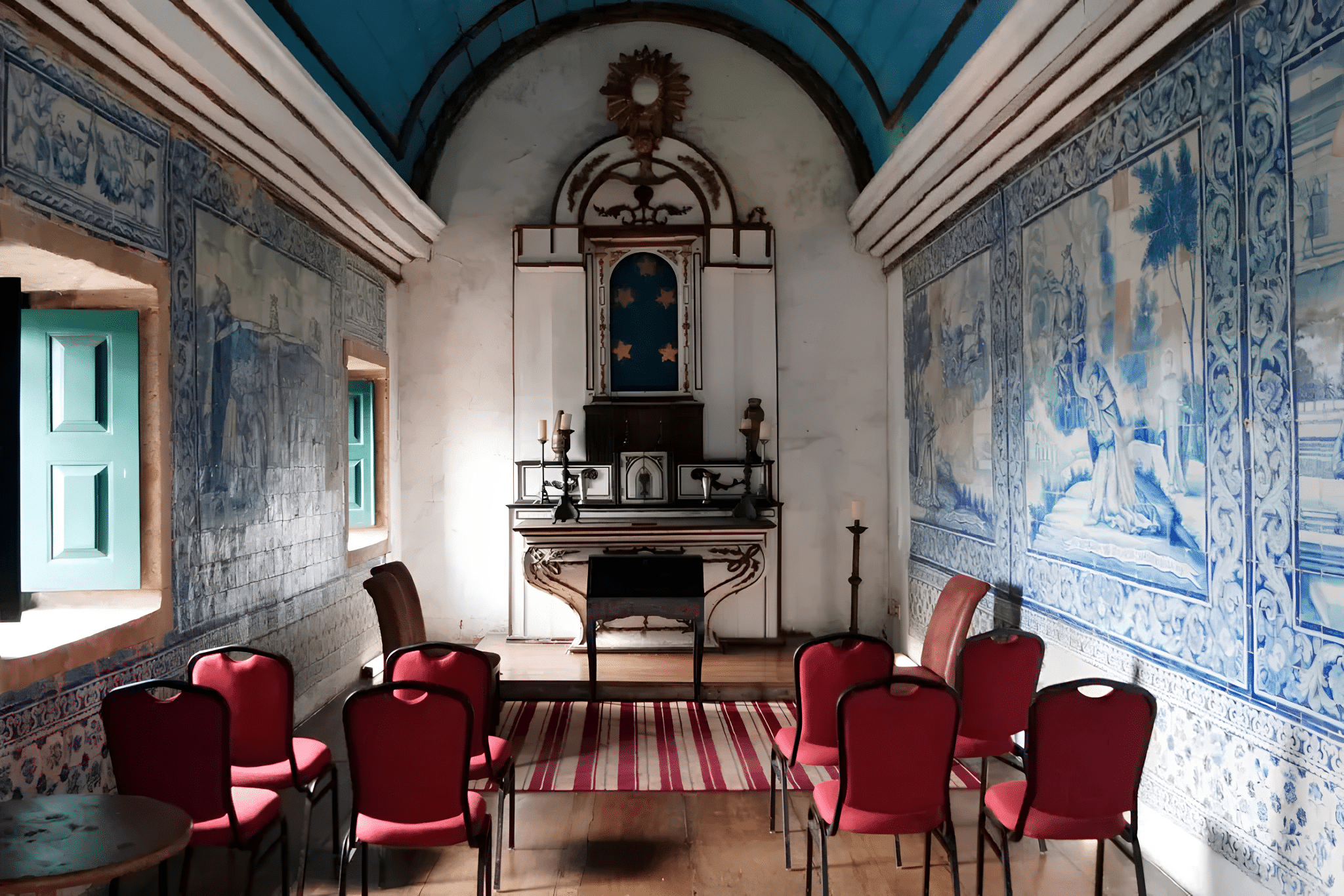
- Church of the Third Order of Saint Francis: The Church of the Third Order of Saint Francis was built by the lay Franciscan order, also in Baroque style, but with Rococo influences. It stands out for its stone carved façade, considered one of the most beautiful in Latin America.
- Church of São Francisco: The Church of São Francisco is famous for its richly decorated interior, one of the best examples of Brazilian Baroque. Built in the early 18th century, its artistic and historical wealth makes it one of Salvador’s greatest tourist attractions.
- Church of Rosário dos Pretos: An important symbol of Afro-Brazilian culture, built by slaves.
- Passo Church: Another beautiful baroque church located around the square.
- Cathedral of Salvador: Formerly known as the Church of the College of Priests, it was an important religious and educational centre, where the poet Gregório de Matos studied and where Father Antônio Vieira preached.
- Church of São Pedro dos Clérigos: The church is an example of baroque architecture, with ornamental features typical of the Brazilian colonial period.
- Carmo Convent and Nossa Senhora do Carmo Church: The construction of the Nossa Senhora do Carmo Church began in the early 17th century, more precisely in 1586, together with the Carmo Convent. The church was built by the Carmelites, one of the most influential religious orders of the time.


Some buildings in Pelourinho, such as the Solar do Ferão, house some of the city’s most important museums, such as the Abelardo Rodrigues Museum, the Jorge Amado House Foundation, the City Museum, the Portas do Carmo Museum and the Tempostal Museum.
1.2. Tomé de Souza Square
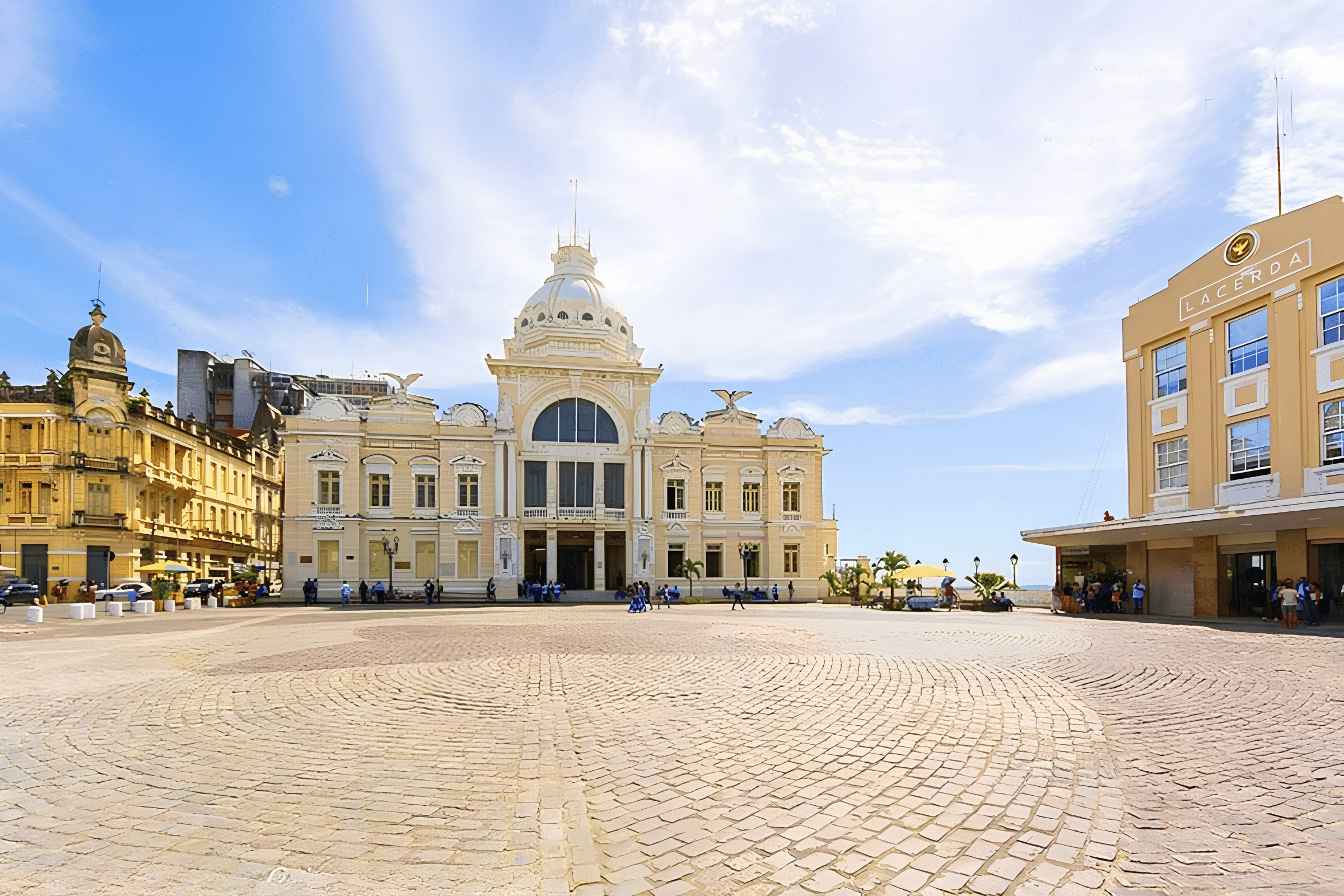
The Praça Tomé de Souza is one of the most emblematic squares in Brazil in terms of history. Located in the Historic Centre of Salvador, the square is considered the birthplace of Brazilian civilisation, as it was the first to bring together all the public buildings of what was then the country’s capital.
Today, the Praça Tomé de Souza is a must-see for its imposing Tomé de Souza statue and its stunning view of the Bay of All Saints.
In the square you will find important buildings and historical monuments, including
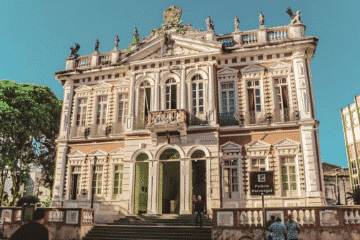
- Tomé de Souza Palace: Currently the seat of the City Hall of Salvador, it is one of the main administrative buildings of the city.
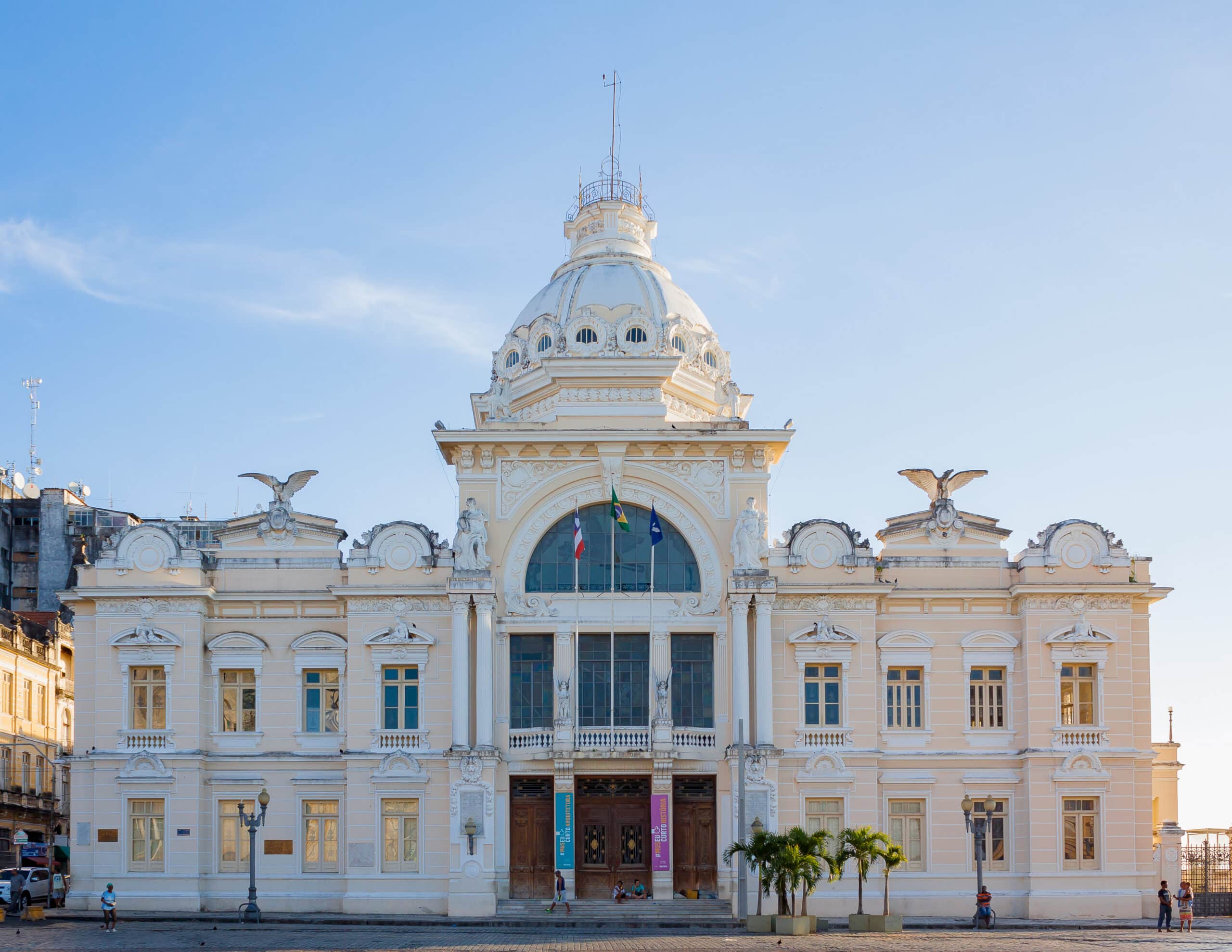
- Rio Branco Palace: Former seat of the government of Bahia, now used for cultural events and exhibitions.
- Salvador City Council: The building where the legislative activities of the city take place.
- Lacerda Elevator: One of the icons of Salvador, connecting the Upper City with the Lower City and offering panoramic views of the city and bay.
In addition to these landmarks, the Praça Tomé de Souza is strategically located in front of the upper part of the Elevador Lacerda, consolidating itself as the nerve centre of the public administration and an important tourist attraction of the city.


See Palaces in Salvador to visit and learn about Brazilian history.
1.3. Bars in Santo Antônio Além do Carmo

Located in the heart of the Historic Centre of Salvador, 500 metres from Pelourinho, Santo Antônio Além do Carmo is an excellent option for those who want to enjoy the bohemian side of the city. In addition to the old mansions and cultural options, the bars are what stand out.
As it is a popular area, tourists can find well-prepared dishes at reasonable prices.
The area also offers beautiful panoramic views of the bay, is home to the church of Santo Antônio, and has vintage shops, colourful pastel houses and cafes. The whole artistic aura of the place adds charm to the tour.
2. Tourist Attractions in Lower Salvador
The Lower City of Salvador offers several tourist attractions that combine history, culture and beautiful landscapes.
Main places to visit:
2.1. Church of Nosso Senhor do Bonfim

The Church of Nosso Senhor do Bonfim is one of the most famous churches in Brazil, dedicated to Senhor do Bonfim, the patron saint of the people of Bahia.
The traditional festa de lavagem das escadarias (washing of the stairs festival), the fitinhas coloridas (coloured ribbons) and the interior of the church with ex-votos (votive offerings) offer a strong link between the holy and the popular.
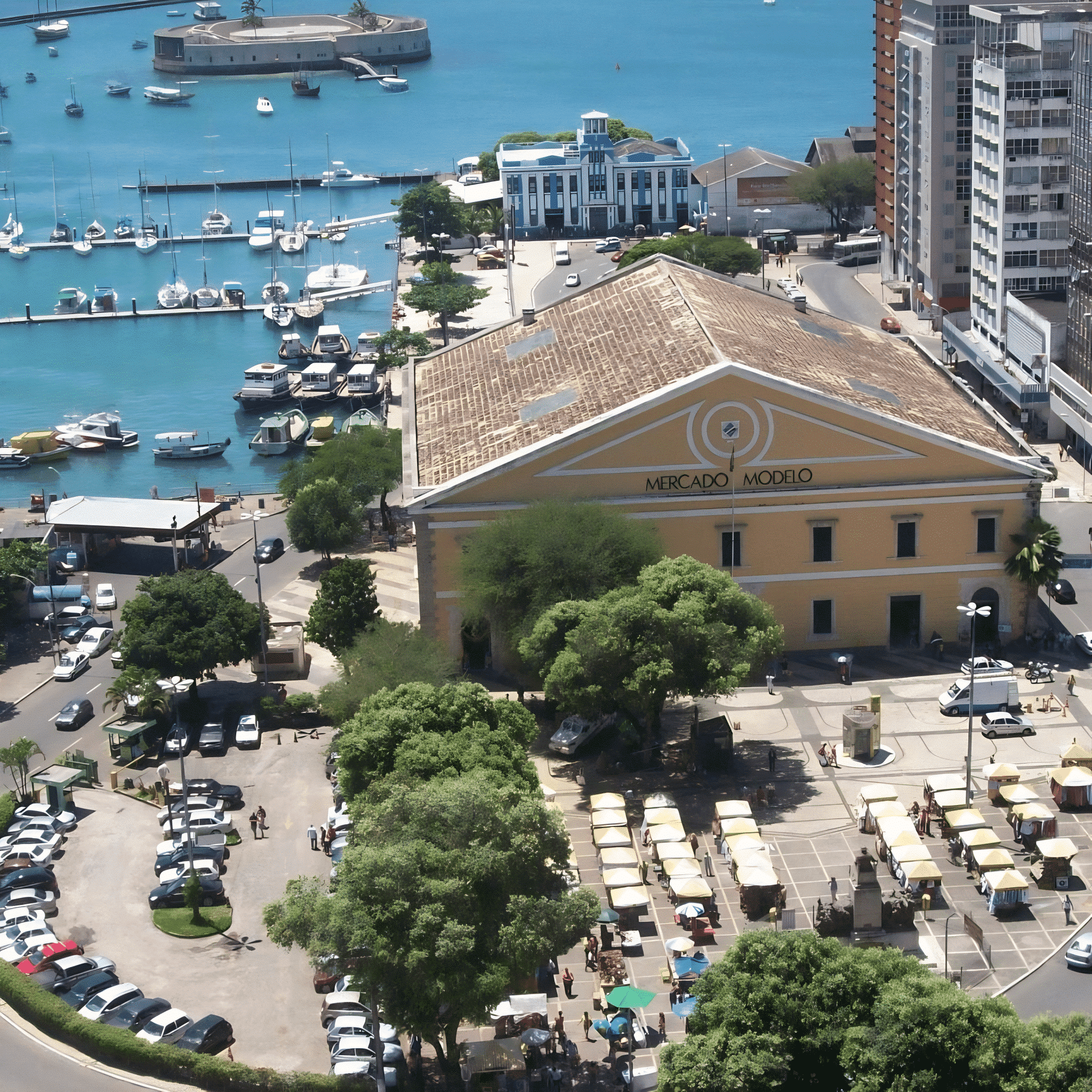
2.2. Model Market

The Mercado Modelo is one of the most famous markets in Salvador, where you can find local handicrafts, souvenirs and typical food. In addition to shopping, the Mercado Modelo offers an excellent view of the Bay of All Saints and is close to the Elevador Lacerda.
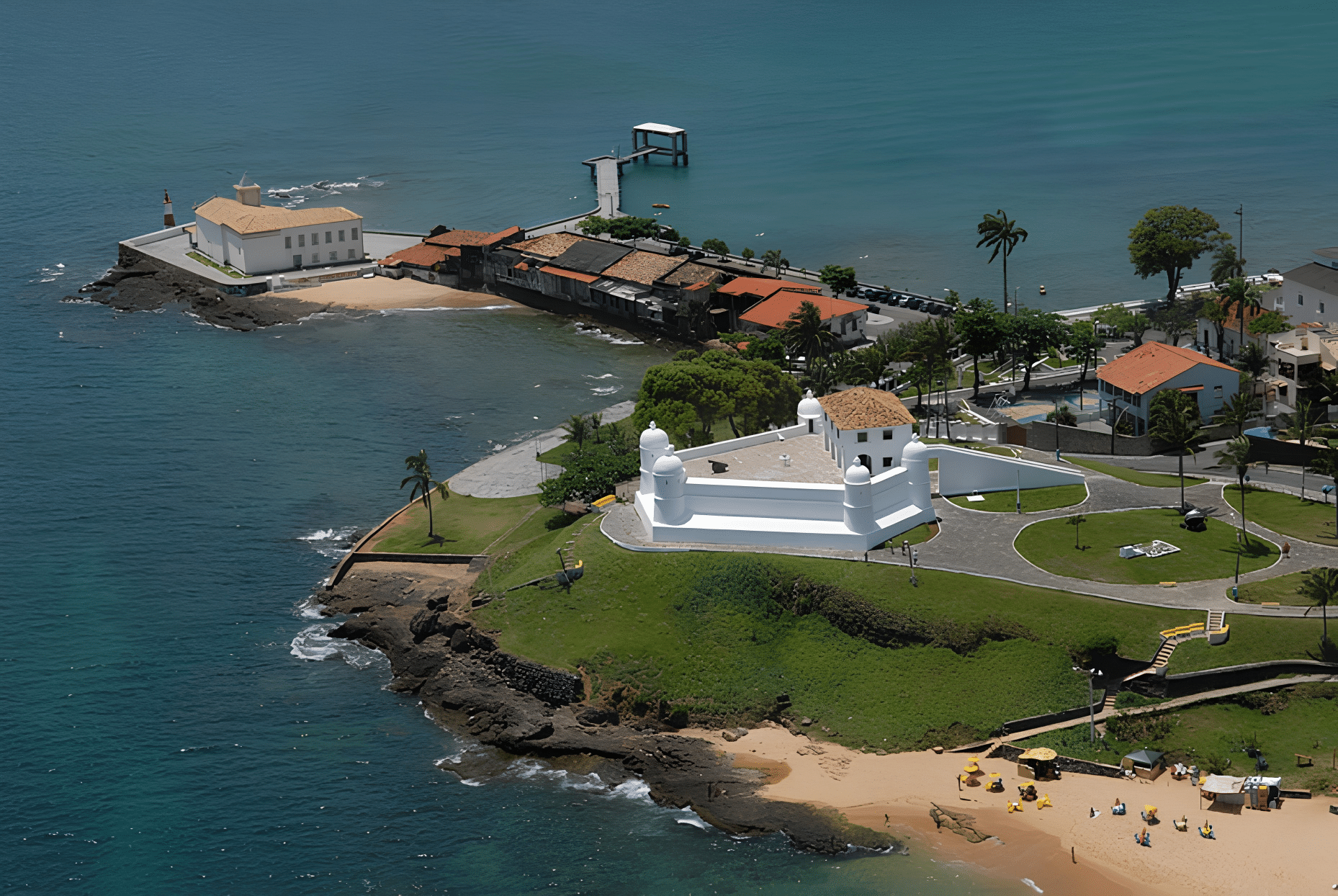
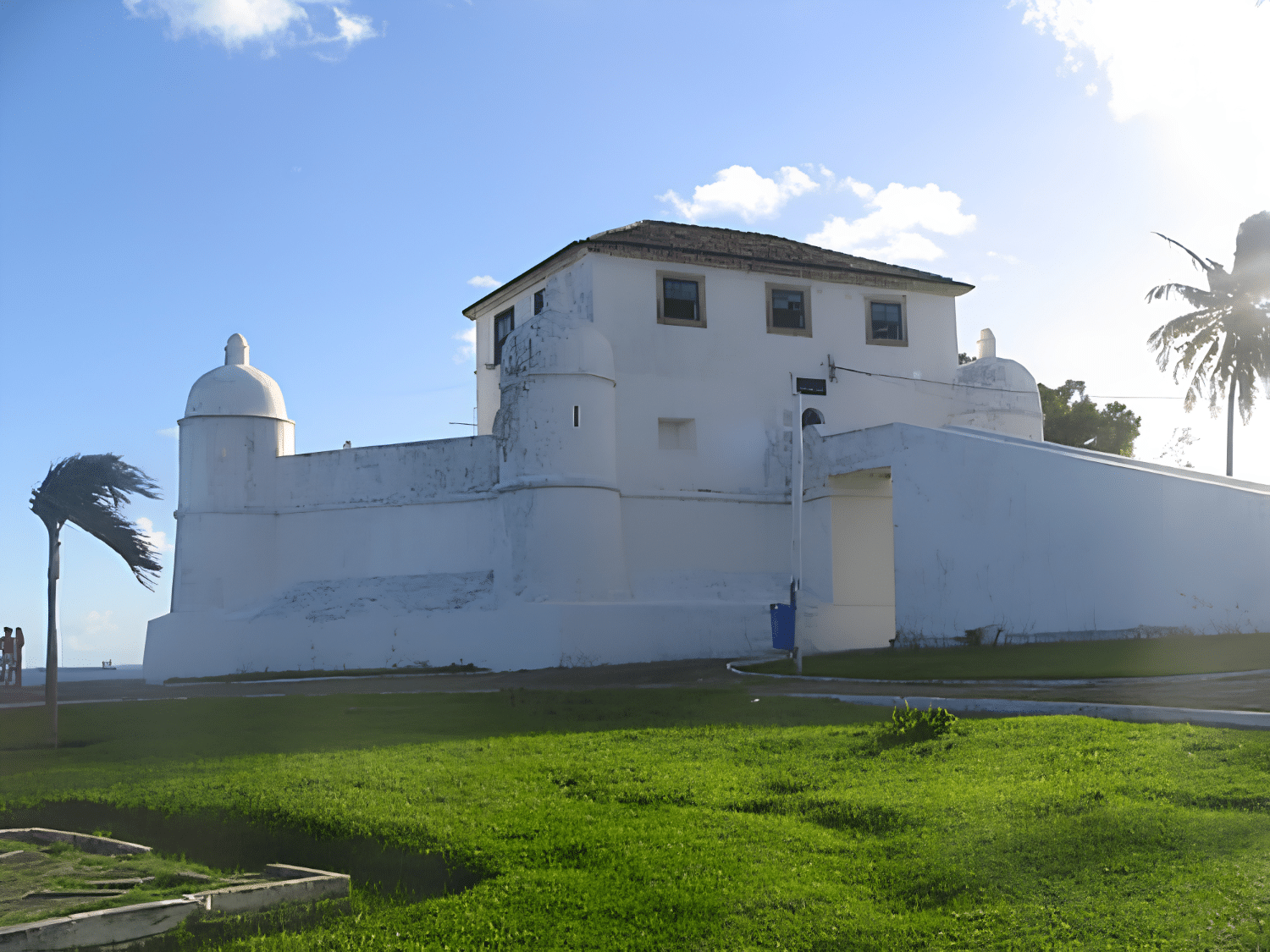
2.3. Fortress of Our Lady of Monte Serrat

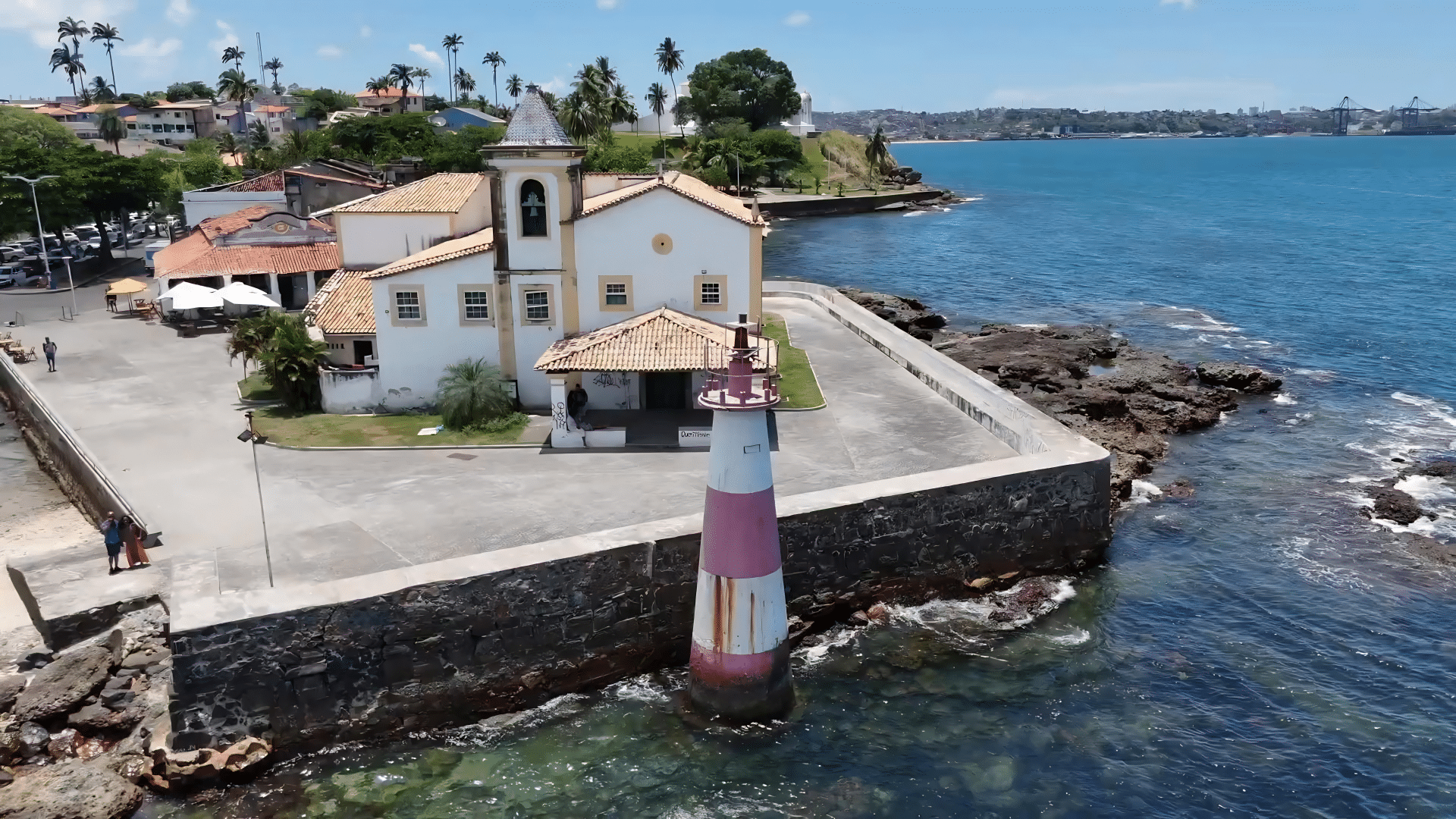
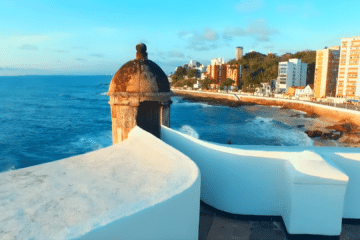
The Fort of Nossa Senhora de Monte Serrat is one of the best preserved forts in Salvador, with colonial architecture that combines Portuguese military elements. Strategically located at Ponta de Humaitá, it offers stunning views of the sunset over the Bay.
2.4. Ponta de Humaitá

- Humaitá lighthouse: The small Lighthouse is one of the icons of Ponta de Humaitá, offering a beautiful photogenic landscape and a landmark of tranquillity by the sea.
- Nuestra Señora del Monte Serrat Church: The church was built in the 17th century and is part of the complex that includes the Nuestra Señora del Monte Serrat Fortress. It is one of the religious and architectural monuments of the colonial period.
2.5. Museum of Sacred Art

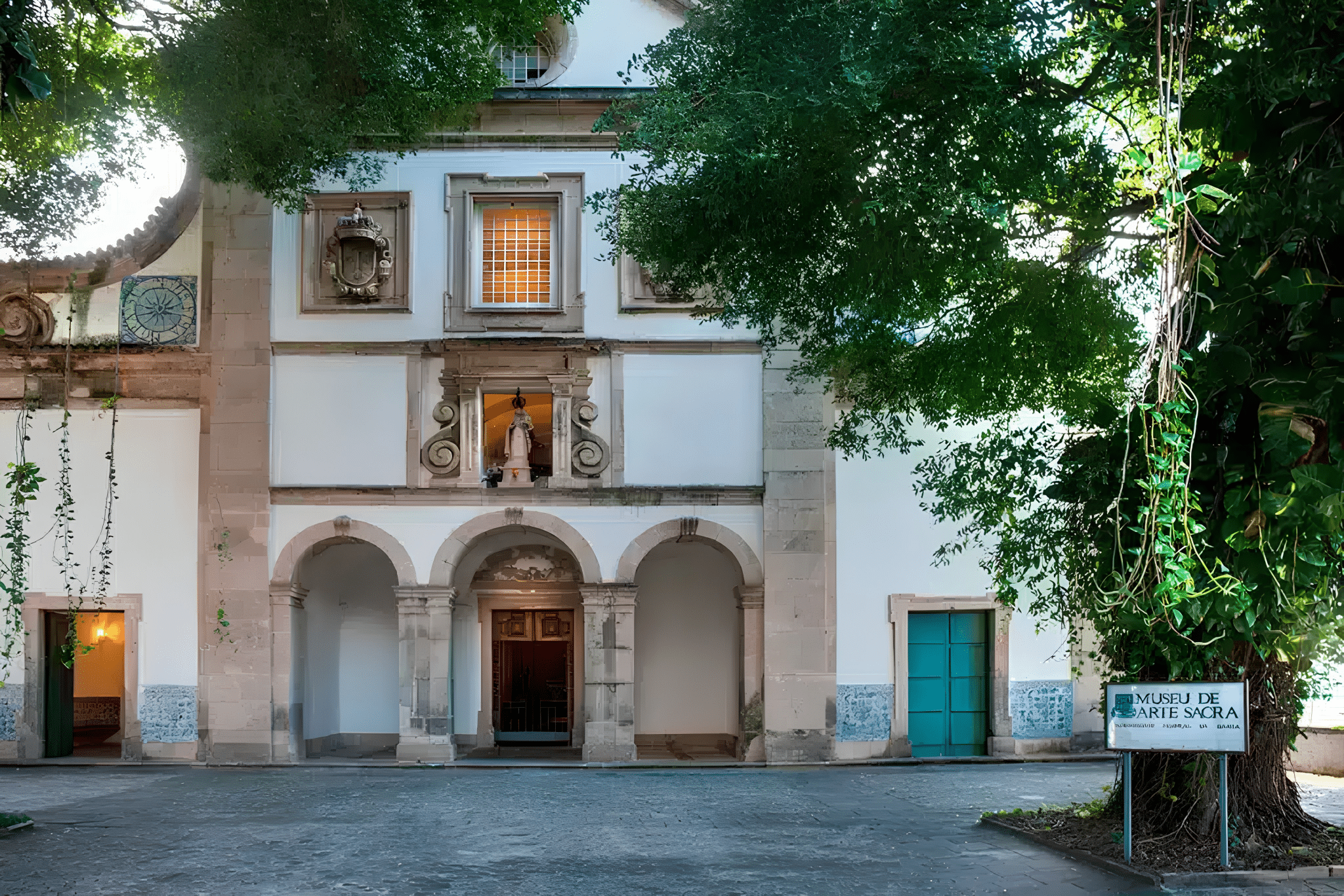
The UFBA Museum of Sacred Art was founded as the first University Museum in Bahia, exhibiting a rare and valuable Christian Sacred Art Collection, housed in one of the most outstanding 17th century architectural complexes in Brazil: the former Convent of Santa Teresa.
In addition to the collection, some areas of the complex are used for recitals and music concerts. Furthermore, from the 146 windows of the Museum of Sacred Art, it is possible to enjoy a breathtaking view of the Bay of All Saints.
History of the Church of Santa Teresa or Museum of Sacred Art UFBa
2.6. Fort of São Marcelo or Fort of the Sea

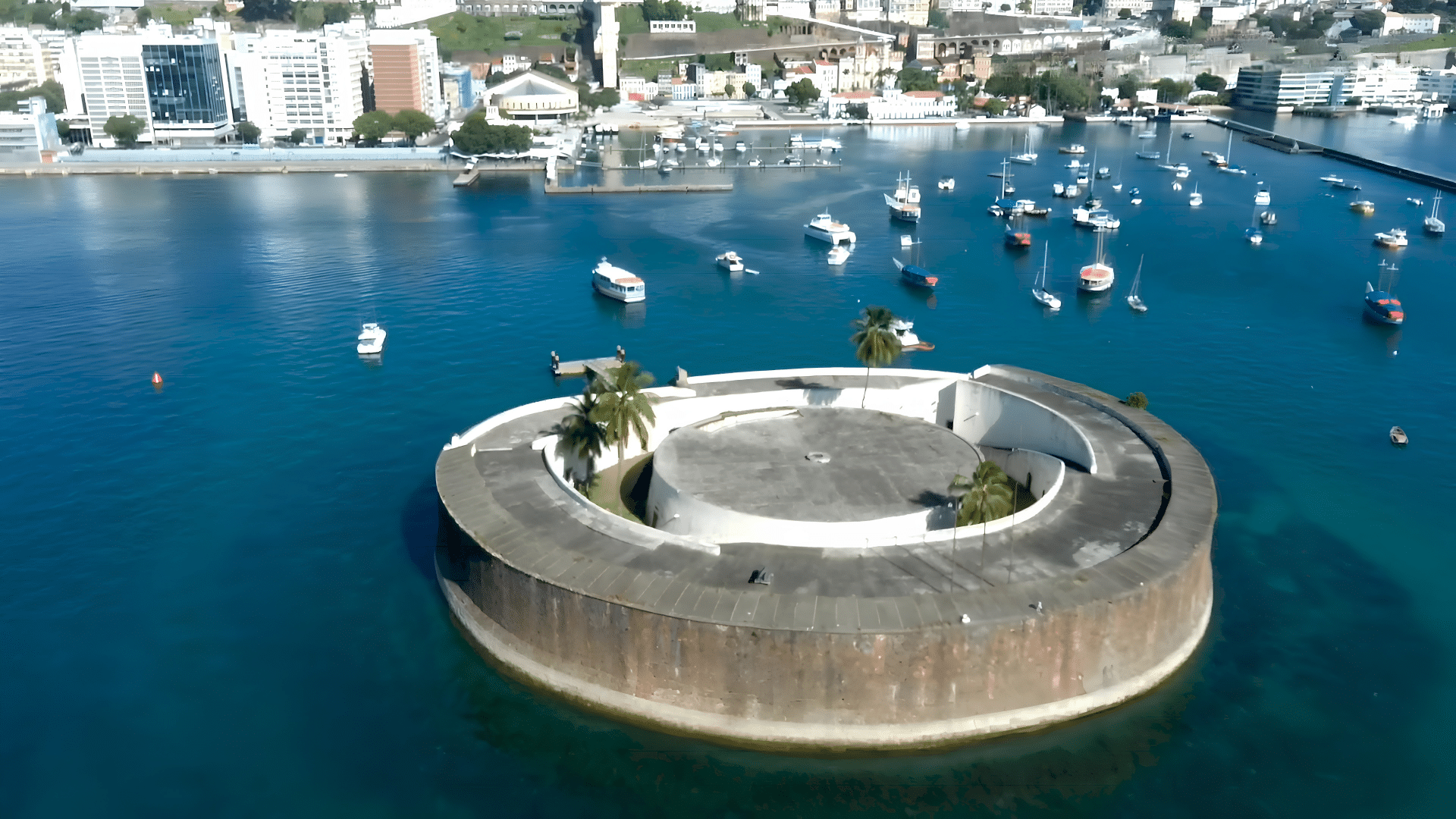
The Fort of São Marcelo, also known as the “Fort of the Sea”, is located on a small island in the bay of Todos os Santos.
The strong circular fort is accessible by boat and offers a historical tour and spectacular views of the city.
2.7. Bahia Marina

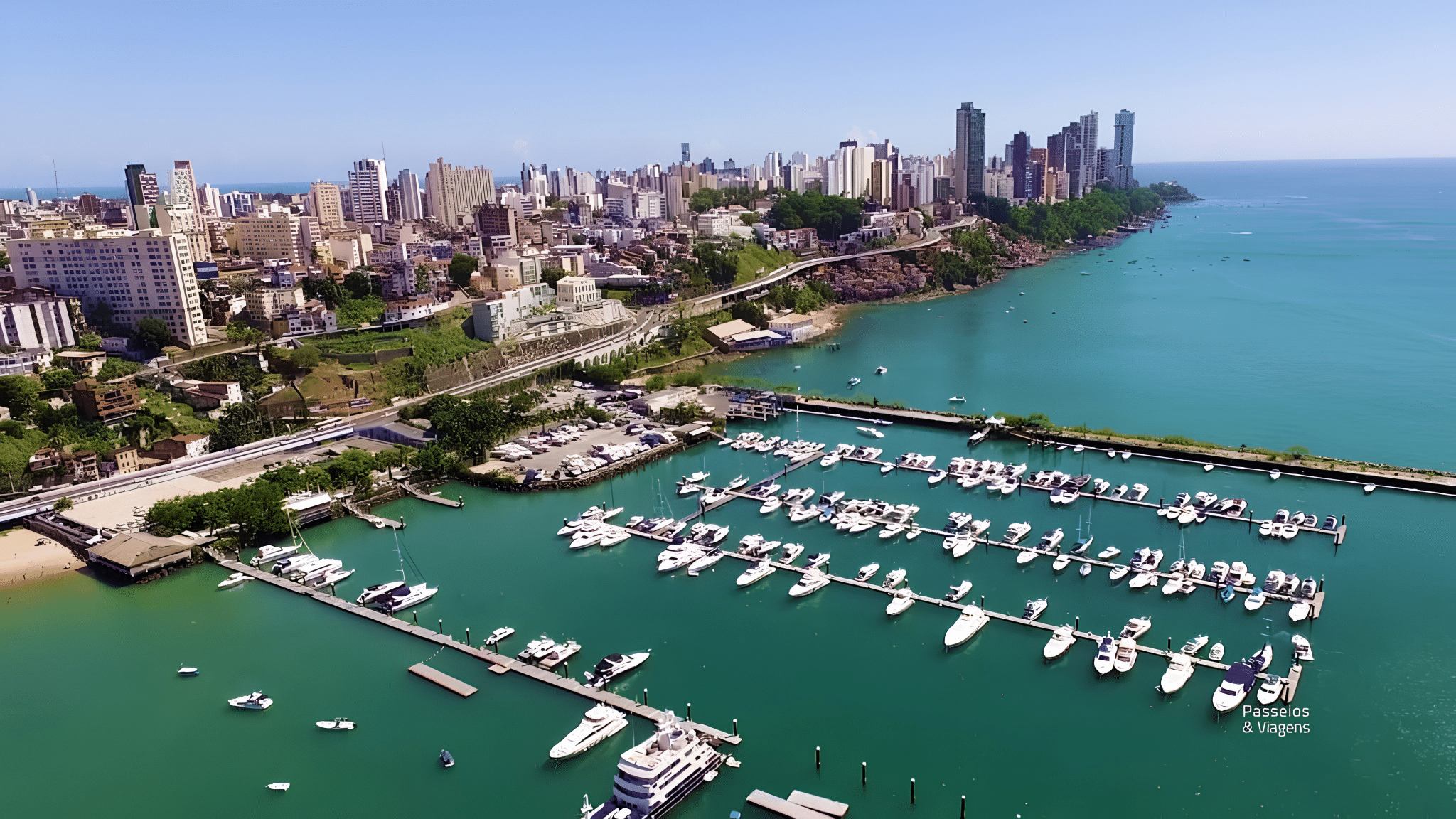
Bahia Marina is a marina complex where boats from all over the world arrive, with bars, restaurants and beautiful views. It is an excellent place to relax, enjoy a meal and take in the scenery along the Bay of All Saints.
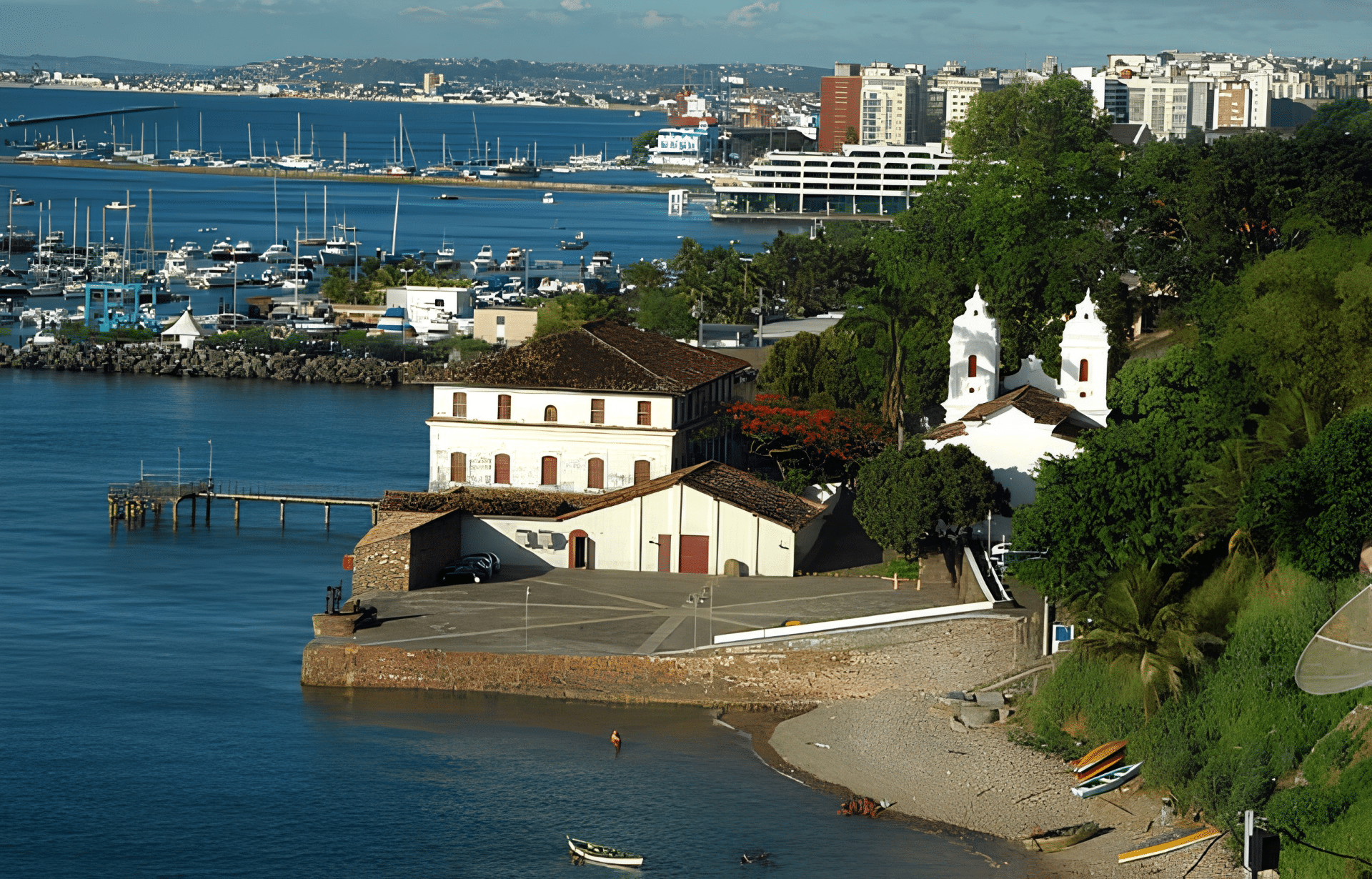
2.8. Solar do Unhão

Solar do Unhão is a historic architectural complex that houses the Museum of Modern Art of Bahia (MAM). In addition to the museum and exhibitions, Solar do Unhão is known for its cultural events and panoramic views of the bay.
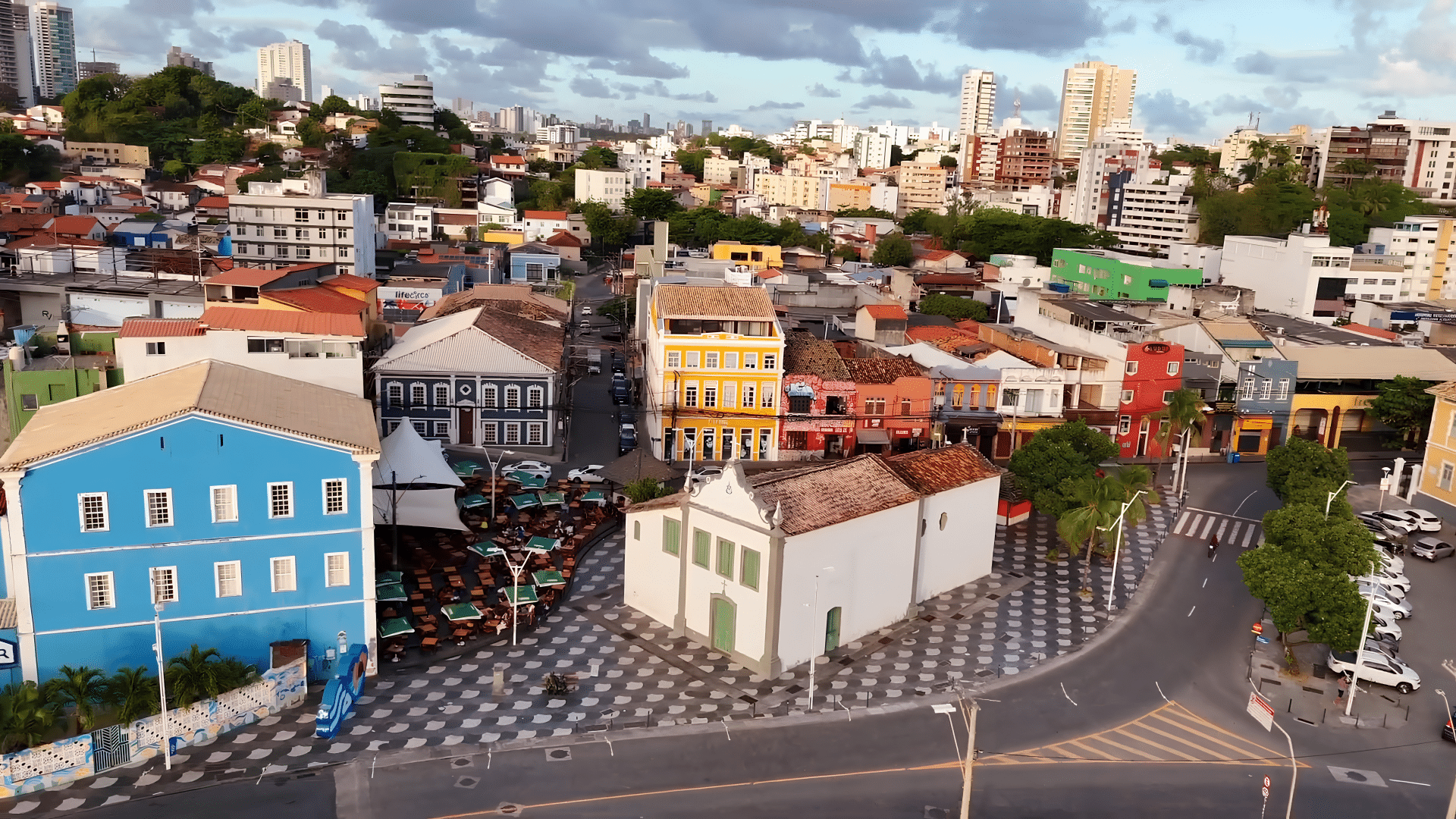
2.9. Church of Our Lady of the Conception of Praia

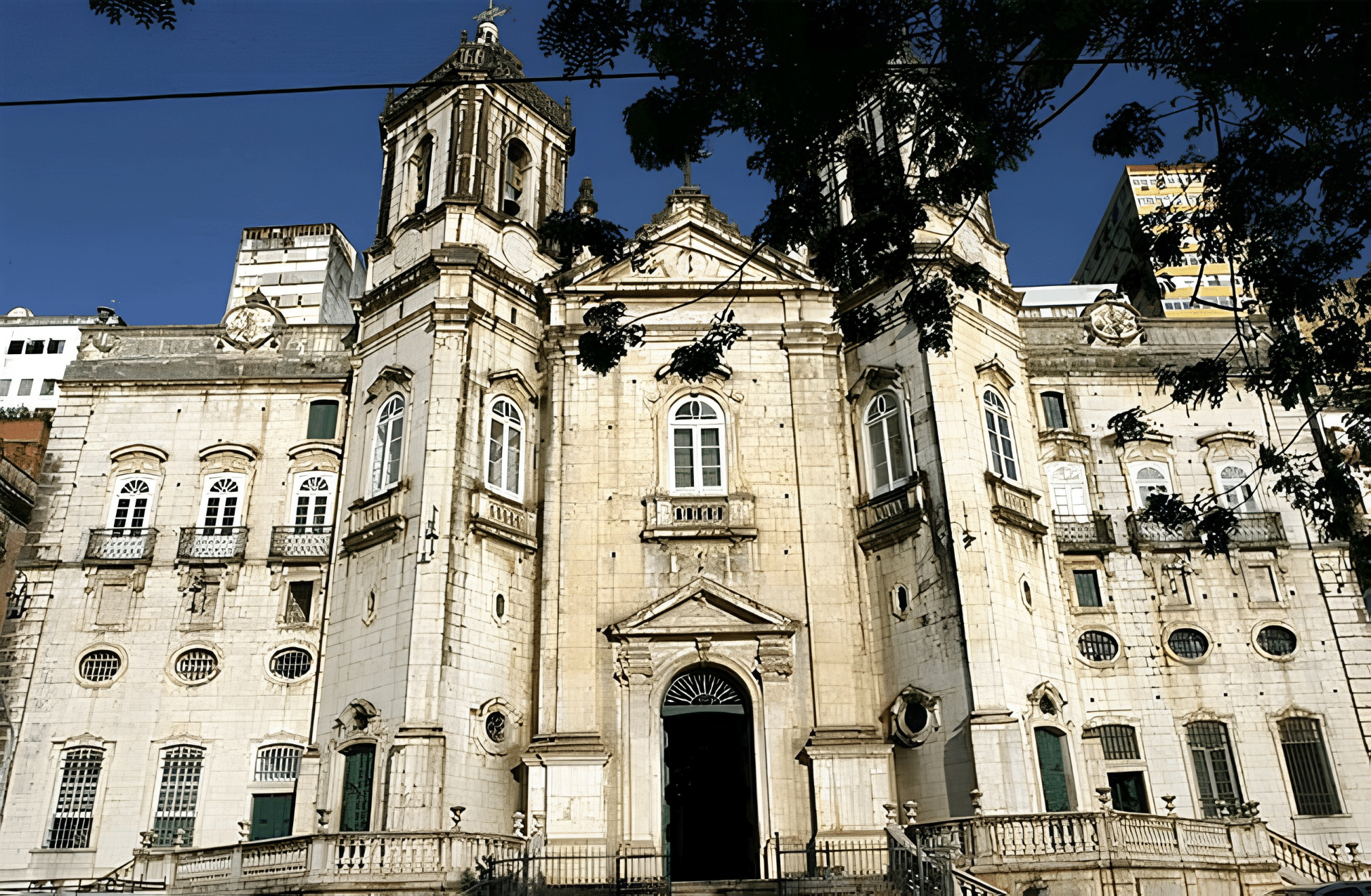
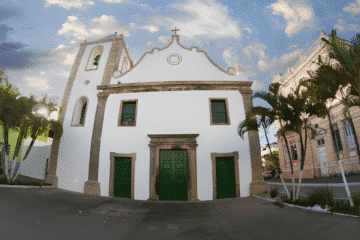
The third temple built on the same site in honour of the saint worshipped by the city’s founder, Tomé de Souza, was begun in 1736.
The current construction of the Church of Our Lady of the Conception of the Beach, with a neoclassical façade and an interior decorated in Joanine Baroque style, was completed in 1849. The stones that make up the façade of the temple were brought from Lioz, in Portugal.
The towers, arranged diagonally, give the temple a unique monumentality.
2.10. Small beach at the Museum of Modern Art of Bahia – MAM

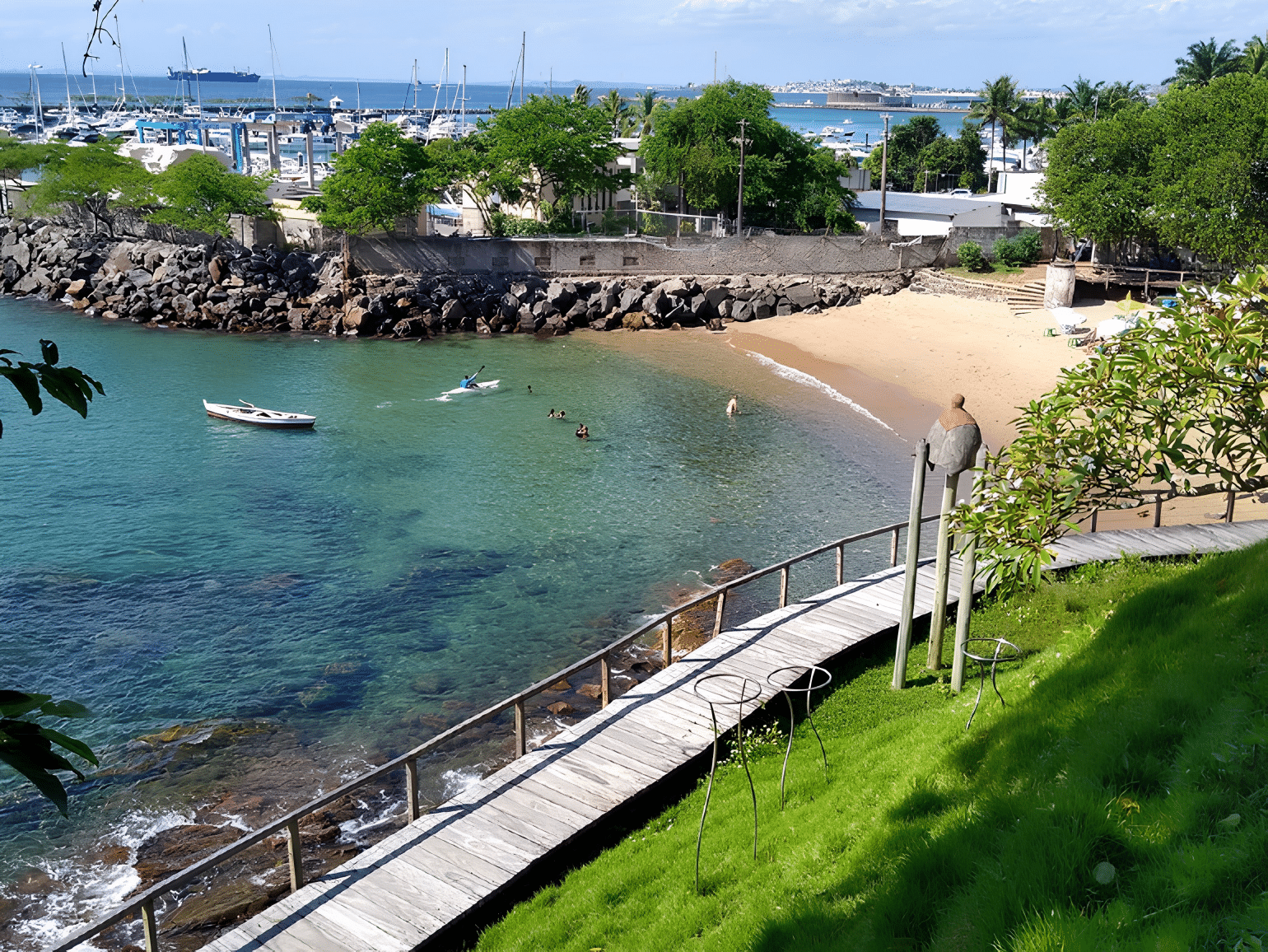
The MAM Beach is a cove with calm, crystal-clear waters and is a privileged place to observe the Bay of All Saints. The site is next to the Sculpture Park, which adds to the charm of both the walk and the route to the beach.
Access to the beach is free. It is recommended that tourists arrive early and bring everything they need. There are street vendors who sell drinks and food and hire chairs and parasols.
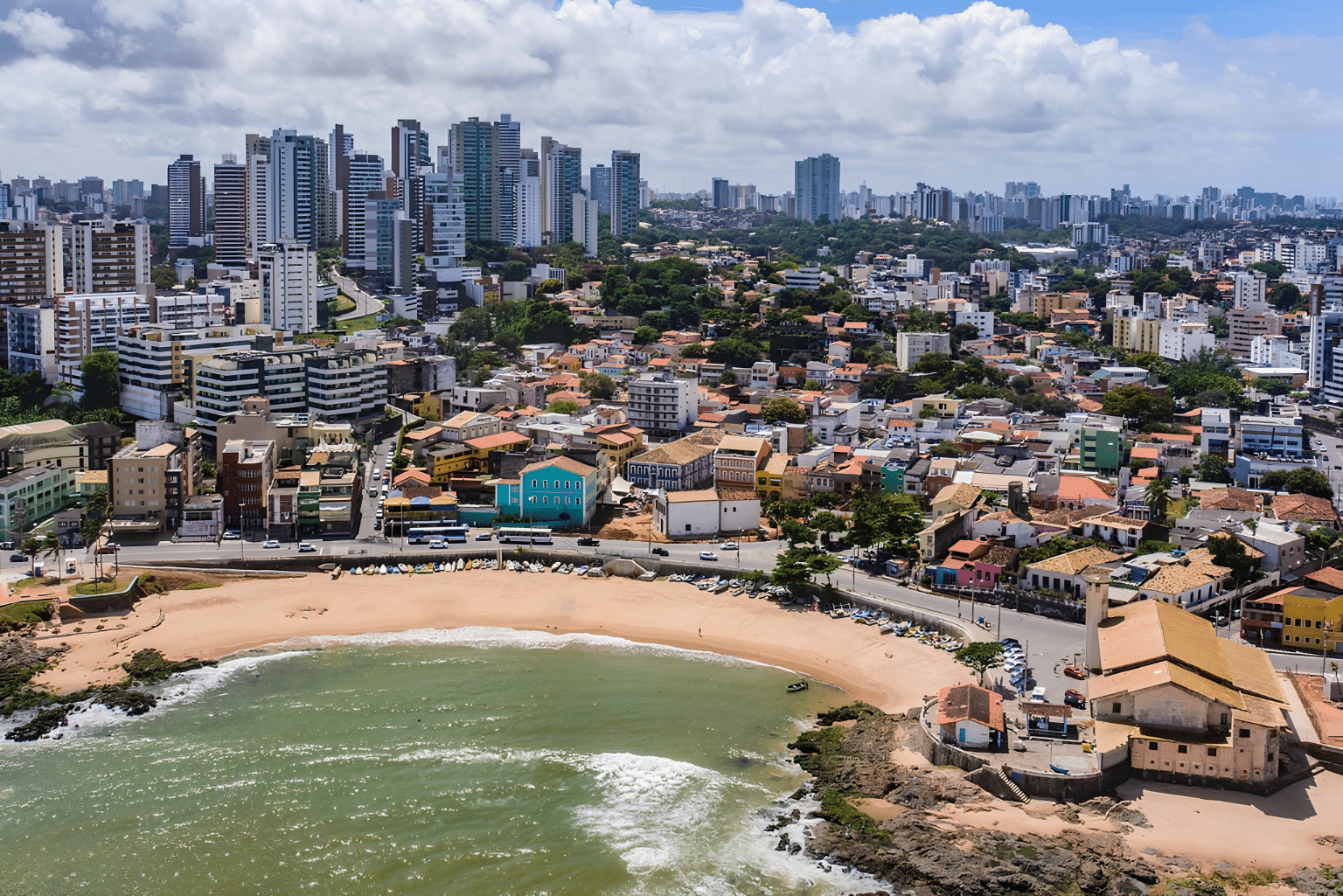
2.11. Swimming at Porto da Barra beach

Porto da Barra is one of the most beautiful beaches in Salvador, voted the third best beach in the world by The Guardian!
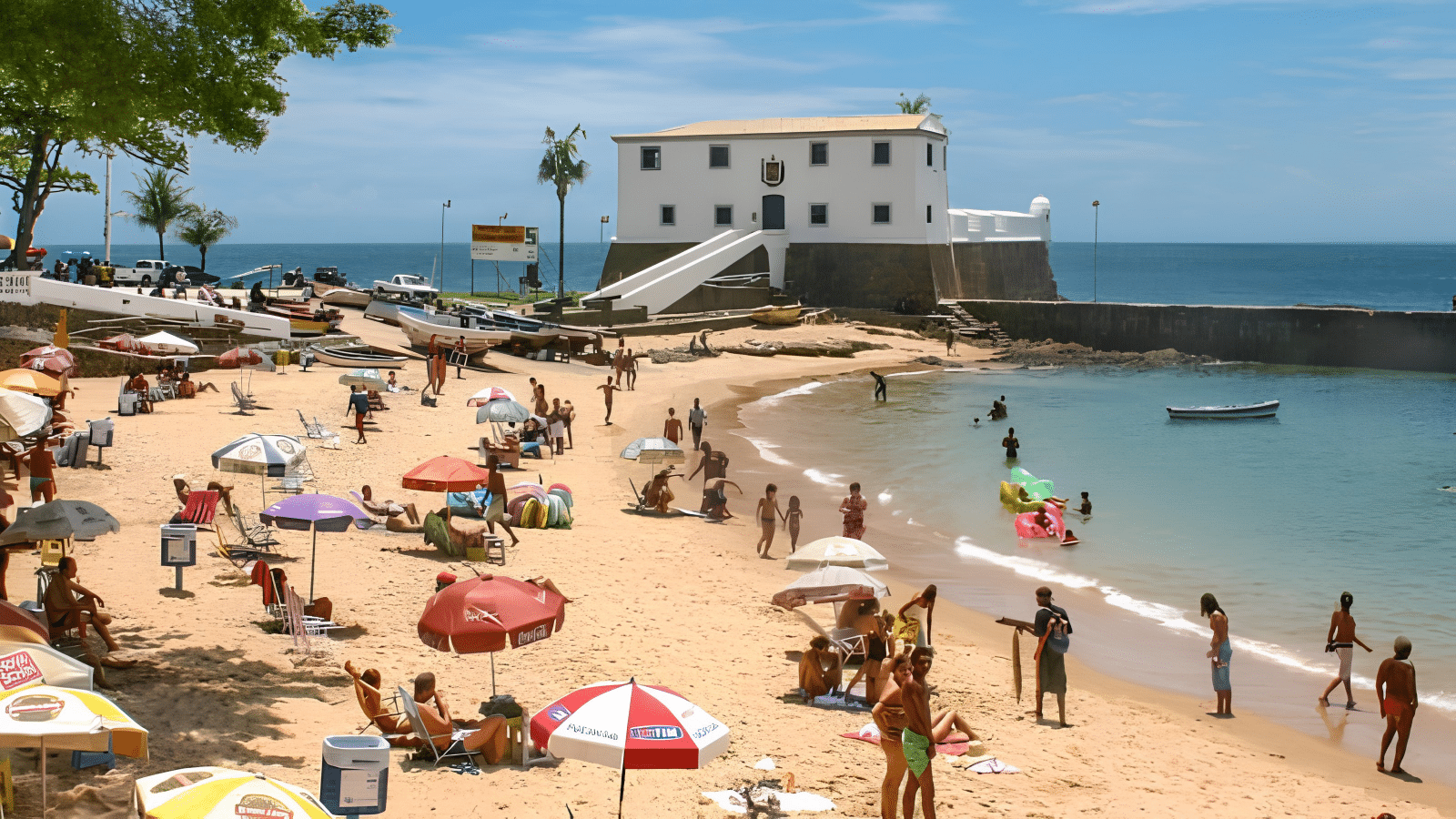
Porto da Barra is located between the forts of São Diogo and Santa Maria and is very popular for swimming as its waters are calm and blue.
Porto da Barra is also popular for water sports such as windsurfing, diving and stand up paddle boarding.
In the surrounding area, beautiful historic buildings enrich the view and the walk, such as the forts of Santa Maria and São Diogo. The Barra lighthouse is also close by. The beach is also a great place to watch the sunset.
2.12. Barra lighthouse

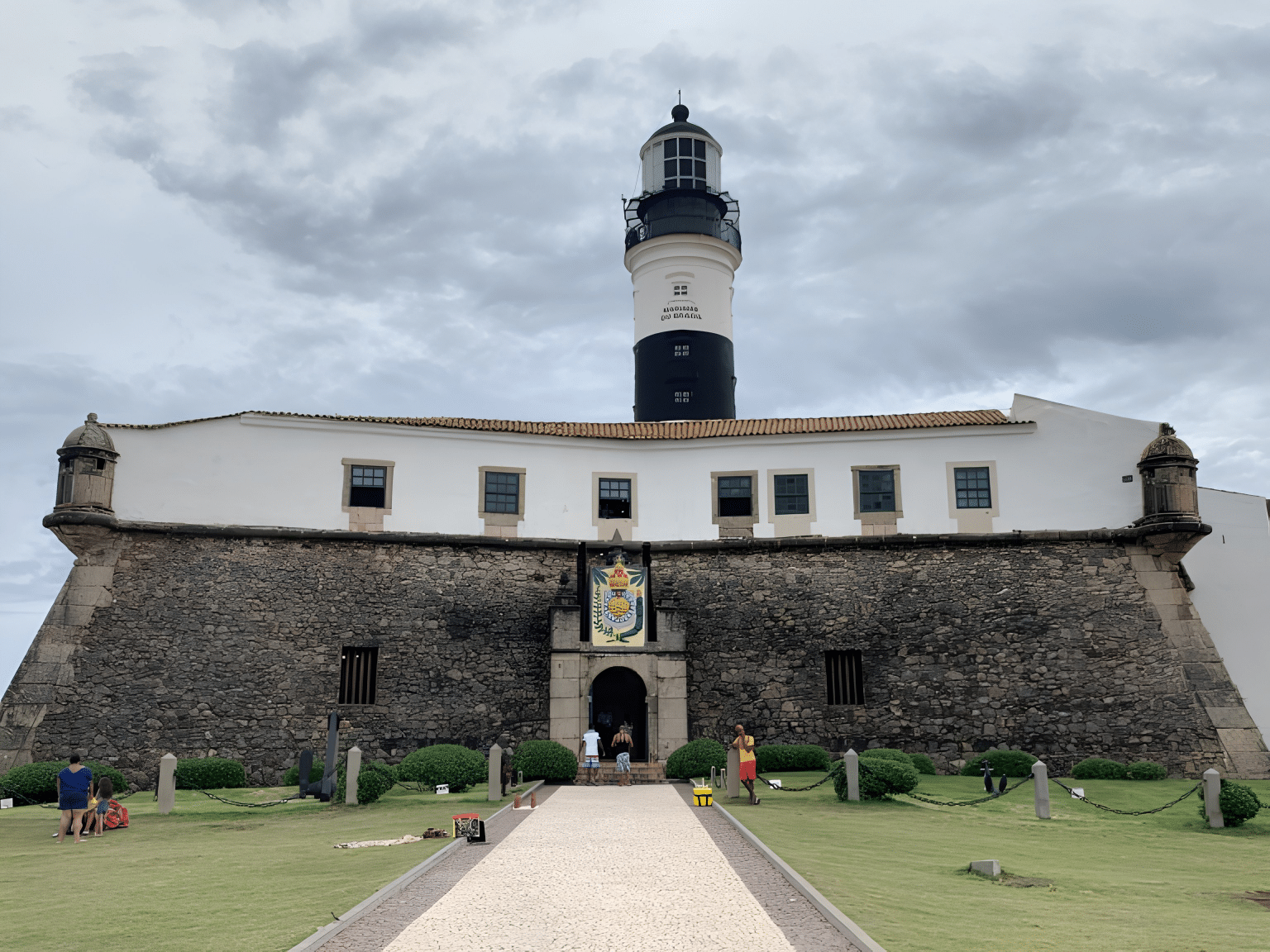
The Fort of Santo Antônio da Barra, the real name of the Barra Lighthouse, is also one of the most famous tourist attractions that visitors should see up close.
With a 22-metre tower, this building was the first to be built in Brazil in 1534 and still houses the Bahia Nautical Museum.
From the top of the tower, you can enjoy an incredible panoramic view of Barra Beach, which is not only beautiful, but also extremely photogenic.
2.13. Church of Nosso Senhor do Bonfim

The Church of Nosso Senhor do Bonfim took 20 years to complete, between the middle and end of the 18th century.
It is one of the postcards of Salvador, whether for its religious significance, its neoclassical architecture or its collection of paintings by José Teófilo, a famous 18th-century painter from Bahia. It is here that the famous Bonfim Ribbons are distributed, a typical amulet of Salvador.
2.14. Bohemia of the Red River

If tourists want excitement and a lively nightlife, the Rio Vermelho district is the place to go. Considered the most famous entertainment centre in Salvador, it is home to the main restaurants, bars, nightclubs and parties.
If you want to experience the atmosphere on the streets, try Largo de Santana or Largo da Mariquita, where you can sit at tables on the pavement and enjoy the festive atmosphere.
2.15. Gamboa neighbourhood

The Gamboa neighbourhood is characterised by its coastal community, which has been inhabited by fishermen for centuries. It is located at the south-western entrance to the Bay of All Saints, close to the centre of Salvador.
Gamboa – home to the parishes of Solar do Unhão and Gamboa de Cima e de Baixo – is bordered by Avenida Contorno and surrounded by the Bay of All Saints. No, that’s no exaggeration.
2.16. Basilica of Our Lady of the Conception of Praia

The Basílica Santuário Nossa Senhora da Conceição da Praia, also known as the Igreja de Nossa Senhora da Conceição da Praia, is located in the Cidade Baixa of Salvador, Bahia. It is just a few metres from the Lacerda Elevator and the Mercado Modelo.
The basilica has a remarkable feature: it was prefabricated in Portugal. The numbered pieces were transported across the Atlantic in caravels and finally assembled in Brazil.
2.17. Church of Our Lady of the Seas

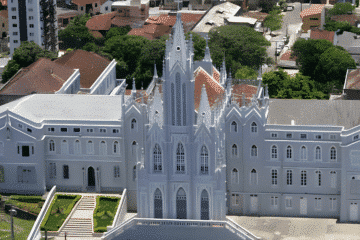
Nossa Senhora dos Mares Church is the only church in Bahia built in the neo-Gothic style, characterised by vertical lines and pointed towers.
2.18. Churches of Salvador da Bahia – History and Architecture
Salvador da Bahia has 160 churches scattered throughout the city, true monuments from the 17th and 18th centuries that illustrate the power of Catholicism at that time.
See Churches of Salvador, Bahia – History and Architecture
2.19. Attractions for families with children

Salvador has great tourist attractions that will delight parents and children alike, such as the Monteiro Lobato Children’s Library, the Zoo and the Municipal Park.
2.20. Discover the 23 beautiful beaches of Salvador, Bahia

The beaches of Salvador are much more than coconut trees, shade and warm water. The coastline of Salvador offers a wealth of history, fun and leisure.
2.21. History and Culture of Bahia: The 39 museums of Salvador
The city of Salvador, capital of Bahia, is one of Brazil’s greatest cultural centres, rich in history, tradition and artistic expression. Its 39 museums offer a deep dive into the region’s cultural diversity, with collections ranging from religious art and colonial art to Afro-Brazilian culture and contemporary art.
Each museum in Salvador is a window into the city’s history, from colonisation to the modern era, reflecting the diverse influences that have shaped Bahian culture.
Discover the history and culture of Bahia through the 39 museums of Salvador.
2.22. Itapuã lighthouse

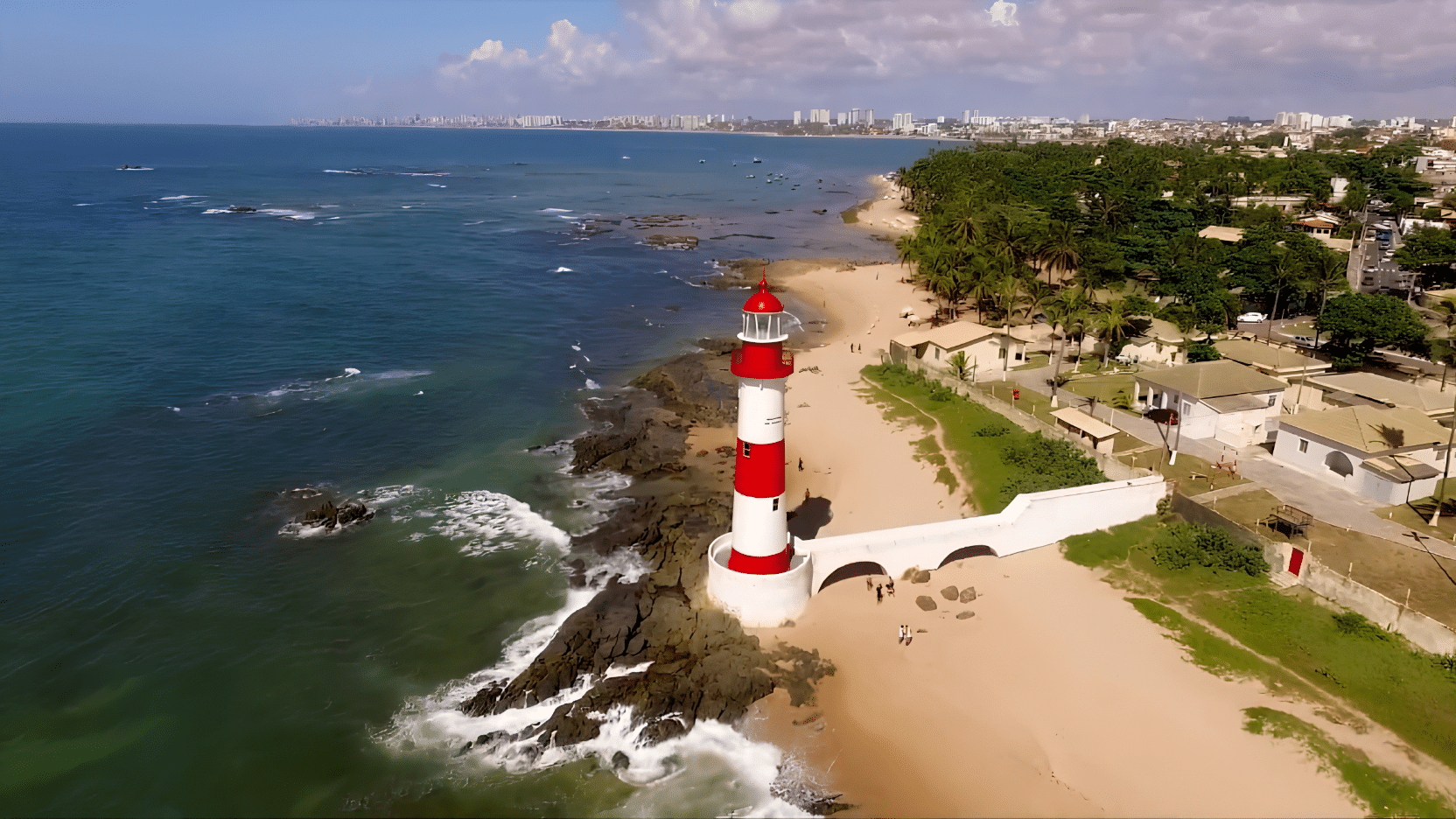
The Itapuã Lighthouse is one of Salvador’s most iconic landmarks, located in the Itapuã district, famous for its beaches. Built in 1873, the lighthouse stands in one of the city’s most stunning landscapes, with white sand, crystal clear waters and coconut trees that complete the typical Salvadoran landscape.
The surrounding area is ideal for relaxing, strolling along the waterfront and enjoying the rich cultural life of the neighbourhood, also known for its references in Brazilian popular music, such as the famous song “Tarde em Itapuã” by Vinícius de Moraes and Toquinho.
2.23. Fort of Santa Maria

The Fort of Santa Maria, located on Porto da Barra beach in Salvador, is one of the historic fortifications that form part of the defensive system of the Bay of All Saints. Built in the early 17th century, the fort was designed to protect the city from attacks by invaders, especially the French and Dutch. Its strategic position on the coast offers a privileged view of the Bay of All Saints.
The fort has a simple and robust architecture, typical of military fortifications of the time, and has undergone several renovations over the years. Currently, the Santa Maria Fort houses the Espaço Pierre Verger da Fotografia Baiana, a permanent exhibition dedicated to the famous photographer and ethnologist Pierre Verger, with images depicting the culture and daily life of the Bahian people.
In addition to its historical and cultural significance, the fort is an excellent stop for tourists visiting Porto da Barra beach, one of the city’s most popular beaches, famous for its calm waters and spectacular sunsets.
Tourist Attractions and Architectural Heritage of Salvador, Bahia
Publicações Relacionadas
History of the Church of São Pedro dos Clérigos in Salvador
Interesting places to visit in Salvador
Discover the 23 beautiful beaches of Salvador, Bahia
Ponta de Humaitá: A Gem in Salvador Bahia
Convent and Church of Santa Teresa and its History
Where to Stay in Salvador for Your Best Experience
History of the Cathedral Basilica of Salvador
History of the Church of Nosso Senhor do Bonfim in Salvador
Attractions in the Historic Centre of Salvador, Bahia
Parks and Squares in Salvador for Leisure Activities
Tourist attractions in the Gamboa neighbourhood in Salvador BA
Bahia Art Museum (MAB): Learn about its history and collection
Church and Convent of Nossa Senhora da Palma in Salvador, Bahia
Tourist attractions for children in Salvador: fun and learning
History of the Senhor do Bonfim Ribbons — Origin, Meaning and Traditions
Solar do Unhão and the Museum of Modern Art in Salvador BA
Tourist Attractions in Pelourinho and the Historic Centre of Salvador
Churches of Salvador: Architectural and Historical Treasures
Cathedral Basilica of Salvador — History, Sacred Art and Collection
Secret History of Salvador, Bahia - History of Brazil
History of the Founding of Salvador, Bahia - History of Brazil
Learn about the history of the construction of the Lacerda Lift
Discover the Magnificence of Nossa Senhora de Monte Serrat Fort
Most Visited Churches in Salvador de Bahia Revealed
Features and History of the Church and Convent of São Francisco
Church of the Third Order of St Francis History
39 Museums in Salvador: Discover the history and culture of Bahia
Basílica de Nossa Senhora da Conceição da Praia: História
Rio Vermelho Neighbourhood in Salvador's Nightlife
History of the São Marcelo Fort or Forte do Mar in Salvador
Palaces in Salvador to visit and learn about Brazil's history
History and sights of Avenida Contorno in Salvador BA
Discover the reasons for a holiday in Salvador, Bahia
Prostitution, sex, massage parlours and nightclubs in Salvador
Fort of Santo Antônio da Barra and Its Rich History
Fort of Nossa Senhora de Monte Serrat History
This post is also on:
Português
English
Deutsch
Español
Français