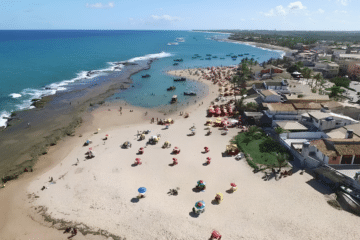
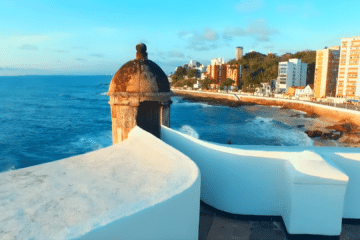
The Fort of Nossa Senhora de Monte Serrat, located in the city of Salvador, Bahia, is one of the most iconic and best-preserved examples of colonial military architecture in Brazil.
Regarded as a major tourist attraction, the fort offers a combination of historical and cultural significance and panoramic views that attract both local and international visitors.
The Fort of Nossa Senhora de Monte Serrat, also known as Monte Serrat Fort or simply São Felipe Fort, is one of the most important and beautiful military structures in Salvador, Bahia.


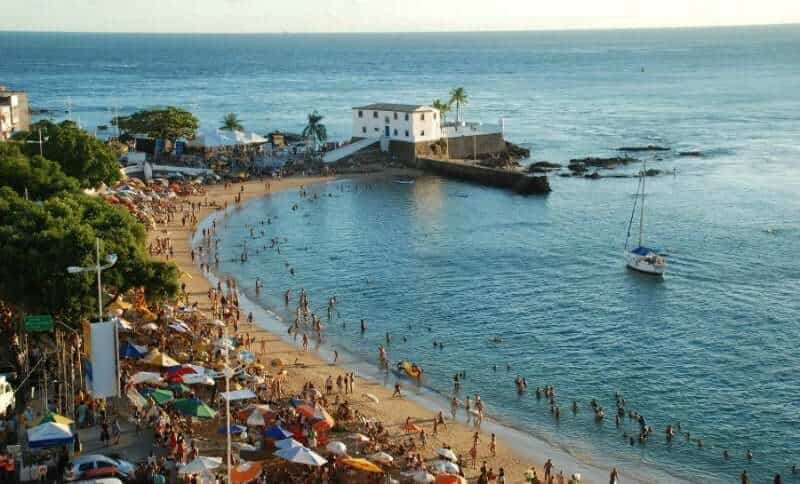
Strategically located on the Itapagipe peninsula, near the Church of Nossa Senhora do Monte Serrat, the fort played a crucial role in the city’s defence during the colonial period.
Video – Fort of Our Lady of Monte Serrat


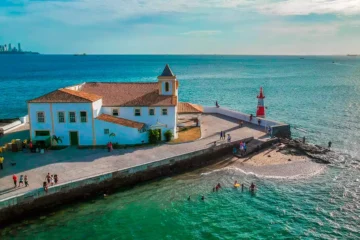
Vista aérea do Forte de Nossa Senhora de Monte Serrat
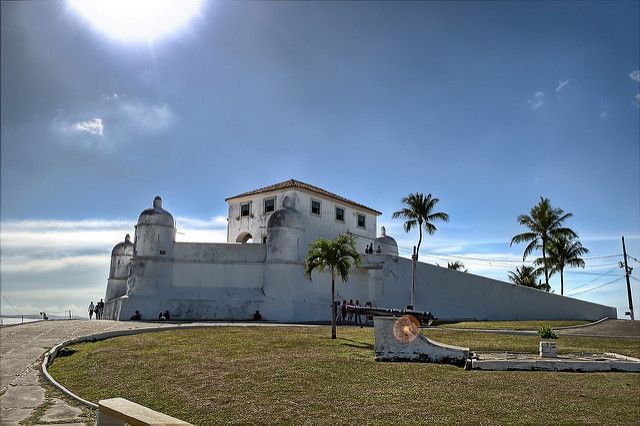
História do Forte de Nossa Senhora de Monte Serrat26:56
A Chronology of the Fort of Nossa Senhora do Monte Serrat
1. Origin and Construction
- Start of Construction
Construction of Monte Serrat Fort began in 1583, during the governorship of Manoel Teles Barreto, who was the Governor-General of Brazil at the time. The fort was built to defend the entrance to Todos-os-Santos Bay, a strategic position for protecting Salvador, then the capital of Brazil, against foreign invasions and pirate attacks. - Architecture and Design
The Fort of Nossa Senhora de Monte Serrat is considered one of the finest examples of military architecture in colonial Brazil, with a style that blends Renaissance influences and traditional Portuguese features. It was originally designed as a fortification made of wood and rammed earth (a construction technique using earth), but over the years, particularly from 1602 onwards, it underwent renovations to become a structure of stone and lime, which was more durable and permanent. - Strategic Location
Situated on top of a hill, the fort offers a commanding view of the entrance to Todos-os-Santos Bay, providing an ideal vantage point for spotting enemy ships and protecting the city from potential attacks. Its location allowed the artillery pieces to cover a wide area of the coastline, including the entrance to the port of Salvador.
2. Military and Defence
- Defence against Dutch Invasions
In 1624, during the Dutch invasion of Salvador, Monte Serrat Fort played a crucial role in the city’s defence. The Dutch managed to capture Salvador, but the fort was one of the last strongholds to hold out and be taken by the invaders. After the Portuguese recaptured the city in 1625, the fort was repaired and reinforced. - Additional Fortifications
Throughout the 17th and 18th centuries, the fort underwent several extensions and modernisations. It was fitted with new, taller and thicker walls, and the number of cannons was increased whilst the facilities for the garrisoned soldiers were improved.
3. Structure and Architectural Features
- Shape
The Fort of Nossa Senhora de Monte Serrat has an irregular polygonal shape, typical of fortifications of the period, with projecting bastions that allowed for wide-ranging fire coverage and greater resistance to attack. This structure facilitated defence and provided all-round visibility, minimising blind spots and improving protection against enemy artillery fire. - Walls and Towers
The walls are thick and built of stone and lime mortar, providing a solid barrier against artillery attacks. The fort features watchtowers at its corners, which were used to observe movement in the bay and around the town. - Entrance Gate and Interior
The entrance to the fort is protected by a sturdy wooden gate, surrounded by defensive walls. Inside, there are barracks for the soldiers, armouries and ammunition stores, as well as a small chapel dedicated to Our Lady of Monte Serrat, after whom the fort is named.
4. Decline and Current Use
- Loss of Military Function
As time passed and military requirements changed, Monte Serrat Fort gradually lost its strategic importance. In the late 19th and early 20th centuries, with advances in military technology and the growth of the city of Salvador, the fort was decommissioned as an active military installation. - Listing and Preservation
In 1938, the fort was listed by the National Institute of Historic and Artistic Heritage (IPHAN) as a site of Brazil’s historical and cultural heritage, in recognition of its architectural and historical significance. Since then, the fort has undergone restoration work and has been preserved as a historic monument. - Tourist Attraction
Today, the Fort of Nossa Senhora de Monte Serrat is a popular tourist attraction in Salvador. Open to the public, it offers spectacular views of the Bay of Todos-os-Santos, attracting visitors interested in Brazil’s military history, colonial architecture and the region’s natural beauty.
5. Cultural and Historical Significance
- Symbol of Resistance
The fort symbolises resistance and the struggle to defend Salvador during the colonial period, particularly against Dutch attempts at invasion. Its history is linked to the defence of Brazilian territory and the effort to maintain Portuguese sovereignty in South America. - Cultural Heritage
In addition to its military significance, the fort is a cultural and religious symbol, dedicated to Our Lady of Monte Serrat, to whom many of the faithful attribute protection and miracles. The fort’s chapel remains a place of worship for many people from Bahia.
6. Access and Facilities for Visitors
- Access: The Fort of Nossa Senhora de Monte Serrat is open to the public and welcomes visitors. There is a small entrance fee, which helps with the maintenance and preservation of the site. It is easily accessible from the centre of Salvador, and there is parking nearby.
- Facilities: The site has basic facilities for visitors, including toilets and a small souvenir shop. Tour guides are often on hand to provide detailed information about the fort’s history and points of interest.
7. Importance to Tourism
- Popular Attraction: The fort is a popular attraction for tourists wishing to explore Salvador’s rich history and gain a better understanding of the city’s importance during the colonial period. Its well-preserved state and peaceful atmosphere make it a pleasant place for family visits and for those interested in history and photography.
8. Summary
The Fort of Nossa Senhora de Monte Serrat, built in the late 16th century, is one of the most important historic fortifications in Salvador, Bahia.
Find out more about the history of the Fort of Nossa Senhora de Monte Serrat
Originally designed to protect the city from foreign invasions and pirate attacks, the fort played a crucial role during the Dutch invasions of the 17th century.
With its impressive architecture and strategic location on the Itapagipe peninsula, the fort not only symbolises resistance and military defence, but also preserves the region’s cultural and religious heritage.
Today, as a listed historic monument, Monte Serrat Fort continues to attract visitors and tell the story of Salvador and Brazil.

Publicações Relacionadas
South Coast of Bahia: Discover Stunning Beaches
Santo Amaro da Purificação — History, Culture and Tourism in the Recôncavo Baiano
Chocolate Road and trails of the Cocoa Coast - video
Paulo Afonso's Beautiful Waterfalls and Canyons
Cairu Archipelago: A Guide to Its Enchantment
Paragliding at Pitinga Beach in Arraial d'Ajuda
History of grape and wine production in the São Francisco Valley
Things to Do in Rio de Contas (Bahia): A Complete Guide
Tourist Attractions on the Discovery Coast in Bahia
Valença: The Gateway to Morro de São Paulo
Complete Guide to Visiting Arraial d'Ajuda in Bahia
Garcez Beach: Discover Paradise in Jaguaripe
Porto Seguro's nightlife: Where to have fun
Discovery Route in Bahia: History, Culture and Tourism
History of São Marcelo Fort — Salvador, Bahia
Blue Fountain in Chapada Diamantina: a complete guide
Iguaí: A Guide to Waterfalls and Relaxation
Kitesurfing in Trancoso: A Guide for Adventurers
Waterfalls and trails in the Capão Valley: Complete Guide
Church and Convent of Santa Clara do Desterro and its History in Salvador
Ilhéus (BA) — Beaches, Cocoa Plantations and Cultural Itinerary
Costa do Sauípe, Bahia: Resorts and Tourist Guide
Cathedral Basilica of Salvador — History, Sacred Art and Collection
Lapão Cave: The Ultimate Adventure Experience
Diving Spots in Bahia: Discover Underwater Treasures
Palaces in Salvador to visit and learn about Brazil's history
Jandaíra: Discover the charm of Mangue Seco
Trekking - Popular trails in Chapada Diamantina
Origin and History of Capoeira in Brazil Explained
History of the settlement of Chapada Diamantina
História da Arte - Caracteristicas, Aspectos e Periodos
Cumuruxatiba (Prado, BA) — Guide to beaches, excursions and whale watching
Barra do Cahy: Brazil's first beach - history and nature
Marimbus Pantanal: Adventure in Chapada Diamantina
Bom Jesus da Lapa Sanctuary: A Complete Visitor’s Guide
Waterfalls of Chapada Diamantina: A Guide for Adventurers
This post is also on:
 Português
  English
  Deutsch
  Español
  Français