The history and architecture of Solar do Unhão
Solar do Unhão is a historic architectural complex situated on the shores of Todos os Santos Bay in Salvador (BA). Dating from the 17th and 18th centuries, the complex comprises the main manor house, the Chapel of Nossa Senhora da Conceição, a private jetty, an aqueduct, a fountain, a slave quarters and a distillery with vats — all bearing witness to the region’s economic and social activities.

1. The first owners and the golden age
In 1690, the site served as the residence of Judge Pedro Unhão Castelo Branco. Around 1700, the property was sold to José Pires de Carvalho e Albuquerque, who established an entailed estate and led the property into its golden age. Portuguese tile panels and a stone-carved fountain date from this period.
2. The Chapel of Our Lady of the Immaculate Conception
The first documented reference to the chapel dates back to the 18th century (a baptismal record from 1740). The chapel forms part of the complex and displays features of the late Rococo style.
3. Economic changes and new uses
With the decline of the sugar industry, the estate was leased out and underwent various alterations. In the 19th century, it served as the town house of the Pires de Carvalho family; in the 19th and 20th centuries, it housed a snuff factory (until 1926), a warehouse and storage facilities linked to the port. During the Second World War, it was used for military purposes.

4. Listing and restoration
The complex was listed as a national heritage site in the 1940s (the listing was officially recorded in 1943). It was subsequently acquired and restored by the Government of the State of Bahia to house cultural institutions.


Video on the History and Architecture of Solar do Unhão

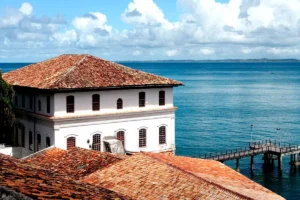
Vista de cima do Solar Unhão em Salvador01:41
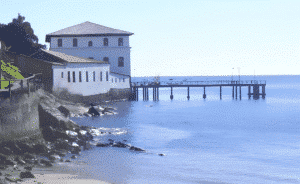
Solar do Unhão em Salvador - Drone05:05
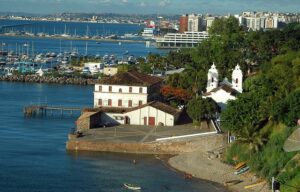
História do Solar do Unhão am Salvador BA05:14

Museu de Arte Moderna da Bahia - MAM02:55
Museum of Modern Art of Bahia (MAM-BA)
MAM-BA was established by state legislation in 1959 and held its first exhibition in January 1960, in the foyer of the Castro Alves Theatre. The restoration and adaptation work on the Solar do Unhão was overseen by Lina Bo Bardi in the early 1960s, when the museum moved into the Solar as its headquarters.
Collection and spaces
MAM-BA boasts a significant collection of modern and contemporary art and attracts a large number of visitors every year. The museum features exhibition galleries, a cinema, a library and the open-air Sculpture Park.


Cultural programme
MAM-BA organises temporary exhibitions, meetings with artists, discussion series, workshops and musical events, with a particular focus on jazz performances and outdoor events.
Sculpture Park and outdoor works
Outside is the Sculpture Park, which opened in the 1990s and features open-air works that blend into the bay’s landscape. Artists such as Carybé have contributed permanent features, such as the railing and panels.

Architectural features of the Solar do Unhão
- Three floors: ground floor, main floor and first floor (added in the 19th century).
- Stone masonry structure and brick arcades.
- Hipped and gabled roofs and colonial-style sash windows.
- A chapel with a late Rococo façade; the nave and chancel are of the same width and height.


Changes and uses over time
In the past, the complex was used as an urban plantation, comprising a main house, a chapel and a slave quarters. Over the centuries, it was adapted for industrial and commercial activities — a snuff factory, a warehouse, a sawmill and a rice-hulling mill powered by a natural waterfall that is still visible today.
Summary timeline
- 1690: the home of Pedro Unhão in Castelo Branco.
- Early 18th century: owned by José Pires de Carvalho e Albuquerque.
- 19th century: it belonged to Antônio Joaquim Pires de Carvalho e Albuquerque.
- 1928–1940s: various uses; listed as a national heritage site (1940s).
- Late 1950s–early 1960s: projects by Lina Bo Bardi; establishment of MAM-BA.
- The 1990s: opening of the Sculpture Park.
Visiting MAM-BA — practical tips
Enjoy the sunset in the outdoor area of Solar do Unhão and be sure to visit the Sculpture Park. Check the official MAM-BA website for opening hours, temporary exhibitions and information on tickets and the programme.
Selected sources and references
- Official website and materials from the Government of the State of Bahia (IPAC / MAM-BA).
- Documents and catalogues on the MAM-BA collection and Lina Bo Bardi’s intervention.
- Local records and studies on the Sculpture Park and the works of Carybé.
See also History and Tourist Attractions of Avenida Contorno in Salvador, Bahia

Publicações Relacionadas
Rio Vermelho is Salvador’s trendiest and most bohemian neighbourhood
Ponta de Humaitá — Lighthouse, church and the best sunset in Salvador
Pelourinho: what to do in Salvador’s Historic Centre
Discover the 23 beaches of Salvador — A complete guide and tips
7-day itinerary in Salvador and the surrounding area: Pelourinho, the islands and Praia do Forte
Bahia Maritime Museum: History of Navigation at the Barra Lighthouse
4 Must-See Museums in Salvador: Art, History and Culture
History of the Cathedral Basilica of Salvador
Cathedral Basilica of Salvador — History, Sacred Art and Collection
Where to Stay in Salvador for Your Best Experience

Church and Convent of Nossa Senhora da Palma in Salvador, Bahia

The most visited churches in Salvador — itinerary and tips

Discover the Magnificence Fort of Nossa Senhora de Monte Serrat

Tourist attractions in the Gamboa neighbourhood in Salvador BA

History and sights of Avenida Contorno in Salvador BA

Palaces in Salvador to visit and learn about Brazil's history

Basílica Santuário Nossa Senhora da Conceição da Praia — history and architecture

Church and Convent of Santa Clara do Desterro and its History in Salvador

Convent and Church of Santa Teresa and the UFBA Museum of Sacred Art in Salvador

Bahia Art Museum (MAB): Learn about its history and collection

The best beaches near Salvador (distance, facilities and tips)
Lacerda Elevator — history, construction and visits

Fort of Nossa Senhora de Monte Serrat History

Santo Antônio da Barra Fort — history, Barra Lighthouse and the Nautical Museu

History of São Marcelo Fort — Salvador, Bahia

Church of Nossa Senhora dos Mares (Salvador) — History and Architecture

Church of the Third Order of St Francis — History, Art and Baroque Architecture

Discover the reasons for a holiday in Salvador, Bahia

Churches of Salvador: Architectural and Historical Treasures
Churches in Salvador (BA) — a guide: history, architecture and itinerary

39 Museums in Salvador: Discover the history and culture of Bahia

Parks and Squares in Salvador for Leisure Activities

A History of the Forts and Lighthouses of Salvador (Bahia)

Places of interest in Salvador — A comprehensive guide

Tourist attractions for children in Salvador: Fun and learning

Find out how to celebrate Carnival in Salvador, Bahia
This post is also on:
 Português
  English
  Deutsch
  Español
  Français