The sloth, an animal with a sweet expression and gentle gestures, has an exclusive research centre in Ilhéus (BA).
In the reserve, which covers 43 hectares, there are currently 16 animals of the common species and 18 of the collared species.


The differences between the two are in the colour of their fur and the area in which they live.
According to the Department of the Environment, the common sloth, which has a greyish coat, can be found in both the Amazon and the Atlantic rainforest, the collared sloth, which has a brown coat and a neck with long black hair, occurs in Rio de Janeiro, Espírito Santo and Southern Bahia.
Vera Oliveira, the biologist in charge of the Research Centre, says that all species of sloth are threatened with extinction, but the sloth is in greater danger because it only occurs in a very small and fragmented geographical area.
Two factors are essential for the conservation and reintroduction of rescued sloths from aggression: preserved habitat and adequate food.
“Their areas of occurrence are shrinking. They are becoming weaker because their natural food is becoming scarce due to the advance of eucalyptus plantations in these regions,” warns Vera.
The biologist also points out that the number of rescued sloths, victims of hunting and deforestation, is constantly increasing.
Many arrive young. Without their mother’s warmth, they can die because their health is fragile. What’s more, sloths don’t drink water and get all the liquid they need from the juicy shoots they eat.
Video about the Collared Sloth

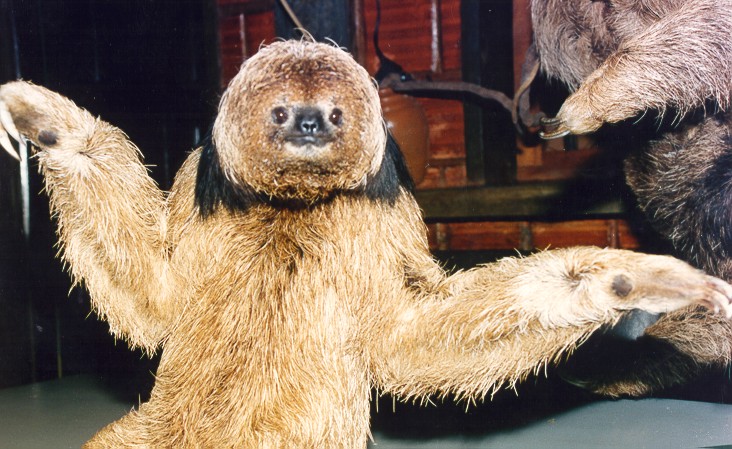
5 species of sloth exist in Brazil, belonging to two genera
The two genera show significant differences in morphology, behaviour and diet.
1. Genus Bradypus (Three-toed sloths)
- Variegated sloth (Bradypus variegatus)
- Sloth (Bradypus torquatus)
- Sloth (Bradypus tridactylus)
Habitat: Tropical forests, especially in the Amazon and the Atlantic Rainforest.
Characteristics
- They have three toes on each front paw.
- They are herbivores, feeding mainly on leaves.
- They move very slowly due to their reduced metabolism.


2. Genus Choloepus (Two-fingered sloths)
- Royal sloth (Choloepus didactylus)
- Hoffmann’s sloth (Choloepus hoffmanni)
Habitat: Mainly in the Amazon, in rainforest areas.
Characteristics
They have two toes on their front legs and three on their hind legs.
- They are more agile than sloths of the genus Bradypus.
- They have a more varied diet, including leaves, fruit and small insects.


Sloth curiosities
- Food: Leaves, shoots and fruit – they get all the water they need from their food.
- Movement: Extremely slow, spending most of their time in the trees.
- Predators: Jaguars, hawks and humans (hunting and deforestation are threats)
- Ecological importance: They spread seeds and help to balance the forest.
Common sloth injuries
The most common injuries show how badly sloths are attacked.
“They arrive wounded, usually from dog attacks, badly bruised and sometimes with fractures.
They also arrive very stressed, which makes it difficult for them to feed and adapt to the centre,” explains the biologist.
It’s important to stress that keeping a sloth in captivity is an environmental crime.
If the aggression situation is not reversed within a few years, the sloth will only be seen in the forests of the Cocoa Research Centre in Ilhéus.
Sloth sanctuary at CEPLAC
Created in 1996 by the biologist Vera Lúcia de Oliveira, the project is dedicated to the recovery and conservation of the sloth in an area of 43 hectares of the Atlantic Forest.
📍 Location: Ilhéus-Itabuna Highway (BR-415), CEPLAC.
Bahia.ws is the largest tourist guide to Bahia and Salvador.

Publicações Relacionadas
Ilhéus (BA) — Beaches, Cocoa Plantations and Cultural Itinerary
Discover the Magnificence Fort of Nossa Senhora de Monte Serrat
São Desidório: Explore Caves and Biodiversity
Churches in Salvador (BA) — a guide: history, architecture and itinerary
History of the Cathedral Basilica of Salvador
Praia do Forte, Bahia: The Complete Travel Guide
Caraíva: A rustic and unspoilt paradise in the south of Bahia
Tourist Attractions on the Discovery Coast in Bahia
The Municipality of Conde, Bahia: Beaches and a Comprehensive History
History of São Marcelo Fort — Salvador, Bahia
Guarajuba Beach: A Paradise on the North Coast of Bahia
Tinharé Archipelago: Discover Hidden Island Gems
Palmeiras: A Gateway to Chapada Diamantina
Lagoa Encantada in Ilhéus: A Preserved Natural Paradise
Valença: The Gateway to Morro de São Paulo
Tourist Areas in Bahia - Tourist Guide
Caravelas (BA) — Complete Guide: Beaches, History and Abrolhos
Trekking - Popular trails in Chapada Diamantina
History, the Festival of Nossa Senhora das Candeias and Tourist Attractions
Island of Fear: Mysteries and Hauntings
History and sights of Avenida Contorno in Salvador BA
A History of the Forts and Lighthouses of Salvador (Bahia)
Prado (BA) — Beaches, Cliffs and Whale Watching | Whale Coast
Find out how to celebrate Carnival in Salvador, Bahia
Church of São Pedro dos Clérigos — History, architecture and religious art
São Jorge Parish Church in Ilhéus — history, architecture and religious art
Maré Island (Bay of Todos os Santos) — beaches, culture and how to get there
The 15 Most Visited and Well-Known Beaches in Bahia
Torrinha Cave: A Speleological Marvel in Brazil
Bahia Maritime Museum: History of Navigation at the Barra Lighthouse
Wine Tourism in the São Francisco Valley Guide
Bay of Todos os Santos: nature, history and cultur
Tourist attractions for children in Salvador: Fun and learning
Salinas da Margarida (BA) — Beaches, Attractions and a Complete Guide
Camamu Bay — A Hidden Paradise in Bahia
Municipality of Una: A Beach Paradise Awaits
This post is also on:
 Português
  English
  Deutsch
  Español
  Français