History of the Cathedral of São Sebastião in Ilhéus — architecture, chronology and significance
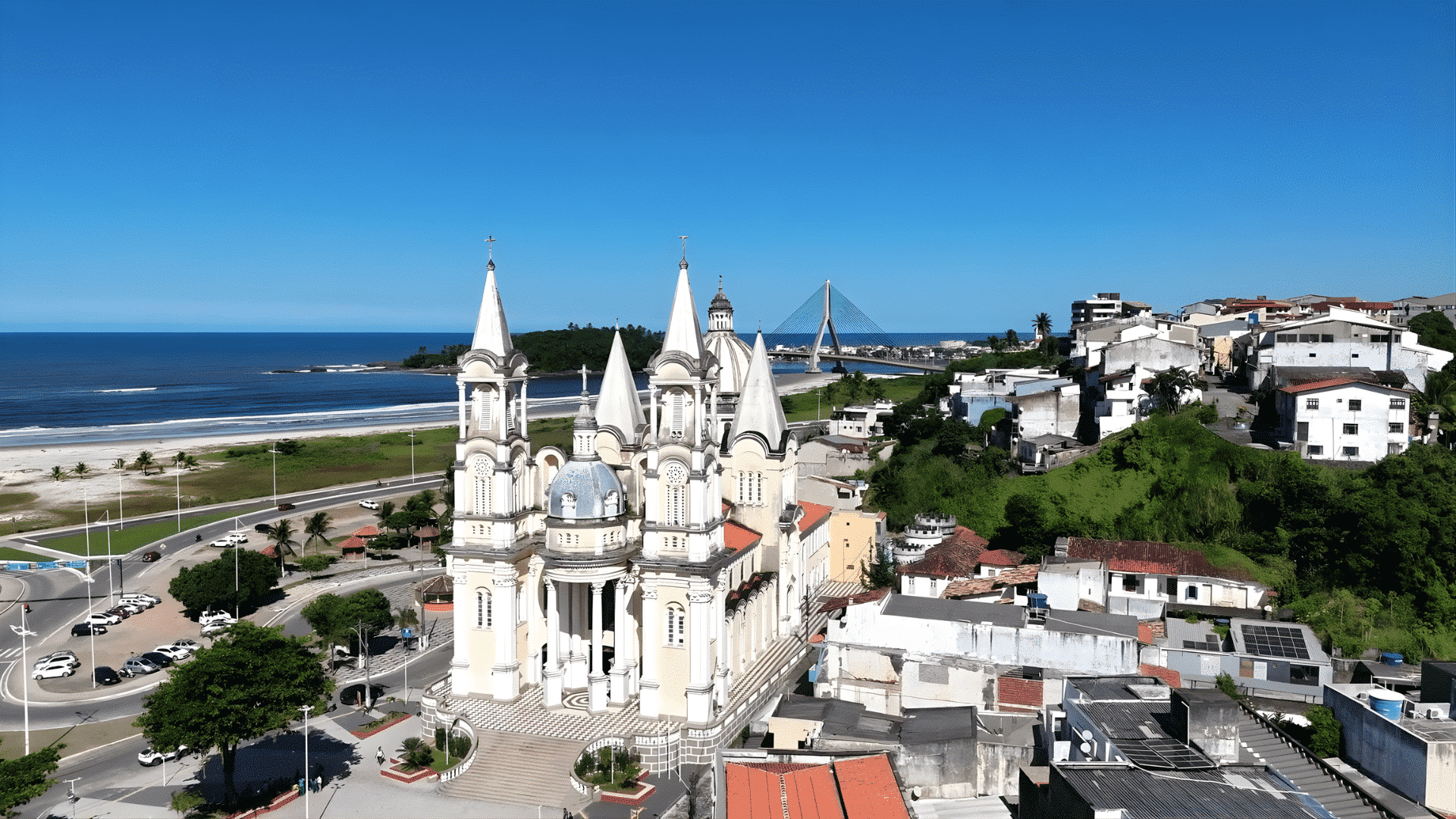
The design of the Cathedral of São Sebastião is attributed to the architect Salomão da Silveira, in an eclectic style.
In 1931, the newly arrived Bishop Dom Frei Eduardo José Herberhold blessed the site earmarked for construction, and work began, although it was soon halted.
There was intense debate over the architectural style and location of the temple. To resolve the deadlock, Mayor Eusínio Lavigne consulted the director of the Rio de Janeiro School of Fine Arts, Professor Arquimedes Memória.
This imposing church has been the dream of the Ilheense community for over thirty years.
The Cathedral of Saint Sebastian embodies the ideals of the bishop who commissioned its construction, Dom Eduardo, who was buried in the church itself — a gesture that made him a figure of great local devotion, even though he was never canonised.
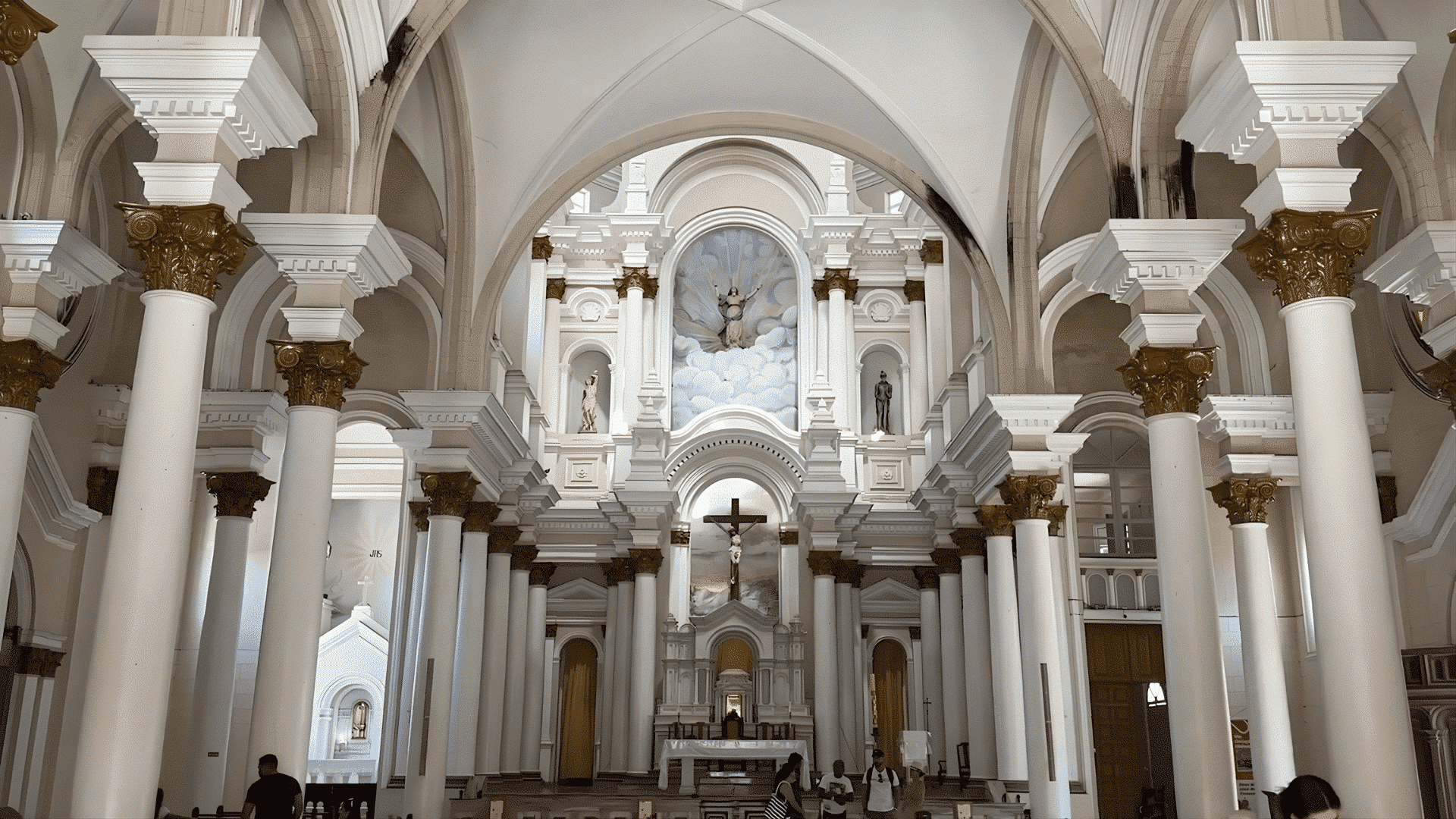
The Cathedral of São Sebastião was inaugurated in 1967, marking the completion of a construction project that lasted more than three decades. Its main vault rises to a height of approximately 48 metres, a sight that impresses both visitors and locals alike.
Although many do not consider it an architectural masterpiece, the Cathedral of São Sebastião holds immense cultural value for the local community and plays a significant role in the town’s tourism industry. Contemporary accounts state that “the wonder of wonders was its inauguration”: the city was filled with bishops and cardinals, and even the Apostolic Nuncio, Monsignor Sebastião Baggio, was present.
At the opening ceremony, the choir led by Maria de Lurdes Abreu performed excerpts from Handel’s *Messiah*. The ceremony was so grand and beautiful that it was described by chroniclers as a “miniature Vatican”.
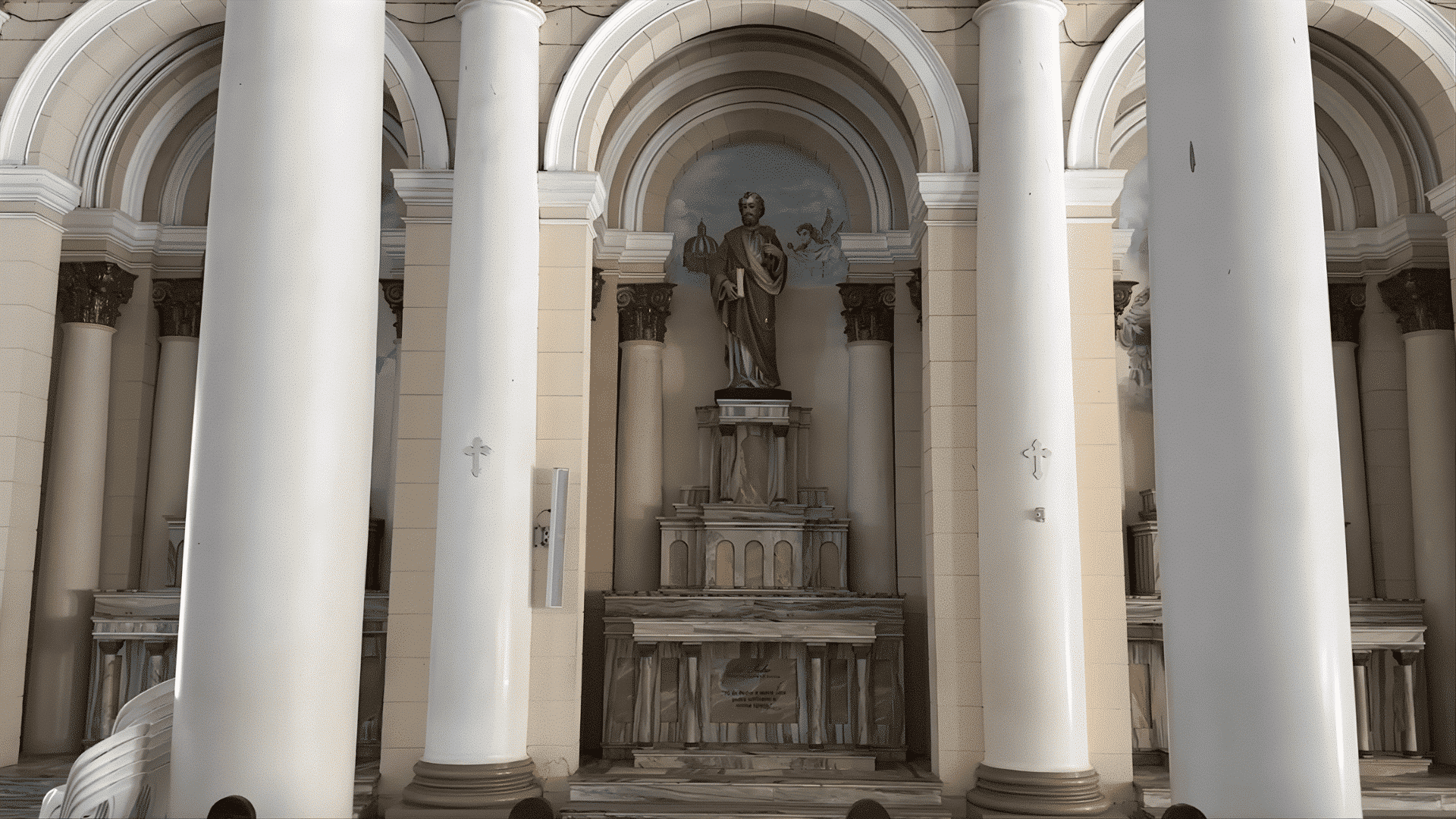
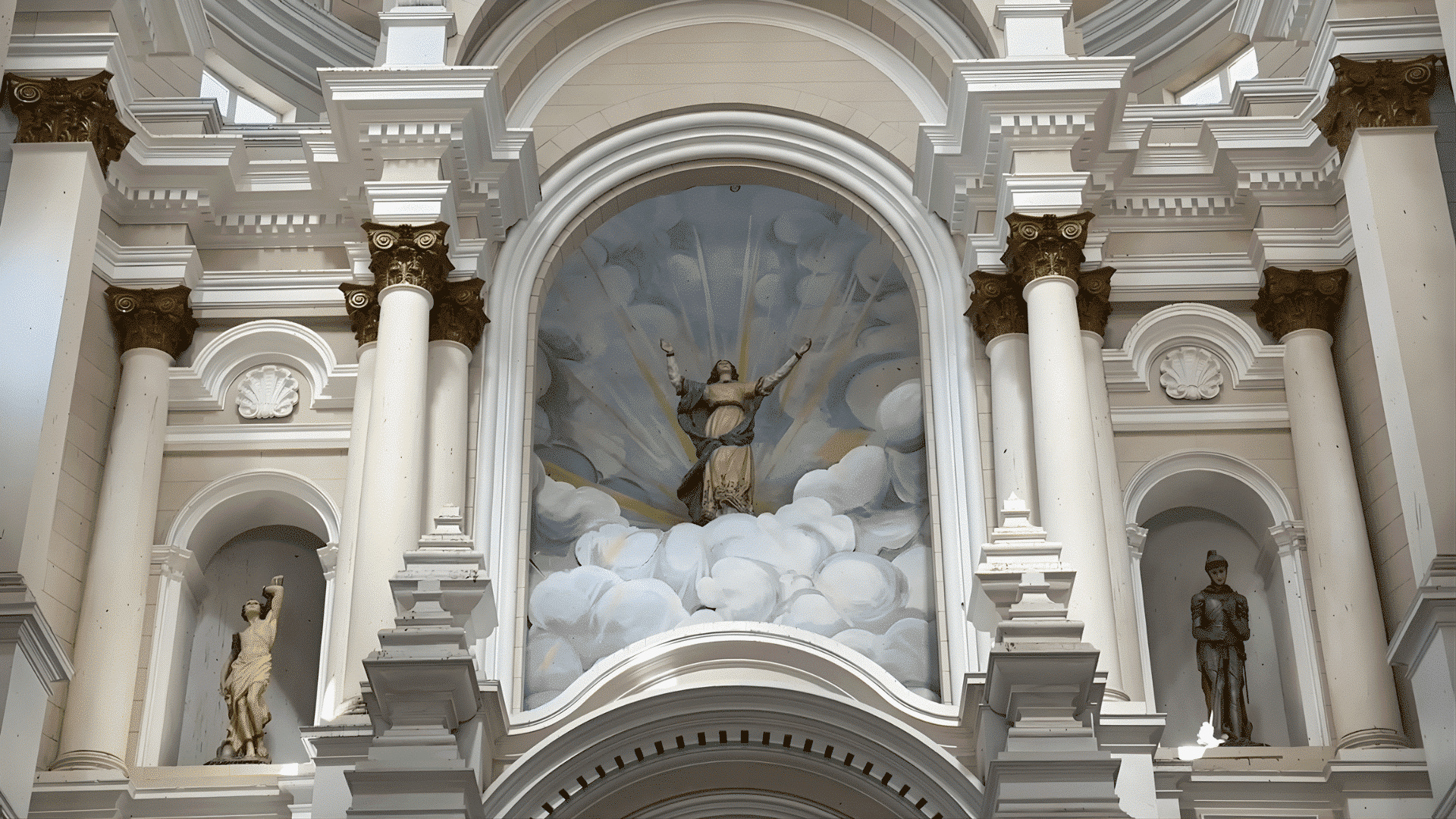
Interior da Catedral de São Sebastião em Ilhéus
Today, the eclectic-style Cathedral of São Sebastião is undoubtedly the symbol of the town of São Jorge dos Ilhéus and one of its main tourist attractions.
Eclectic style — definition and characteristics
The eclectic style is an architectural (and aesthetic) approach that combines elements from different historical styles and artistic movements, chosen on the basis of functional, symbolic or decorative criteria, rather than adhering to a single tradition.
Key features
- A blend of styles: Neoclassical, Gothic, Renaissance, Baroque, Art Nouveau, etc.
- Compositional freedom: the free combination of elements (columns, pediments, arches, ornamentation).
- Decorative eclecticism: ornate façades, a variety of materials and ornamental details.
- Functionality combined with aesthetics: adapting modern technical solutions whilst incorporating historical design elements.
Historical context
- Very common in the 19th and early 20th centuries, particularly in rapidly expanding cities seeking architectural prestige.
- Commonly used in public buildings, churches, palaces and townhouses.
Practical example
- An eclectic-style cathedral may combine neoclassical columns, Gothic-inspired stained-glass windows and Renaissance decorative details — the result of a variety of aesthetic and historical choices that come together to form a harmonious whole.
Publicações Relacionadas
History and Historical Attractions of Itacaré Reveale
São Jorge Parish Church in Ilhéus — history, architecture and religious art
History of Cocoa: From Aztecs to Modern Use
Beaches and Waterfalls of Itacaré: A Hidden Gem
Comandatuba Island: Resort and Family Adventure
Canavieiras: A Hidden Gem in Bahia's Coastline
Cocoa farms attract tourists to Bahia - Chocolate Road
History of the Convent and Church of Nossa Senhora da Piedade in Ilhéus
Serra Grande: Your Guide to Bahia's Paradise
Tourist Attractions on the Rio de Contas in Itacaré, Bahia
Learn more about the sloth and its unique characteristics
The best places to visit on the Cocoa Coast in Bahia
Ilhéus (BA) — beaches, history and cocoa plantations
Ilhéus: A Journey Through Bahia's Rich History
Chocolate Road and trails of the Cocoa Coast - video
Municipality of Una: A Beach Paradise Awaits
Paranaguá Palace — History, architecture and visiting information in Ilhéus (BA)
Lagoa Encantada in Ilhéus: A Preserved Natural Paradise
This post is also on:
 Português
  English
  Deutsch
  Español
  Français