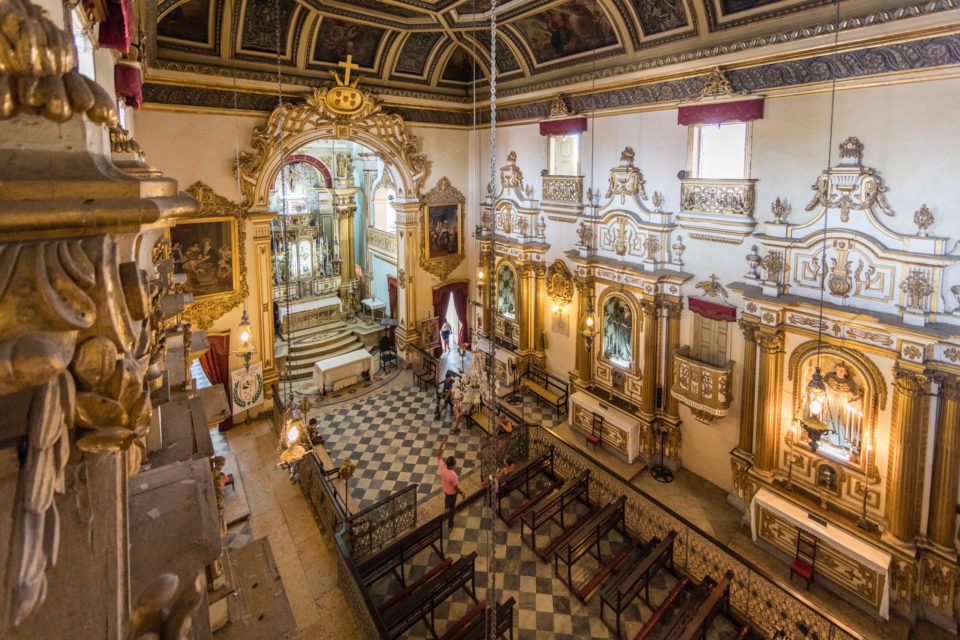
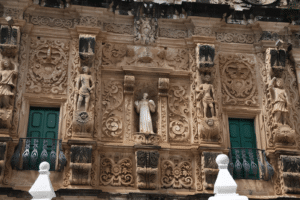
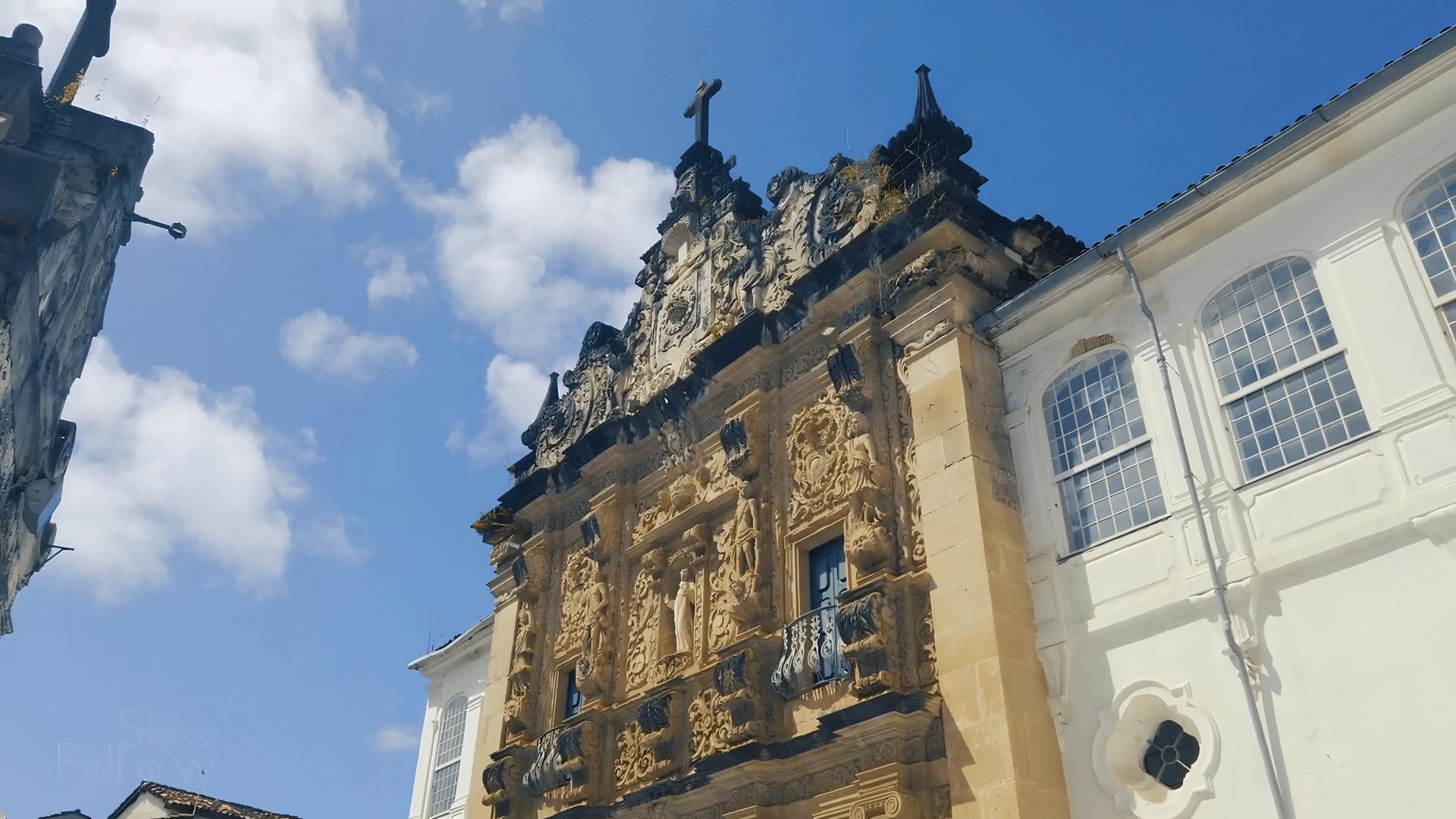
A striking example of Baroque architecture in Salvador, the Church of the Third Order of St Francis, in Largo do Pelourinho, is notable for its sandstone-carved façade, gilded interiors, Portuguese tile panels and valuable works of religious art.

Video – History and Architecture of the Church of the Third Order of St Francis
Igreja da Ordem Terceira de São Francisco em Salvador09:56
Conheça a Igreja da Ordem Terceira de São Francisco, em Salvador20:21
See also the details of the church’s façade – ICONOGRAPHY OF THE FAÇADE OF THE CHURCH OF THE THIRD ORDER OF SAINT FRANCIS IN SALVADOR, BAHIA
History and chronology
The presence of the Third Order of St Francis in Salvador dates back to the colonial period. The foundation stone of the present church was laid on 1 January 1702. Construction of the church and convent took place throughout the 18th century, with the finishing and decoration work continuing until the middle of the century.
Exterior and external features
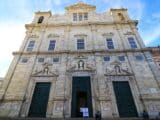
The façade is notable for its high-relief carvings on limestone and sandstone, featuring pilasters and Plateresque ornamentation. In the central niche stands a marble statue of Saint Francis. The two simpler side towers contrast with the richly decorated central section.

Interior, woodcarving and decoration
The interior is adorned with carvings and gilding that cover the walls, columns, chapels and altars. The ceiling features paintings from the colonial period, and the sacristy is renowned for its rich wood carvings and marble details. In the 19th century, some of the Baroque décor was complemented by altars in the Neoclassical style.


Portuguese tiles
The tile panels, found in the cloister, corridors and sacristy, are a highlight of the complex. In shades of blue, they depict a variety of scenes, including urban landscapes and religious episodes, forming one of the country’s most significant collections of tiles.


Works of art and treasures
Among the highlights are religious sculptures, life-size figures on display in the “Casa dos Santos” and pieces featuring exquisite detailing that form part of local processions and rituals. The church also preserves liturgical and decorative elements of great artistic value.


Floor plan and architectural features
Unlike the more common Franciscan-style church found in the North-East, this church has three naves, offering greater spaciousness and a more complex decorative scheme. The façade opens onto a square with a cross-shaped layout, integrating the complex into the urban fabric of Pelourinho.
Restoration and conservation
The complex underwent restoration work throughout the 20th century and continues to undergo regular conservation work to preserve the woodcarvings, tiles and sculpted elements, which are essential to the preservation of its architectural and religious heritage.
Visiting hours
Situated in Largo do Pelourinho, the church is a tourist and religious attraction in Salvador. When visiting, please respect conservation guidelines and liturgical timetables; part of the building serves as a museum, allowing visitors to admire the tiles, woodcarvings and religious images.
See also: Baroque architecture • Largo do Pelourinho • Salvador

Publicações Relacionadas
Rio Vermelho is Salvador’s trendiest and most bohemian neighbourhood
Ponta de Humaitá — Lighthouse, church and the best sunset in Salvador
Pelourinho: what to do in Salvador’s Historic Centre
Discover the 23 beaches of Salvador — A complete guide and tips
7-day itinerary in Salvador and the surrounding area: Pelourinho, the islands and Praia do Forte
Bahia Maritime Museum: History of Navigation at the Barra Lighthouse
4 Must-See Museums in Salvador: Art, History and Culture
History of the Cathedral Basilica of Salvador
Cathedral Basilica of Salvador — History, Sacred Art and Collection
Where to Stay in Salvador for Your Best Experience

Church and Convent of Nossa Senhora da Palma in Salvador, Bahia

The most visited churches in Salvador — itinerary and tips

Discover the Magnificence Fort of Nossa Senhora de Monte Serrat

Solar do Unhão & MAM-BA — History, Architecture and a Visit

Tourist attractions in the Gamboa neighbourhood in Salvador BA

History and sights of Avenida Contorno in Salvador BA

Palaces in Salvador to visit and learn about Brazil's history

Basílica Santuário Nossa Senhora da Conceição da Praia — history and architecture

Church and Convent of Santa Clara do Desterro and its History in Salvador

Convent and Church of Santa Teresa and the UFBA Museum of Sacred Art in Salvador

Bahia Art Museum (MAB): Learn about its history and collection

The best beaches near Salvador (distance, facilities and tips)
Lacerda Elevator — history, construction and visits

Fort of Nossa Senhora de Monte Serrat History

Santo Antônio da Barra Fort — history, Barra Lighthouse and the Nautical Museu

History of São Marcelo Fort — Salvador, Bahia

Church of Nossa Senhora dos Mares (Salvador) — History and Architecture

Discover the reasons for a holiday in Salvador, Bahia

Churches of Salvador: Architectural and Historical Treasures
Churches in Salvador (BA) — a guide: history, architecture and itinerary

39 Museums in Salvador: Discover the history and culture of Bahia

Parks and Squares in Salvador for Leisure Activities

A History of the Forts and Lighthouses of Salvador (Bahia)

Places of interest in Salvador — A comprehensive guide

Tourist attractions for children in Salvador: Fun and learning

Find out how to celebrate Carnival in Salvador, Bahia
This post is also on:
 Português
  English
  Deutsch
  Español
  Français