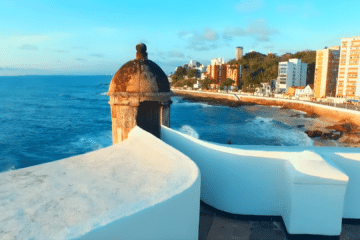
Enjoy Salvador’s parks and squares. Discover the rich variety of green spaces and enjoy moments of leisure, culture and relaxation.
Green areas and open spaces are a good alternative to exploring the city’s parks to enjoy the surroundings and make the most of your leisure time, as well as enjoying contact with nature and cultural attractions, not to mention cycling.

Parks and squares in Salvador, Bahia
- City Park
- Blue Coast Park
- Sculpture Parks
- Abaeté Metropolitan Park
- Tororo Dam Metropolitan Park
- Pituaçu Metropolitan Park
- Castro Alves Square
- Sé Square
- Retiro Square
- Lovers Garden Park
- Boca do Rio Leisure and Sports Park
- Dunes Park
- Wind Park
- Dinosaur Lagoon
- Cairu Square
- Bonfim Square
See also Tourist Attractions in Salvador.
1. Municipal Park
Avenida Antonio Carlos Magalhães, s/n, Itaigara
Completely wooded, Parque da Cidade offers a large green area for leisure and sports activities. It has running and walking tracks and a children’s playground, open daily from 6am to 8pm.
Popularly known as Parque da Cidade, Parque Joventino Silva brings together natural elements such as the Atlantic Forest and the White Sand Dunes, as well as various leisure activities spread over its 73 hectares.

The park has a reception area of 20,000 square metres, which includes snack bars, areas for leisure equipment hire, play areas and a amphitheatre with a capacity for 600 people.
With lawns, trees and cycle paths, City Park is a great option for the whole family. It is ideal for cycling, rollerblading, scooter riding and skateboarding, as well as for walking and picnicking, with almost 4,000 metres of trails.
The City Park is one of the few places in the capital of Bahia where you can find different species of ornamental and fruit trees, due to the transition from the Atlantic Forest to the dunes.
Species such as Oiti, Ipê, Pau-Brasil, as well as Jackfruit trees, Mango trees and Sapodilla trees, are easily found in the area.
The lawns invite you to relax and listen to the birdsong. The location is also ideal for activities such as yoga. Due to the pandemic, the park is open Monday to Saturday from 5am to 10pm with free entry.
2. Costa Azul Park
Adelaide Fernandes da Costa Avenue, s/n, Costa Azul
At 55,000 m², the park is a large area dedicated to sports, culture and leisure. It has sports grounds, exercise equipment, playgrounds with cycle racks, cycle paths, jogging track, boardwalk and an open-air amphitheatre with a capacity for 600 people.
There are also restaurants serving typical local dishes, international cuisine, pasta and meat dishes. The park is open 24 hours a day.

This urban park is a leisure and entertainment complex with a football pitch, cycle paths, running tracks and a food court with a variety of restaurants, all located near the seafront, offering a complete leisure and wellness experience.
3. Sculpture Park
Contorno Avenue, no number, Graça
Surrounding the Solar do Unhão is the Sculpture Park, an extension of the Bahia Museum of Modern Art (MAM). It is a true open-air museum where art meets nature.

Built in the 17th century, the park’s gardens contain sculptures by some of Bahia’s most representative artists. Among the highlights are works by Mário Cravo, Siron Franco, Carybé and other great names in Brazilian art. Their creations are scattered along a stretch of hillside facing the sea, in harmony with the natural environment.
One of the main attractions is the sculpture by Antônio Conselheiro, made of wood by Mário Cravo, installed in a setting reminiscent of the semi-arid hinterland.
The park is bordered by a seafront promenade, from where you can enjoy a stunning view of the Bay of Todos os Santos. In addition to the sculptures, the site has an exhibition hall and offers art workshops, making it a meeting point for art and culture in the capital of Bahia.
4. Abaeté Metropolitan Park
Alto do Abaeté Street, no number, Itapuã
The Abaeté Lagoon, located in Itapuã, is an important ecological leisure centre in Salvador. In addition to being a remarkable natural attraction, the site offers a landscape of dunes, bars, restaurants and the Casa da Música, which houses documents that tell the story of Bahian music.

Covering 12,000 square metres, the park preserves native vegetation, dunes and several lagoons, including the iconic Lagoa do Abaeté, which gives the park its name.
The park is also home to the Casa da Música, a museum dedicated to preserving the history of Bahian rhythms, where the Fobica, the world’s first Trio Eléctrico, created by Dodô and Osmar, is on display.
In addition to the cultural and historical attractions, the space offers a leisure area with kiosks, restaurants and live music, offering a complete experience of contact with nature and local culture.
5. Tororo Dam Metropolitan Park
At the Tororó Dam, eight figures from the Candomblé religion, designed by the artist Tati Moreno, dance on the surface of the water around a fountain that shoots water 40 metres into the air. These sculptures represent Candomblé deities and add a cultural and religious touch to the site.

The dam itself was built by the Dutch in the 18th century and originally played a strategic role as a military defence against Portuguese attacks.

Today it combines history, art and spirituality and is one of Salvador’s main tourist attractions.
6. Pituaçu Metropolitan Park
Inaugurated in 1973, Pituaçu Metropolitan Park is the largest ecological reserve in Salvador, located close to the sea. With an area of 450 hectares, the park is one of the most important spaces for leisure and free tourism in the capital of Bahia, receiving between four and five thousand visitors on weekends.

The park offers a variety of activities, such as multi-sports fields, a 18 km cycle track, a skateboard and rollerblading track, a children’s playground and a pedal boat dock. Works by the artist Mário Cravo also adorn the space, providing a combination of art and nature.
With an entrance on Rua Manoel Antonio Galvão, s/n, Pituaçu, the park also offers bicycle hire, bars, restaurants and recreational areas for the whole family, making it one of the most important places for environmental conservation and leisure in Salvador.
7. Castro Alves Square
Rua Chile, s/n, Pelourinho
Castro Alves Square is a tribute to the Bahian poet Castro Alves and is one of the main stages of the Salvador Carnival.

The highlight of the square is the imposing bronze and granite sculpture of Castro Alves, created by the Italian sculptor Pasquale Di Chirico.
In addition to its historical and cultural value, the square is a centre for artistic and cultural events, especially during Carnival, when it becomes a place for people to meet and celebrate.
8. Sé Square
Praça da Sé, s/n, Pelourinho
Praça da Sé is one of the most iconic tourist attractions in Pelourinho, Salvador. Located in the heart of the historic centre, the square is known for its colonial charm and important historical attractions.

Tourist Attractions
- Cathedral of Salvador: The majestic cathedral, also known as the Church of São Salvador, is one of the main landmarks of the square. Its baroque architecture and richly decorated interior make it a must see.
- Church of São Pedro dos Clérigos: A historic church that, together with other buildings around the square, contributes to the colonial charm of the area.
- Largo do Pelourinho: The square is located in one of the most famous areas of Salvador, Pelourinho, known for its cobbled streets, colourful buildings and vibrant cultural life.
- Jorge Amado House: The former home of the famous Brazilian writer, now converted into a cultural centre and museum, is nearby and an excellent stop for those interested in literature.
- Barroquinha Cultural Centre: A space dedicated to the promotion of culture and the arts, often hosting exhibitions and cultural events.
- Bahia Art Museum: Although not exactly on the square, it is close by and a great place to learn more about the art and history of Bahia.
Praça da Sé is a great starting point for exploring Pelourinho, with its rich history and vibrant cultural life.
9. Retiro Square
Largo do Retiro covers an area of 5,000 m², where a square and multi-sports field have been built, along with weight training equipment and a children’s playground.

Largo do Retiro is an important historical and cultural site.
Monuments and places of interest in the area
- Church of Our Lady of the Black Rosary: Located in Largo do Retiro, this historic church is known for its importance in the history of enslaved blacks and their cultural contributions. The building is a remarkable example of colonial and baroque architecture.
- Church of Saint Lazarus: Another important church in the region, known for its architecture and importance to the local community.
- Martyrs’ Square (Praça da Sé): Close to Largo do Retiro, this square offers a charming setting with its colonial architecture and vibrant cultural life.
- Bahia Art Museum: Although not located in Largo do Retiro, the museum is close by and is an excellent stop for those who want to explore the art and history of Bahia.
- Cultural Centre: Sometimes cultural events and temporary exhibitions take place in Largo do Retiro or nearby, offering an immersion in local culture.
- Fairs and local markets: At certain times of the year, Largo do Retiro hosts fairs and markets with local products, handicrafts and typical food.
Largo do Retiro is an area rich in history and culture, with several attractions that reflect the historical and cultural heritage of Salvador.
10. Park of the Lovers
The Parque Jardim dos Namorados is one of the most important urban parks in Salvador.
Parque Jardim dos Namorados is located close to the seafront and offers panoramic views of the sea, providing a relaxing and beautiful setting.

The park is known for its extensive lawns and beautiful gardens, providing a peaceful and pleasant environment for walks and picnics. The landscaping is well maintained and provides a natural space in the middle of the city.
Created in the 1960s and reopened in the 1990s, the park underwent a revitalisation that included the construction of an amphitheatre, porticoes, murals and sculptures by Bahian artists, as well as sports fields and gym equipment.
Located in the Pituba neighbourhood, the 110,000 m² park offers extensive facilities for cultural events, children’s recreation, recreation and sports such as cycling, jogging, skating and skateboarding.
There is also a restaurant, car park and kiosks selling coconuts and the traditional acarajé. It is a complete leisure area, with several options for outdoor activities.
11. Boca do Rio Leisure and Sports Park
Avenida Octávio Mangabeira, s/n – Boca do Rio, Salvador
Boca do Rio Leisure and Sports Park is an excellent place for those who enjoy outdoor activities and sports in Salvador.

Park Attractions
- Sports Facilities: The park offers various sports facilities such as football pitches, basketball and volleyball courts, as well as running and walking tracks.
- Leisure Areas: There are large green spaces and picnic areas where visitors can relax and enjoy the natural surroundings.
- Playgrounds: The park has modern and safe playgrounds, making it a great destination for families with children.
- Exercise Equipment: The park has outdoor exercise equipment, allowing visitors to keep in shape while enjoying the view.
- Events and Activities: The area often hosts community events, fairs and cultural activities, giving visitors something extra to do.
- Natural Beauty: Situated in a natural setting, the park offers a pleasant and well-maintained environment, ideal for relaxation and enjoyment.
- Accessibility: The park is easily accessible and has adequate infrastructure for people with special needs.
It is an excellent place for those who wish to practise sport, exercise or simply spend time outdoors in a well-maintained and pleasant environment.
12. Dunes Park
Avenida Orlando Gomes, s/n – Itapuã, Salvador
The Parque das Dunas is an ecological reserve of 6 million square metres, managed by the Universidade Livre das Dunas e Restinga de Salvador (Unidunas), near Stella Maris.

The park plays a fundamental role in the environmental balance and preservation of the quality of life in Salvador, with a rich diversity of flora and fauna.
It was the first protected area in Salvador to be awarded the UNESCO title, highlighting its importance in preserving the ecosystem. The park offers several ecological trails where visitors are accompanied by guides who explain the characteristics of the dunes and sandbars along the way.
In addition to the trails, the park has a complete infrastructure, including an auditorium, classrooms, a composting centre, a sandbank garden, a library, a guest house, a snack bar, a projection room, a sports field, a playground, a barbecue area, a rest area, a first aid station and a toilet. Worm farm, Cafeteria, Projection room, Cultural centre and a Recreation area. It is a place dedicated to environmental education and the conservation of biodiversity.
13. Parque dos Ventos (Wind Park)
Avenida Dorival Caymmi, s/n – Itapuã
The Parque dos Ventos is a recreational and nature reserve in Salvador, known for its dunes and panoramic views.
With 85,000 square metres facing the sea, Parque dos Ventos, located on the Boca do Rio waterfront next to the Salvador Convention Centre, offers a wide range of activities focused on leisure and sports, including opportunities for professional athletes.

With 14 leisure areas, the park has been designed to cater for all ages, with inclusive equipment and toys.
Highlights include a ten-metre high structure for activities such as abseiling and climbing. The park also has a street skate park with ramps and handrails, a three-kilometre cycle track, a pump track (a continuous circuit of bumps and curves) and an area for parkour.
The park also has a disabled playground, basketball hoops, a volleyball court, areas for contemplation and picnics, and an amphitheatre with a capacity of 100 to 150 people.
The structure also includes four hills connected by laminated wooden bridges and natural slides. For visitors’ convenience, there are kiosks, areas for rollerblading, walking paths and toilets.
The car park has 150 spaces, a gatehouse and a small medical centre. The park also guarantees security with the permanent presence of the Guardia Civil (GCM), 24-hour camera surveillance and LED lighting.
14. Dinosaur Lagoon
Dorival Caymmi Avenue, Itapuã
The Lagoa dos Dinossauros (Dinosaur Lagoon) is a tourist attraction in the region of Itapuã.

The Lagoa dos Dinossauros (Dinosaur Lagoon) is known for its natural formation and the presence of large rocks and formations that resemble dinosaur footprints. These formations are the result of natural geological processes over time.
The Lagoa dos Dinossauros (Dinosaur Lagoon), located in the Stiep neighbourhood, is a special attraction for families with children and fans of the Jurassic Park film.
There are life-size replicas of dinosaurs in the lagoon.
The park is the result of the redevelopment of Lagoa dos Frades and features several dinosaur replicas, including
- Tyrannosaurus Rex
- Velociraptor
- Dilophosaurus
- Dilophosaurus sinensis
- Brachiosaurus
- Pteranodon
- Anquilossauro
The dinosaurs have presence sensors and are equipped with a system that emits sounds when someone approaches, enhancing the immersion and experience of visitors.
The site offers an educational and entertaining experience that combines the charm of prehistoric times with modern technology.
15. Visconde de Cairu Square
Praça Visconde de Cairu, also known as Praça Cairu, is an important square in the historic centre of Salvador, in the Pelourinho district.

Attractions and surroundings
There are several places of interest around the square:
- Mercado Modelo: One of the city’s main shopping and craft centres.
- Nautical Terminal: Facilitates maritime transport and tourist activities.
- Lacerda Lift: Offers a panoramic view of the city and connects the upper and lower city.
- Church of Nossa Senhora da Conceição da Praia: One of the historic churches of the city.
- 2nd Naval District: Important for the military history of Salvador.
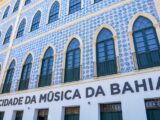
The area gained new prominence with the opening of the Music Museum of Bahia City, one of the state’s main instruments for cultural appreciation.
The museum is a 100% audiovisual space with more than 750 hours of content, including 260 exclusive testimonies on Bahian music. The collection is curated by Gringo Cardia and Antonio Risério and covers four floors with a shop, library, media library, café and permanent exhibitions that showcase the past, present and future of music production in Brazil’s first capital.
The square is one of the main attractions for tourists arriving at the Nautical Terminal.
History of the square
Praça Visconde de Cairu was built between the end of the 19th and the beginning of the 20th century, when the Mercado Modelo still functioned as the city’s customs house and part of the Lower City had not yet been completely filled in. The square is an important historical and cultural landmark that attracts visitors and tourists interested in Salvador’s rich history and vibrant culture.
16. Bonfim Square
Bonfim, Salvador
Largo do Bonfim is one of the most emblematic places in Salvador, known for its religious and cultural importance.

Here are some details about Largo do Bonfim and its attractions:
- Bonfim Church: The main attraction of Largo do Bonfim is the Church of Nosso Senhor do Bonfim, one of the most famous sanctuaries in Brazil. The church is an important place of pilgrimage and is known for its fitinhas (Bonfim ribbons), which the faithful tie to the temple railings to make requests and promises.
- Lavagem do Bonfim: One of the most traditional and famous events in the city, Lavagem do Bonfim takes place every January. It is a celebration that mixes religion and folklore, in which devotees dressed in white carry the statue of Senhor do Bonfim in a procession to the church and perform a kind of symbolic washing of the temple steps with scented water.
- Crafts and Local Trade: In Largo do Bonfim you will find several stalls and shops selling local handicrafts, including the famous Bonfim ribbons and other souvenirs.
- Cultural Environment: Largo do Bonfim is a vibrant centre of Bahian culture, offering an authentic experience of the city’s religious and festive spirit.
- visit and access: Largo do Bonfim is easily accessible and well located in the Bonfim neighbourhood, with public transport and parking facilities nearby.
It is a great place to discover one of the deepest aspects of Salvador’s culture and religiosity, as well as participate in one of Brazil’s most iconic festivals, the Lavagem do Bonfim.
Bahia.ws is the largest tourist guide for Bahia and Salvador – Parks and Places in Salvador, Bahia

Publicações Relacionadas
Rio Vermelho is Salvador’s trendiest and most bohemian neighbourhood
Ponta de Humaitá — Lighthouse, church and the best sunset in Salvador
Pelourinho: what to do in Salvador’s Historic Centre
Discover the 23 beaches of Salvador — A complete guide and tips
7-day itinerary in Salvador and the surrounding area: Pelourinho, the islands and Praia do Forte
Bahia Maritime Museum: History of Navigation at the Barra Lighthouse
4 Must-See Museums in Salvador: Art, History and Culture
History of the Cathedral Basilica of Salvador
Cathedral Basilica of Salvador — History, Sacred Art and Collection
Where to Stay in Salvador for Your Best Experience

Church and Convent of Nossa Senhora da Palma in Salvador, Bahia

The most visited churches in Salvador — itinerary and tips

Discover the Magnificence Fort of Nossa Senhora de Monte Serrat

Solar do Unhão & MAM-BA — History, Architecture and a Visit

Tourist attractions in the Gamboa neighbourhood in Salvador BA

History and sights of Avenida Contorno in Salvador BA

Palaces in Salvador to visit and learn about Brazil's history

Basílica Santuário Nossa Senhora da Conceição da Praia — history and architecture

Church and Convent of Santa Clara do Desterro and its History in Salvador

Convent and Church of Santa Teresa and the UFBA Museum of Sacred Art in Salvador

Bahia Art Museum (MAB): Learn about its history and collection

The best beaches near Salvador (distance, facilities and tips)
Lacerda Elevator — history, construction and visits

Fort of Nossa Senhora de Monte Serrat History

Santo Antônio da Barra Fort — history, Barra Lighthouse and the Nautical Museu

History of São Marcelo Fort — Salvador, Bahia

Church of Nossa Senhora dos Mares (Salvador) — History and Architecture

Church of the Third Order of St Francis — History, Art and Baroque Architecture

Discover the reasons for a holiday in Salvador, Bahia

Churches of Salvador: Architectural and Historical Treasures
Churches in Salvador (BA) — a guide: history, architecture and itinerary

39 Museums in Salvador: Discover the history and culture of Bahia

A History of the Forts and Lighthouses of Salvador (Bahia)

Places of interest in Salvador — A comprehensive guide

Tourist attractions for children in Salvador: Fun and learning

Find out how to celebrate Carnival in Salvador, Bahia
This post is also on:
 Português
  English
  Deutsch
  Español
  Français