Discover the architecture and history of the palaces in Salvador

Palacio Rio Branco em Salvador09:07

Palácio Rio Branco vira hotel03:08

Palacio da Sé ou Palácio Arquiepiscopal de Salvador02:41
1. Palace of Acclamation

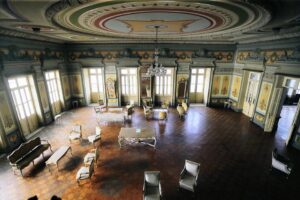
Once the residence of Miguel Francisco Rodrigues de Morais, the palace was converted in 1912 into the official residence of the governors — based on designs by the architect Filinto Santoro — and was officially occupied between 1917 and 1967. It has welcomed distinguished visitors, such as Queen Elizabeth II (1968).
Since 1990, it has operated as a museum, with its collection spread over two floors (furniture from the reigns of King John I and Louis XV, bronze, crystal and porcelain pieces, Persian rugs and paintings by Presciliano Silva).
Highlights: a Baccarat crystal chandelier in the Great Hall, neoclassical décor and the Banquet Hall. It is currently undergoing renovation but continues to host cultural events, temporary exhibitions and private ceremonies.
Opening hours: Tuesdays to Sundays, 1 pm–7 pm (when open).
Address: Av. Sete de Setembro, 1330 – Campo Grande.
2. Rio Branco Palace

Built following the city’s foundation (1549) on the orders of Tomé de Souza, the building served as the seat of the Portuguese government and as a residence for governors and members of the royal family. Following a series of fires and reconstructions, it was reopened in an eclectic style (1919) and named in honour of the Baron of Rio Branco.
It has served as a barracks, a prison and the headquarters of institutions such as the Pedro Calmon Foundation; today it houses the Department of Culture and the Governors’ Memorial, with a collection that includes certificates, insignia, swords, books, photographs and personal effects belonging to the governors.

Interesting facts and curiosities
- Louis XV-style furniture on display in the Great Hall.
- French mirrors framed in plaster and gilded with gold leaf.
- The Pompeian Room: the oldest of the rooms, it survived the events of 1911–1912 and features frescoes inspired by Pompeii.
- Collection: 1,845 items (most of which were donated by family members); 46 items are listed in the Pedro Calmon Foundation’s inventory.
The Pedro Calmon Foundation (1986) preserves and promotes this collection. There are plans to convert the palace into a luxury hotel; the Governors’ Memorial is to be housed in its own premises under the Foundation’s care.
Address: Praça Tomé de Souza, S/N – Centro.


3. Archbishop’s Palace (Cathedral Palace)

Built in the 18th century in the Historic Centre, it is one of the finest examples of colonial civil architecture. With three storeys and four wings, it is notable for its Lioz stone portal bearing the coat of arms of Archbishop D. Sebastião Monteiro da Vide, and its galleries lining a central courtyard, which are influenced by Italian Renaissance palaces.

Reopened in December 2019 following restoration, it houses the Reference Centre for the History of the Catholic Church in Brazil, including the Rector Eugênio Veiga Conservation and Restoration Laboratory and more than 16,000 restored documents.
Address: Praça da Sé, 203-47 – Pelourinho, Salvador – BA, 40020-210
4. Solar Santo Antônio House-Museum

A 19th-century building with a strong imperial influence, it houses the collection of Marchand Dimitri Ganzelevitch (over 4,000 items). It features a terrace overlooking the Bay of Todos-os-Santos and also serves as accommodation.

Visiting hours: by appointment.
Address: Rua Direita de Santo Antônio, 177 – Santo Antônio Além do Carmo.
5. Sports Palace

Originally associated with the São João Theatre, the current building (dating from the 1930s, in the Art Deco style) once housed the Department of Agriculture and various sports federations. It currently serves as the Municipal Department of Sport, and there are proposals to sell it for use in the tourism sector.
Opening hours: Monday to Friday, 9am–7pm.
Address: Praça Castro Alves, 01 – City Centre.

Publicações Relacionadas
Fort of Nossa Senhora de Monte Serrat History
Costa do Dendê: A Tropical Paradise in Bahia
São Sebastião Cathedral (Ilhéus) — History, architecture and tourism
Find out how to celebrate Carnival in Salvador, Bahia
Church and Convent of Nossa Senhora da Palma in Salvador, Bahia
Torrinha Cave: A Speleological Marvel in Brazil
Itaparica Island — Complete Guide: History, Beaches and Tips
Barra do Cahy: Brazil's first beach - history and nature
Discover the reasons for a holiday in Salvador, Bahia
Prado (BA) — Beaches, Cliffs and Whale Watching | Whale Coast
History of the Cathedral Basilica of Salvador
Marimbus Pantanal: Adventure in Chapada Diamantina
Maré Island (Bay of Todos os Santos) — beaches, culture and how to get there
Bay of Todos os Santos: nature, history and cultur
History of the settlement of Chapada Diamantina
Garcez Beach: Discover Paradise in Jaguaripe
Cumuruxatiba (Prado, BA) — Guide to beaches, excursions and whale watching
Origin and History of Capoeira in Brazil Explained
Igatu: Explore the 19th-Century Stone Houses
10 Interesting Facts About Rio de Contas That You Didn’t Know
Tourist Attractions in Bahia: main attractions, beaches and cities
Places of interest in Salvador — A comprehensive guide
Tourist Attractions on the Rio de Contas in Itacaré, Bahia
Alcobaça, Bahia: A Comprehensive Guide to Beaches and History
Discover the Abrolhos Archipelago: a haven for humpback whales and a biodiversity hotspot
Paranaguá Palace — History, architecture and visiting information | Ilhéus (BA)
Cathedral Basilica of Salvador — History, Sacred Art and Collection
Tinharé Archipelago: Discover Hidden Island Gems
Tourist Information about Chapada Diamantina
Lapão Cave: The Ultimate Adventure Experience
Church and Convent of Santa Clara do Desterro and its History in Salvador
South Coast of Bahia: Discover Stunning Beaches
Porto Seguro (BA) — History, Beaches, Tours and Practical Tips
Towns and the Abrolhos Archipelago — The southernmost tip of Bahia
The Tamar Project and turtle conservation
Salvador’s Historic Centre, Pelourinho, Baroque churches and museum
This post is also on:
 Português
  English
  Deutsch
  Español
  Français