Conde, Bahia: Nature, Tradition and Hidden Paradises on the Costa dos Coqueiros
The municipality of Conde, Bahia, on the North Coast of Bahia, lies about 180 km from Salvador. Although many tourists still overlook it, it has landscapes that surprise even the most seasoned travelers.
Located on the Costa dos Coqueiros, near the Linha Verde (BA-099), Conde charms visitors with quiet beaches, winding rivers, preserved mangroves, dunes and a simple way of life. However, be careful: do not confuse it with Conde in Paraíba, home to Tambaba Beach.
- Where it is: North Coast of Bahia, on the Costa dos Coqueiros, about 180 km from Salvador.
- Population: 23,654 inhabitants (IBGE Census 2022).
- Main beaches: Sítio do Conde, Barra do Itariri, Poças and Siribinha.
- Must-see: Cavalo Russo, a dune more than 20 meters high that ends in a river.
- Best time to go: from September to March, when the weather is drier.

Videos about the Tourist Attractions of Conde, Bahia

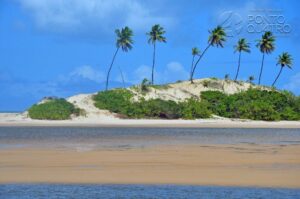
Praias do conde, sitio do conde, siribinha, cavalo russo e rio de pedras01:40
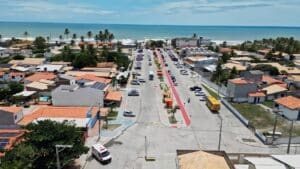
Praia de Sítio do Conde04:50

Siribinha na Bahia

Conde BA - Guia de Turismo03:50
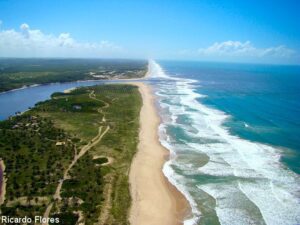
Praia de Siribinha em Conde BA05:40
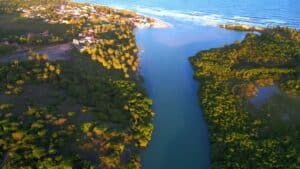
Barra do Itariri no município do Conde (BA)01:25
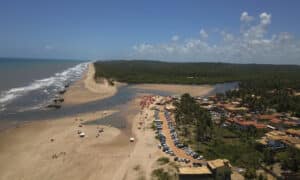
Barra do Itariri em Conde BA02:19
Things to do in the municipality of Conde, Bahia
1. Sítio do Conde Beach – sea and serenity
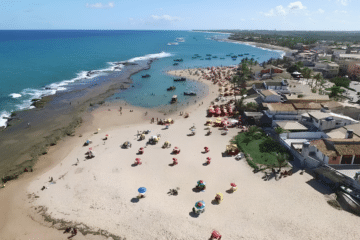
As the main tourist district of the municipality, Sítio do Conde is known for its calm sea and light sand, which make it ideal for swimming and walks along the shore.
In addition, the village has a good range of guesthouses, bars and restaurants, as well as beach huts right on the sand. For this reason, it is the ideal starting point for exploring the other attractions of the municipality.


2. Praia dos Artistas (Corre Nu) – for those seeking tranquility
Just 3 km from Sítio, this beach has a rustic setting, with a warm, calm sea, gentle dunes and plenty of coconut palms.
Therefore, it is perfect for anyone who wants to enjoy the coast in a peaceful atmosphere. Moreover, simple kiosks and nearby condominiums provide basic facilities.
3. Praia das Poças – simple and charming
With light sand, coconut groves and stronger waves, Praia das Poças is home to a small fishing village. It is also the only natural harbor in the region for small boats.
From there, motorized canoe trips set off through the rivers and mangroves. Thus, it is a great spot for those who enjoy community-based tourism.

4. Cavalo Russo – adventure on the dunes
First of all, imagine sliding down a dune more than 20 meters high straight into the reddish waters of a river. After all, that is what Cavalo Russo offers, one of the most thrilling attractions in the region.
To get there, you travel by boat, either from Poças (about 45 minutes) or from Siribinha (about 10 minutes). Besides the slide, the spot is great for swimming and is surrounded by white dunes and preserved vegetation.

5. Siribinha – a rustic village at the mouth of the Itapicuru
Further north, 16 km from Sítio do Conde, the village of Siribinha sits at the mouth of the rio Itapicuru and keeps a simple way of life. Furthermore, surrounded by dunes, mangroves and coconut palms, it is one of the most beautiful settings on the North Coast. According to locals, the area also served as a location for scenes in the film Tieta do Agreste, based on the work of Jorge Amado.

The village also offers boat and buggy tours, as well as quiet beaches rich in biodiversity. Finally, the sunset over the river is one of the most beautiful moments of the trip.
6. Barra do Itariri – where the river meets the sea
About 13 km from Sítio do Conde, Barra do Itariri is one of the postcard views of the municipality. There, in fact, the river meets the sea and forms natural pools, gentle dunes and sandbanks that, at low tide, you can cross on foot. In addition, coconut groves and rustic beach huts complete the scene and serve typical dishes by the sea.


7. Vila do Conde – heritage and tradition
On top of a hill, the old Vila do Conde, the seat of the municipality, preserves traces of the colonial period, such as the old church, simple rows of houses and stone streets. For this reason, it is a great outing for anyone who enjoys history, folk culture and photography.
8. Regional cuisine
In short, the cuisine of Conde highlights fresh seafood, such as moquecas (Bahian seafood stews), shrimp and other stews. In addition, locals sell acarajé (fried black-eyed pea fritters), beiju (cassava flatbread), cocadas (coconut sweets) and filled tapiocas (cassava crepes).
How to get to Conde and practical tips
- How to get there: from Salvador, head north on the Linha Verde (BA-099). Then take the turnoff to Conde and Sítio do Conde, for a total of about 180 km.
- Best time to go: from September to March, when the weather is drier and sunnier. On the other hand, rain is more frequent from April to July.
- How many days: ideally, 3 or 4 days to see the main beaches and take the trip to Cavalo Russo.
- Must-see: above all, the boat trip on the rio Itapicuru, the slide down the Cavalo Russo dune and the sunset in Siribinha.
- Surroundings: finally, it is worth combining the trip with Baixio, to the south, and Mangue Seco, to the north.
History of Conde, Bahia: Land of Traditions and Faith
Located on the North Coast of Bahia, the municipality of Conde combines lush nature, rich culture and a long history.
1. Indigenous origins and the arrival of the Jesuits
First of all, before the colonizers arrived, the territory was inhabited by the Tupinambá. Later, during the government of Mem de Sá, the Jesuit priests arrived, led by Luís da Grã, to catechize the Indigenous people. Then, in 1621, the Jesuits acquired a large area of land in the region, which they finally received by will in 1650.
2. Colonization and development
Over time, the fertile land attracted Portuguese settlers, who devoted themselves to sugarcane, tobacco and cattle raising and built several sugar mills. As a result, the old village gave rise to the settlement of Itapicuru de Baixo, which became a parish in 1702 under the name Nossa Senhora do Monte de Itapicuru da Praia.
Subsequently, on December 17, 1806, the parish was raised to the status of Vila do Conde, a name that honors the Count of Arcos and remains to this day. Later, in 1921, Conde received the title of city.
3. Loss of the seat and emancipation
However, in 1912, a state law moved the seat of the municipality to the hamlet of Esplanada. Later still, in 1931, the municipality was abolished, and its territory became part of Esplanada.
Over time, the people of Conde mobilized for autonomy. According to local memory, leaders such as Lamberto Pinto, Minervino do Carmo and Rodolfo Lins led the movement, which cost Minervino his life. Finally, on August 10, 1935, a state decree restored the municipality of Conde, which was reinstated on August 30 of that year.
4. Location and economy
Today, Conde borders Jandaíra and Rio Real to the north, Esplanada to the west, the rio Inhambupe to the south and the Atlantic Ocean to the east. Covering about 931 km², the municipality has 23,654 inhabitants (IBGE Census 2022). Currently, the economy is based on tourism, coconut farming and livestock.
Faith and Tradition: Alto do Cruzeiro
In Vila do Conde, the oldest neighborhood in town, stands Alto do Cruzeiro, a tourist spot full of faith and legends.
According to locals, the image of Nossa Senhora do Monte once disappeared from the church and was found on top of a tree, high on a hill. However, even after being put back on the altar, it kept returning to the same place on its own. For this reason, the faithful built a chapel there dedicated to the saint.
Nowadays, Alto do Cruzeiro is a place of pilgrimage, with a water spring that, according to tradition, never runs dry. Thus, visitors pray and leave ex-votos in thanks for the blessings they have received.
Frequently asked questions about the municipality of Conde, Bahia
Where is the municipality of Conde, Bahia?
Conde is on the North Coast of Bahia, on the Costa dos Coqueiros, about 180 km from Salvador.
Its main tourist district is Sítio do Conde.
Is Conde in Bahia the same town as Conde in Paraíba?
No. In fact, they are two different municipalities with the same name.
This guide is about Conde in Bahia; by contrast, Conde in Paraíba is famous for Tambaba Beach.
How many days do you need to see Conde?
Ideally, 3 to 4 days.
That way, you can visit Sítio do Conde, Barra do Itariri and Siribinha and take the trip to Cavalo Russo.
When is the best time to visit Conde?
In general, from September to March, when the weather is drier and sunnier.
How do you get to Conde from Salvador?
In short, take the Linha Verde (BA-099) heading north, on a route of about 180 km.
Besides, the road is well signposted.
What is Cavalo Russo?
It is a dune more than 20 meters high from which you slide straight into the reddish waters of a river.
That is why it is one of the most thrilling attractions in the region; access is by boat, from Poças or Siribinha.

Publicações Relacionadas
Arembepe: beaches (Piruí, Praia do Canto), Hippie Village and the Tamar Project

Paranaguá Palace — History, architecture and visiting information | Ilhéus (BA)

São Jorge Parish Church in Ilhéus — history, architecture and religious art

History of the Convent and Church of Nossa Senhora da Piedade in Ilhéus

São Sebastião Cathedral (Ilhéus) — History, architecture and tourism
The 15 Most Visited and Well-Known Beaches in Bahia
The 3 most paradisiacal beaches in Bahia

Skydiving, Paragliding and Ballooning in Bahia

Historic Towns in Bahia: A Journey Through Time
Places to visit on the south coast of Bahia

História da Arte - Caracteristicas, Aspectos e Periodos
Tourist Attractions in Bahia: main attractions, beaches and cities

Subaúma, Bahia: where it is, things to do and where to stay

Massarandupió Naturist Beach, Bahia: Rules and Access
Beaches on the South Coast of Bahia: 10 Best and Tips
Towns and the Abrolhos Archipelago — The southernmost tip of Bahia

Baixio: Between lagoons, dunes and the charm of a village surrounded by nature
Best Beaches in Bahia: Your Guide to Paradise
Salinas da Margarida (BA) — Beaches, Attractions and a Complete Guide

Guarajuba Beach, Bahia: Natural Pools and Tips

Barra do Cahy: Brazil's first beach - history and nature

Garcez Beach: Discover Paradise in Jaguaripe

Barreiras: An Ecological Paradise in Bahia
Catabrigas Waterfall — A natural haven in Ibirajá, Itanhém (BA)

Serra Grande: Your Guide to Bahia's Paradise
Corumbau, Bahia: Ponta de Corumbau, beaches, map, how to go

Taipu de Fora: Discovering Natural Pools

Iguaí: A Guide to Waterfalls and Relaxation
Morro de São Paulo: Map, Beaches & How to Get There (2026)
Tourism in São Francisco do Conde (BA) — Tips and Attractions
Todos-os-Santos Bay (Bahia) — History, geography and conservation
Todos os Santos Bay — Nature, History and Water-based Tourism
Bay of Todos os Santos: nature, history and cultur

Rafting in Taboquinhas: The Ultimate Adventure Guide
Abseiling Sites in Bahia: Top Locations to Explore

Diving Spots in Bahia: Discover Underwater Treasures
This post is also on:
 Português
  English
  Deutsch
  Español
  Français