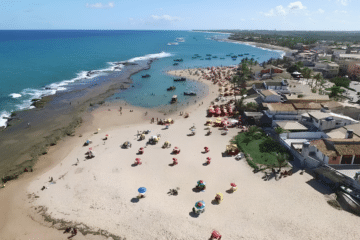
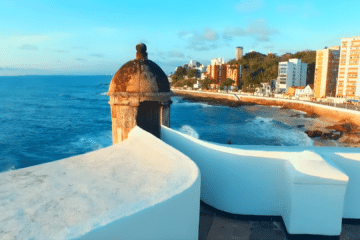
Mangue Seco is a charming fishing village located in the municipality of Jandaíra, in the state of Bahia, on the border with Sergipe.
It is the last beach on the north coast of Bahia, accessible only by boat, and has retained its rustic and natural charm. The local population is small, with less than 200 inhabitants.

Situated on the banks of the Rio Real, Mangue Seco is about 242 kilometres from Salvador on the Linha Verde. The most convenient access, however, is via Aracaju, the capital of Sergipe. From there, go to Estância and then to Porto do Cavalo, where you can take a boat to Mangue Seco.
The Joel Silveira Bridge, inaugurated in 2010, over the River Vaza-Barris, facilitates travel to the southern region of Sergipe, linking the districts of Aracaju with beaches such as Caueira.
In Porto do Mato, the Gilberto Amado Bridge crosses the Rio Real, bringing visitors even closer to the city.

Video of Mangue Seco in Bahia

Mangue Seco na Bahia07:03
Mangue Seco - Guia de Turismo Completo25:28

Mangue Seco e Praia do Saco03:18

Mangue Seco - Reportagem04:14
Conheça Mangue Seco na Bahia!05:19
Mangue Seco in Bahia
National fame
Mangue Seco gained national fame when it became the setting for Rede Globo‘s soap opera Tieta, based on Jorge Amado‘s novel Tieta do Agreste.
The natural beauty of the landscapes, the golden dunes and the simple way of life enchanted the whole of Brazil.

Village and structure
Mangue Seco’s few streets are covered with fine, clear sand, which adds to its natural and authentic appearance.
Along the river and between the dunes, there are inns, bars, restaurants and fishermen’s houses, making up a modest but welcoming infrastructure, ideal for those seeking peace and quiet.
Leisure and nature
Leisure activities are varied and linked to nature. For surfers, the region’s beaches offer good waves.
Fishermen take advantage of the calm waters of the rivers to catch species such as stingrays, dogfish and carapebas.
The Rio Real, with its slightly salty waters, surprises visitors by being easy to swim down – a separate diversion for swimmers. The river’s banks are also home to extensive mangroves, an environment rich in biodiversity and seafood.

Magical nights
At night, the countryside takes on a special charm. With little artificial lighting, the village offers a dazzling starry sky, especially on full moon nights when the glow is reflected in the waters of the river.
Children still play in the streets, while locals tell stories and organise serenades, offering visitors a unique cultural experience.
Meeting of the waters
Mangue Seco is located in a privileged position, close to the mouth of the Rio Real, where the river meets the Atlantic Ocean. The region is also home to other smaller rivers, such as the Guararema and the Piauí, creating unique landscapes of mangroves, coconut groves and shifting dunes.
Preservation and charm
The natural isolation of the village, accessible only by boat, guarantees its authenticity and environmental preservation. The moving dunes, constantly sculpted by the wind, seem to slowly advance over the village, creating scenes of cinematic beauty.

A haven for relaxation
Mangue Seco is the ideal destination for those seeking relaxation, paradisiacal landscapes and direct contact with a traditional culture. A trip to the village is a true immersion in the simplicity and beauty of the Northeast of Brazil.
Attractions in Mangue Seco – BA
The beaches in the region are very rustic, with simple huts catering for tourists. Many offer hammocks in which to relax after a meal. The evening in Mangue Seco is unforgettable – a stunning sunset that will stay with you forever.
The village has several home-style restaurants with typical Bahian and Northeastern flavours. A highlight is the aratu moqueca, a crustacean found in the region’s mangroves.
If you’re on the beach, try the moquequinha de folha, made with aratu meat, cumin, chilli, coriander, lightly grilled and served in a palm leaf.
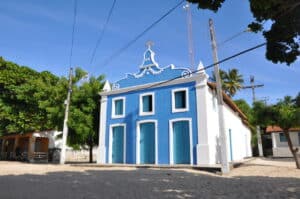
The city centre has sandy streets, a square with a church and several rustic but cosy inns that create a bucolic and welcoming atmosphere.

1. Bela Vista Beach
Excellent for swimming in the natural pools that form at low tide. At high tide there are large, powerful waves.
2. Vila Coqueiros
Simple village with fishermen’s houses, small square and church. On one side the dunes, on the other the mangroves. The locals make a living from fishing, shellfishing and coconut extraction. In the evenings, the village’s only bar attracts visitors from all over the region.
3. Coqueiro Beach
Lone beach with dunes where sea turtles lay their eggs. Look out for the Tamar Project signs.
4. Vaporzinho Beach
This deserted beach is home to the carcass of the steamer Baependi, torpedoed by the Germans in 1942 during the Second World War. The remains of the ship have become a fishing ground, attracting divers and spearfishermen.
The waters are deep and only suitable for good swimmers. Nearby is the Fazenda Lagoa Vermelha, a mariculture farm that grows Malay prawns. Bring water and a snack.
5. Buggy rides
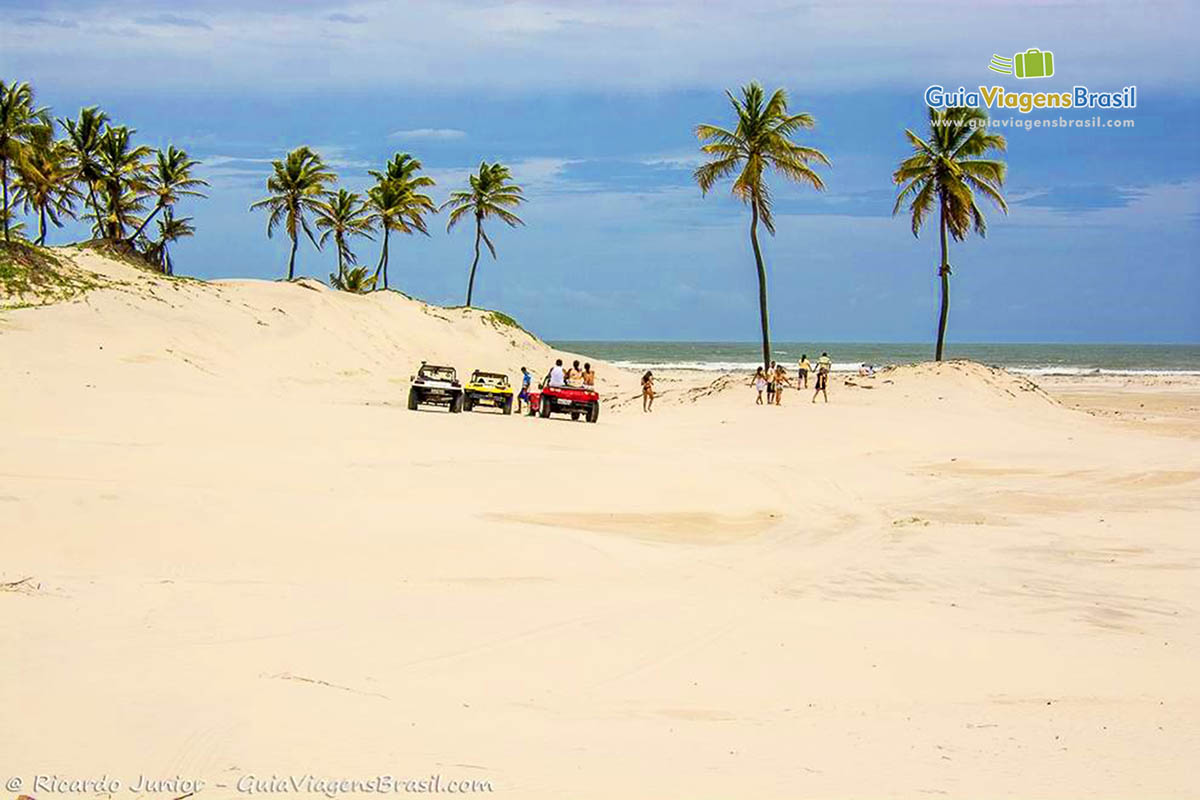
Buggy rides are very popular. They cross the dunes and lead to the nearby beaches of Jandaíra and Costa Azul.
Crossing the valleys and mountains of sand, the landscape reveals itself with coconut and cashew trees. The Caju Dune is the largest and highest in the region.
A classic spot for selfies is between the two coconut trees known as Romeu and Julieta, considered icons of Mangue Seco beach.
The walk can take from 20 minutes to 1.5 hours, depending on the time available. If you like extreme sports you can go sandboarding in the dunes.
6. Sogra Island
Ilha da Sogra is on the Sergipe side of the Rio Real. It can be reached by boat from the village.

Despite its name, this is an sand bank formed at low tide. It is said that a group of travellers left a “troublesome” mother-in-law here, hence the curious name.
There are natural pools of crystal-clear green water that change colour with the direction of the wind. It is one of the hidden wonders of the Sergipe coast.
7. Saco Beach
On the other side of the Rio Real, in Estância (SE), is Saco Beach, considered one of the most beautiful beaches in Bahia.
It has a coast of more than 5 kilometres, mangroves, fresh water rivers, coconut trees and dunes. A paradisiacal setting.
8. Lagoa Grande
Lagoa Grande is the largest lagoon in the state of Sergipe and is close to Abaís Beach, also in Sergipe. Tours start from the village centre of Mangue Seco.
Tourist guide for Mangue Seco in Bahia

Publicações Relacionadas
Arembepe: beaches (Piruí, Praia do Canto), Hippie Village and the Tamar Project

Paranaguá Palace — History, architecture and visiting information | Ilhéus (BA)

São Jorge Parish Church in Ilhéus — history, architecture and religious art

History of the Convent and Church of Nossa Senhora da Piedade in Ilhéus

São Sebastião Cathedral (Ilhéus) — History, architecture and tourism
The 15 Most Visited and Well-Known Beaches in Bahia
The 3 most paradisiacal beaches in Bahia

Skydiving, Paragliding and Ballooning in Bahia

Historic Towns in Bahia: A Journey Through Time
Places to visit on the south coast of Bahia

História da Arte - Caracteristicas, Aspectos e Periodos
Tourist Attractions in Bahia: main attractions, beaches and cities

Subaúma, Bahia: where it is, things to do and where to stay
Massarandupió Naturist Beach, Bahia: Rules and Access
Beaches on the South Coast of Bahia: 10 Best and Tips
Towns and the Abrolhos Archipelago — The southernmost tip of Bahia

Baixio: Between lagoons, dunes and the charm of a village surrounded by nature
Best Beaches in Bahia: Your Guide to Paradise
Salinas da Margarida (BA) — Beaches, Attractions and a Complete Guide

Guarajuba Beach, Bahia: Natural Pools and Tips

Barra do Cahy: Brazil's first beach - history and nature

Garcez Beach: Discover Paradise in Jaguaripe

Barreiras: An Ecological Paradise in Bahia
Catabrigas Waterfall — A natural haven in Ibirajá, Itanhém (BA)

Serra Grande: Your Guide to Bahia's Paradise
Corumbau, Bahia: Ponta de Corumbau, beaches, map, how to go

Taipu de Fora: Discovering Natural Pools

Iguaí: A Guide to Waterfalls and Relaxation
Morro de São Paulo: Map, Beaches & How to Get There (2026)
Tourism in São Francisco do Conde (BA) — Tips and Attractions

Todos-os-Santos Bay (Bahia) — History, geography and conservation
Todos os Santos Bay — Nature, History and Water-based Tourism
Bay of Todos os Santos: nature, history and cultur

Rafting in Taboquinhas: The Ultimate Adventure Guide
Abseiling Sites in Bahia: Top Locations to Explore

Diving Spots in Bahia: Discover Underwater Treasures
This post is also on:
 Português
  English
  Deutsch
  Español
  Français