Jandaíra: Between rivers, dunes and history
Jandaíra is a municipality located in the far north of Bahia, bordering Sergipe and separated by one of the region’s most important watercourses: the Rio Real.
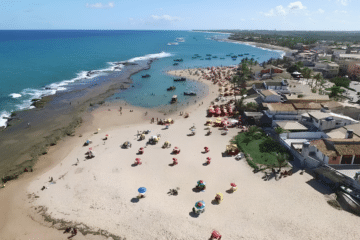
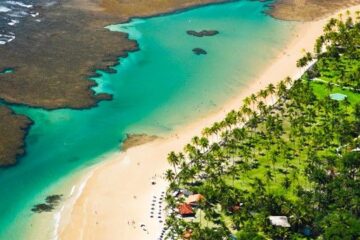
With a coastline of rare beauty, the municipality is surrounded by coconut groves, dunes and warm water beaches that invite you to relax and enjoy adventure. The Rio Real not only frames the landscape, but is also ideal for water sports.

Video about the parish of Jandaíra BA

Mangue Seco na Bahia07:03
Mangue Seco - Guia de Turismo Completo25:28

Mangue Seco e Praia do Saco03:18

Mangue Seco - Reportagem04:14
Conheça Mangue Seco na Bahia!05:19
See the map of Costa dos Coqueiros
Mangue Seco: the natural jewel of Jandaíra
The municipality’s main tourist attraction, Mangue Seco, is a rustic and charming village situated between the mouth of the Rio Real and the Atlantic Ocean.
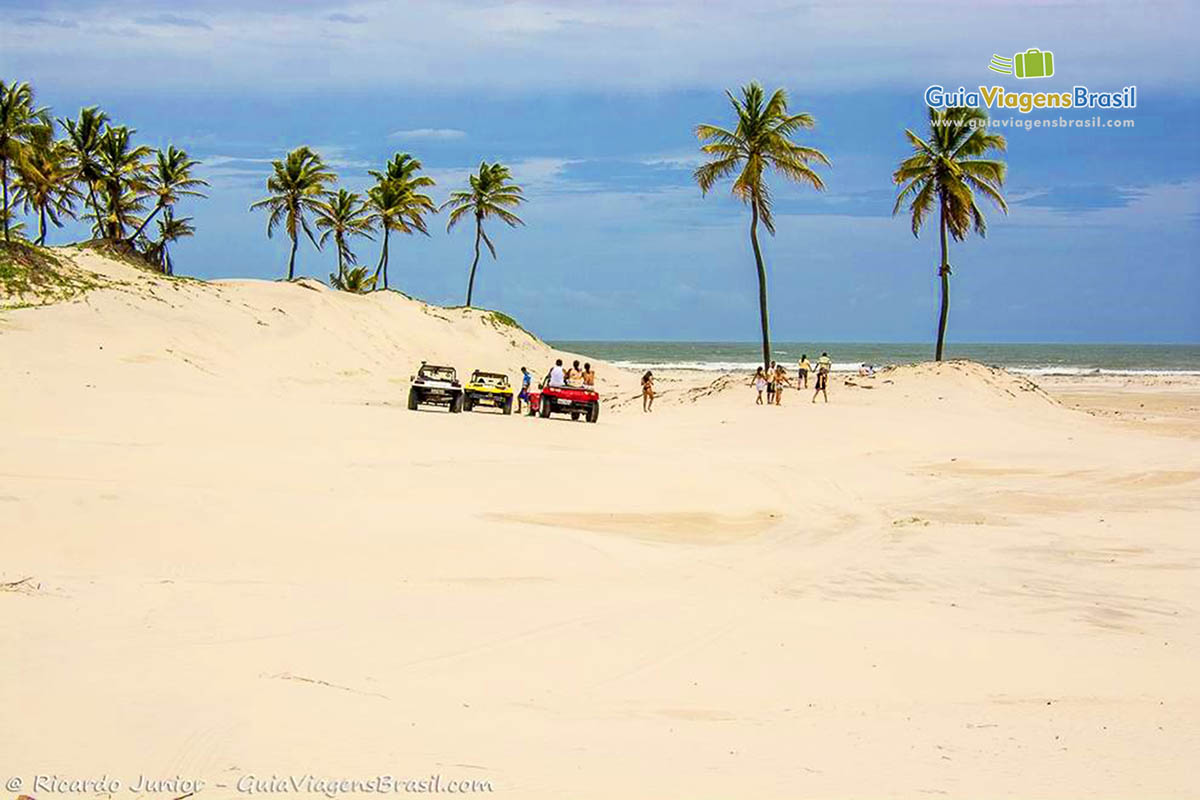
The dunes that form here reach a height of up to 35 metres and are the setting for thrilling buggy rides offered by local operators. The unspoilt beauty of the place gained national fame with TV Globo’s soap opera Tieta (1989), based on Jorge Amado‘s novel Tieta do Agreste.

Getting to Mangue Seco is an experience in itself: access is only by boat from the town of Pontal in Sergipe, via the Rio Real.
This natural isolation helps to preserve the rusticity of the village, whose streets are covered in fine white sand. At night, the starry sky reveals its fullness, especially on full moon nights, when its reflection in the waters of the Real, Piauí, Fundo, Guararema, Priapu and Saguí rivers transforms the landscape into a light show.

Living nature and biodiversity
The Mangue Seco is home to a rich ecological diversity. The mixture of fresh and salt water favours the formation of extensive mangroves, an ideal habitat for countless species of aquatic and terrestrial fauna.
It is common to find seabass, carapebas, rayfish and even manatees, a rare species that has found a favourable breeding environment in the Rio Fundo. The coconut trees overhang the calm waters of the rivers, creating a typical postcard scene.
The village is also a haven of tradition. Children play rounders and hide and seek, while locals tell old stories or sing serenades.
Recreational opportunities are varied, appealing to surfers who enjoy the waves of the region’s beaches and fishermen who seek the quieter rivers.

Beaches of Jandaíra
1. Mangue Seco Beach.
Nationally famous for the soap opera Tieta, this beach will enchant you with its more than 30 kilometres of virtually deserted beach. Shifting dunes, White sand, Sand banks and Mangroves create a unique landscape.

The dunes are used by the locals for traditional “sand skiing” with coconut tree sticks. The beach, about 1.5 kilometres from the village of Jandaíra, can be reached on foot or by tractor trailer.
There are simple stalls on the shore selling grilled fish and nearby, the remains of a shipwreck add to the mystery and beauty of the area.
2 Coqueiro Beach and Costa Azul Beach.
Accessible by buggy, these beaches are known for their clear, fine sand, small dunes and coconut palms that stretch down to the shore. Its blue waters are home to dogfish, rays and seabass, among others.
Historical and cultural heritage
The municipality of Jandaíra has ancient origins. Its lands belonged to the sesmaria, who donated them in 1573 to the Governor General, Dom Luís de Brito e Almeida.
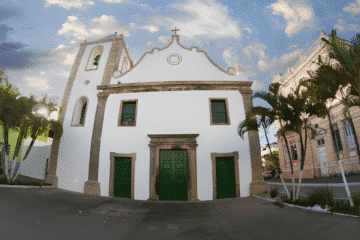
In the 17th century, the Chapel of Nossa Senhora de Abadia was built, around which the town was elevated to a district in 1718 and a village in 1728, under the name of Vila de Abadia.
In 1880 the seat of the municipality was transferred to the Arraial of Cachoeira and the parish was renamed Cachoeira da Abadia. In 1927 it was renamed Jandaíra.
After successive extinctions and annexations to the municipality of Rio Real (in 1931 and 1943), Jandaíra was finally restored in 1944 and its seat promoted to the category of city.
Economy and agriculture
The local economy has a strong agricultural base. Jandaíra is Bahia’s second largest producer of coconuts and a leading producer of passion fruit.
This agricultural vocation, combined with ecological and cultural tourism, makes the municipality a complete destination for those seeking nature, history and quiet.
Jandaíra Guide
Bahia.ws is the largest tourist guide in Bahia, Salvador and the Northeast.

Publicações Relacionadas
History of the Church of Nosso Senhor do Bonfim in Salvador
The highest and most beautiful waterfalls in Chapada Diamantina
Baixio: Between lagoons, dunes and the charm of a village surrounded by nature
Subaúma Beach: The Perfect Escape in Bahia
Salinas da Margarida (BA) — Beaches, Attractions and a Complete Guide
Wine Tourism in the São Francisco Valley Guide
Enchanted fountain in Chapada Diamantina: How to get there
Bay of Todos os Santos: nature, history and cultur
Mucugê: Discover the local history and culture
Garcez Beach: Discover Paradise in Jaguaripe
Places of interest in Salvador — A comprehensive guide
Sempre-Viva: Symbol of Preservation in the Chapada Diamantina
Arembepe: beaches (Piruí, Praia do Canto), Hippie Village and the Tamar Project
Ventura Village: A Rich History of Diamonds
Valença: The Gateway to Morro de São Paulo
Places to visit on the south coast of Bahia
Tourist Areas in Bahia - Tourist Guide
Alcobaça, Bahia: A Comprehensive Guide to Beaches and History
Cocoa farms attract tourists to Bahia - Chocolate Road
Santo Antônio da Barra Fort — history, Barra Lighthouse and the Nautical Museu
São Sebastião Cathedral (Ilhéus) — History, architecture and tourism
Barreiras: An Ecological Paradise in Bahia
Discovery Route in Bahia: History, Culture and Tourism
Ecotourism in Bahia: discover village of Santo André
Discover the Magnificence Fort of Nossa Senhora de Monte Serrat
The Tamar Project and turtle conservation
History and Historical Attractions of Itacaré Reveale
Monte Pascoal National Park: Pataxó culture and Brazilian history
How to get to Fumaça Waterfall in Chapada Diamantina
Municipality of Una: A Beach Paradise Awaits
Relief, Fauna and Flora of Chapada Diamantina
Ibicoara: An Unmissable Tourist Destination
Whale Coast (BA) — Complete guide: Abrolhos, beaches and whale-watching
The History of Lençóis in the Chapada Diamantina — Origins, the Diamond Cycle and Heritage
History, the Festival of Nossa Senhora das Candeias and Tourist Attractions
Serra Grande: Your Guide to Bahia's Paradise
This post is also on:
 Português
  English
  Deutsch
  Español
  Français