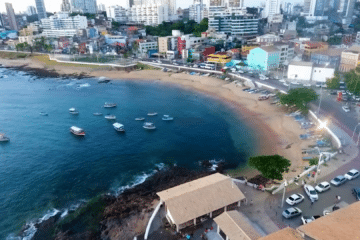
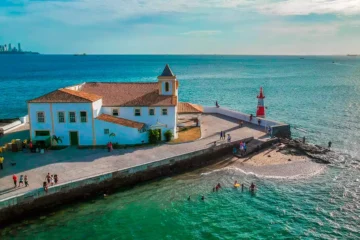
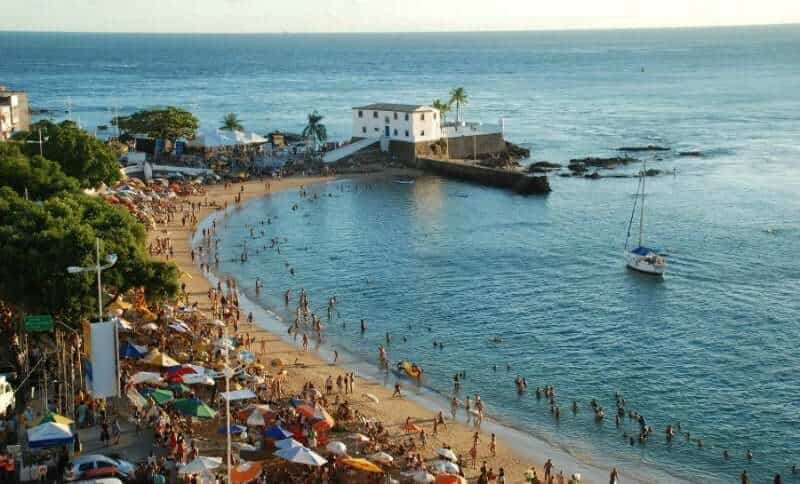
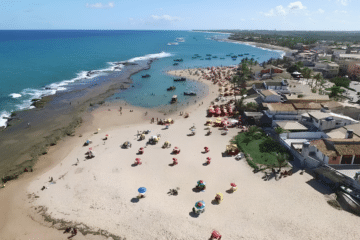
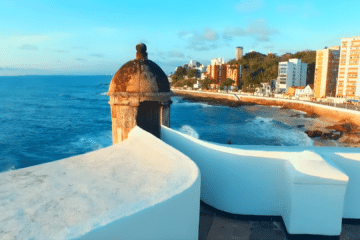
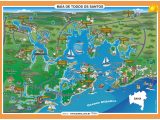
Todos os Santos Bay is the largest bay in Brazil. It was first recorded by Europeans on 1 November 1501 — it was given this name because it coincided with All Saints’ Day. Located in the state of Bahia, it is of great historical, ecological and economic importance.

Featured islands
Ilha Bimbarras na Bahia03:40

Ilha de Bom Jesus dos Passos

Ilha dos Frades - Guia Turístico07:13

Baía de Todos os Santos - Reportagem

Ilha dos Frades - Praias e Trilhas

Ilha de Itaparica - Praia da Penha04:04

Ilha de Itaparica - Barra do Gil04:47

Ilha de Itaparica - Drone02:55

Madre de Deus BA08:48

Ilha da Maré - Praia das Neves03:23

Ilha da Maré - Reportagem
Ilha de Matarandiba02:15
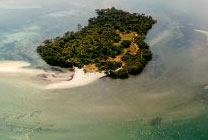
Ilha do Medo na Baía de Todos os Santos22:16

Ilha das Vacas na Bahia01:58

Ilha das Canas na Bahia04:54
- Bimbarras Island
- Bom Jesus dos Passos Island
- Ilha dos Frades
- Itaparica Island
- Madre de Deus Island
- Ilha da Maré
- Matarantiba Island
- Island of Fear
- Ilha das Vacas
- Ilha das Canas
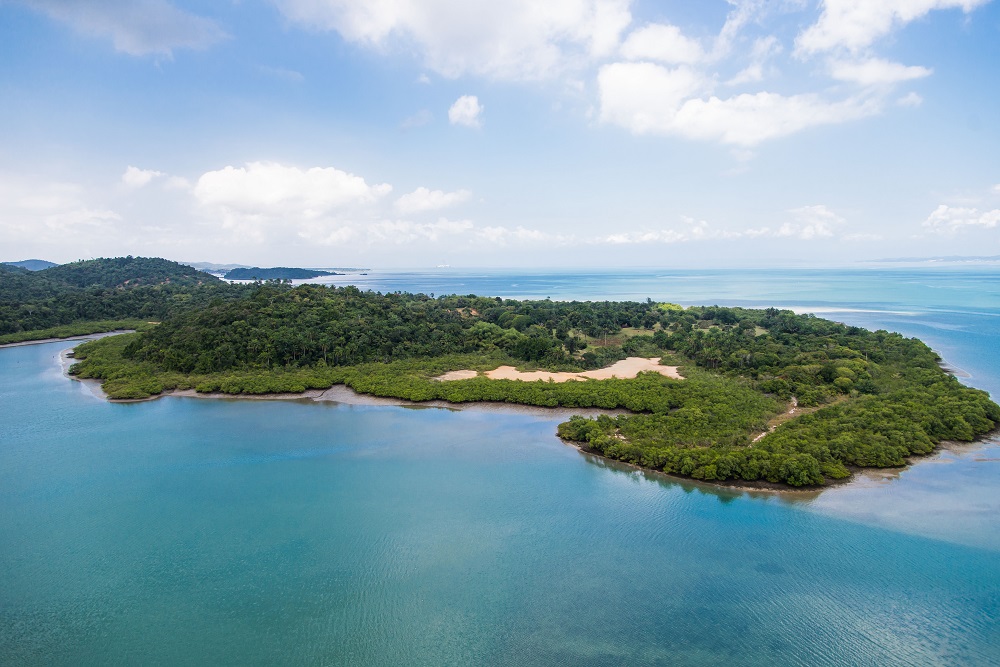
1. Bimbarras Island
A private island with unspoilt beaches, mangroves and patches of Atlantic Forest. Partly designated as an environmental conservation area; access by prior arrangement and private boats. Ideal for diving and water sports.
2. Bom Jesus dos Passos Island
The Island of Bom Jesus dos Passos lies between Madre de Deus and Ilha dos Frades, and is covered in forests and mangroves. It boasts calm waters, camping areas and the Church of Bom Jesus dos Passos (18th century). Approximate population: 1,400–1,600 inhabitants. Access by boat from Madre de Deus.


3. Ilha dos Frades
The coastline of Ilha dos Frades stretches for around 8 km, featuring unspoilt Atlantic Forest and beaches with crystal-clear waters. Recommended beaches: Loreto, Paramana, Tobar and Ponta de Nossa Senhora de Guadalupe. Highlights include colonial churches (17th century) and small guesthouses.


4. Itaparica Island
The largest island in the Bay of Todos os Santos (approx. 246 km² according to academic sources), with historic villages, coconut groves and ferry crossings from Salvador. It offers diving spots and water sports.


5. Madre de Deus Island
The Island of Madre de Deus gained autonomy in 1989, and has since seen growth driven by the oil industry. The beaches are largely developed; some areas are unsuitable for swimming. Activities include surfing, diving and water sports.


6. Maré Island
Ilha da Maré belongs to the municipality of Salvador; its area is approximately 14 km² according to some sources. It comprises Atlantic Forest, mangroves and beaches such as Itamoabo, Neves (with its 16th-century church) and Botelho. The local economy is based on fishing and the production of bilro. The crossing departs from the São Tomé de Paripe Waterway Terminal (approx. 45 mins).


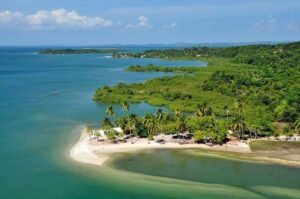
7. Matarantiba Island
An ecotourism destination with natural attractions — notably the Tororó Spring — and beaches popular with surfers and ecotourists.

8. Island of Fear
Ilha do Medo is a small, uninhabited island, steeped in legend and historically used as a quarantine station. It is currently an Environmental Protection Area, covered in sandbanks and mangroves.


9. Ilha das Vacas
A private and virtually uninhabited island, known for its cattle farming and a solitary colonial house. Access is restricted.
10. Ilha das Canas
Few people, quiet beaches and the ideal setting for those seeking peace and quiet, diving and a connection with nature.

Publicações Relacionadas
Arembepe: beaches (Piruí, Praia do Canto), Hippie Village and the Tamar Project

Paranaguá Palace — History, architecture and visiting information | Ilhéus (BA)

São Jorge Parish Church in Ilhéus — history, architecture and religious art

History of the Convent and Church of Nossa Senhora da Piedade in Ilhéus

São Sebastião Cathedral (Ilhéus) — History, architecture and tourism
The 15 Most Visited and Well-Known Beaches in Bahia
The 3 most paradisiacal beaches in Bahia

Skydiving, Paragliding and Ballooning in Bahia

Historic Towns in Bahia: A Journey Through Time
Places to visit on the south coast of Bahia

História da Arte - Caracteristicas, Aspectos e Periodos
Tourist Attractions in Bahia: main attractions, beaches and cities

Subaúma, Bahia: where it is, things to do and where to stay
Massarandupió Naturist Beach, Bahia: Rules and Access
Beaches on the South Coast of Bahia: 10 Best and Tips
Towns and the Abrolhos Archipelago — The southernmost tip of Bahia

Baixio: Between lagoons, dunes and the charm of a village surrounded by nature
Best Beaches in Bahia: Your Guide to Paradise
Salinas da Margarida (BA) — Beaches, Attractions and a Complete Guide

Guarajuba Beach, Bahia: Natural Pools and Tips

Barra do Cahy: Brazil's first beach - history and nature

Garcez Beach: Discover Paradise in Jaguaripe

Barreiras: An Ecological Paradise in Bahia
Catabrigas Waterfall — A natural haven in Ibirajá, Itanhém (BA)

Serra Grande: Your Guide to Bahia's Paradise
Corumbau, Bahia: Ponta de Corumbau, beaches, map, how to go

Taipu de Fora: Discovering Natural Pools

Iguaí: A Guide to Waterfalls and Relaxation
Morro de São Paulo: Map, Beaches & How to Get There (2026)
Tourism in São Francisco do Conde (BA) — Tips and Attractions
Todos-os-Santos Bay (Bahia) — History, geography and conservation
Todos os Santos Bay — Nature, History and Water-based Tourism
Bay of Todos os Santos: nature, history and cultur

Rafting in Taboquinhas: The Ultimate Adventure Guide
Abseiling Sites in Bahia: Top Locations to Explore

Diving Spots in Bahia: Discover Underwater Treasures
This post is also on:
 Português
  English
  Deutsch
  Español
  Français