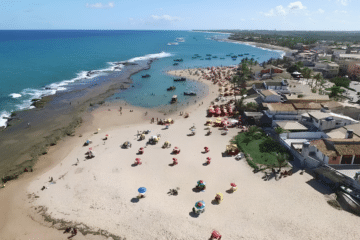
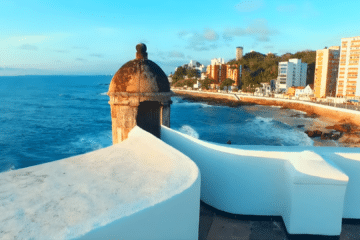
Praia do Forte (BA): complete guide to the village, beaches and Alameda do Sol
Praia do Forte is a district of Mata de São João, on the Litoral Norte (North Coast) of Bahia, about 80 km from downtown Salvador. Once a fishing village, it has since become one of the most sought-after destinations on the Costa dos Coqueiros, with natural pools, coconut groves, Projeto Tamar, the Castelo Garcia d’Ávila and the charming Alameda do Sol.
- Where it is: Mata de São João, Litoral Norte of Bahia, 56 km from the airport and 80 km from downtown Salvador.
- Access: mainly via the BA-099 (Estrada do Coco and Linha Verde).
- Highlights: Alameda do Sol, Projeto Tamar, Castelo Garcia d’Ávila and Reserva da Sapiranga.
- Beaches: Papa-Gente, Praia do Lord and Praia do Porto, among others.
- Humpback whales: from July to October.
- Suggested stay: 3 to 4 days.

Videos about Praia do Forte in Bahia

Praia do Forte - Guia Turístico

Praia do Forte - Dicas04:58

Vila da Praia do Forte12:34

Praia do Forte04:07

Praia do Forte - Projeto Tamar08:41
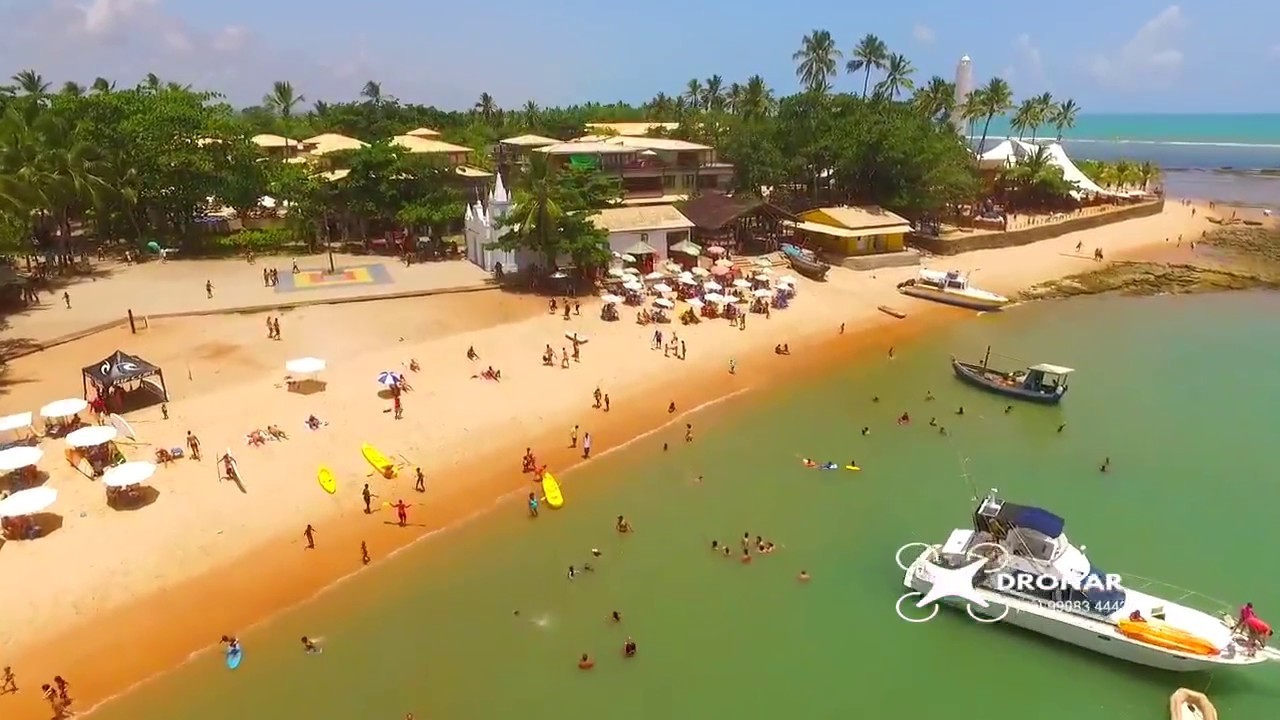
Praia do Forte - Drone04:34
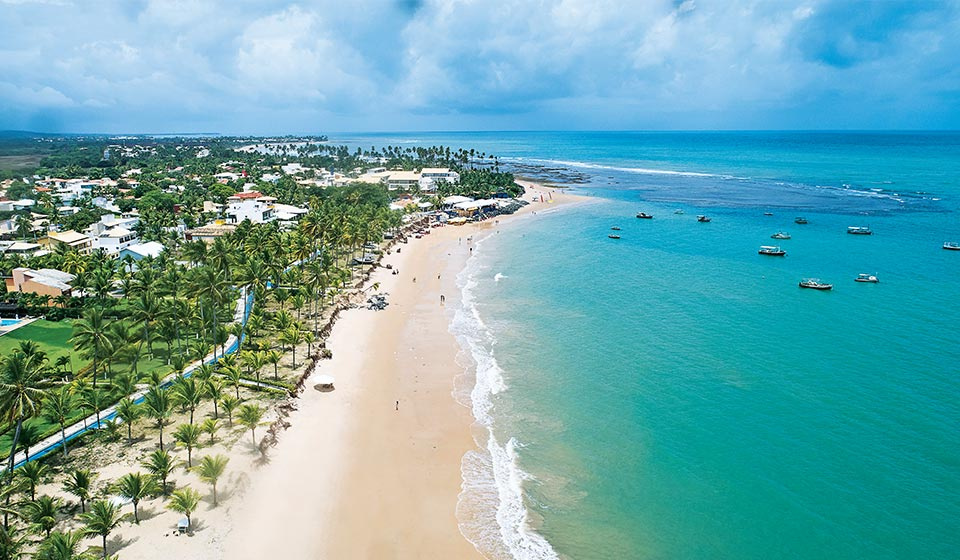
Praia do Forte e Imbassaí - O que fazer?24:03
História do Castelo Garcia D'Ávila ou a Casa da Torre05:01
6 LUGARES PARA VISITAR NA PRAIA DO FORTE BA06:51
The village and Alameda do Sol
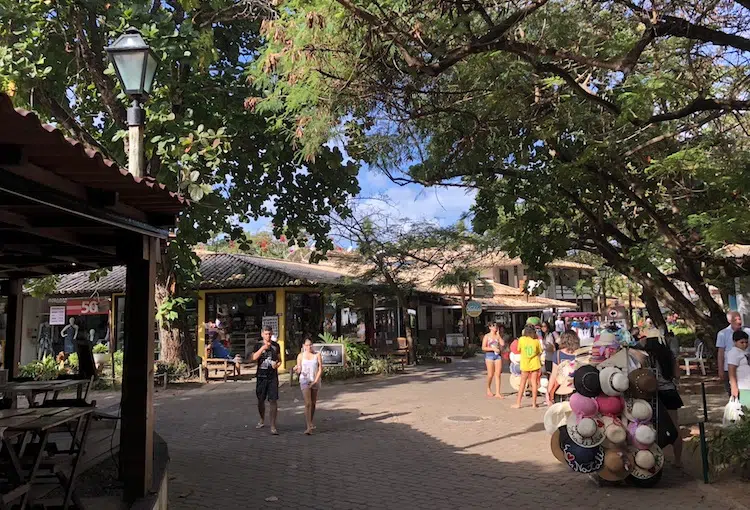
The heart of the area is the Vila da Praia do Forte, at once rustic and sophisticated. The main streets are reserved for pedestrians, bicycles and bike taxis. Therefore, the atmosphere is peaceful and great for exploring on foot.
Without a doubt, the most famous street is the Alameda do Sol (Sun Avenue), a promenade in the center of the village lined with shops, restaurants, bars and craft fairs. In addition, the shade of the trees, the birdsong and the marmosets make the stroll even more pleasant. Right around it, there are also other streets with poetic names, such as Alameda da Lua, Alameda das Estrelas and Alameda da Aurora.

Shopping, dining and nightlife
Both on the Alameda and on the side streets, you will find:
- restaurants serving Bahian food as well as French, Italian and Japanese cuisine;
- clothing, accessory and home decor shops, as well as art galleries;
- craft fairs with local products;
- cafés and bars with live music.
Incidentally, among the restaurants most often mentioned by visitors are Donana and Xica’s Bistrô. However, bars and restaurants change frequently, so check opening hours before you go.
At night, meanwhile, the village comes alive with live music and events. On the other hand, those who prefer something calmer can stroll along the Alameda or walk down to the beach on full-moon nights.
Maps of Praia do Forte


See the map of the Costa dos Coqueiros
The beaches of Praia do Forte
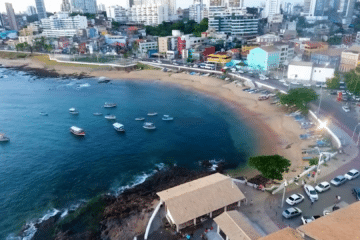
Beyond the center, the area offers a string of warm-water beaches, many with natural pools formed by the reefs at low tide.

- Praia do Papa-Gente: the most famous for snorkeling in the natural pools, with plenty of colorful fish.
- Praia do Lord: at low tide, it forms a large natural pool, with snacks served right in the water.
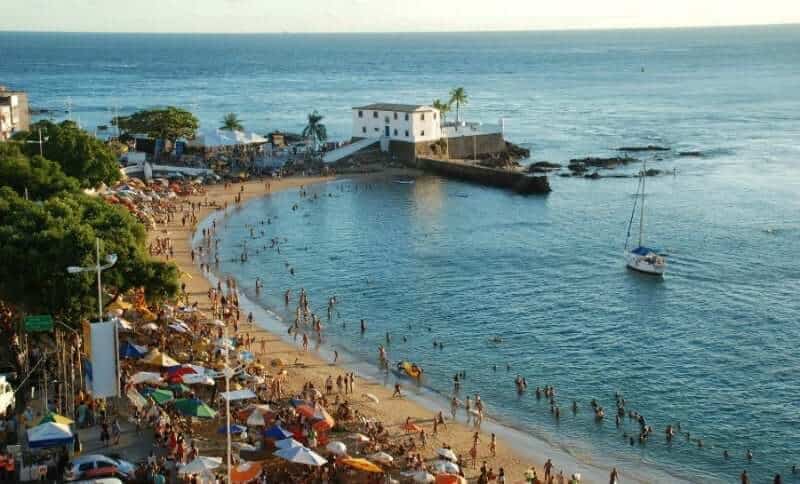
- Praia do Porto: great for families, it has stalls selling local food and fishing boats.
- Praia do Portinho: in the center of the village, near the little church, it is handy for a quick swim.
- Praia do Porto de Cima: it has reefs and anchored boats, for an authentic and tranquil scene.
- Praia Pedra do Chapéu: it stands out for its rock formation and, therefore, is great for photos.
- Praia da Casinha: on the other hand, it is the surfers’ favorite because of the waves.
- Beaches in front of the resorts: in general, they have calmer waters and long stretches of sand for walking.
If you want to explore other beaches, it is also worth visiting Imbassaí, to the north, and Guarajuba, to the south.
Projeto Tamar and Instituto Baleia Jubarte
Projeto Tamar
The village is home to one of the most visited bases of Projeto Tamar (the Brazilian sea turtle conservation project), which protects the sea turtles that nest on the Brazilian coast. The nesting season in the region generally runs from September to March.

In addition, the visitor center features:
- tanks with live turtles;
- aquariums and an interactive museum;
- a shop and a restaurant;
- educational activities.
Before you go, check opening hours and prices on Projeto Tamar’s official channels.
Instituto Baleia Jubarte
Between July and October, meanwhile, humpback whales arrive on the coast of Bahia to breed. Thus, boat tours leave at this time of year to watch them. Moreover, the Instituto Baleia Jubarte (Humpback Whale Institute) runs a visitor center in the village with an exhibition and educational activities. Therefore, check the current opening hours before your visit.

Nature: Reserva da Sapiranga and Lagoa Timeantube
Sapiranga Ecological Reserve
Also just a few kilometers from the village, the Reserva da Sapiranga protects around 600 hectares of Atlantic Forest. Marmosets, anteaters and dozens of bird species live there, as well as orchids and bromeliads.

As a result, in the reserve you can enjoy:
- nature trails and birdwatching;
- bike, quad bike and horseback rides;
- zip-lining and treetop adventure courses;
- river floating and swimming in the rio Pojuca.
Lagoa Timeantube
Despite the competition from the sea, Lagoa Timeantube is also enchanting. It has a tree-lined promenade for walking, running and cycling, as well as kayak tours. Surrounded by native vegetation, it is also a good spot for birdwatching, especially at sunset.
History: from Castelo Garcia d’Ávila to fishing village
Before tourism, the place was a small fishing hamlet. Its origins go back to the 16th century, when the Portuguese Garcia d’Ávila, who arrived in Bahia with Tomé de Sousa in 1549, was granted land in the region. Over time, coconut groves were planted, and residents began to make a living from fishing, harvesting coconuts and ferrying people across the rio Pojuca.
Castelo Garcia d’Ávila (Casa da Torre)

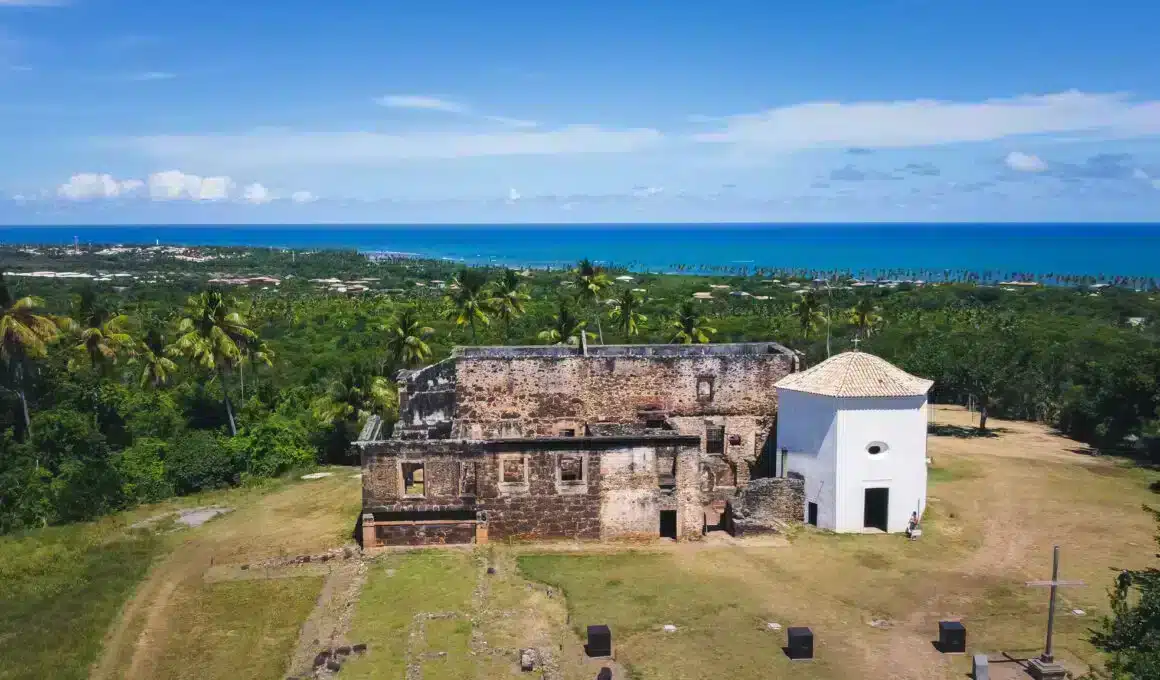
Construction of the Castelo Garcia d’Ávila, also known as the Casa da Torre, began in 1551. It was at once a residence, a trading post and a lookout post for the coast. For example, according to tradition, fire signals warned Salvador of the arrival of suspicious ships. Considered a unique building in the Americas because of its medieval style, the complex was listed as a heritage site by IPHAN in 1938.
To this day, the chapel, completed in 1624, is the best-preserved part. After being abandoned in the 19th century, the complex was restored from the 1980s onwards and became the Parque Histórico Garcia d’Ávila, with a museum, archaeological pieces and panoramic views of the sea.
The Garcia d’Ávila family was one of the most powerful in colonial Brazil. After all, its cattle ranches pushed deep into the sertão and formed one of the largest landholdings in the country’s history. In addition, tradition links the family to the spread of coconut groves along the coast of Bahia. Finally, a curiosity: according to popular tradition, the expression “sem eira nem beira” (literally “without threshing floor or eaves”, meaning penniless) contrasted with the Casa da Torre, which had “eira, beira e tribeira” (threshing floor, eaves and a triple roof edge), a sign of wealth.
Capela de São Francisco de Assis
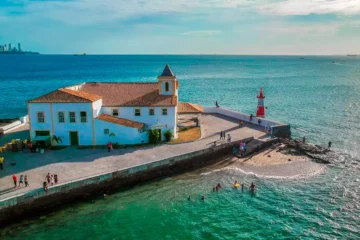
The charming Capela de São Francisco de Assis, facing Praia do Porto, was built by local fishermen. Inside, it holds images of Saint Francis, Saint Benedict and Our Lady of the Conception, as well as Stations of the Cross painted by the Bahian artist Carlos Bastos. Today, facing the sea and surrounded by boats, it is one of the most popular places for weddings.


Accommodation
The local hotel network has more than a thousand beds, with resorts, luxury guesthouses and simple options, as well as houses and apartments for rent. So there are good choices for couples, families and groups of friends. Finally, if you want an all-inclusive resort, you can also look at neighboring Costa do Sauípe.
How to get there and practical tips
- Distances: 56 km from Salvador Airport, 75 km from the bus station and about 80 km from the Historic Center.
- Access: via the BA-099 (Estrada do Coco and Linha Verde), by car, transfer or bus; however, confirm schedules with the companies.
- Footwear: first of all, bring comfortable shoes for walking around the village.
- Animals: above all, do not feed the marmosets, for your safety and theirs.
- High season: the village gets crowded on public holidays and in summer, so plan parking or a transfer in advance.
Frequently asked questions about Praia do Forte
Where is Praia do Forte?
Praia do Forte is in Mata de São João, on the Litoral Norte of Bahia, about 80 km from downtown Salvador and 56 km from the airport.
Usually, access is via the BA-099, the Estrada do Coco and Linha Verde.
What is the Alameda do Sol?
In short, it is the village’s main promenade, for pedestrians only, with shops, restaurants, bars and crafts.
That is why it is the meeting point for visitors, especially at night.
How many days do you need to see Praia do Forte?
3 to 4 days are enough for the village, the beaches, Projeto Tamar and the Castelo Garcia d’Ávila.
However, if you want to include the Reserva da Sapiranga and other tours, set aside at least 5 days.
When is the best time to see humpback whales?
From July to October, when the whales arrive on the coast of Bahia to breed.
During this period, boat tours leave to watch them.
Is Praia do Forte good for traveling with children?
Yes. For example, beaches such as Praia do Porto and the natural pools of Papa-Gente have calm waters at low tide.
In addition, Projeto Tamar and the Reserva da Sapiranga appeal to adults and children alike.

Publicações Relacionadas
Arembepe: beaches (Piruí, Praia do Canto), Hippie Village and the Tamar Project

Paranaguá Palace — History, architecture and visiting information | Ilhéus (BA)

São Jorge Parish Church in Ilhéus — history, architecture and religious art

History of the Convent and Church of Nossa Senhora da Piedade in Ilhéus

São Sebastião Cathedral (Ilhéus) — History, architecture and tourism
The 15 Most Visited and Well-Known Beaches in Bahia
The 3 most paradisiacal beaches in Bahia

Skydiving, Paragliding and Ballooning in Bahia

Historic Towns in Bahia: A Journey Through Time
Places to visit on the south coast of Bahia

História da Arte - Caracteristicas, Aspectos e Periodos
Tourist Attractions in Bahia: main attractions, beaches and cities

Subaúma, Bahia: where it is, things to do and where to stay
Massarandupió Naturist Beach, Bahia: Rules and Access
Beaches on the South Coast of Bahia: 10 Best and Tips
Towns and the Abrolhos Archipelago — The southernmost tip of Bahia

Baixio: Between lagoons, dunes and the charm of a village surrounded by nature
Best Beaches in Bahia: Your Guide to Paradise
Salinas da Margarida (BA) — Beaches, Attractions and a Complete Guide

Guarajuba Beach, Bahia: Natural Pools and Tips

Barra do Cahy: Brazil's first beach - history and nature

Garcez Beach: Discover Paradise in Jaguaripe

Barreiras: An Ecological Paradise in Bahia
Catabrigas Waterfall — A natural haven in Ibirajá, Itanhém (BA)

Serra Grande: Your Guide to Bahia's Paradise
Corumbau, Bahia: Ponta de Corumbau, beaches, map, how to go

Taipu de Fora: Discovering Natural Pools

Iguaí: A Guide to Waterfalls and Relaxation
Morro de São Paulo: Map, Beaches & How to Get There (2026)
Tourism in São Francisco do Conde (BA) — Tips and Attractions
Todos-os-Santos Bay (Bahia) — History, geography and conservation
Todos os Santos Bay — Nature, History and Water-based Tourism
Bay of Todos os Santos: nature, history and cultur

Rafting in Taboquinhas: The Ultimate Adventure Guide
Abseiling Sites in Bahia: Top Locations to Explore

Diving Spots in Bahia: Discover Underwater Treasures
This post is also on:
 Português
 English
 Deutsch
 Español
 Français