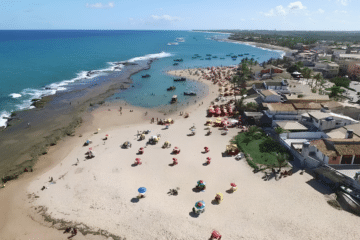
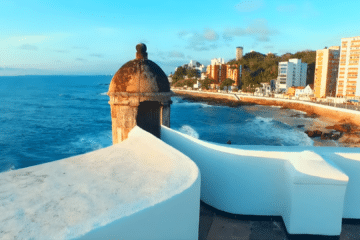
Published on · Updated on
Nova Viçosa lies in the far south of Bahia, on the Costa das Baleias, between Caravelas and Mucuri. The town is known for its seven beaches and for the reefs of Ilha de Coroa Vermelha, which are great for snorkeling and diving. So, if you want to know the best things to do in Nova Viçosa, the answer includes varied beaches, historic heritage, the legacy of the artist Frans Krajcberg and boat trips in one of the richest seas in Brazil.
- Location: far south of Bahia, on the Costa das Baleias, about 906 km from Salvador.
- Population: 39,509 inhabitants (IBGE Census 2022).
- Beaches: Lugar Comum, Pau Fincado, Sabacuí, Pontal da Barra and Costa do Atlântico, among others.
- Highlights: the Coroa Vermelha reefs, Ilha da Cassumba, Frans Krajcberg’s Sítio Natura and, finally, the historic center.
- Humpback whales: the season runs from July to November.
- Suggested stay: 2 to 3 days.


Nova Viçosa: history and location
First of all, the town sits at the mouth of the rio Peruípe, in a region originally inhabited by the Aimoré indigenous peoples. From 1720 onwards, settlers from Mucuri founded the village of Campinhos there. Then, in 1798, the place was raised to the status of the town of Viçosa. Later, the territory was incorporated into Mucuri, received the name Nova Viçosa in 1953 and, finally, gained its independence as a municipality in 1962.
Besides the main town, the municipality includes districts such as Posto da Mata and Helvécia. Helvécia, in fact, is a quilombola community that descends from the former Colônia Leopoldina, founded by Swiss and German settlers in the 19th century.
Maps


Videos about Nova Viçosa in Bahia

Guia de Turismo de Nova Viçosa (BA)09:20

Nova Viçosa Vista de Cima05:11

NOVA VIÇOSA NO SUL DA BAHIA12:50

Praia do Pau Fincado - Nova Viçosa (BA)
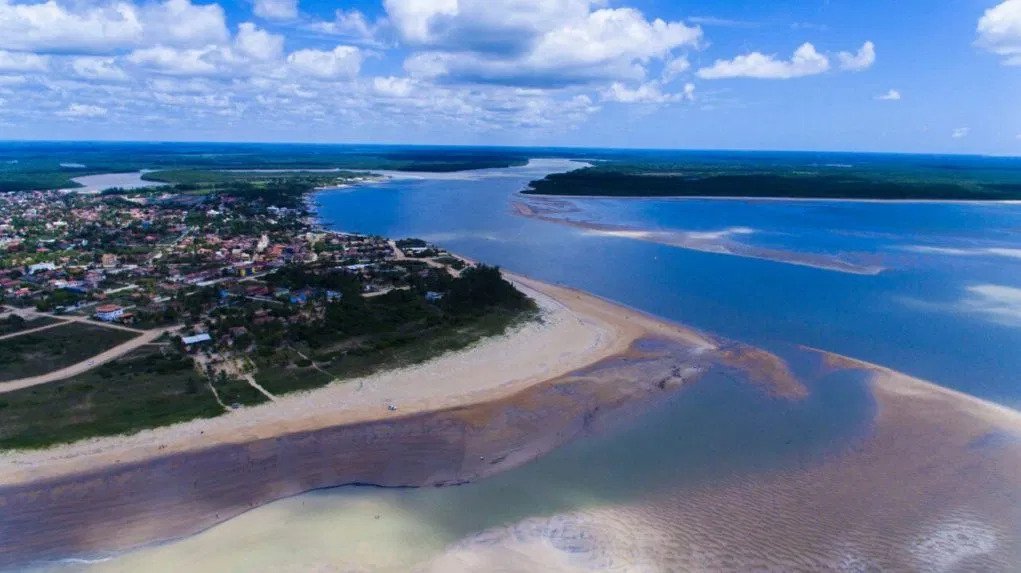
Nova Viçosa na Bahia
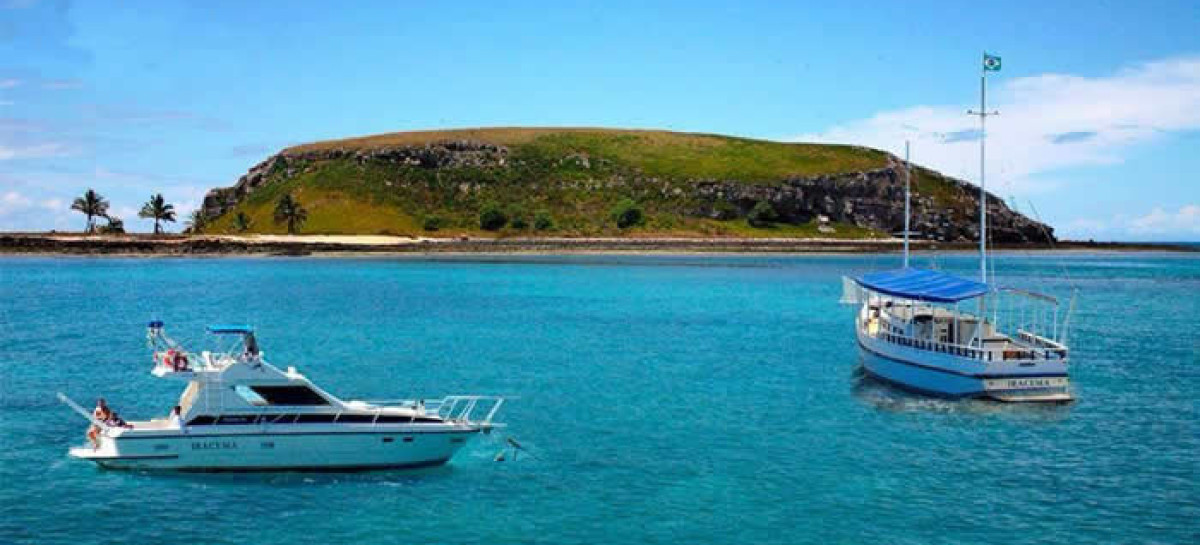
Ilha de Coroa Vermelha na Bahia02:04
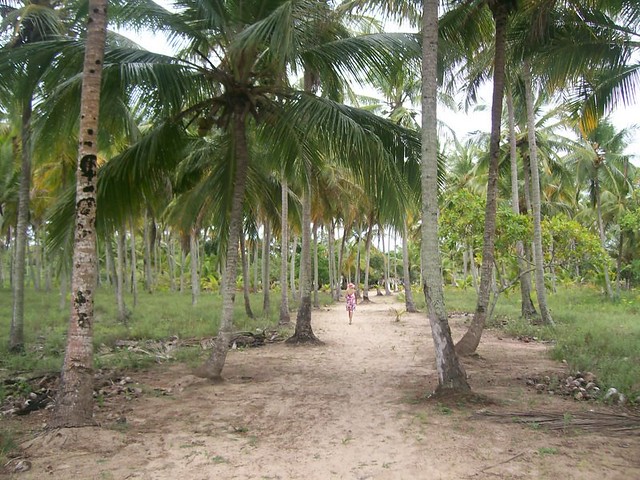
Ilha de Barra Velha em Nova Viçosa
Sights and historic heritage of Nova Viçosa
First, the small historic center preserves buildings from the colonial period and the railway era. In addition, the town keeps alive the legacy of one of the country’s greatest environmentalist artists.
1. Igreja Matriz de Nossa Senhora da Conceição

The church has a nave, a chancel and a tower with external access and a pyramidal top. On the Epistle side, there is also a small sacristy. The façade has a central door and three windows at choir level, all with segmental lintels. Finally, a cut-out pediment crowns the main body, while the tower displays its belfry in a round arch.
- Date built: late 18th century
- Maintained by: the Diocese
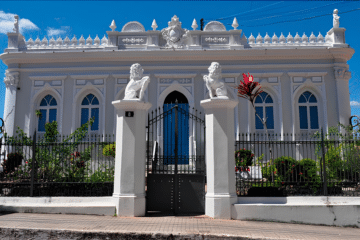
2. Casa de Câmara e Cadeia

The building has two floors and a rectangular plan. Its façade, marked by quoins and cornices, ends in a triangular pediment bearing the coat of arms of the Republic. On the ground floor, there is a door with a depressed arch between two windows with iron bars. Upstairs, meanwhile, five round-arched windows complete the façade.
- Date built: late 18th century
- Maintained by: Municipal Department of Tourism
3. Railway Station

The building has two sections side by side. The ground floor served as a warehouse, while the upper floor housed the administration and the waiting room. Moreover, the roofs have French tiles and decorative wooden trim, and the boarding platform is covered with zinc sheets. On the upper floor, a central pediment decorated with a small lobed oculus finishes off the façade.
- Date built: 1897
- Maintained by: Nova Viçosa City Hall
4. Sobrado do Porto

It is a historic building with a rectangular plan. The façade has a door and two windows on the ground floor and, in addition, four windows on the upper floor, all with surrounds and segmental lintels. The front hall, in turn, receives light from two side windows.
- Date built: late 18th century
- Maintained by: the heirs of Tula Chaves Pereira
5. Sítio Natura, by Frans Krajcberg
The artist Frans Krajcberg (1921–2017), born in Poland and later a naturalized Brazilian, lived in Nova Viçosa for decades. There, at Sítio Natura, he created sculptures from the trunks and roots of burned trees as a protest against the destruction of the forests. He also built a famous house raised on top of a tree trunk.
Today, the site covers about 51 hectares of restinga (coastal scrub) and, furthermore, was donated by the artist to the State of Bahia. In 2026, the state government was studying turning the area into a protected conservation unit. Therefore, before you go, check whether the site is open to visitors.
Beaches of Nova Viçosa
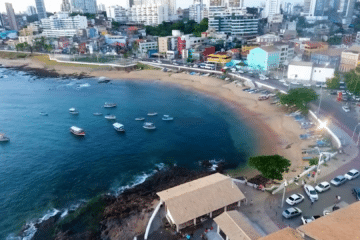
The beaches range from lively urban stretches to almost deserted coves. As a result, they suit leisure as well as fishing and relaxing.
- Praia do Lugar Comum: an urban beach that is very popular with young people. It usually has calm water, white sand and coconut groves, as well as good facilities.
- Praia do Pontal da Barra: located on Avenida Beira-Mar, near the center, with a mooring for small boats. Since the rio Peruípe flows into the sea here, the water is murkier.
- Praia do Pau Fincado: a straight beach within the town limits, with gentle waves and firm sand. It also has beach kiosks and wooden handicraft fairs, so it is good for families.
- Costa do Atlântico: an isolated, almost deserted stretch with strong waves and lots of coconut palms. Furthermore, it is a nesting area for sea turtles and is very popular with snook and shrimp fishermen.
- Praia do Sabacuí: about 2 km from the center, in a wide cove with calm water and light sand. In fact, the meeting of the rio Sabacuí and the sea forms large sandbanks. In high season, there are beach kiosks.
- Praia do Pontal do Norte: a quiet stretch, recommended for walks and for taking in the scenery. Therefore, it is ideal for anyone looking for peace and quiet close to town.
- Praia do Parque (Praia do Rio): it mixes the influence of the river and the sea and, for this reason, it is good for small-scale fishing and for getting to know the local fishing culture.


Diving and ecotourism in Coroa Vermelha
In fact, the region has coral reefs close to the shore, which offer excellent spots for diving and snorkeling. The reefs of Ilha de Coroa Vermelha are part of the Banco dos Abrolhos and form natural pools at low tide. As a result, you can see colorful fish, algae, starfish and turtles.
In general, the schooner trip to the island takes about 1h30, depending on the boat and the sea conditions. Therefore, check the tide table to enjoy the natural pools at low tide.
Note, however, that you should not confuse it with the Coroa Vermelha in Santa Cruz Cabrália, near Porto Seguro, which is a different destination.
Abrolhos Archipelago and whale watching
Nova Viçosa is close to the Abrolhos Archipelago, a marine area of great environmental importance. However, the main departure point for boats to the archipelago is neighboring Caravelas. For this reason, many visitors stay in Nova Viçosa and head there on the day of the tour.
From July to November, it is the season of the humpback whales, which seek out the region’s warm waters to breed. Without a doubt, it is a natural spectacle much loved by divers and wildlife watchers.

Recommended tours
- Abrolhos Archipelago: boat trips with diving and marine life watching, usually departing from Caravelas. In season, moreover, you can see humpback whales.
- Ilha de Coroa Vermelha: a schooner trip for snorkeling and swimming in the natural pools. Before you set off, however, check the tide table.
- Ilha de Barra Velha (Cassumba): a speedboat trip along the rio Peruípe, through mangroves and restingas. It is recommended, above all, for short hikes and birdwatching.
- Small-scale fishing: outings with local fishermen to catch snook and shrimp. In this way, you also get to know the region’s fishing culture.
- Trails and birdwatching: guided walks in the restinga and the mangroves, which are ideal for spotting birds and other animals.

How to get there and practical tips
- By car: from Salvador, it is about 906 km along the BR-101 to Teixeira de Freitas and then via Posto da Mata to Nova Viçosa.
- By plane: the nearest airport is in Teixeira de Freitas. Porto Seguro airport, on the other hand, has more flights but is farther away.
- Boat trips: choose reliable operators and, above all, check the safety of the boat and the sea conditions.
- Best time to go: for diving, choose months when the sea is calm. To see whales, on the other hand, go from July to November.
- Accommodation: there are simple guesthouses and hotels and, also, some more comfortable options. Therefore, book in advance in high season.
- Environment: respect the protected areas during dives and visits to the islands.
Suggested itinerary (2–3 days)
- Day 1: first, the historic center (church, Casa de Câmara e Cadeia, Sobrado do Porto) and then the urban beaches.
- Day 2: a boat trip to the Coroa Vermelha reefs for diving and snorkeling.
- Day 3: Ilha de Barra Velha (Cassumba), small-scale fishing or, in season, a trip to Abrolhos from Caravelas.
Where to stay
Choose guesthouses or hotels near the waterfront, because this makes trips to the beaches and boats easier. In addition, check the reviews before booking.
Frequently asked questions about things to do in Nova Viçosa
What are the best things to do in Nova Viçosa?
In Nova Viçosa, you can enjoy seven beaches, dive on the Coroa Vermelha reefs, take a trip to Ilha da Cassumba and explore the historic center.
In season, from July to November, you can also see humpback whales.
What is the best time to visit Nova Viçosa?
From July to November, for those who want to see the humpback whales.
For diving, on the other hand, choose days with calm seas and low tide.
How many days do you need to see Nova Viçosa?
Generally, 2 to 3 days are enough to see the historic center and the beaches and to take at least one boat trip.
If you want to include Abrolhos, however, set aside an extra day.
How do you get to Nova Viçosa from Salvador?
By car, it is about 906 km along the BR-101 to Teixeira de Freitas and then along the road that passes through Posto da Mata.
To shorten the journey, you can instead fly to Teixeira de Freitas or Porto Seguro.
Can you visit Abrolhos from Nova Viçosa?
Yes, but the main departure point for boats to the archipelago is neighboring Caravelas.
Thus, many visitors stay in Nova Viçosa and head to Caravelas on the day of the tour.
Is Nova Viçosa a good choice for a family trip?
Yes. Pau Fincado and Lugar Comum beaches have gentle waves, beach kiosks and easy access.
The Costa do Atlântico, by contrast, is more isolated, so it is better for those looking for tranquility.
Final recommendations
In short, Nova Viçosa combines relaxation, adventure and history. To round off your trip around the region, also visit neighboring Caravelas, the gateway to Abrolhos, and Mucuri and the Costa Dourada, further south. Or else, explore other destinations in the Bahia Tourist Guide.

Publicações Relacionadas
Arembepe: beaches (Piruí, Praia do Canto), Hippie Village and the Tamar Project

Paranaguá Palace — History, architecture and visiting information | Ilhéus (BA)

São Jorge Parish Church in Ilhéus — history, architecture and religious art

History of the Convent and Church of Nossa Senhora da Piedade in Ilhéus

São Sebastião Cathedral (Ilhéus) — History, architecture and tourism
The 15 Most Visited and Well-Known Beaches in Bahia
The 3 most paradisiacal beaches in Bahia

Skydiving, Paragliding and Ballooning in Bahia

Historic Towns in Bahia: A Journey Through Time
Places to visit on the south coast of Bahia

História da Arte - Caracteristicas, Aspectos e Periodos
Tourist Attractions in Bahia: main attractions, beaches and cities

Subaúma, Bahia: where it is, things to do and where to stay
Massarandupió Naturist Beach, Bahia: Rules and Access
Beaches on the South Coast of Bahia: 10 Best and Tips
Towns and the Abrolhos Archipelago — The southernmost tip of Bahia

Baixio: Between lagoons, dunes and the charm of a village surrounded by nature
Best Beaches in Bahia: Your Guide to Paradise
Salinas da Margarida & Barra do Paraguaçu: beach guide

Guarajuba Beach, Bahia: Natural Pools and Tips

Barra do Cahy: Brazil's first beach - history and nature

Garcez Beach: Discover Paradise in Jaguaripe

Rio de Ondas, Barreiras: Acaba Vida and Redondo waterfalls
Catabrigas Waterfall — A natural haven in Ibirajá, Itanhém (BA)

Serra Grande: Your Guide to Bahia's Paradise
Corumbau, Bahia: Ponta de Corumbau, beaches, map, how to go

Taipu de Fora: Discovering Natural Pools

Iguaí (BA): attractions, waterfalls, map and history
Morro de São Paulo: Map, Beaches & How to Get There (2026)
Tourism in São Francisco do Conde (BA) — Tips and Attractions
Bay of All Saints, Bahia: history, islands and Recôncavo
Todos os Santos Bay — Nature, History and Water-based Tourism
Bay of Todos os Santos: nature, history and cultur

Rafting in Taboquinhas: The Ultimate Adventure Guide
Abseiling Sites in Bahia: Top Locations to Explore