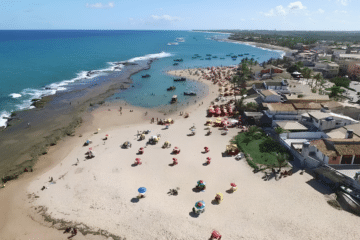
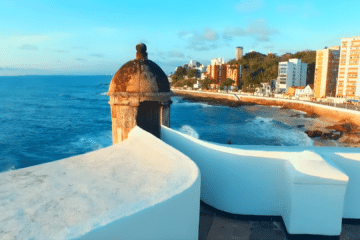
Caravelas, situated at the southern tip of Bahia on the banks of the River Caravelas — around 870 km from Salvador and 36 km south of Prado via the BA-001 — boasts a rich historical heritage, religious festivals, beaches perfect for relaxation and outdoor activities, and serves as the main departure point for the Abrolhos Marine National Park.


Quick summary
- Foundation: traditionally recorded as 1581; developed as a market town in the early 18th century.
- Gateway to the Abrolhos Marine National Park — a base for excursions and diving.
- Humpback whale-watching season: mainly between July and November.


Video about Caravelas in Bahia


Recommended activities
A brief history
The settlement was founded in the 16th century and developed over the following centuries, becoming an important trading post during the colonial period and preserving a remarkable architectural and religious heritage.
Origin of the name
The name ‘Caravelas’ may refer to the ships used in the Age of Discovery (caravels) and is also associated with certain jellyfish commonly known as ‘caravelas’, reflecting the connection with the sea and local biodiversity.
Abrolhos Marine National Park

The Abrolhos archipelago lies approximately 70 km off the coast. It is famous for its coral reefs, rock formations known as ‘chapeirões’, and excellent conditions for diving and observing marine life.
Underwater treasures
The waters around Abrolhos are home to coral reefs, historic shipwrecks, a wide variety of fish and good visibility for diving on many days of the year.
Attractions in Caravelas
Beaches and islands
- Ponta da Baleia Beach — a protected area with unspoilt scenery; accessed via a dirt track.
- Iemanjá Beach — a long stretch of coastline with soft sand; the waters are influenced by the flow of the Caravelas River.
- Grauçá Beach — the area with the most facilities, including bars and guesthouses; close to the fishing village.
- Pontal do Sul, Cassumba Island, Barra Nova, Ponta do Catueiro — islands and isolated stretches of coastline accessible by boat, ideal for a getaway and marine wildlife watching.
- Quitongo Beach — situated in the Caravelas River estuary, an area close to research and management centres.


Historical heritage
- Church of St Anthony — an 18th-century building with Baroque and Rococo features; the interior contains historic altarpieces.
- Church of Santa Efigênia — a church with strong links to Afro-Brazilian devotion, founded in the 18th century and renovated over the years.
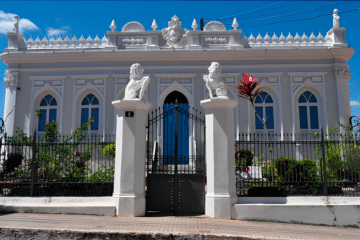
- Historic Centre — 19th-century colonial mansions and streets that preserve the city’s urban heritage.
- Disused railway station — a historic landmark from the period when the town was connected by rail to neighbouring towns.
1. St Anthony’s Church
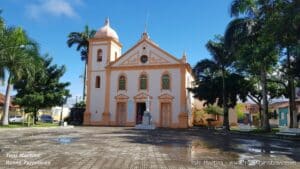
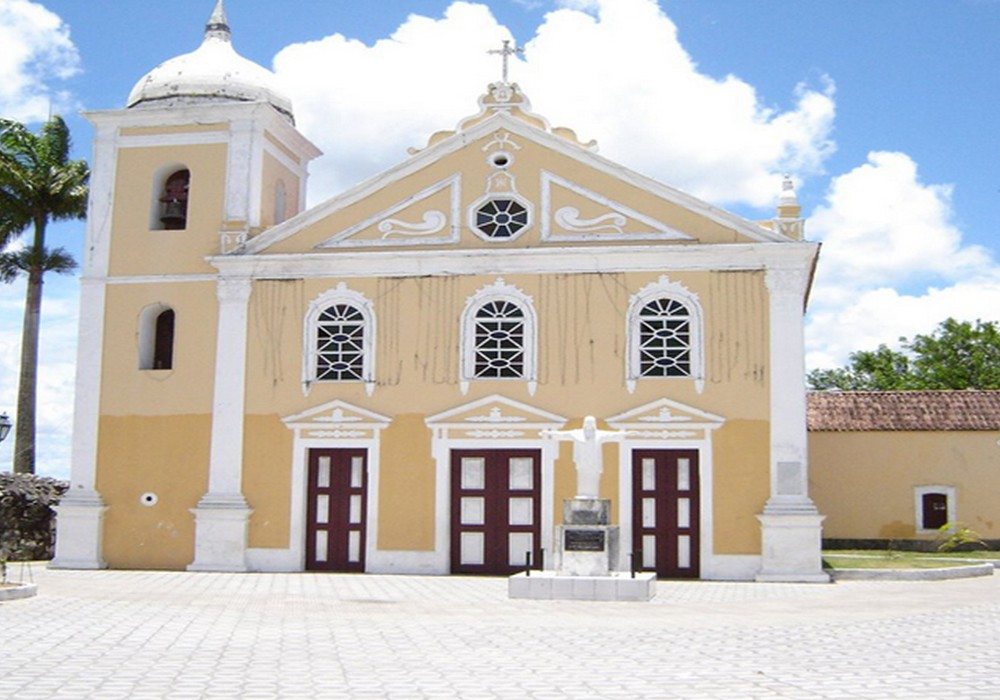
The Church of St Anthony was founded in 1725, conceived by the Jesuit priest Antônio do Espírito Santo, and was completed around 1750. It underwent renovation between 1858 and 1863. The layout comprises a nave, a chancel, two sacristies and a tower with a polyhedral dome clad in white tiles. The pediment is adorned with Corinthian-style pilasters and a projecting cornice.
The interior is dominated by Rococo-style altarpieces — originally gilded and now painted white — which house sacred images from the 17th and 18th centuries.
Following the reorganisation and establishment of the diocese in 1962, the district’s cathedral was moved to Teixeira de Freitas (St Peter’s Cathedral), whilst the Church of St Anthony was designated as a co-cathedral. Situated in Praça Santo Antônio, it is an important historical and religious landmark in Caravelas.


2. Church of Saint Efigênia
Construction of the Church of Santa Efigênia began around 1755 and was carried out largely by members of the local community, including enslaved people.
It was partially completed in 1767 and underwent renovation in 1928. Traditional materials and techniques of the period were used in its construction, such as masonry and whale oil in the mortar.
The current façade retains decorative elements that were remodelled in the early 20th century. Situated in Praça Teófilo Otoni, the church is an important landmark of the region’s religious and cultural heritage, symbolising Afro-Brazilian devotion to Saint Efigênia.

3. Historic Centre
The historic centre of Caravelas is home to colonial mansions, squares and narrow streets that bear witness to the town’s mercantile past. Colourful façades, balconies and well-preserved tiles reveal the prosperity of the 18th and 19th centuries.
Founded as a port settlement in the 16th century, Caravelas grew into a trading and fishing centre, reaching its peak of prosperity in the 18th and 19th centuries, partly due to the whaling industry.
Throughout the 20th century, it underwent economic changes but retained much of its architectural heritage. It is now recognised as a hub for eco-tourism and serves as the gateway to the Abrolhos Marine National Park.

4. Caravelas Railway Station
Although no longer in use, the old railway station is a historic landmark dating back to the time when Caravelas was connected by rail to other towns in the region. The building stands as a testament to the town’s past economic and social development.

Infrastructure and practical tips
Caravelas offers guesthouses, restaurants and travel agencies that organise trips to Abrolhos. It is advisable to book in advance during the whale-watching season (July–November) and to check the permits and conditions for diving and visiting the conservation areas.

Publicações Relacionadas
History and Historical Attractions of Itacaré Reveale
What to do on Boipeba Island - Tourist Guide - videos
Complete Guide to Visiting Arraial d'Ajuda in Bahia
History of the Convent and Church of Nossa Senhora da Piedade in Ilhéus
Church of São Pedro dos Clérigos — History, architecture and religious art
Things to Do in Nova Viçosa (Bahia): Beaches, Islands and Abrolhos
Camamu Bay — A Hidden Paradise in Bahia
Bahia Maritime Museum: History of Navigation at the Barra Lighthouse
Island of Fear: Mysteries and Hauntings
Trekking - Popular trails in Chapada Diamantina
Lapão Cave: The Ultimate Adventure Experience
Basílica Santuário Nossa Senhora da Conceição da Praia — history and architecture
Historic Towns in Bahia: A Journey Through Time
How to get to Fumaça Waterfall in Chapada Diamantina
Skydiving, Paragliding and Ballooning in Bahia
Church of Nossa Senhora dos Mares (Salvador) — History and Architecture
Ponta de Corumbau — an unspoilt paradise on the southern coast of Bahia
Campo Formoso: Explore Caves and Emerald Trade
Fort of Nossa Senhora de Monte Serrat History
Monte Pascoal National Park: Pataxó culture and Brazilian history
História da Arte - Caracteristicas, Aspectos e Periodos
The History of Lençóis in the Chapada Diamantina — Origins, the Diamond Cycle and Heritage
Igatu: Explore the 19th-Century Stone Houses
Santo Antônio da Barra Fort — history, Barra Lighthouse and the Nautical Museu
Paulo Afonso's Beautiful Waterfalls and Canyons
Salinas da Margarida (BA) — Beaches, Attractions and a Complete Guide
Taipu de Fora: Discovering Natural Pools
Todos os Santos Bay — Nature, History and Water-based Tourism
Solar do Unhão & MAM-BA — History, Architecture and a Visit
Waterfalls and trails in the Capão Valley: Complete Guide
Ecotourism in Bahia: discover village of Santo André
Ecotourism at Timeantube Lagoon, Praia do Forte
Things to Do in Rio de Contas (Bahia): A Complete Guide
The Coconut Coast and its tourism heritage
Bom Jesus dos Passos Island: A Complete Guide (Beaches, Church and How to Get There)
Tourist Information about Chapada Diamantina
This post is also on:
 Português
  English
  Deutsch
  Español
  Français